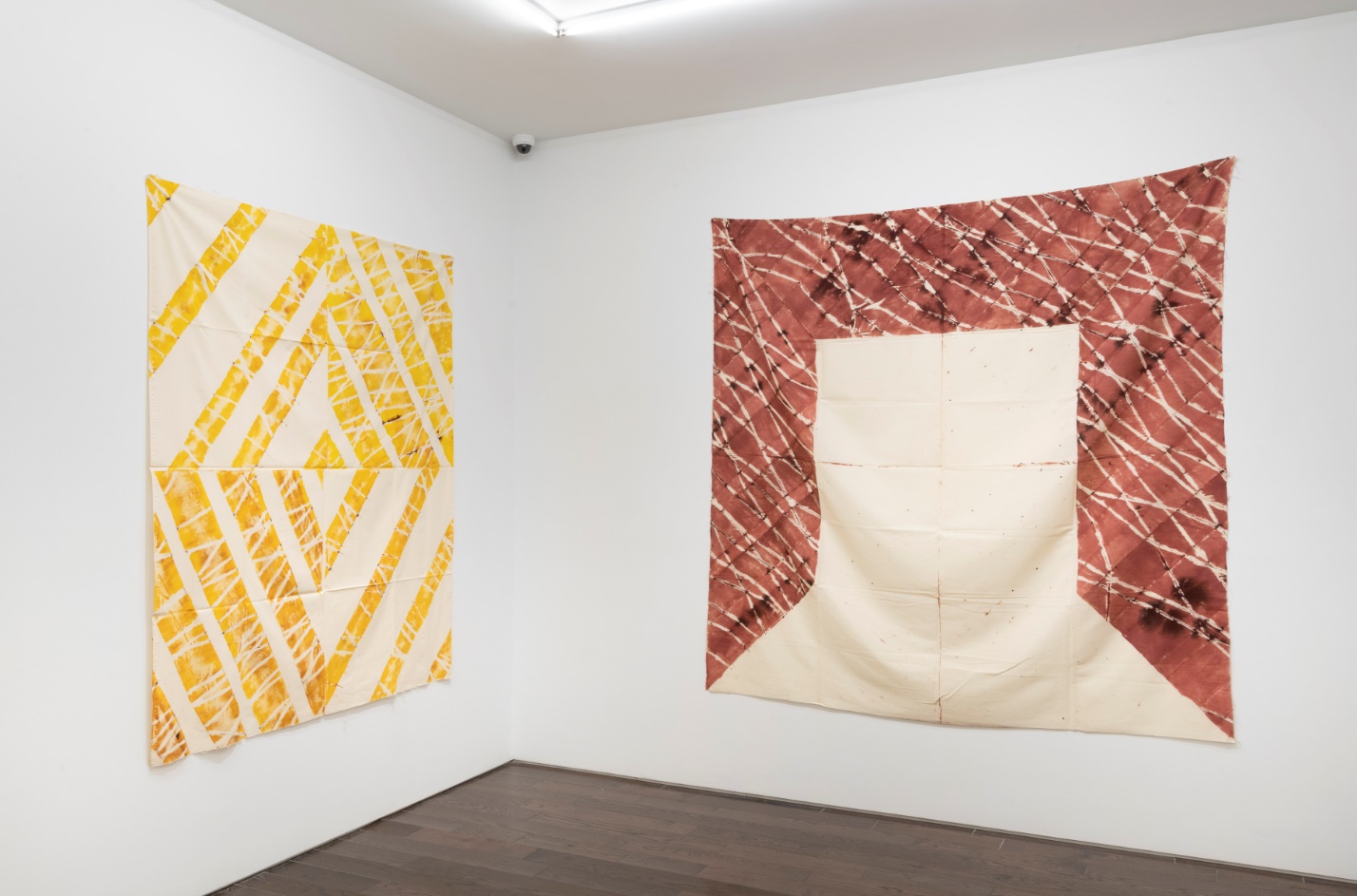
Born in 1913, Canadian American painter Philip Guston began his career in the 50’s in New York during the Abstract Expressionist movement. The Ab-Ex-ers were sweeping the country as the next great thing and developing a bit of a swagger. Painters everywhere were ditching representational painting for the new experimental style of pure abstraction, and Guston was no exception. Well-esteemed and well-reviewed, he was a part of the in-crowd. Everyone loved the guy.
Technically, Edouard Manet (1832–1883) and Edgar Degas (1834–1917 are not Impressionists; instead, they are Realists whose works owe a debt to Gericault, Goya, and Daumier and the invention of photography. Unlike Monet, who sought solace and inspiration in nature, which can be seen as a reaction to the urbanization associated with the rise of the bourgeoisie, Manet and Degas instead embraced the industrialization and urbanization driven by bourgeois economic interests. They were unconcerned with the dehumanizing effects of rapid technological advancement. Realism is aimed at depicting scenes and subjects based on the everyday lives of ordinary people.
Left: Pablo Picasso, 1920. @2023 Estate of Pablo Picasso / Artists Rights Society (ARS), New York. Right: Hannah Gadsby, 2018. (Photo: Alan Moyle).
In our current era where historical and critical thinking are on the wane, one can’t complain about a show being ahistorical, but one can be faulted for lacking a cogent dialogue. Consequently, though mashing things together can produce interesting results, the parts must communicate with one another in a meaningful manner. Problematically, the exhibit, It’s Pablo-matic: Picasso According to Hannah Gadsby at the Brooklyn Museum resembles Gadsby’s stand-up comedy routine—it rambles from subject to subject, and in this case, its cohesion relies on the audience’s attempt to understand how it is all connected to the red-herring Picasso. Considering Gadsby has been put in the position of playing auteur in a medium she is unaccustomed to, one which is visual and not language-based, it might have been a more interesting exercise in a post-way of thinking to present solely the exhibition’s wall texts, or conversely just the works themselves without commentary rather than clinging to the conventions of theme based exhibitions.
Vitamin C+ Collage in Contemporary Art. Introductory essay by Yuval Etgar. Phaidon (back cover)
Recently released by Phaidon, Vitamin C+ is another noteworthy addition to the publisher’s boundlessly malleable series of anthological volumes gathering scores of artist profiles into luxuriantly illustrated, conceptually cohesive tomes. Medium, era, genre, or movement tend to be the organizational binders for these books, as might be expected, and they’re generally wonderful and inspiring as such. But they’re sometimes wonderful and inspiring in less obvious ways as well, furnishing readers with much more to delve into, reflect on, and revisit time and again.
Once, my day job was a freelance graphic designer and I worked from home in Brooklyn. My desk was in a corner of the combination living-room-kitchen-dining-room, right next to the TV. I had cable, and while I worked, I would put on Turner Classic Movies because they didn’t play commercials. And those of us who worked from home during the golden age of cable know that the middle-of-the-day commercials were the most depressing.
TCM showed black and white movies from the 30’s, 40’s and 50’s in an unending ribbon of celluloid, one right after the other. And after months of working like this, it began to amaze me how little the films stuck in my head. They just pleasantly wafted into one ear and floated out the other. There were two exceptions, though, that seemed to have the ability to stick: Stanley Kubrick’s 2001 A Space Odyssey and The Bells of St. Mary (starring Casablanca’s Ingrid Bergman as a nun). And this forgettable/unforgettable phenomenon got me wondering: Why those two? Why did they stick and not the hundreds of others that I had watched?
Installation view of “Beyond Digital”, Venus Over Manhattan, 2022. Photo courtesy of Venus Over Manhattan
Artists have been working with technology since the beginning of the 20th Century. This represents an important moment in artmaking’s evolution, which until recently collectors and institutions haven’t wanted much to do with—the result is a lack of historical presence for such works. Without recourse to a history, every few decades promoters herald the emergence of an exciting new realm of expression or experimentation related to a new media, which appears to the uninformed to be without precedence—most recently it was the crypto-driven NFT market. It is this lack of a sense of history that makes it possible for the organizers of Beyond Digital to claim that this exhibition brings together pioneering artists whose works explore the possibilities of bridging the digital and physical realms. Problematically, this project is more than 50 years old and is built upon one that dates back to the start of the 20th century, when artists working in the modernist tradition started to adapt technology to art to produce light organs, slideshows and kinetic art.
Jules Olitski ,Wanderings: Bilbao, Orange, Yellow and Blue, 2004, acrylic on canvas, 45 ½ x 39 1/2 inches, from the exhibition Jules Olitski: Late Works at the Sam and Adele Golden Gallery on the campus of Golden Artist Colors in New Berlin, New York
Painter Elisabeth Condon’s reflections on a painting by Jules Olitski she had seen at the exhibition Jules Olitski: Late Works—were initially presented in the first episode of Elisabeth Condon Describes a Painting, a new series artist Amy Talluto has recently launched in her podcast Pep Talks for Artists. In each episode in this series Elisabeth Condon shares her way of looking at one painting, here, at the acrylic painting (2004) Wanderings, Bilbao: Orange Yellow and Blue, by Ukrainian- American artist Jules Olitski. The show at the Sam and Adele Golden Gallery in New Berlin, NY is up until March 2023 and another concurrent show of his works was up at Yares Gallery in New York (till February 11, 2023).
Installation view, André-Pierre Arnal at Ceysson & Bénétière New York. Photo courtesy of Ceysson & Bénétière New York
With the advent of Modernism in the late 19th – early 20th century, differing movements, schools, and networks sprang up internationally—some were generative and sustainable, others dead-ended, though unbeknownst to most of us, traces of these persist or return. This cross-fertilization drove Modernism’s evolution until the post-World War II era the new art made in the U.S. came to dominate the narrative. The triumph of the NY School (AbEx) corresponded to the new political and economic order. In this scenario the vanguards that emerged from the rubble and detritus of the War such as C.O.B.R.A., Nouveau Realisme, Lettrist, Zero, Arte Povera, etc. were trivialized, marginalized, or came to be appropriated. To this day, the European artists whose works come to be acknowledged in the States tend to be those whose works are used to typify the whole of a critical discourse, or style. This has reduced post-War European art to a short list that includes Pierre Soulages, Antonio Tapies, Lucio Fontana, Yves Klein, Francis Bacon, Joseph Beuys, Gerhardt Richter, Anselm Keifer, etc. In this manner, the illusionary status of the U.S. as the cultural leader of the free world is sustained, while European art is made to appear to be broken, fragmented, or at best sporadically relevant, rather than constituting a network of competing histories, practices, and critical discourses.
I would hate to think I have become an old and conservative critic who believes our best days are behind us. I would rather believe that my structuralist perspective is capable of evaluating contemporary emerging practices and recognize the social, cultural and political value of these tendencies. What brought this on is having recently seen the 1962–64 exhibition at the Jewish Museum. This show examines how artists living and working in New York during this three-year period responded to rapidly changing social and cultural conditions, by questioning what was considered to be art’s normative forms and subjects. This post-AbEx generation was concerned with creating aesthetic configurations that would result in novel perceptual modes and political subjectivities.
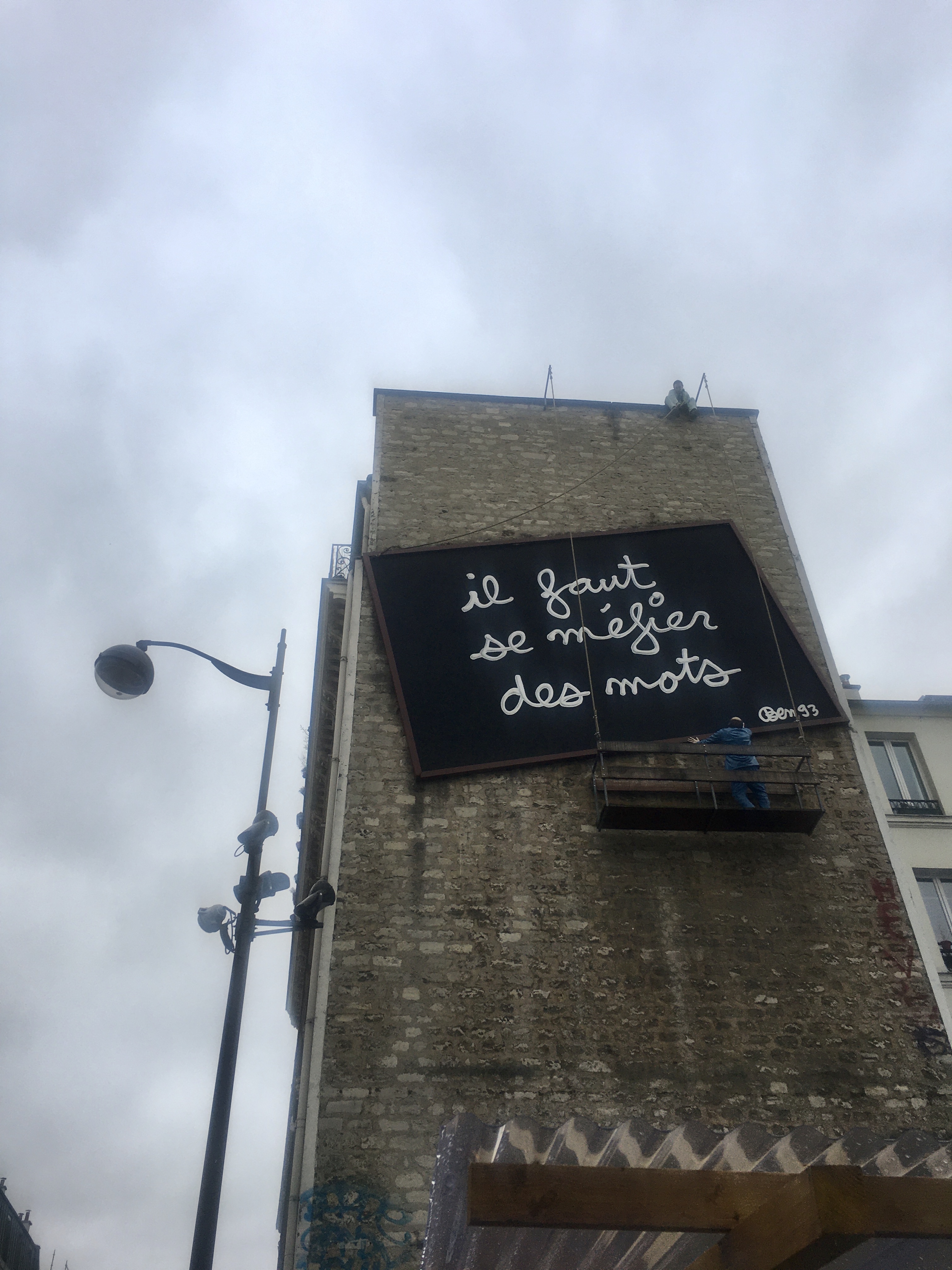
Il faut se méfier des mots (Beware of words), Ben, 1993. Belleville, Paris, France. Photo: Astrid Dick
To make a painting is not easy. To look at a painting is not an easy matter either, as it requires the viewer’s disposition and willingness to engage with it beyond words and labeling. Our brains like to pin things down, using minimum resources to move on to the next task as quickly as possible. They latch on to words. Yet the moment words enter our minds, we’re not really looking anymore.