America, Unfinished?! at WaterFire Arts Center

America, Unfinished?! at WaterFire Arts Center

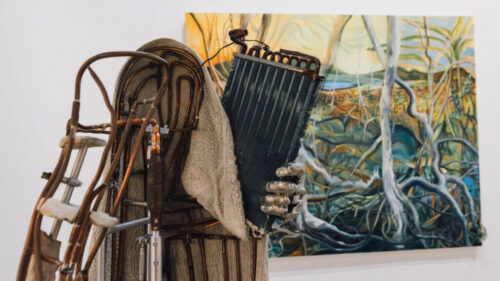
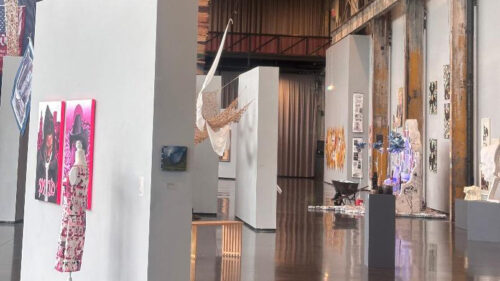
America, Unfinished?!, a national exhibit at WaterFire Arts Center in Providence, RI, features the work of 80 artists from 13 states and territories. I visited the 15,000-square-foot former rubber factory on a hot July day. The light-filled space is several stories high and could dwarf almost anything smaller than a jet, so it took me a while to find my bearings and focus on the work.

Greater New York, on view at MoMA PS1

Greater New York and the identity and pulse of the city at MoMA PS1

Walking through MoMA PS1 for the first time in several years, I realized how much it has changed and how much I still remembered from my first visit, before officially becoming a New Yorker. The meandering, bustling energy of the building remained, each turn and new corridor offering discoveries. It was special to witness how eclectic and unique each artist’s vision and process was and how many identities and stories are gathered under one roof. Organized for the first time by MoMA PS1’s full curatorial team, the exhibition emphasizes the forces that shape daily life in the city today. This includes strategies of resistance and adaptation in the face of increased surveillance, shifting identities, economic uncertainties, how we view ourselves and others, and the ever-changing technologies around us. This exhibition notes both optimism and anxiety throughout all of the artists’ attention to the layered, eclectic lived textures of New York City and the people intertwined within it. 

Daina Higgins

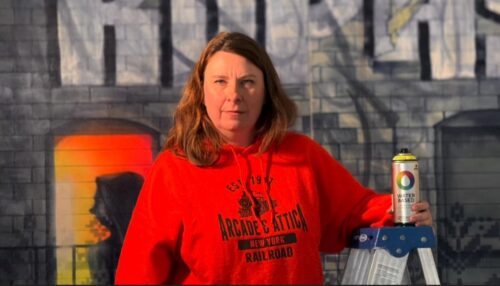
Interview with Daina Higgins: On Graffiti, Risk, and the Art of Impermanence

Pioneer graffiti artist and painter Daina Higgins explores the shifting visual identity of urban spaces across the American Northeast. Our conversation, centered on Daina, also reads as a message to the emerging women graffiti artists she encounters on the streets. A how-to guide including the rules- yes, graffiti has rules- a way to value yourself as an artist, and a sisterhood joining the past and present.

Melora Kuhn, Eruption

Melora Kuhn’s Power of Erasure and Material Revision

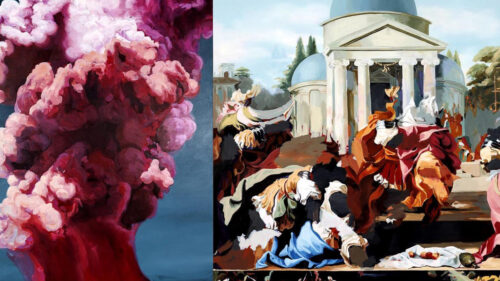
History has always depended on materials. Marble, oil paint, bronze, woodcuts, engravings, museum vitrines, and photographic reproductions preserve the past as well as determine how events, ideas, and narratives are represented. Over time, images become durable, gaining a certain kind of truth value because they acquire material permanence and spread through copies. Mythological heroines, biblical women, allegorical figures, and historical subjects return across centuries through the persistence of artistic media, carrying with them the assumptions, hierarchies, and ideologies embedded in their forms. Melora Kuhn‘s solo exhibition, The Legacy of Disembodiment, on view at Private Public Gallery, starts with the recognition that if representation has helped naturalize and proliferate the narratives these images and forms carry, then materials themselves can be a site of political intervention.
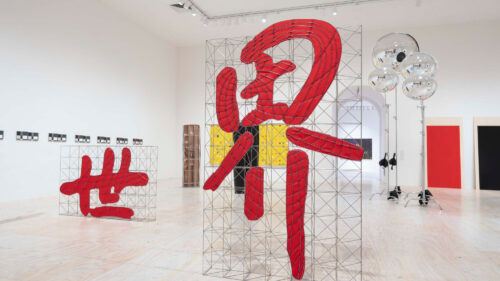
Installation view, Fugue Gallery

Fugue Gallery Finds a New Home with Forbidden Fruit

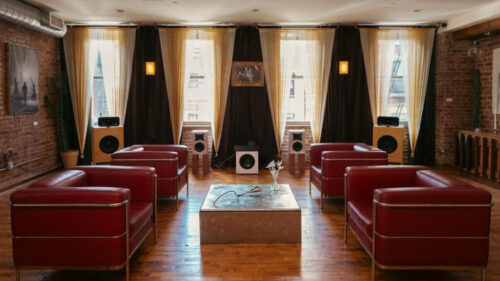
Located along the central artery of Little Italy, amid a glut of red sauce joints with checkered tablecloths, sits the new home of Fugue Gallery. Having recently relocated from Canal Street to Mulberry Street, the space, a 1,000-square-foot brick loft, eschews white box sterility for something more atypical.

Timothy Makepeace in the Studio

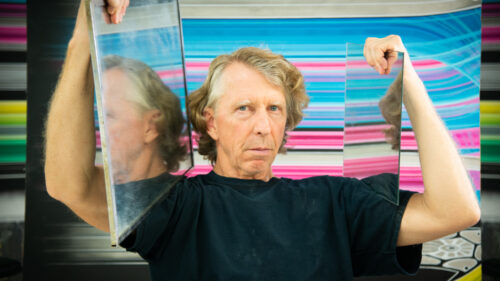
Timothy Makepeace: From Thirty Feet to One Million Miles 

Timothy Makepeace has spent nine years making art about one of the most complex machines humanity has ever built. Since his first visit to NASA’s Goddard Space Flight Center in 2016, the artist has developed an expansive body of work in response to the James Webb Space Telescope — its gold-plated beryllium mirrors, its acoustic test chambers, the light it gathers from increasingly distant points in time. The culmination of that inquiry is Ghost in the Machine, on view at the American University Museum at the Katzen Arts Center in Washington, DC, through August 9, 2026. We spoke with Makepeace about working with NASA engineers, the formal decisions behind his square-format drawings, and what kept drawing him back to a telescope now orbiting the Sun a million miles from Earth.

Diego Azzola, Huang Zhe, Installation view of He Spoke To The Birds

Interview for He Spoke to the Birds: Matter, Memory, and Nonhuman Voices

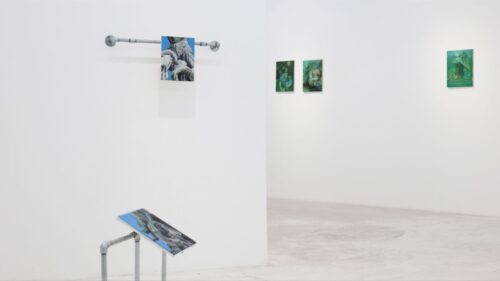
Presented at the AAIE Center for Contemporary Art in Rome, He Spoke to the Birds brings together works by Jeremias Rumpl, Diego Azzola, and Huang Zhe in an exhibition curated by Fanfan Yuxuan Fan. Taking its title from Carolyn Christov-Bakargiev’s reflection on Saint Francis of Assisi and Arte Povera, the exhibition asks what it might mean to listen not only to human voices, but also to birds, ruins, pipes, smoke, and matter itself.

Emelie Stenhammar, How Unexpected

How Unexpected: Encounters With the Divine, Emelie Stenhammar

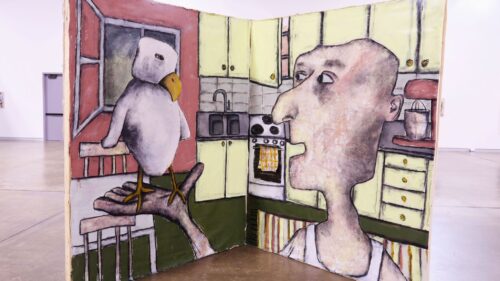
Emelie Stenhammar’s works echo the aims of Elizabeth Murray to reshape our relationship with painting. Cozy rectangular formats are denied. Twisted Perspective prevails. Both artists’ depictions of domestic spaces reflect a mutual fondness for cartoons and whimsy. Stenhammar paints compelling allegory about the human condition, with a compassionate gaze akin to that of Kathe Kollwitz. 

Cecily Brown, Nature Walk with Paranoia

Cecily Brown at the Serpentine: Everything Everywhere All at Once

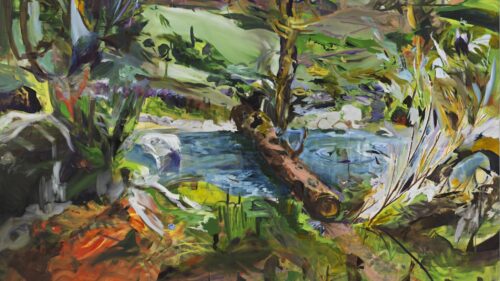
Entering the first room of the gallery, one is instantly struck by the richness of movement in Cecily Brown’s paintings. Several recent works, drawn from nature walks, centre on the motif of a log laid across a blue stream. This fairy-tale imagery, bordering on kitsch, was borrowed from a jigsaw puzzle Brown was completing at the time. Yet the jagged shrubbery and turbulence surrounding these scenes point towards something darker.