No one ever thinks the plate is going to become a problem.
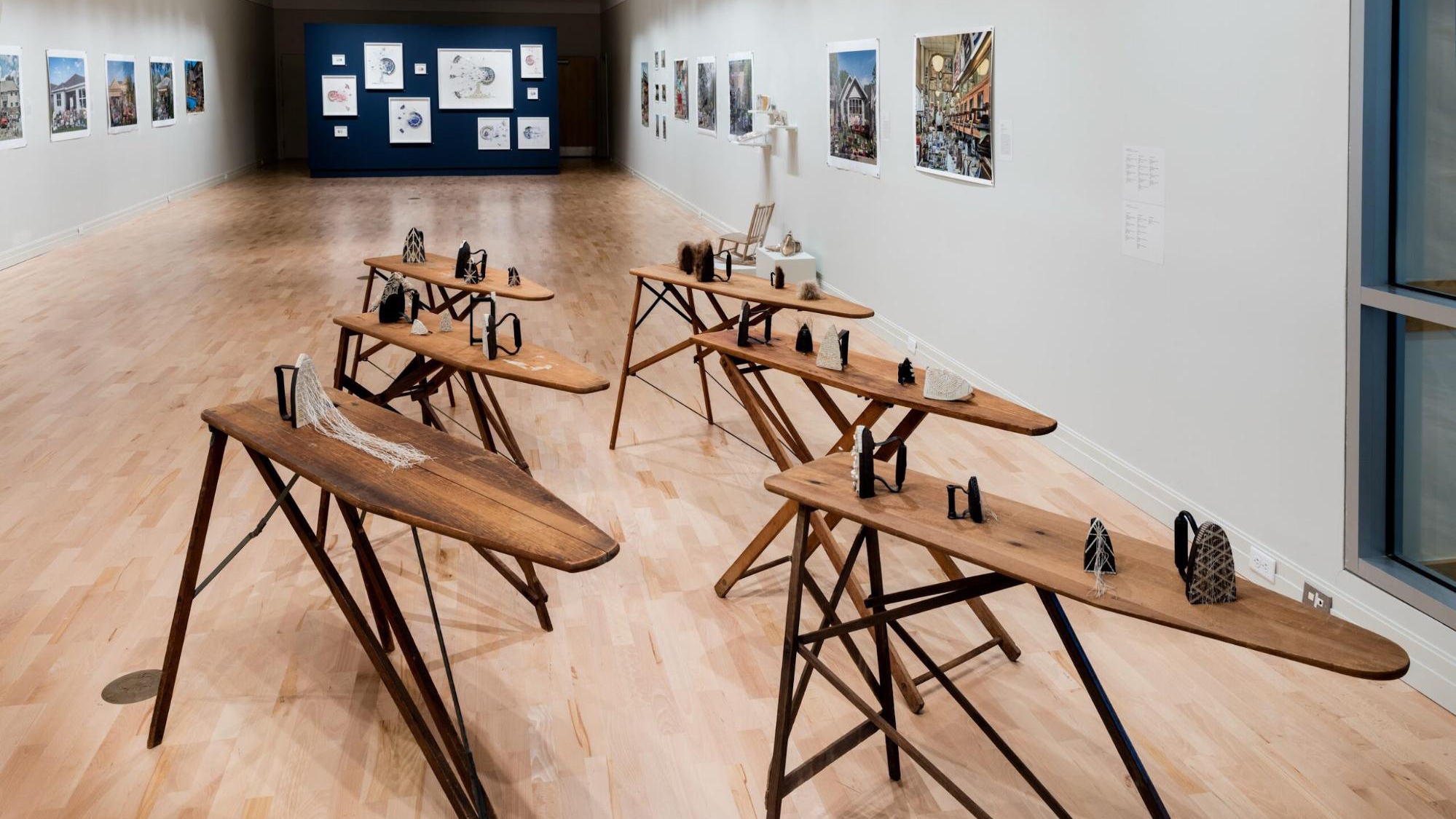
A plate survives three apartments and one bad Thanksgiving. A suitcase gets hauled across borders or shoved beneath beds; sometimes it is packed in hope, sometimes because someone has no choice. An iron presses school clothes and funeral clothes, then outlives its usefulness and sits in a closet somewhere, still holding the pressure of human hands.
That is the animating idea behind extraORDINARY things, the quietly arresting exhibition at the Flinn Gallery in Greenwich Library.
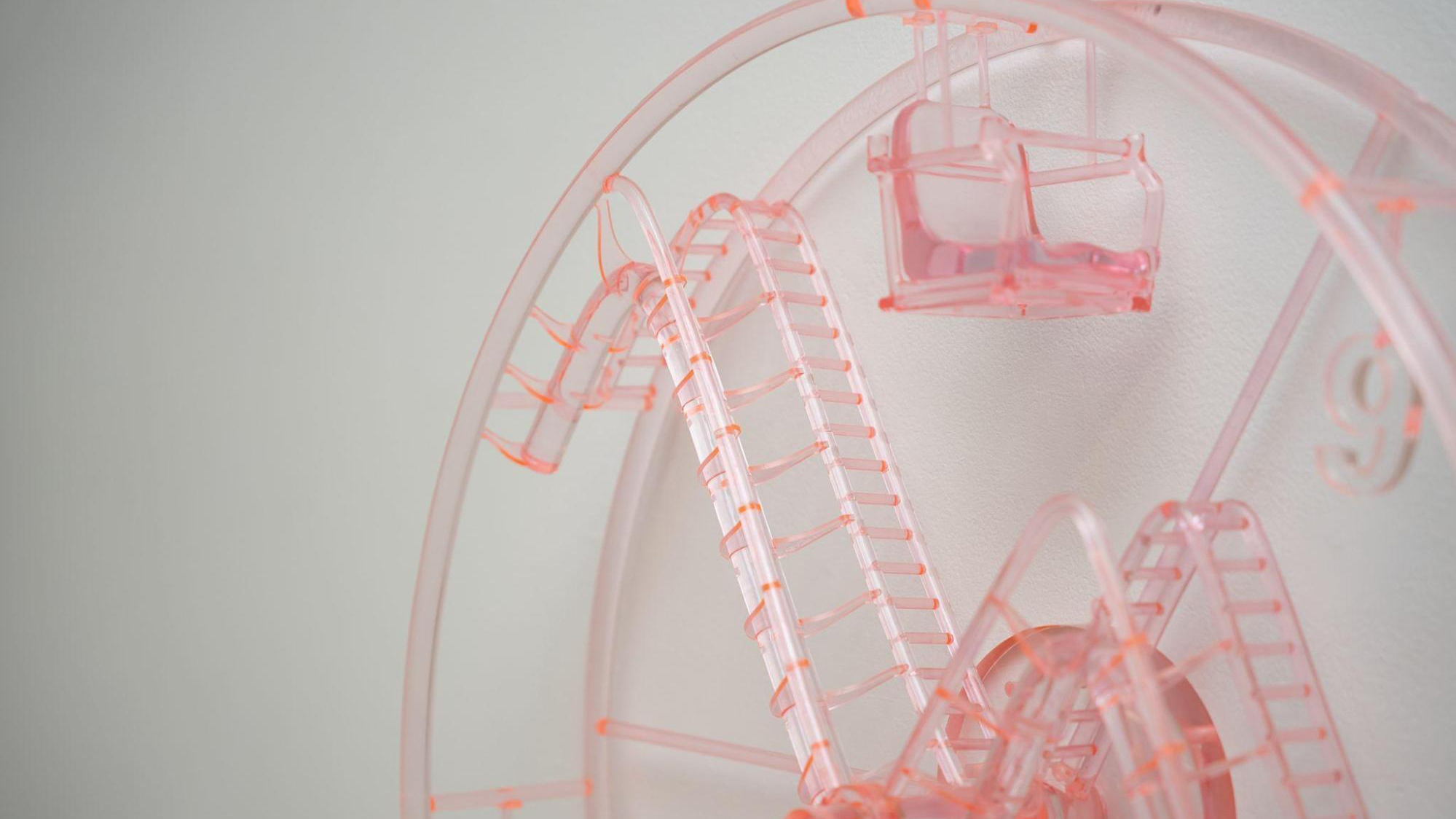
Upon entering the exhibition, you are greeted by pieces of various sizes and mediums, full of intricacies and exploration. With the pieces being smaller in size, besides the Ferris wheel, you have to get close to see the small details or the depth of space that opens into a world of its own within each piece. Within the works, Liu offers locations such as cities, darkened spaces, carnivals, and other places of transition. Places that one may find themselves when they are beginning to traverse or transition into someplace new. I appreciated that each work was either on the wall or a shelf, giving each a sense of its own place. The space around the pieces gives them an opportunity to breathe and allows viewers to look closely at one and flow seamlessly into the next.
I walked into the PPOW gallery the morning my friend Riki died. The 182-panel illustrated small drawings by New York artist John Kelly, which extend as an open graphic memoir around the gallery, captured me instantly, letting me in on a personal journey of mortality, pain, and beauty. There was something generous in the way Kelly handed his notebook and shared the manuscript of his injury. It resonated with my thoughts of investigating and dwelling on mourning and mortality.
Tomashi Jackson: Across the Universe at Tufts University Art Galleries
August is the height of summer and a great time to see art. The city is quieter and less crowded (I went to the First Friday openings and actually got to talk to people AND look at the art!) and the satellite exhibitions throughout the region are exceptional. Museums and galleries continue to host dynamic summertime events and there’s still a calendar full of community festivals and block parties that will highlight some of Boston’s most talented artists. Here are a few shows to have on your radar as you travel in and around the Boston area this month.
August in New York is nothing without its heat waves and epic weather. While many escape the city, there are lots of wonderful gems to behold. Here are some cool current exhibitions not to miss downtown that will bring some good energy on those hot days.
Beauty Out of Bounds, East End Arts 11 West Gallery Installation. Painting on the left: Moonset. Painting on the right: The Center Will Hold. Photo courtesy of the artist
Anne Sherwood Pundyk’s solo exhibition, Beauty Out of Bounds, features a vibrant selection of her color-intensive works, many on public display for the first time. Her large, unstretched paintings reveal layers of stained drop cloth canvas interspersed with geometric shapes, cascades of color, bold stitching, sharp lines, and imprinted grids of paint. Her smaller pieces on stitched paper reflect the experimental approach of her larger works. A series of photographs that obscure handwritten journal entries bridge visual art and literature, underscoring the artist’s dual identity as a painter and writer. At the heart of the exhibition is Pundyk’s artist’s book, The Garden, which integrates printed pages and narratives prominently along the gallery walls. Her artworks collectively navigate themes of trauma and forgiveness. “By setting aside received wisdom, I make room for curiosity, investigation, and especially vulnerability”, Pundyk asserts. The exhibition spans both locations of East End Arts Galleries in the Arts District on Main St., Riverhead, NY, and includes various events designed to expand the dialogue.
Jody MacDonald, Everywhere All Over. All Over. Everywhere. (detail), mixed media, 168″ x 180″ x 96″, 2022.
Jody MacDonald dissects in detail the concept of “identity” through a cast of small-scale 2-D and textile-based 3-D surrogates. She uses repurposed materials to create figures and detailed, miniature accessories (wigs, clothing, shoes furniture) set inside elaborate, mixed media environments with clues which shed light on the complex, often conflicting narratives.
Manju Shandler, Wonder Whale 1, 2018, mixed media, 23×19 inch
Luckily, or to many art-mavens’ chagrin, our 21st century art world—in line with the global techno-culture and socio-political processes—seems to have abandoned crusades of “right” or “wrong” related to artistic form (though sometimes that does not apply to content). We are experiencing a dizzying array of aesthetic expressions, where often fast-pace visual trends replace ideologies of form. Unlike some passing trends, visual narratives based on mythological iconography have been central in all art forms since archaic ages, except for the early-mid half of the 20th century when narrative impetus was largely downplayed in most of what was called the “Avant Garde” art of the time.
Małgorzata Mirga-Tas, Re-enchanting the World, Polish Pavillion, 59th Venice Art Biennale
As you enter the Polish Pavillion at the Venice Biennale 2022 you are surrounded by Małgorzata Mirga-Tas’ stunning floor-to-ceiling hand-stitched tapestry panels, richly depicting mostly female protagonists in everyday life. If you had a lucky chance to visit the Renaissance Palazzo Schifanoia in Ferrara, Italy, you would most likely soon discover in Mirga-Tas’ images myriad allusions to the Palazzo’s splendid ‘Hall of the Months’ cycle of frescoes portraying Olympian gods, astrological figures, and scenes from court life in Ferrara. The name of the Ferara palazzo derives from the phrase ‘schivar la noia’, meaning ‘escape from boredom’, which accurately defines the purpose of this splendid architectural gem—built for the leisure of the powerful Este family over 500 years ago.
The rural Catskill mountain village of Fleischmanns an unlikely a place to find a world-class contemporary art installation.
In the nineteenth century, the village was a flourishing, prosperous Catskill vacation spot for the New York well-to-do, resplendent with Victorian mansions and lodging houses, attracting both Jewish and non-Jewish summer residents. By the mid-twentieth century, the town had languished, and many properties had fallen into disrepair. Over time, Fleischmanns became a summer retreat for a large ultra-Orthodox Jewish community who juxtapose oddly with deer hunters, RV owners, motorcycle enthusiasts, and other locals. “Eclectic” is an understatement. If Fleischmanns were on a deli menu it would be an Everything Bagel.