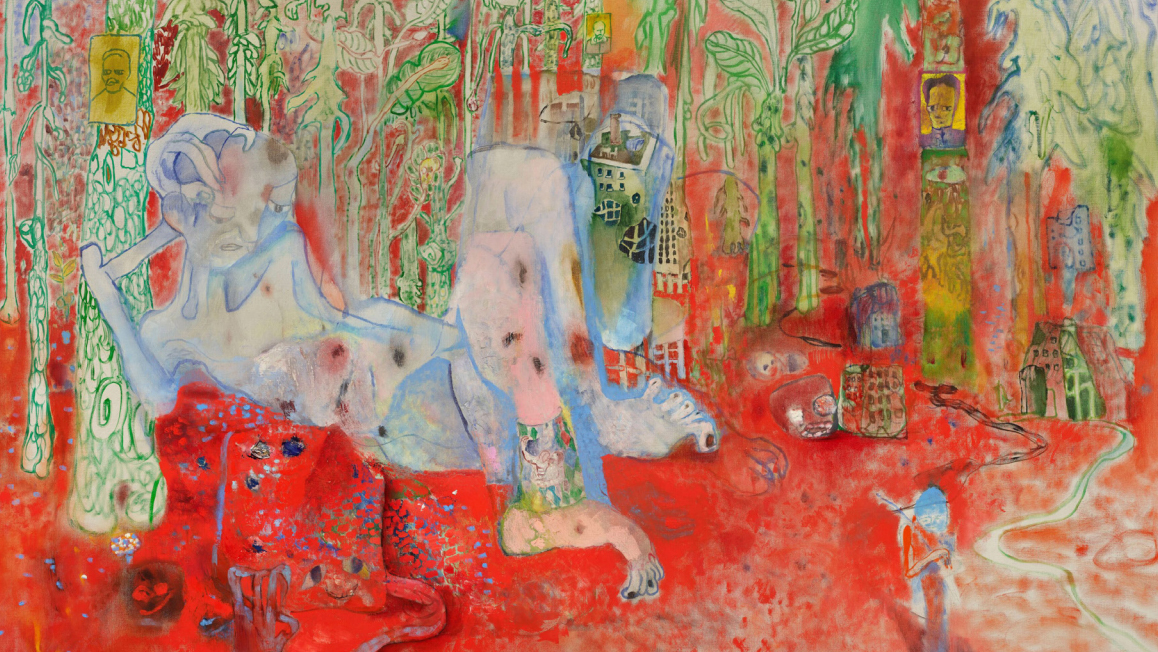
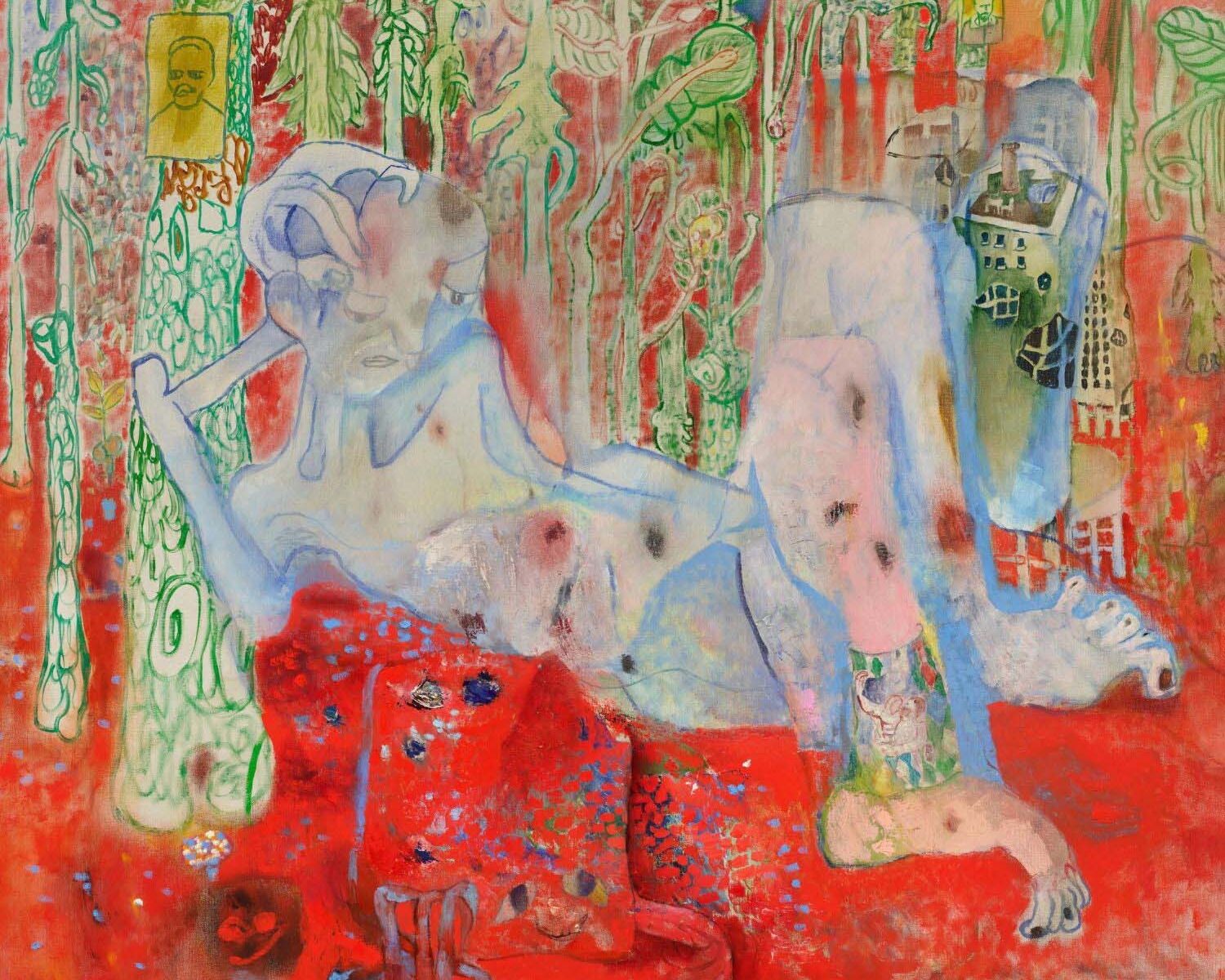
At first glance, Qiu Xiaofei’s paintings appear weightless, washed in vaporous blues and fractured light. They hover between memory and dream, suspended in a luminous haze. But sustained looking alters the experience. The mist does not dissolve — it thickens. What seemed ethereal becomes anatomical. The viewer descends from the sky into the soil, and then further still into the ruptured systems, broken bodies, and unstable architectures that structure human existence. Beneath the atmospheric softness lies something closer to the bowels of what we call life: exposed nerves of paint, skeletal fragments, windows that stare back like watchful eyes. The work stages, narrates, and exposes modes of excavation.
Qiu Xiaofei: The Theater of Wither and Thrive at Hauser & Wirth 542 W 22nd St, New York, NY 10011 February 12 – April 18, 2026. Tue – Sat, 10 am to 6 pm
Qiu Xiaofei presents new oil paintings and works on paper inspired by previously unknown family photographs discovered after his father’s passing. From this intimate source, the exhibition expands into a meditation on memory, loss, and the world’s unstable transformations. Informed by Chinese philosophical traditions and Western poets such as Robert Lowell and Emily Dickinson, Qiu creates vivid, dreamlike scenes in which presence and absence unfold across psychological landscapes. Rooted in family history and his hometown of Harbin, his paintings merge abandoned architecture, nature, and imagination. Recurring spiral motifs evoke non-linear time, while layered imagery bridges personal remembrance with broader historical and emotional experience.
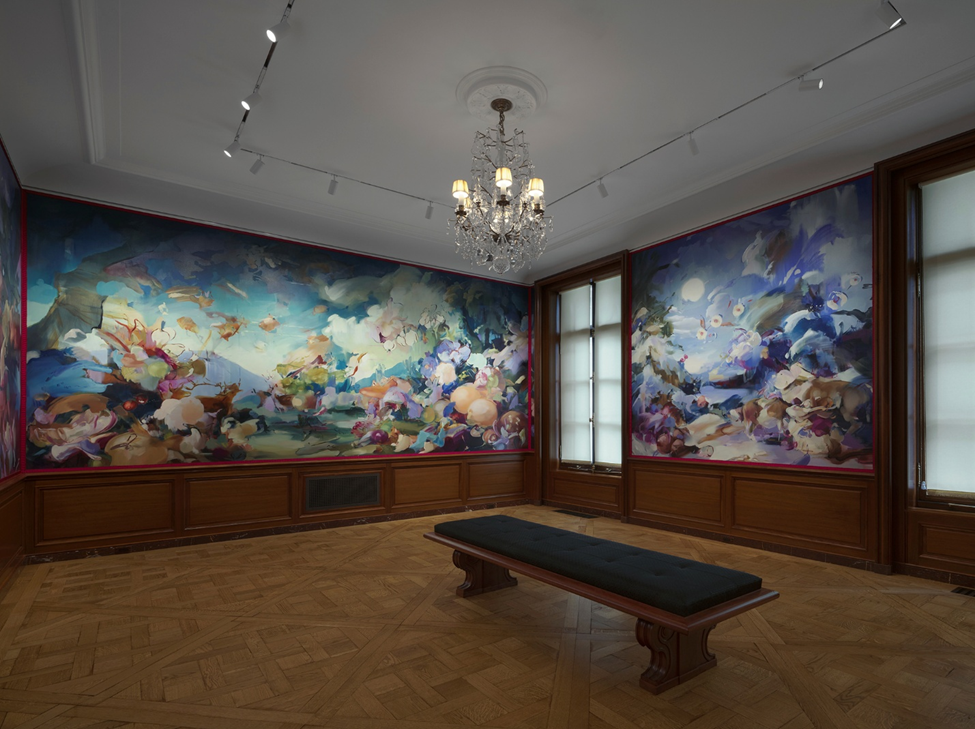
Installation view of Flora Yukhnovich’s Four Seasons in The Frick Collection’s Cabinet Gallery, showing Autumn and Winter. Photo: Joseph Coscia Jr.
What draws artists and audiences back to the Baroque now, in a century shaped by speed and fracture? Perhaps it is the recognition of kinship. The seventeenth century was also an age of cataclysm and wonder — continents mapped, the cosmos recalculated, science expanding perception. The Baroque arose amid fracture: religious schisms, shifting empires, faith and politics entangled. Art became theatrical, constructed to move the spirit through light, motion, and sensation.
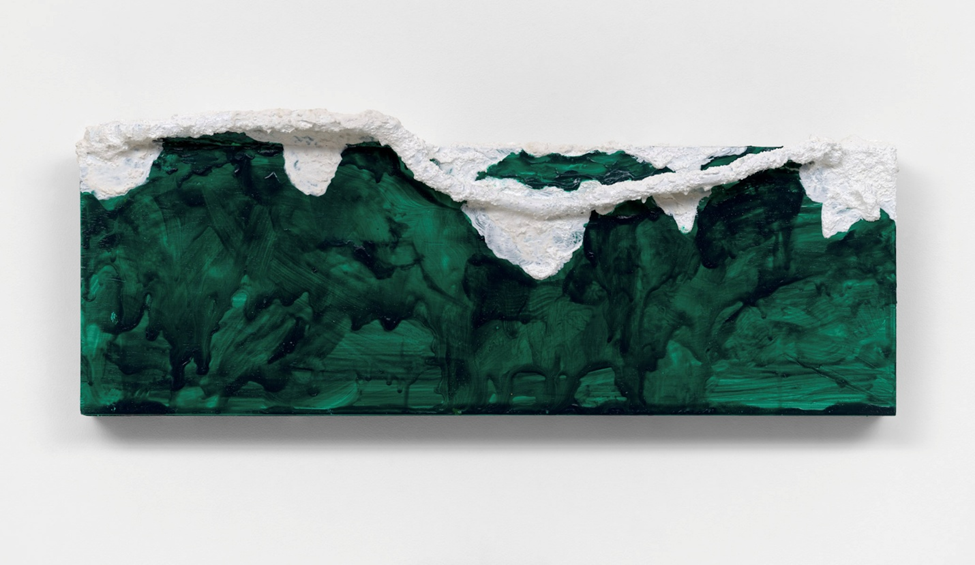
Mary Heilmann, Broken Wave, 2022,Acrylic and paper mache pulp on wood and panel, 10×26.75×3-1/2 inches, photo by Dan Bradica. @Mary Heilmann. Image courtesy of the artist, 303 Gallery, New York, and Hauser & Wirth
Water Way, Mary Heilmann’s newly opened show at Guild Hall in East Hampton and her first large-scale museum show on Long Island’s East End, is a joyous celebration of 40 years of the artist’s career. The water-themed exhibition includes not only paintings and works on paper but also chairs, a small table, and ceramics, the latter either on its own or incorporated into a painting as in the 2020’s red acrylic Barrel and Tube. Heilmann is a longtime resident of Bridgehampton and her reverence for the ocean reverberates throughout, underpinned by an underground, punk rock/new wave, California surf culture ethos.
Lorna Simpson, did time elapse, 2024, acrylic and screenprint on gessoes fiberglass @Lorna Simpson
Cecilia Vicuña, Lorna Simpson and Nour Mobarak powerfully and eloquently broach heavy subject matter with diligent research in their attempts to preserve significant stories amidst the burdens of colonialism. Each artist speaks to various experiences as they contend with complicated histories of peoples, lands, and the dynamics between them in an array of circumstances. These exhibitions take on the task of engaging with past and present, depicting resourcefulness and perseverance amid the tangled threads of imperialism that wreak havoc across the globe. Viewers are offered context as they enter works that embody life through organic matter, curious objects, and ethereal modalities.
Born in 1913, Canadian American painter Philip Guston began his career in the 50’s in New York during the Abstract Expressionist movement. The Ab-Ex-ers were sweeping the country as the next great thing and developing a bit of a swagger. Painters everywhere were ditching representational painting for the new experimental style of pure abstraction, and Guston was no exception. Well-esteemed and well-reviewed, he was a part of the in-crowd. Everyone loved the guy.