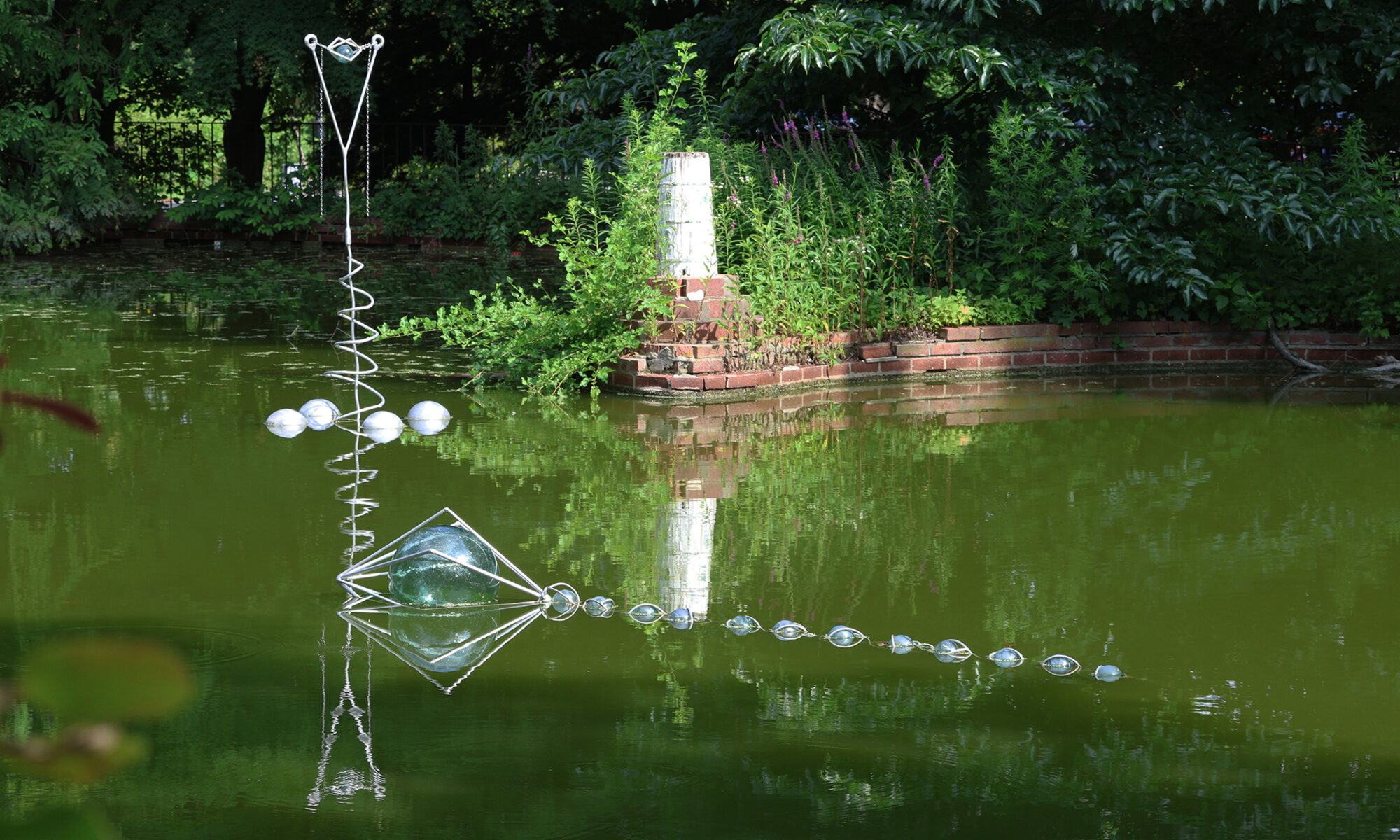
A chance meeting in October 2024 set Serpentine Sibyls in motion. Wandering into the Newhouse Center for Contemporary Art, Daniel Rothbart met its director and senior curator Melissa West, and a shared bond with the late critic and curator John Perreault — who ran the center in the 1980s — opened a collaboration that grew from the main pond to the two reflecting pools beside the Glass House. Rothbart’s floating forms in aluminum and glass, buoyed by salvaged Japanese fishing floats, drift and turn with wind, light, and water, so no two hours look alike. Named by West for the ancient prophetesses and for the serpentinite stone in Staten Island’s own hills, the work holds history and forecast at once, using the climate crisis as its undertow. Sited at a former sailors’ home along a tidal waterway, it runs through September 28 at Snug Harbor. The artist and curator discuss the project’s origins, its shifting forms, and the myth and history beneath the title.
Continue reading “Serpentine Sibyls at Snug Harbor”Interview for He Spoke to the Birds: Matter, Memory, and Nonhuman Voices
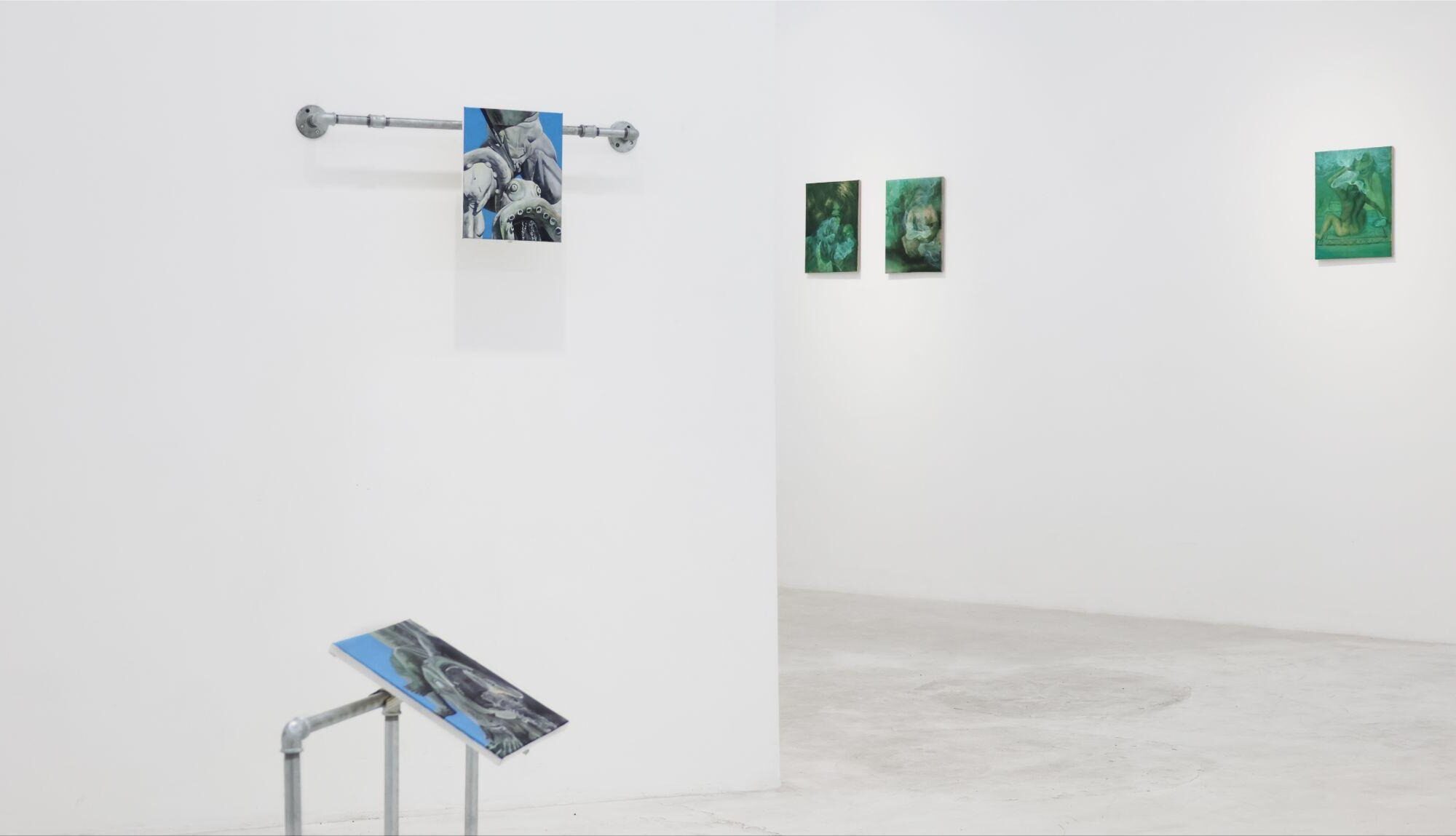
Presented at the AAIE Center for Contemporary Art in Rome, He Spoke to the Birds brings together works by Jeremias Rumpl, Diego Azzola, and Huang Zhe in an exhibition curated by Fanfan Yuxuan Fan. Taking its title from Carolyn Christov-Bakargiev’s reflection on Saint Francis of Assisi and Arte Povera, the exhibition asks what it might mean to listen not only to human voices, but also to birds, ruins, pipes, smoke, and matter itself.
Continue reading “Interview for He Spoke to the Birds: Matter, Memory, and Nonhuman Voices”Hollis Heichemer: Transcension over Anthropocentrism and Breakaway into Landscapes
Hollis Heichemer’s solo exhibition at Hollis Taggart titled “moving in stillness” is a profound investigation of existence and the meaning of the world through the study of landscapes and Mother Nature. Is Humanism an anthropocentric perspective that is ultimately flawed and furnishes humanity with the arrogance to destroy the environment and disregard the principles of empathy? How can we overcome the diseased thought that humans have the right to master or exploit nature for profit? And how has the artist found great peace and liberation through her lifelong study of Mother Nature and her generous nourishment and wisdom? Does Heichemer apply the paint purely as a formal exercise of abstract colors and relationships, or does the paint become the flesh of Mother Nature, by the observation of which we can become and live through the painting as landscapes?
Continue reading “Hollis Heichemer: Transcension over Anthropocentrism and Breakaway into Landscapes”Dakota Gearhart: All Matter Is Alive
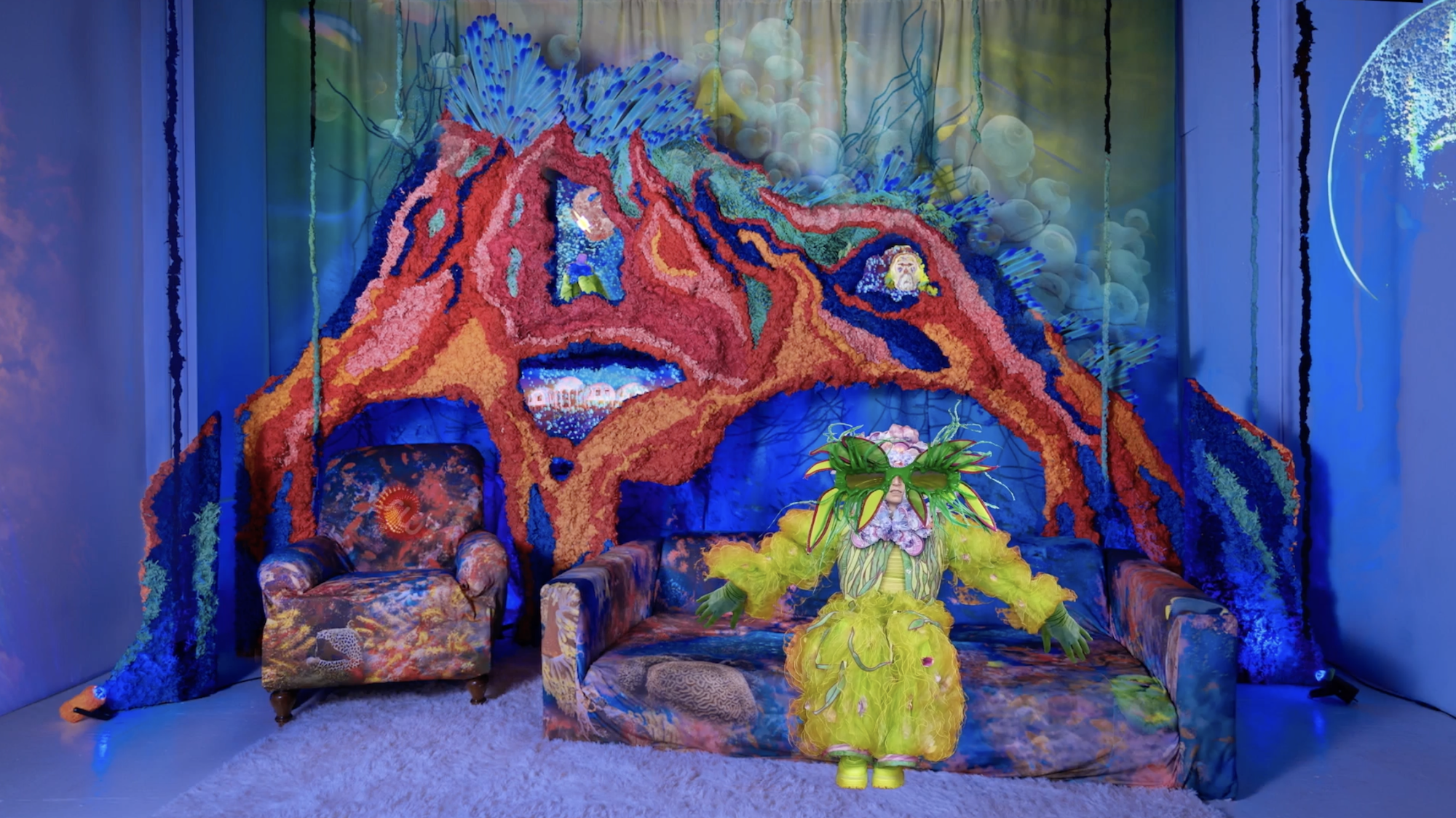
Dakota Gearhart grew up on a Florida coastline where algae blooms, sewage outflows, and bikini contests share the same shoreline, and her work has been carrying that mix of beauty, decay, and amusement into a much bigger frame ever since. Across animation, sculpture, performance, and sound, she builds video worlds where pixels sing, electricity becomes sentient, and the nonhuman shows up on equal footing with the rest of the cast. Her ongoing animated series Life Touching Life is hosted by Tiffany, a half-algae, half-woman figure who guides viewers through episodes shaped with collaborators — poets, scientists, activists, caretakers — whose lives already reflect the worldview the work is reaching toward. It’s funny, strange, and serious in roughly equal measure, which turns out to be the right register for the worlds it stages.
Continue reading “Dakota Gearhart: All Matter Is Alive”The Biennale That Broke Itself
The 61st International Art Exhibition arrives in grief, political fury, and institutional crisis. It is one of the more galvanizing editions in recent memory.
The lagoon light still flatters everything it touches, but this year, Venice has the feel of a city that stayed up too late arguing. May 7, 2026 — the one morning of the press preview period spared by both rain and protest — was the kind of day Venice is famous for: blue sky and large cinematic cumuli drifting above the Queen of the Adriatic. Police stood watch outside the Israeli and Russian pavilions. The queues at the Giardini were long; those at the Arsenale were longer. In years of attending press previews, I have rarely encountered such a congested or physically demanding environment — the crowd, indistinguishable from a general-public opening, consumed by the compulsive and indiscriminate act of photographing everything in sight.
Continue reading “The Biennale That Broke Itself”After the Rains – How Nature Roots Us Home
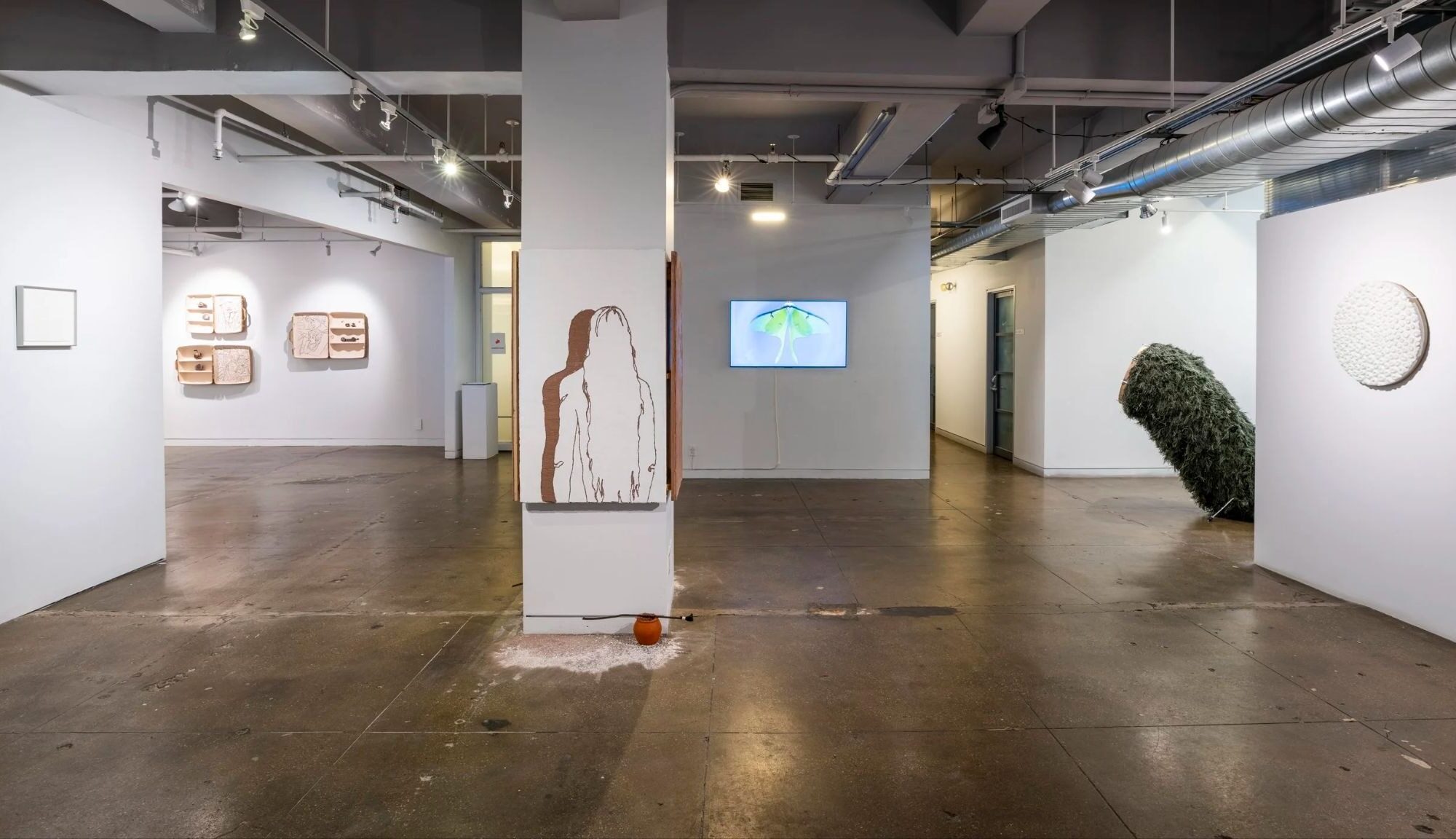
When one thinks of nature, the first thing that comes to mind would be a park filled with leafy trees or perhaps a bouquet of vibrant flowers. With EFA Studio’s newest exhibition, After the Rains, artists challenge the idea of how nature can be represented.
Continue reading “After the Rains – How Nature Roots Us Home “