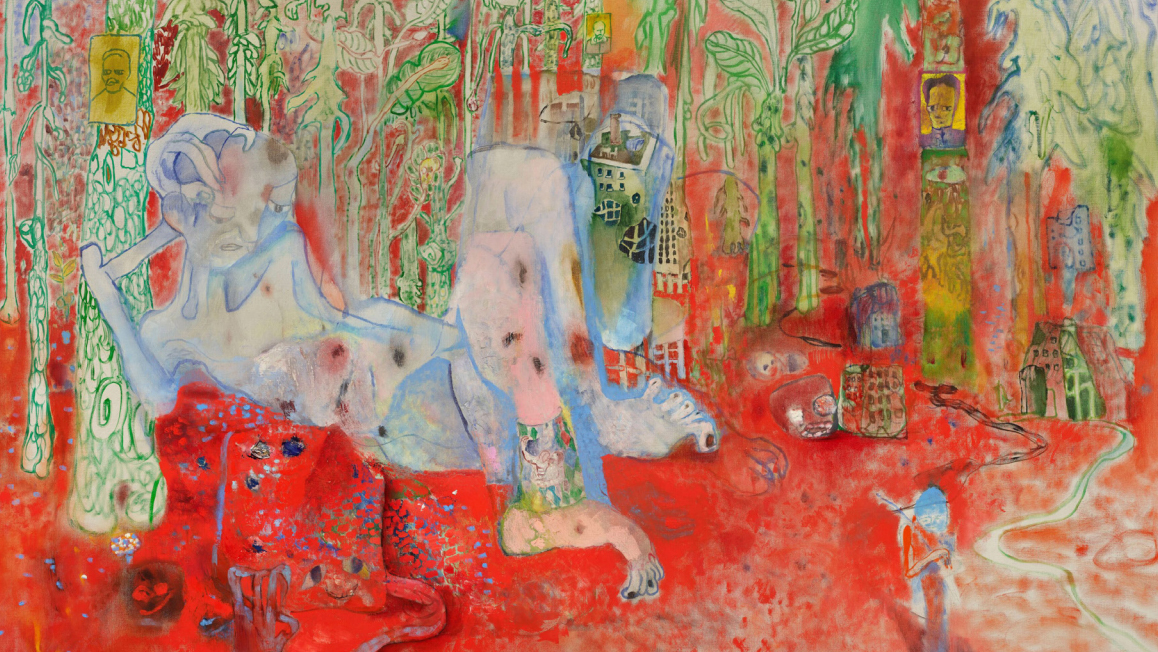
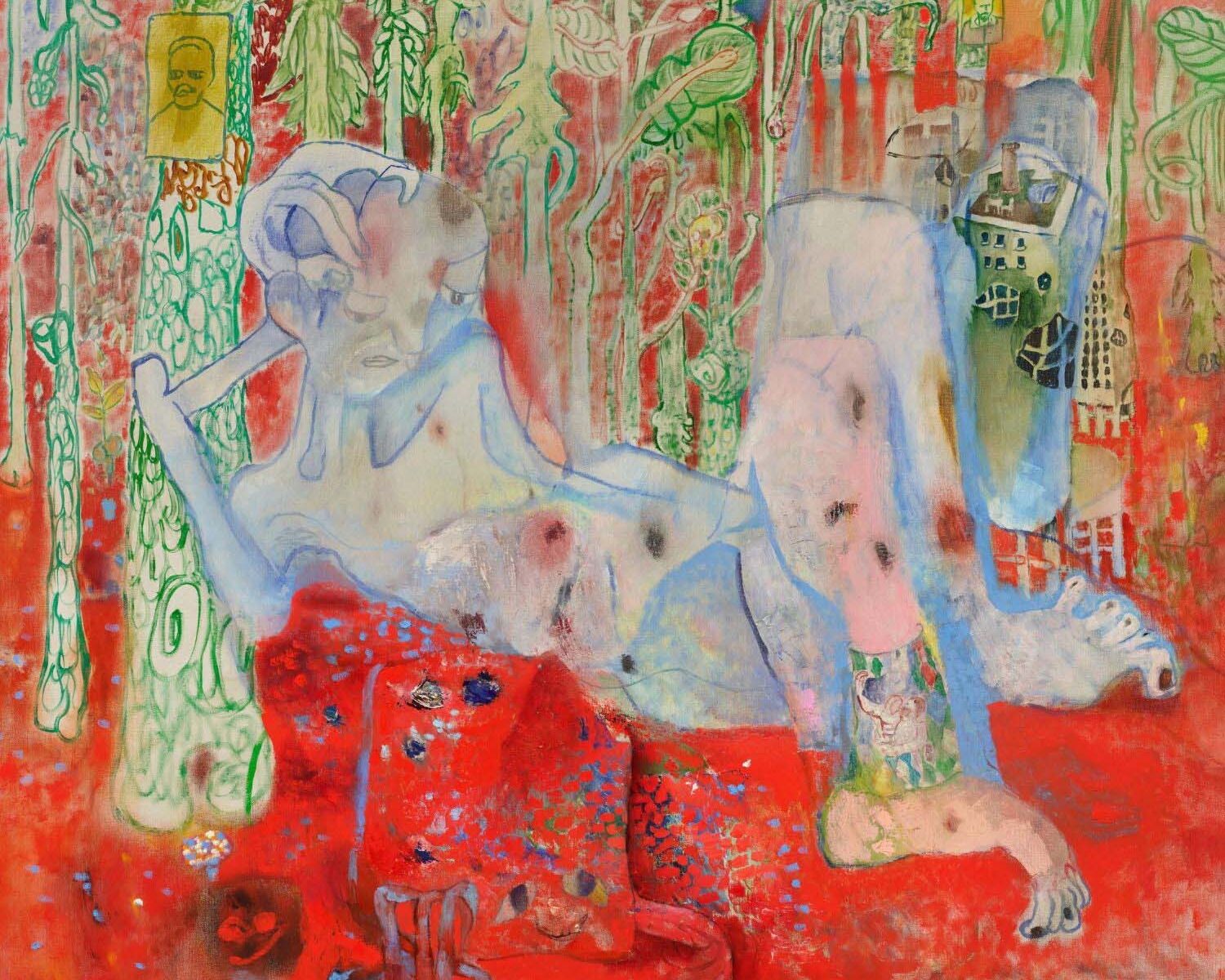
At first glance, Qiu Xiaofei’s paintings appear weightless, washed in vaporous blues and fractured light. They hover between memory and dream, suspended in a luminous haze. But sustained looking alters the experience. The mist does not dissolve — it thickens. What seemed ethereal becomes anatomical. The viewer descends from the sky into the soil, and then further still into the ruptured systems, broken bodies, and unstable architectures that structure human existence. Beneath the atmospheric softness lies something closer to the bowels of what we call life: exposed nerves of paint, skeletal fragments, windows that stare back like watchful eyes. The work stages, narrates, and exposes modes of excavation.
Continue reading “Qiu Xiaofei: The Theater of Wither and Thrive at Hauser & Wirth”
JUDY CHUNG: CAFETERIA AT RAINRAIN
110 Lafayette St, New York, NY 10013, February 13 – March 14, 2026, Wed- Sat, 11 am – 6 pm
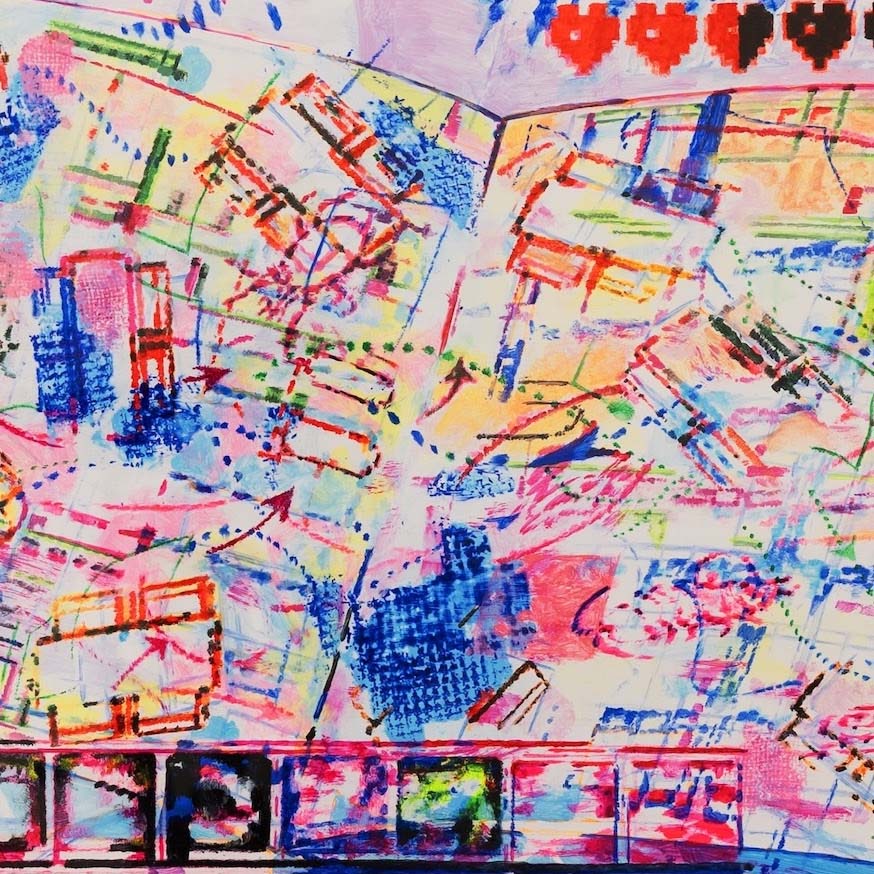
RAINRAIN presents Cafeteria, Judy Chung’s first solo exhibition with the gallery, featuring new paintings centered on the school cafeteria as a charged social microcosm. Exploring how identity is formed and negotiated in public, Chung stages collisions between cute and grotesque, sincerity and artifice. Drawing on anime, Baroque drama, and digital image culture, her psychologically charged figures navigate judgment, belonging, and cultural displacement shaped by her transnational upbringing. Spaghetti recurs as an ambiguous symbol of comfort and abjection. Anchored by Symbiosis (Cafeteria) (2025), the exhibition also includes works such as Spaghetti Lariat and Communion, where social ritual, violence, and performance converge.
Qiu Xiaofei: The Theater of Wither and Thrive at Hauser & Wirth
542 W 22nd St, New York, NY 10011
February 12 – April 18, 2026. Tue – Sat, 10 am to 6 pm
Qiu Xiaofei presents new oil paintings and works on paper inspired by previously unknown family photographs discovered after his father’s passing. From this intimate source, the exhibition expands into a meditation on memory, loss, and the world’s unstable transformations. Informed by Chinese philosophical traditions and Western poets such as Robert Lowell and Emily Dickinson, Qiu creates vivid, dreamlike scenes in which presence and absence unfold across psychological landscapes. Rooted in family history and his hometown of Harbin, his paintings merge abandoned architecture, nature, and imagination. Recurring spiral motifs evoke non-linear time, while layered imagery bridges personal remembrance with broader historical and emotional experience.