Andreas Schulze’s exploration of color in the cool pastures of cake

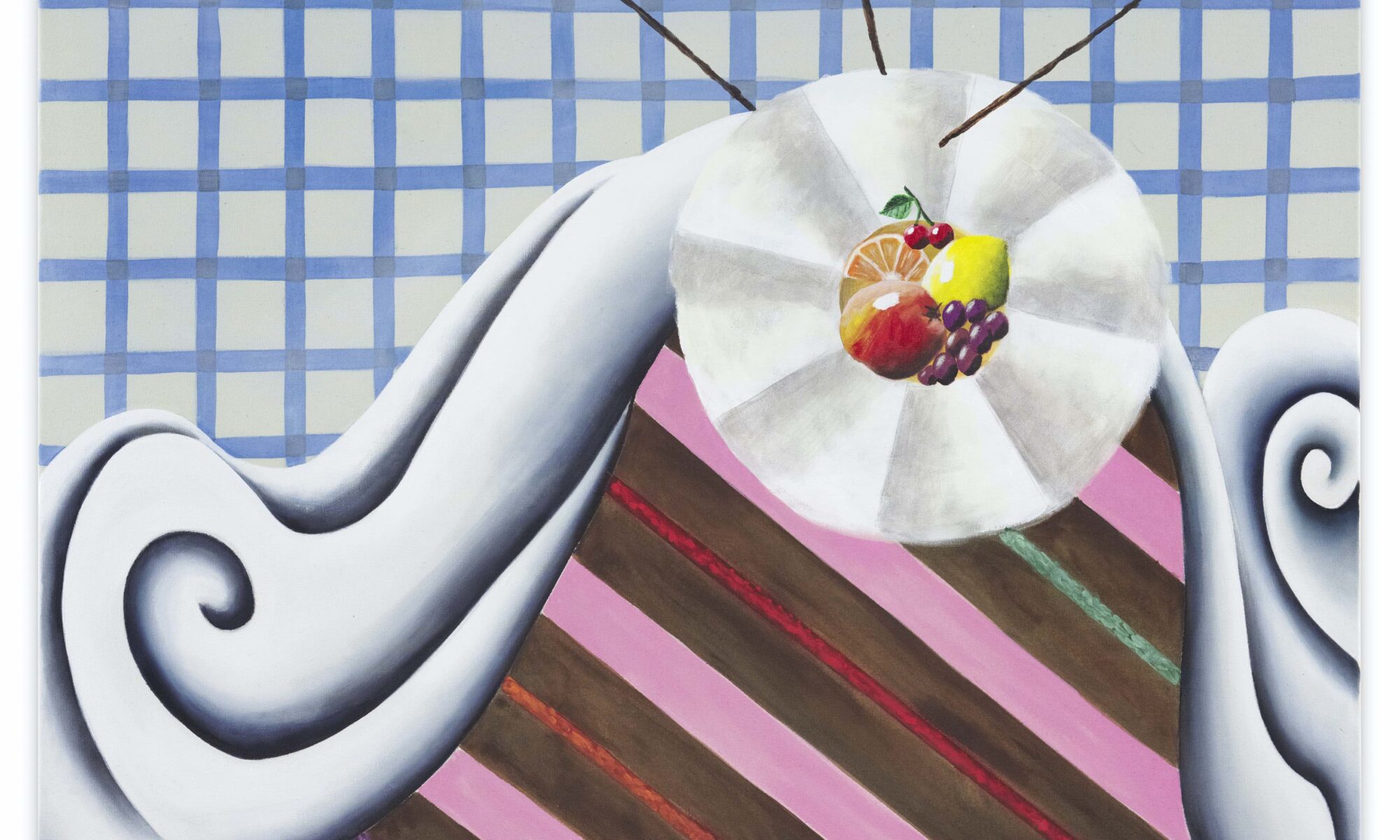
Andreas Schulze, Untitled (Her)

In his show Cake (2026) at Sprüth Magers, New York, Andreas Schulze explores the visual effects of saturated color and geometric form, using cake as the setting for his investigation.

In his paintings, Schulze creates an inner three-dimensional universe, which serves as a bell jar. In his imaginary pastures, Schulze creates surreal interiorscapes, built of geometric shapes and flat backdrops of color-gradient skies, juxtaposed with rounded spheres and spirals painted in three-dimensional perspective, with depth and shadow. The pictorial space he builds gives a stage for him to explore various phenomena, in this case, cake, and he does so with a playful seriousness, experimenting with the basic forms and images that make up cakes: candles, frosting, fruit, sprinkles, and layers.

Continue reading “Andreas Schulze’s exploration of color in the cool pastures of cake”
Hollis Heichemer: Transcension over Anthropocentrism and Breakaway into Landscapes

Hollis Heichemer, Come to the Surface

Hollis Heichemer’s solo exhibition at Hollis Taggart titled “moving in stillness” is a profound investigation of existence and the meaning of the world through the study of landscapes and Mother Nature. Is Humanism an anthropocentric perspective that is ultimately flawed and furnishes humanity with the arrogance to destroy the environment and disregard the principles of empathy? How can we overcome the diseased thought that humans have the right to master or exploit nature for profit? And how has the artist found great peace and liberation through her lifelong study of Mother Nature and her generous nourishment and wisdom? Does Heichemer apply the paint purely as a formal exercise of abstract colors and relationships, or does the paint become the flesh of Mother Nature, by the observation of which we can become and live through the painting as landscapes?

Continue reading “Hollis Heichemer: Transcension over Anthropocentrism and Breakaway into Landscapes”

Strata of Time: a burying and unearthing of new discoveries at Elorea 

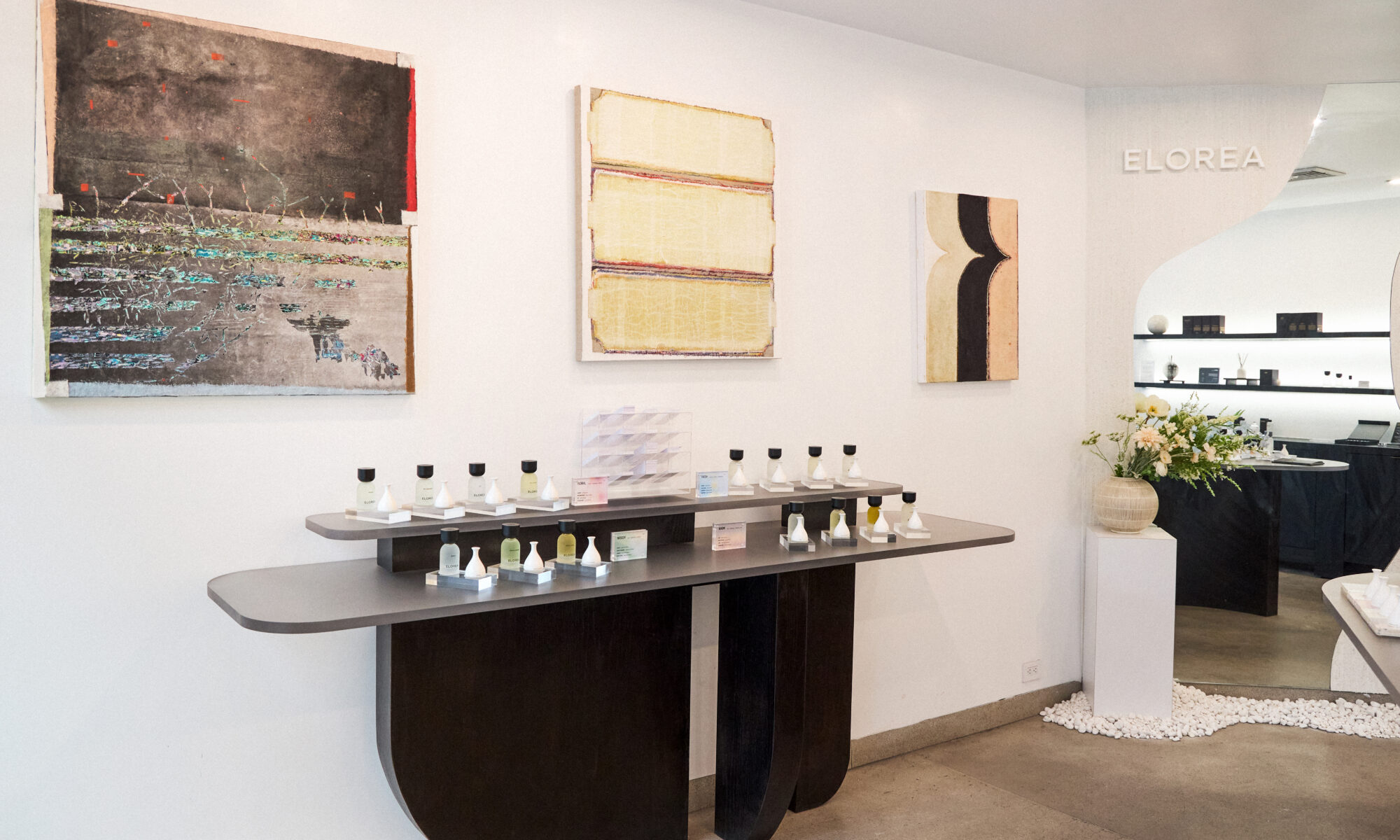
Installation view, Strata of Time

Stepping into the exhibition Strata of Time at Elorea, the focus is not only on the works hanging on the walls but also the fragrances around them as well. With works placed throughout a perfume shop, Herok was given the opportunity to respond to the fragrances surrounding his works. He uses his process of layering to overlay different colors, materials, and experiences of both to mimic the processes the perfume makers used to create their products, as they mix and meld various scents. The works are nicely displayed throughout the space; some works, like Out of Field 5, Out of Field 4, and See You Again, are displayed alongside products, while other walls allow works to stand on their own. This is an interesting exhibition collaboration that grew from studying the products and interviewing store personnel, a process that generated a new body of work carrying as many small details within the surfaces as the fragrances carry within the perfumes. 

Continue reading “Strata of Time: a burying and unearthing of new discoveries at Elorea “

Maria Gil Lucientes: Letting the Materials Misbehave

Maria Gil Lucientes, Circles series backdrop

Maria Gil Lucientes paints in the slim margin where a system starts to come undone. She begins with a constraint, a single color, a periodic screen, a piece of medical gauze, then lets the materials misbehave. In Pareidolia, gauze shifted by air becomes the suggestion of a face. A Spanish-born painter who studied mathematics, physics, and computer science before a decade in tech, Lucientes brings a system-builder’s discipline to a practice that hinges on chance. Here, she reflects on the path from science to painting, the dialogue between control and surprise in her process, and the new Moiré series taking shape in her studio.

Continue reading “Maria Gil Lucientes: Letting the Materials Misbehave”

Still Abstract at 90: American Abstract Artists 

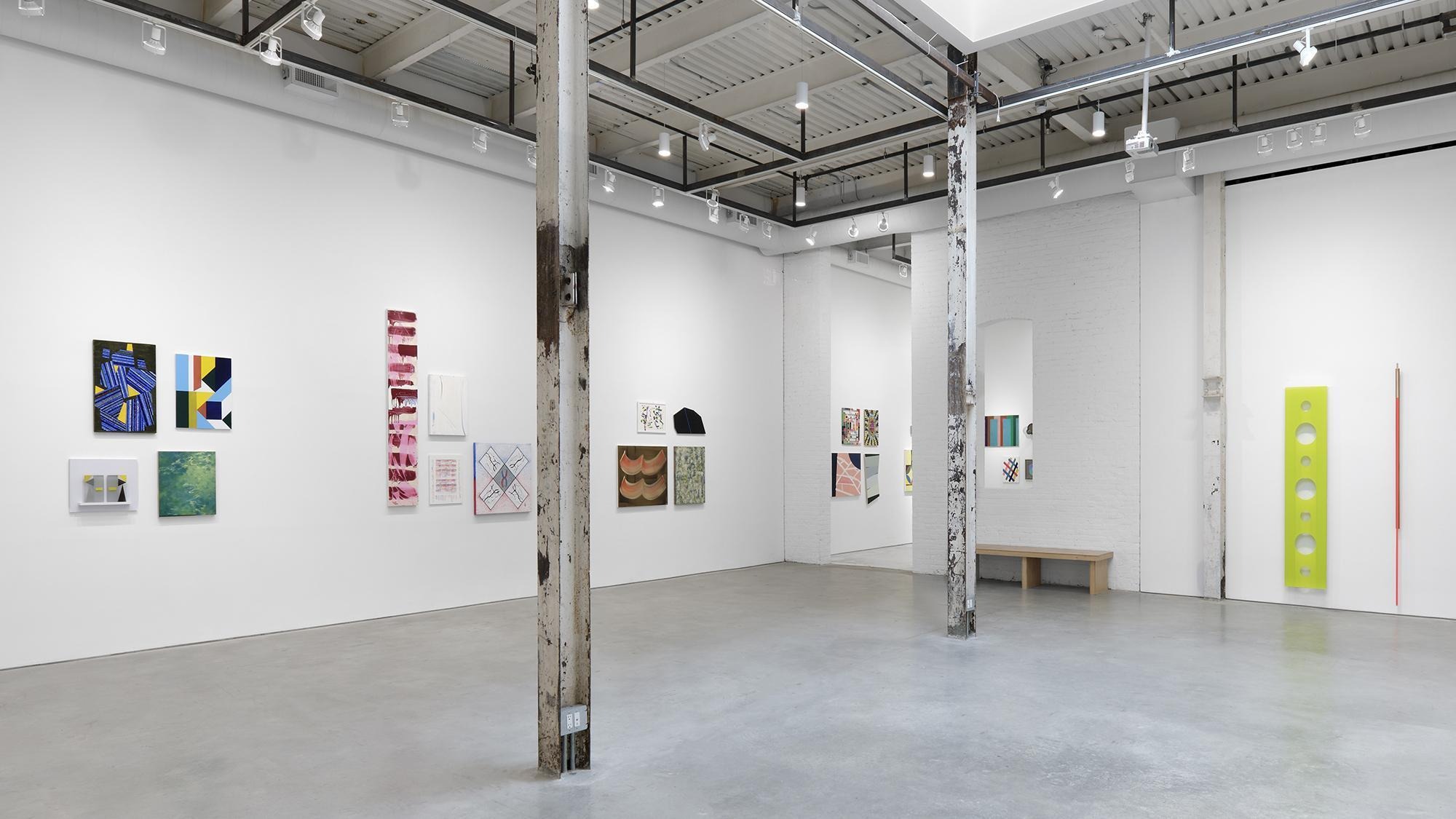
American Abstract Artists turns 90 this year, an unusual achievement for an artist-run group. Its anniversary show, Abstract by Definition: An Index, opened in April at Art Cake in Brooklyn, curated by Saul Ostrow, who brought 88 current members together under a single roof: a curatorial puzzle, an organizational feat, and a long-running argument about what abstraction can be. A companion exhibition at D. Wigmore Fine Art on West 57th Street focuses on the group’s founders and work made between 1936 and 1950 and runs through July. Here, painter Jacob Cartwright, who serves as AAA’s Secretary, reflects on the group’s nomination-only structure, how a show this size actually comes together, and where he wants AAA to go next.

Continue reading “Still Abstract at 90: American Abstract Artists “

Gary Petersen: The Shape of Walking at McKenzie Fine Art

Garden of Music (after Bob Thompson), 2024, acrylic and oil on canvas, 54” x 94” 

For artists working within the realm of geometric abstraction, understanding the weight of art history is vital. The hard-edge lines, a keen understanding of color theory, and structured patterns—all form part of a visual language that has evolved over a century. Artists today, when approaching geometric abstraction, face a unique tension. On the one hand, they inherit the legacy of giants such as Piet Mondrian, Wassily Kandinsky, Josef Albers, and Kazimir Malevich, whose works laid the foundation for what we understand as “geometric art.” On the other hand, the question looms large: How does one continue to make geometric abstraction in 2024?

Continue reading “Gary Petersen: The Shape of Walking at McKenzie Fine Art”