Atay Ilgun and Jonathan Carmel on ./spiral at Fondazione Aversano
Atay Ilgun, Otherness

How does a field barely a decade old start to have a past? ./spiral takes up that question, gathering eleven artists who were present at the early days of AI, code, and blockchain art and asking each to pick up a formative work, tool, or loose end and carry it forward from where they are now. For co-curator Atay Ilgun, a London-based artist and technologist, the burst of new tools between 2017 and 2022 has only lately settled far enough into the past to be seen clearly. His fellow curator, SuperRare’s Jonathan Carmel, describes the return as a way of moving forward by first turning around. The works cross from screen into matter along the way, Helena Sarin’s ceramics drawing AI imagery toward ancient clay, Robbie Barrat’s Plexiglas prints nudging it back toward the glow of a monitor. Presented by SuperRare at Justin Aversano’s Fondazione Aversano in New York, September 3–10. Here, Ilgun and Carmel discuss how the show came together, the move from screen to object, and the histories their artists carry forward.

Continue reading “Atay Ilgun and Jonathan Carmel on ./spiral at Fondazione Aversano”

Dakota Gearhart: All Matter Is Alive

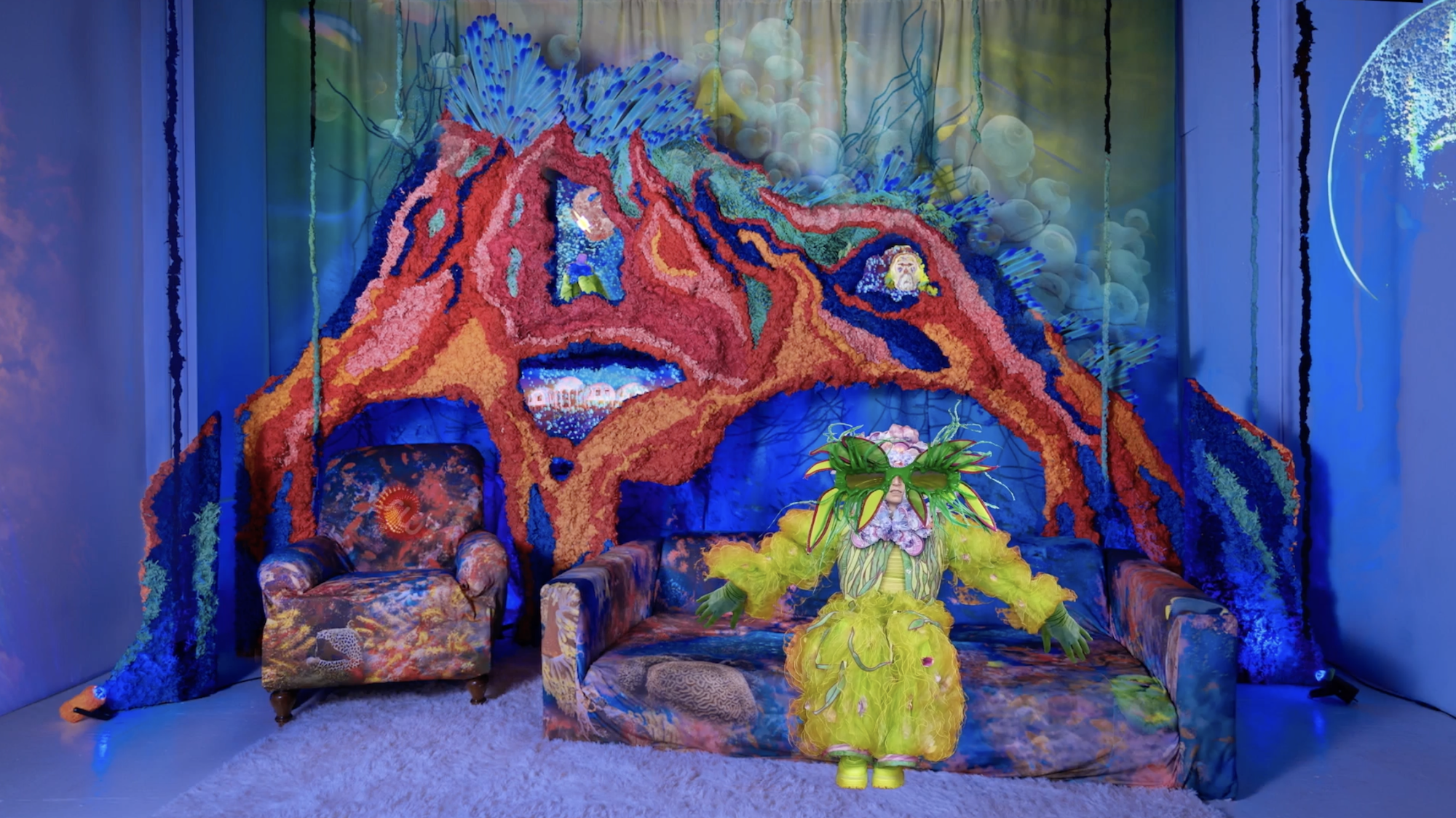
Dakota Gearhart grew up on a Florida coastline where algae blooms, sewage outflows, and bikini contests share the same shoreline, and her work has been carrying that mix of beauty, decay, and amusement into a much bigger frame ever since. Across animation, sculpture, performance, and sound, she builds video worlds where pixels sing, electricity becomes sentient, and the nonhuman shows up on equal footing with the rest of the cast. Her ongoing animated series Life Touching Life is hosted by Tiffany, a half-algae, half-woman figure who guides viewers through episodes shaped with collaborators — poets, scientists, activists, caretakers — whose lives already reflect the worldview the work is reaching toward. It’s funny, strange, and serious in roughly equal measure, which turns out to be the right register for the worlds it stages.

Continue reading “Dakota Gearhart: All Matter Is Alive”

Carol Bouyoucos: Eden After Us

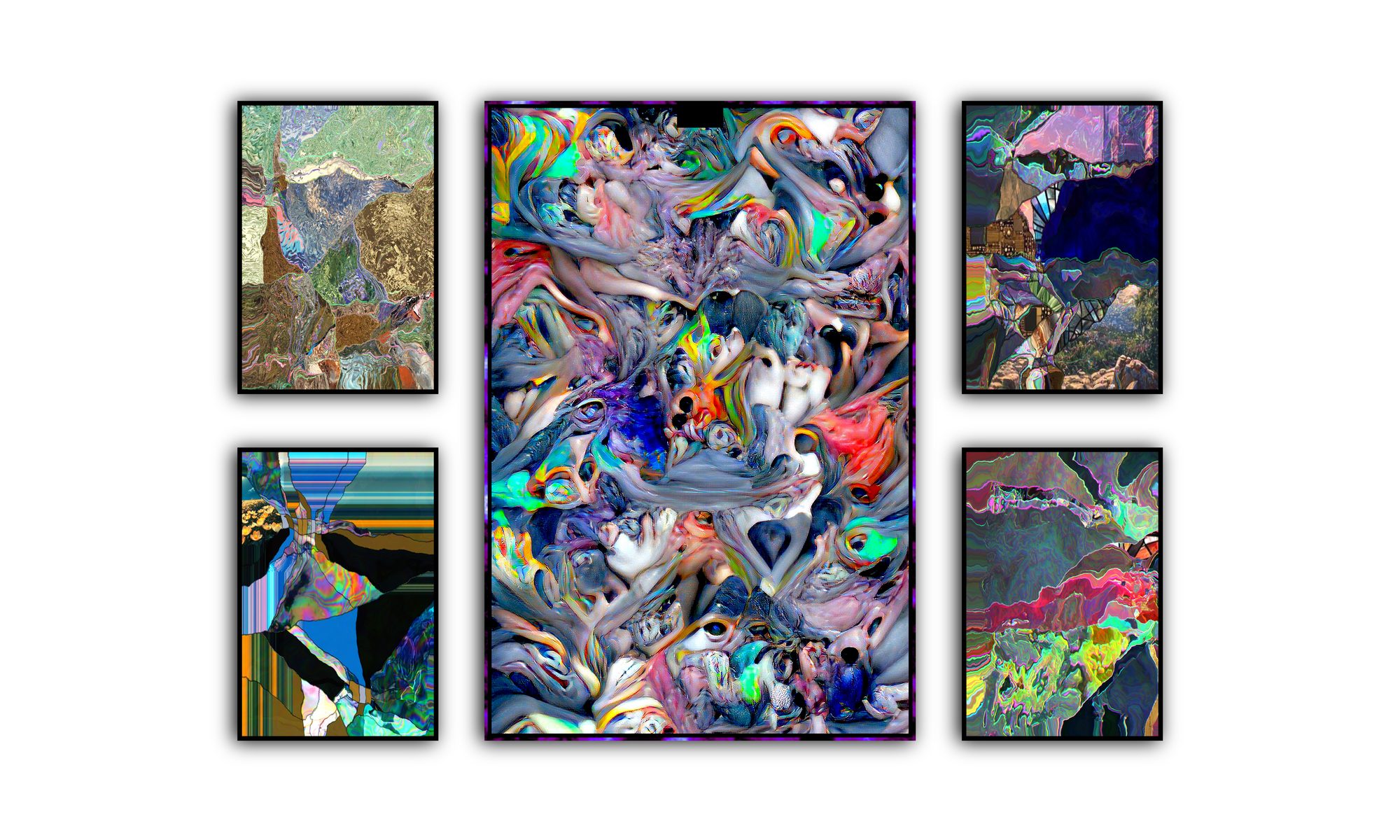
Carol Bouyoucos

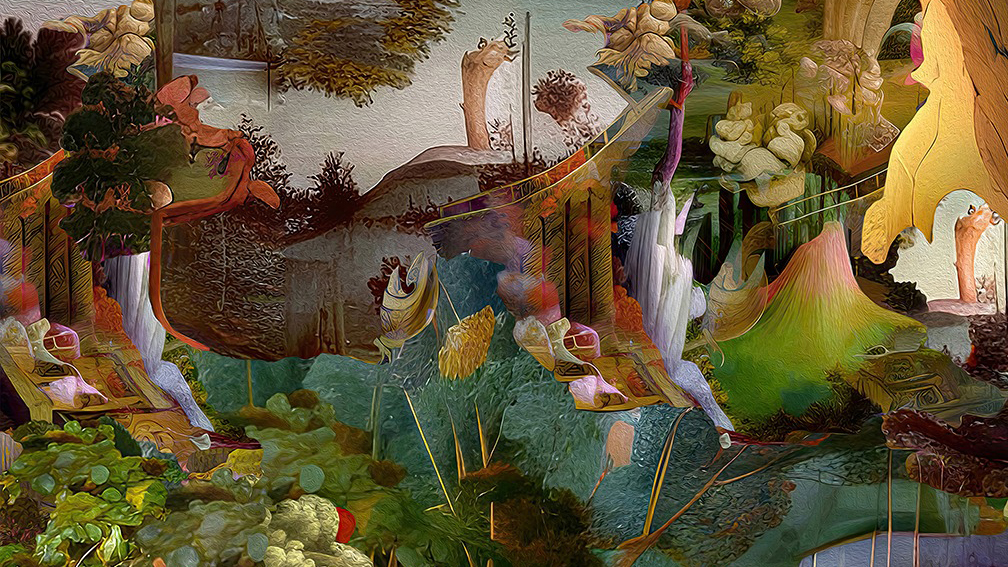
Trained as a photographer, Carol Bouyoucos has spent the last several years pushing past the camera’s claims to truth—folding her own images into AI systems, digital layering, and the slow accidents of computational misreading. The landscapes that emerge read as propositions about what nature might become once human authorship loosens its grip.Her recent work, increasingly ambitious in scale and mythic in register, marks a notable departure from the botanical and landscape series that established her vocabulary. In this conversation, she speaks about the terrain that shaped her eye, the painters and visionaries whose company she keeps, and the strange logic of making images in a moment when both ecosystems and pictures behave less and less predictably. What follows is a portrait of an artist thinking out loud about control, instability, and the worlds that emerge when she relinquishes both.

Continue reading “Carol Bouyoucos: Eden After Us”

Still Abstract at 90: American Abstract Artists 

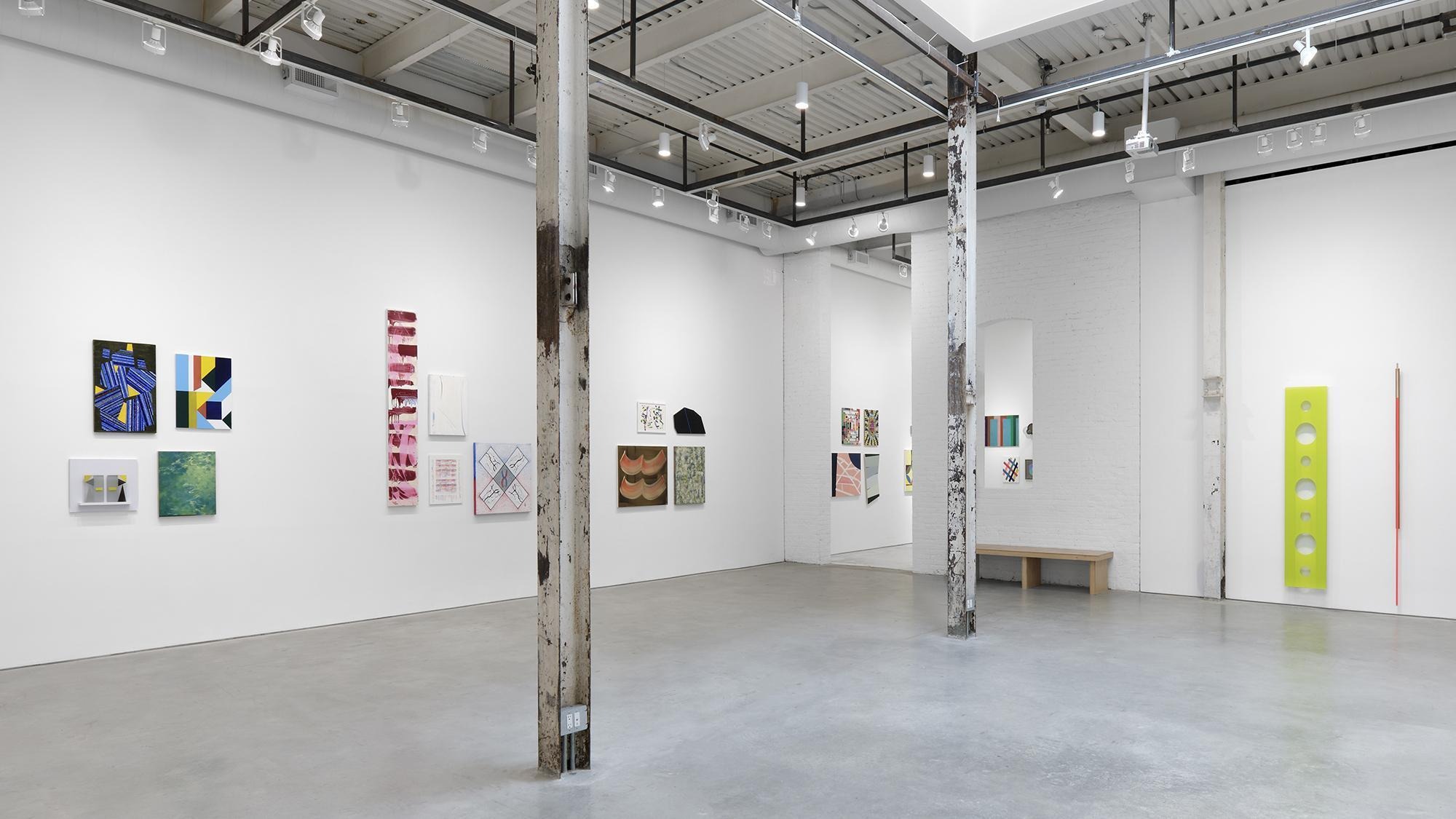
American Abstract Artists turns 90 this year, an unusual achievement for an artist-run group. Its anniversary show, Abstract by Definition: An Index, opened in April at Art Cake in Brooklyn, curated by Saul Ostrow, who brought 88 current members together under a single roof: a curatorial puzzle, an organizational feat, and a long-running argument about what abstraction can be. A companion exhibition at D. Wigmore Fine Art on West 57th Street focuses on the group’s founders and work made between 1936 and 1950 and runs through July. Here, painter Jacob Cartwright, who serves as AAA’s Secretary, reflects on the group’s nomination-only structure, how a show this size actually comes together, and where he wants AAA to go next.

Continue reading “Still Abstract at 90: American Abstract Artists “

How Malta Biennale 2026 Reimagines Site-Specificity

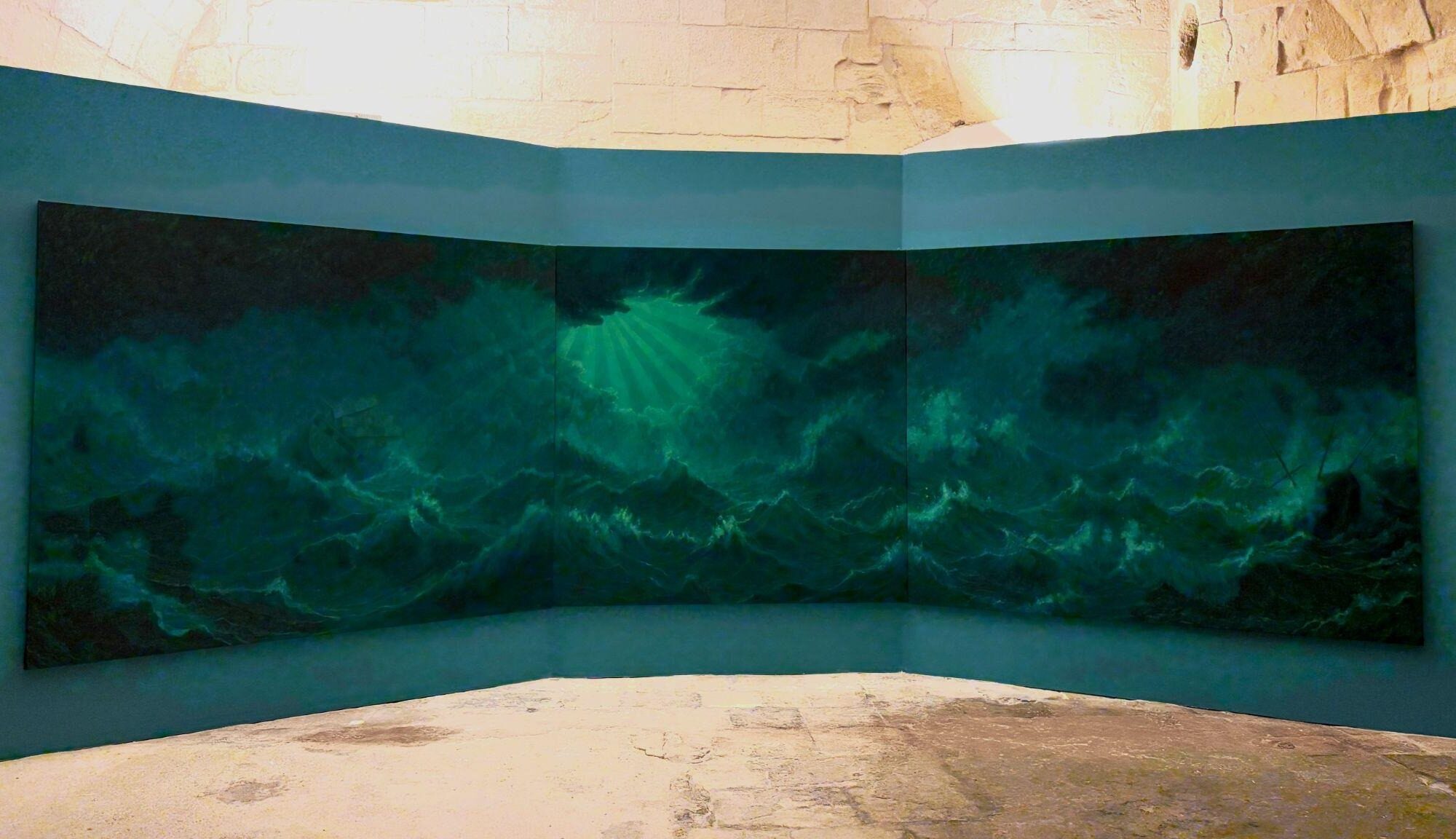
One is never prepared for the Maltese archipelago and its vertiginous dichotomy of antiquity and modernity; an exhilarating compound of ethnicities, languages, and cultures. Though one might consider it diminutive, during the three-day press preview, I traversed the main island, Malta, and its quieter, more pastoral and bucolic sister island, Gozo, in a flurry of taxis, ferries, and buses. (Comino, a nature lover’s sanctuary, remains largely uninhabited.) Malta occupies a distinctly liminal position within the Mediterranean world: a central island shaped across centuries by exchanges among Europe, North Africa, and the Near East. Situated a mere 60 miles south of Sicily and roughly an hour’s flight from Tunis, it has long functioned as a site of passage, encounter, and cultural layering—a geographic palimpsest upon which successive civilizations have inscribed themselves again and again.

Continue reading “How Malta Biennale 2026 Reimagines Site-Specificity”