Aging is a paradox. Wisdom and clarity of purpose increase, while deterioration and physical impairments begin to ravage the body. The exhibition and panel, The Prime of Your Life, at Marc Straus Gallery, exemplifies that dichotomy, bringing to bear aging female artists’ dilemmas while celebrating their enduring passion, talent, and productivity.
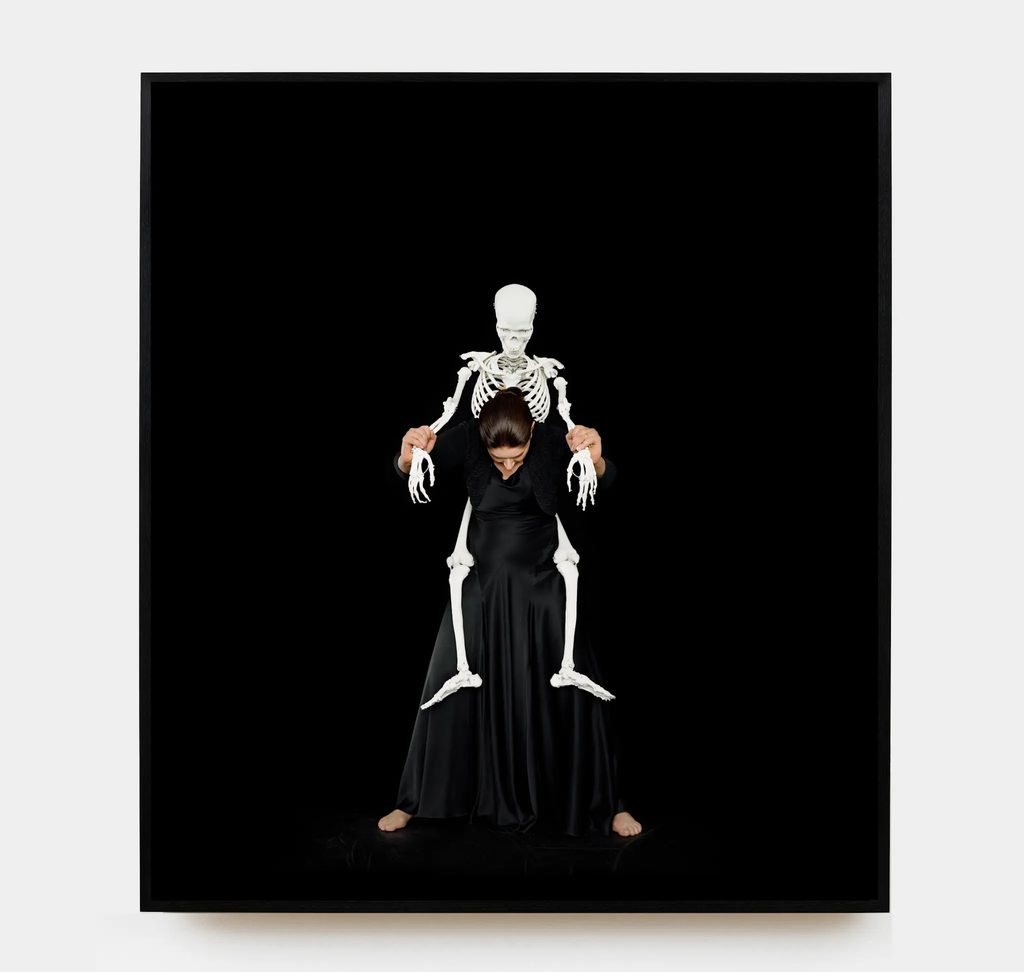
Grand Street on Manhattan’s Lower East Side is chaotic, filled with grime, graffiti, noise, and groups of young people hanging out. Walking through the massive glass door of the gallery leads to a peaceful, quiet, light-filled room with white walls and art. The exhibition, The Prime of Your Life, includes eighteen female artists ages seventy-five or older. An introduction and symbol of the exhibition is an enormous photo of Marina Abramovic in a long and billowing black dress, head bowed, face obscured, carrying a skeleton on her neck. The skeleton, whose wrists she holds, appears burdensome, yet is compelling, buoyant, and almost comical.
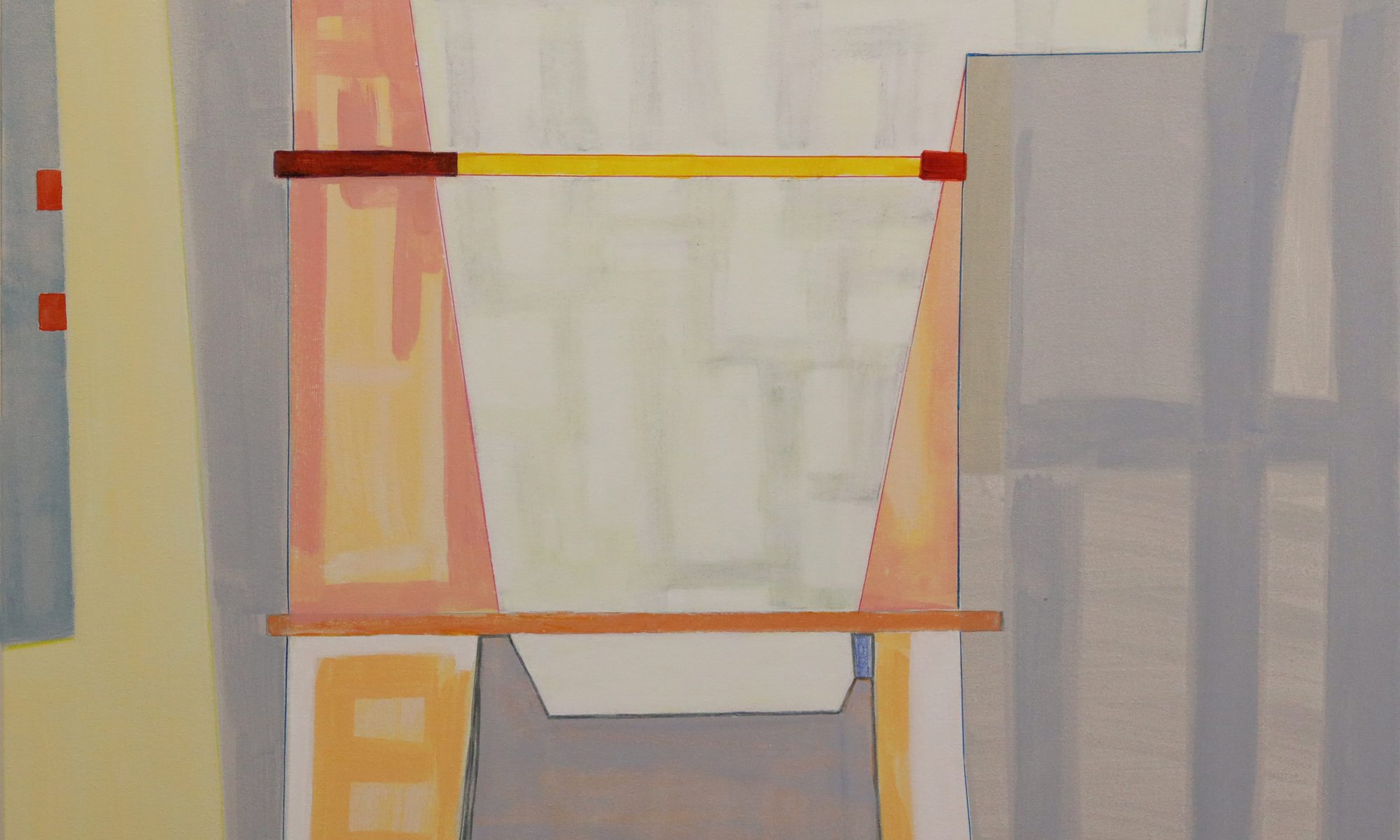
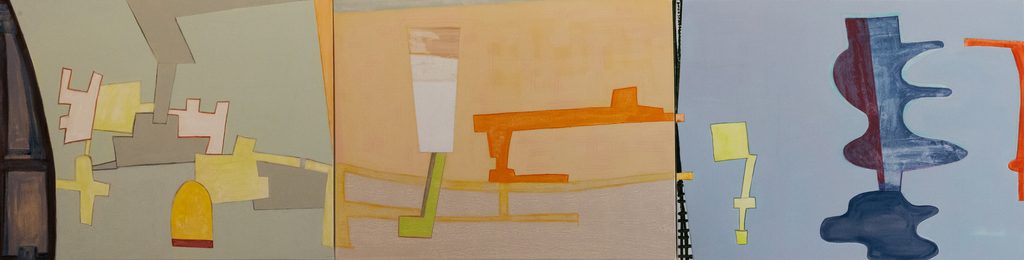
Not a retrospective, the exhibition displays the artists’ recent work. These artists dedicated decades to making art, mentoring younger artists, and continuing on despite inevitable infirmities. Francis Barth, an academic, painter, and filmmaker, states, “Now that I have had my whole left side replaced by mechanical parts, I am limited.” She works in triptychs, an accommodation, as she can no longer “make fourteen foot paintings”. Barth’s harmonious Summer Triptych utilizes geometric abstraction while retaining a softness, humor, and accessibility. Initially, space appears flat on the picture plane. After a longer gaze, space becomes deep, open, and luminous, suggesting an aerial landscape.
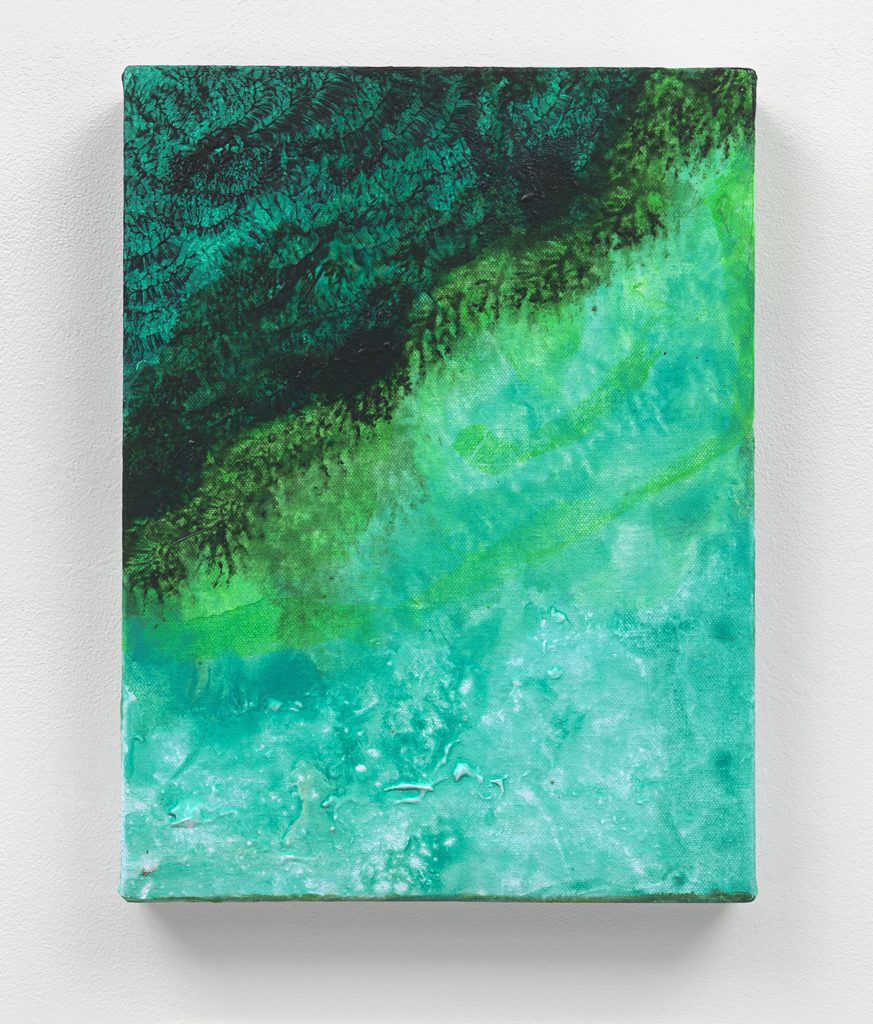
Mary Hielmann’s small lyrical painting, Mecox, is an abstracted image of the ebbing, disappearing sea near her home. In luscious and luminous greens, retrospectively it reads as loss, given her recent death.
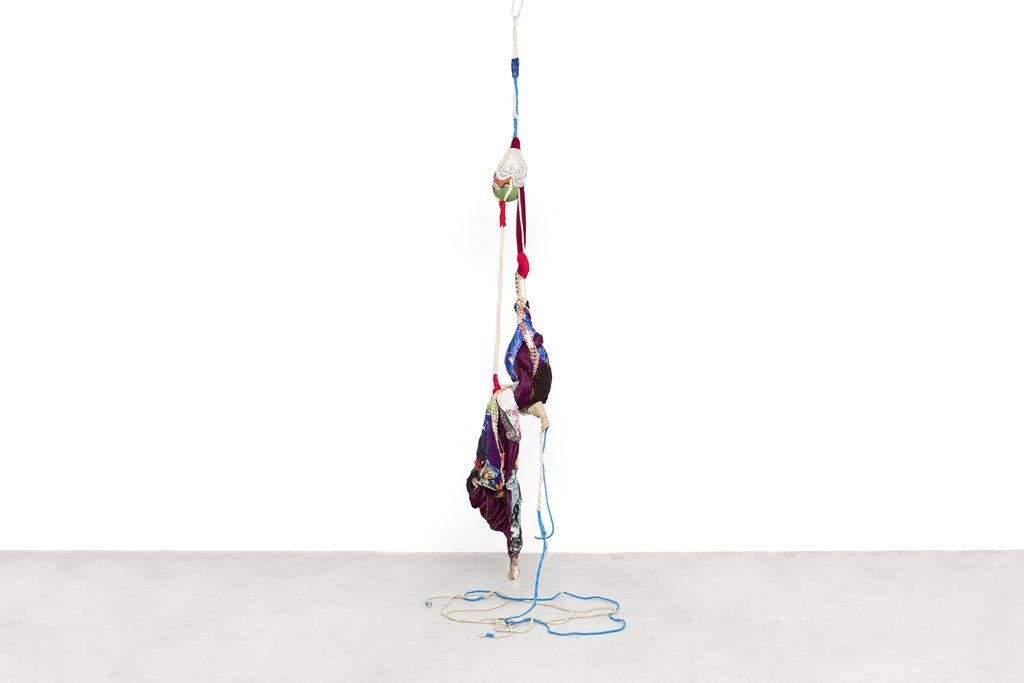
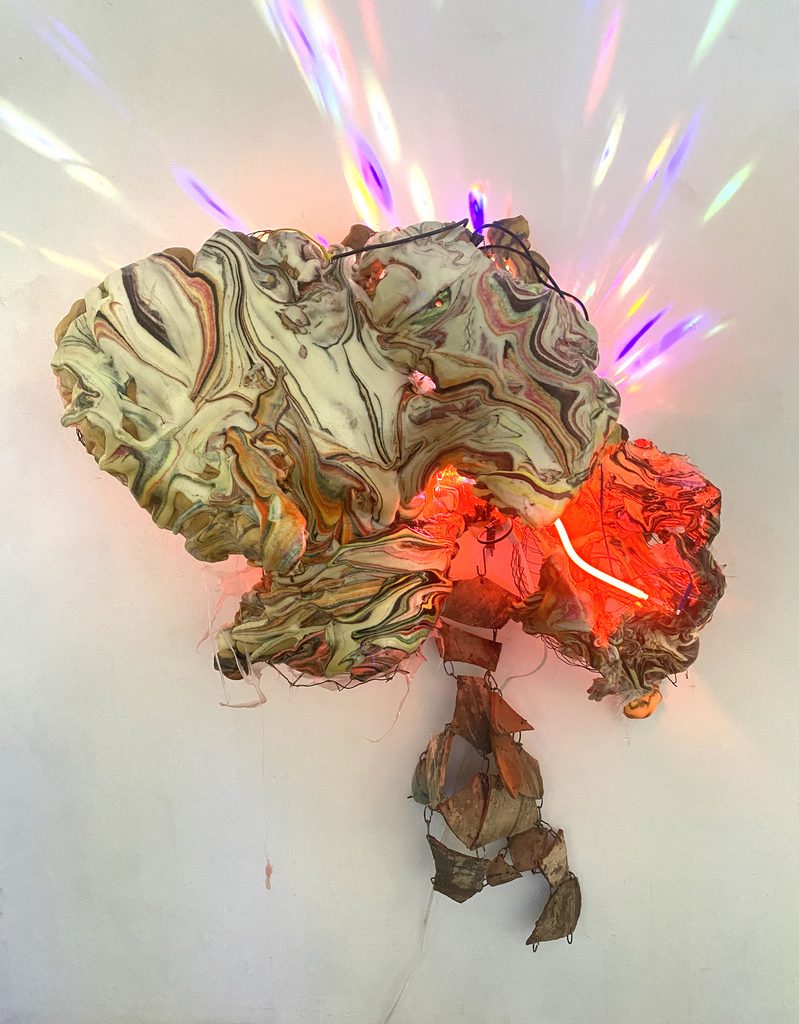
Sonia Gomes’s hanging sculpture, composed of fabric, rope, and beads encased in sagging sacks, references her Brazilian roots, while convincingly demonstrating the eroding effects of age on flesh. Fabric is worn close to the body’s skin. The mixture of materials, shapes, and color brings a corporeality weight to the work. Gomes was born in a town considered the birthplace of Brazil’s textile industry. Gomes’ sculpture implies sagging, aging flesh. Judy Pfaff’s Cockatrice, however, is an imposing installation of steel and plastic, aggressively thrusting forth into the room. We are confronted with the body’s viscera. A younger artist recognized Pfaff as one of the originators of installation art. She was a MacArthur Fellow in 2004
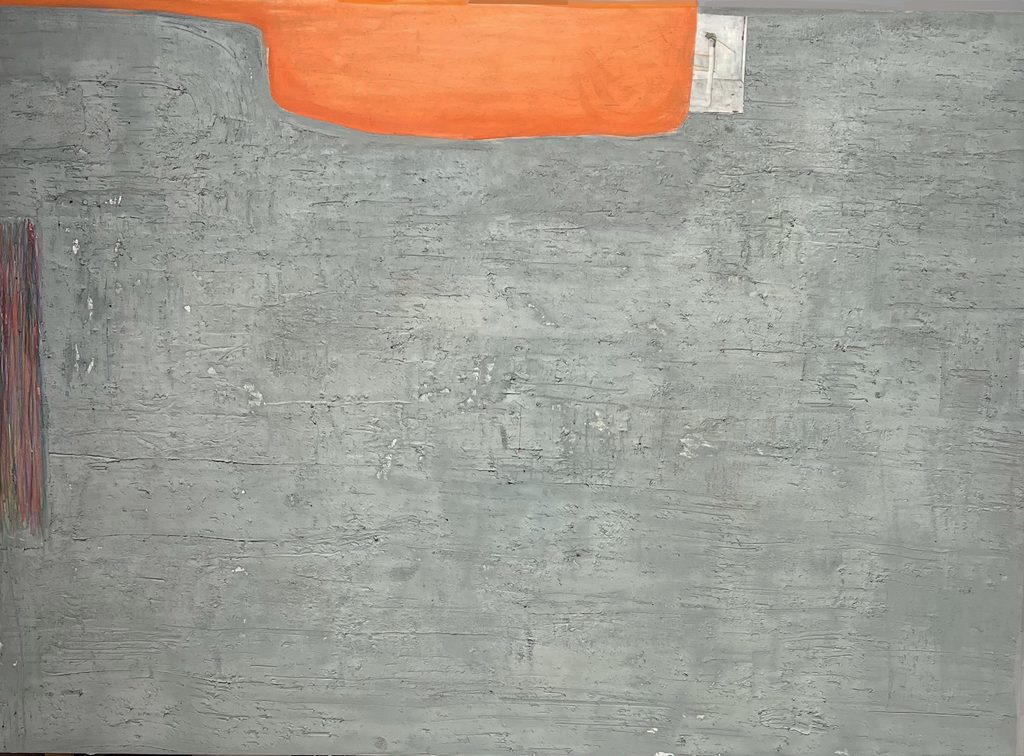
Brenda Goodman conveys her roots in industrial Detroit and the Cass Corridor movement, demonstrated by the thick impasto areas of cement-like grey of It Can Be Done. The industrial nature of the oil painting is accompanied by a passage on the left with thin, soft stripes, evidence of fragile humanity, much in the way Agnes Martin’s pencil lines on her huge gridded paintings express an intimate touch.
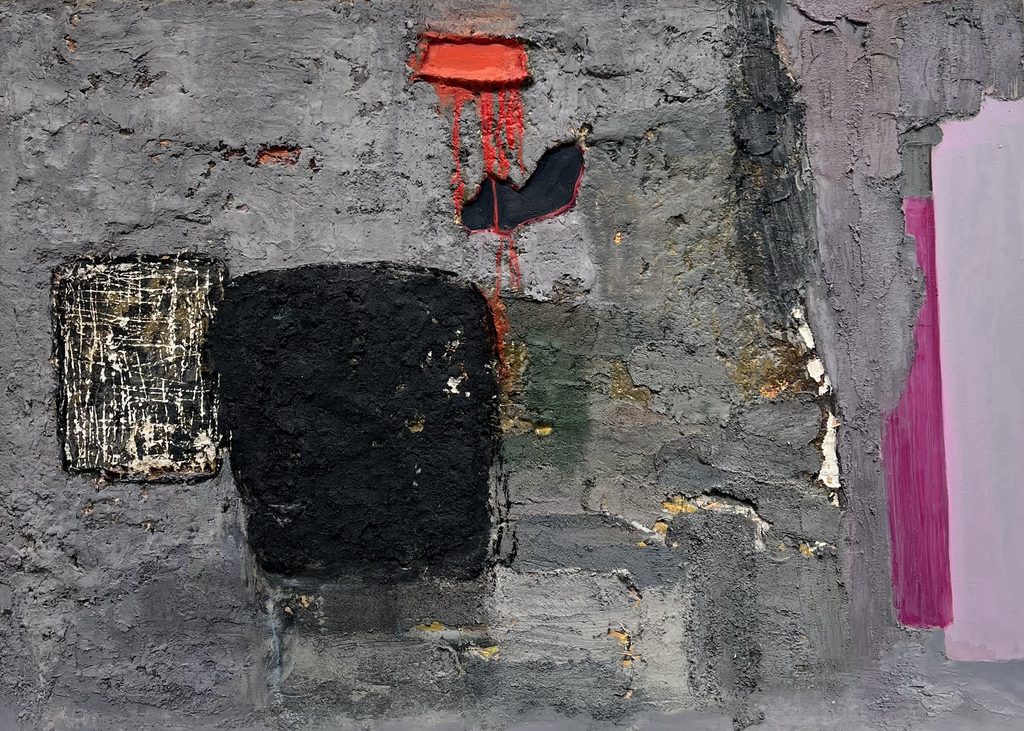
Goodman’s Digging Deep, also predominantly cement-grey, has an eerie sense of excavation, as if someone’s utensils spooned off portions of the wet cement to reveal red dripping below. In the right corner, pale purple and lavender introduce a feeling of impermanence and fragility in this seemingly indestructible painting.
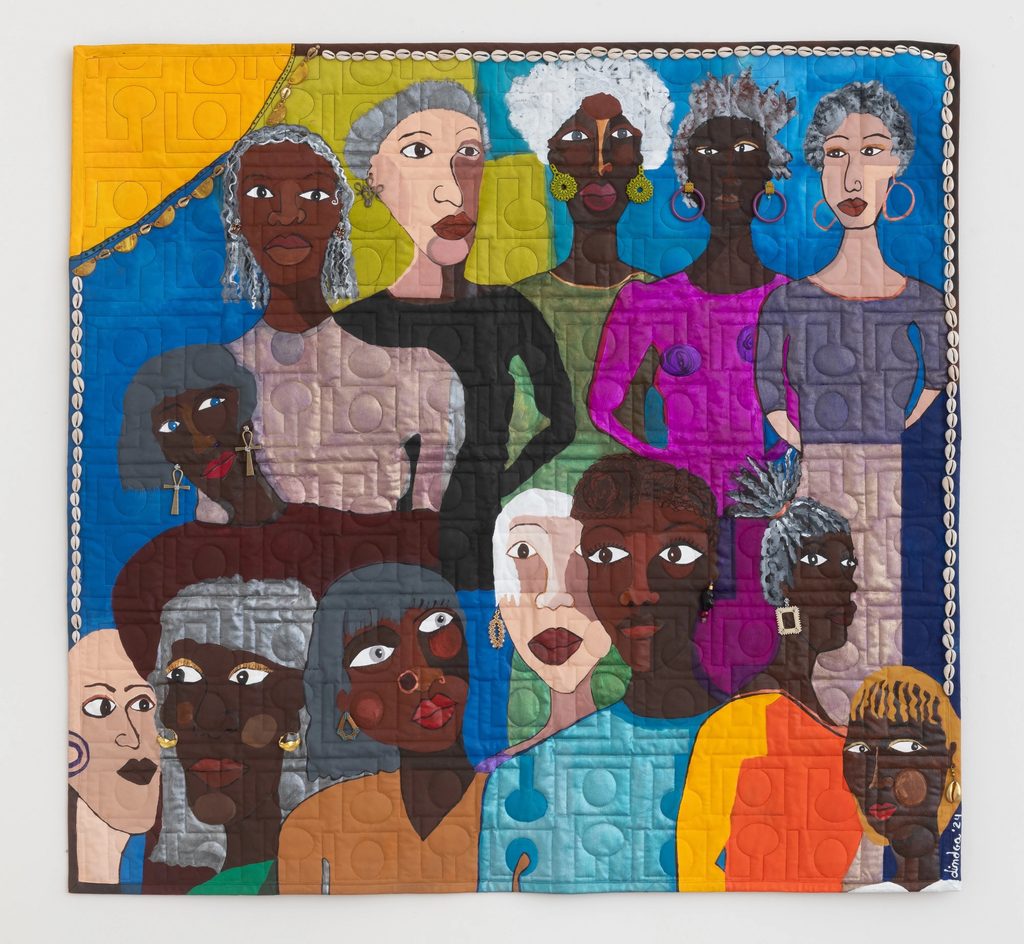
Dandga McCannon’s quilt, The Brown Sisters, contains fabric in hues of brown. These mostly silver-haired women peer out, adorned in earrings, united on a quilt framed with cowrie shells. In 1971, McCannon co-founded Where We Are At: Black Women Artists to create space for Black women artists in the art world. The quilt “reads as portraiture, as a congregation, a company of elders with no intention of going quietly,” says Maria Paula Suarez, gallery director.
The day after the exhibition opened, Jeanne Silverthorn, Brenda Goodman, and Francis Barth convened for a panel discussion. Asked to reflect on the longevity of their careers, both Silverthorn and Barth recognized a consistent strand of DNA running throughout their work.
Silverthorn, whose work is often sculpture of her own body, described how aging brought clarity to her practice, “With age the body starts to show its skeleton, your work…you see very, very clearly. Its skeleton is super clear.” Goodman offered a contrasting perspective. She explained, ” My work… is a visual diary; everything changes. I am motivated by learning and risking and finding new adventures in the work.”
All the panelists, two in their eighties, acknowledged impending mortality. Abramovic’s photos explicitly evoke death. Death is less explicit in the panelists’ work. Nonetheless, each discussed limited time, the large accumulation of their work, and the burden it will leave for others. Goodman states, “I have friends who’d love my work, but I work large and their walls are full”. No one expressed a clear path for the disbursement of their estate.
Although two overtly political works felt somewhat jarring, the audience—two-thirds mature women—applauded the exhibition’s poignant moments and its frank conversations about art, age, and mortality. In a moment of levity, Marc Straus, gallery senior director, noted that the choice of female artists was due partially to the remaining demographic of established artists over seventy-five. By selecting contemporary pieces of the artists’ work, this thrilling exhibition is evidence of their endurance, passion, and need to create. Despite age and obstacles, the panel and exhibition as a whole are a testament to creation and resilience.
The Prime of Your Life at Marc Straus runs through October 31st, 2026
About the Writer: Gail Winbury’s abstract paintings and collages are exhibited throughout the United States, Europe, and Mexico and are held in permanent collections in those regions. Winbury holds an MFA from the Massachusetts College of Art and Design and a doctorate in psychology. Her practice draws on psychological inquiry and often incorporates poetry. Her career combines exhibitions, lecturing, and international residencies. Recent solo exhibitions include the Wilson Museum (2023), Kean University (2024), and Newark Academy (2026). Her work has been featured in Artscope, Rejoinder Journal, and The Brooklyn Review. She has lectured on Abstract Art and Aging and Women in Abstract Expressionism, among other topics. Winbury’s residencies include School of Visual Arts in Manhattan and the Bau Foundation in Italy, among other programs. A 2017 artist grant supported travel and studio work in Israel. She is represented by Carter Burden Gallery in Manhattan and works from a studio at Mana Contemporary in Jersey City. @gwinburystudio www.gwinburypainting.com
Featured Image: Francis Barth, Bridging, 2024, Acrylic on canvas, 30” x 40”, photo courtesy of Marc Straus Gallery