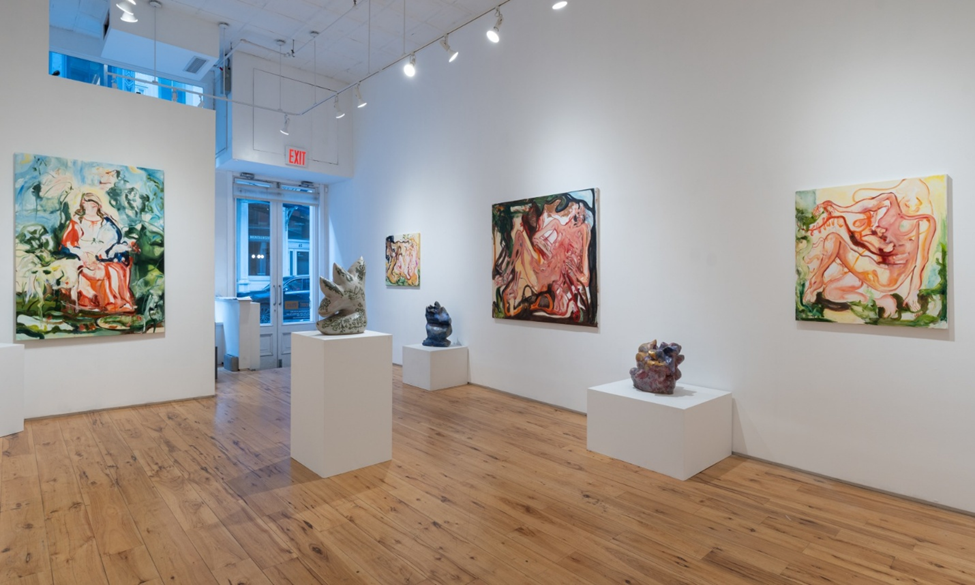
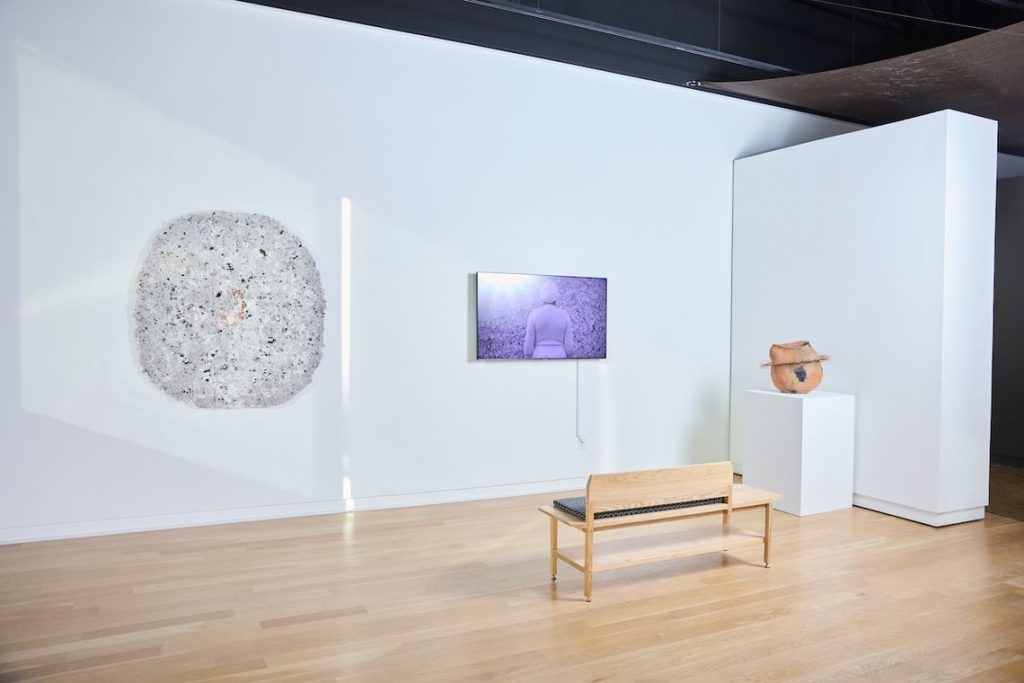
Jorge K. Cruz & Elizabeth Insogna, Divine Myth– Faith and Flesh, installation view, photo courtesy of the gallery
In the quiet hum of Freight + Volume, myth breathes anew — through clay, through oil, through the occulted pulse of memory and transformation. Elizabeth Insogna’s luminous ceramics rise from ionic pedestals like ancient offerings, while Jorge K. Cruz’s visceral canvases create a kaleidoscopic backsplash, drawing viewers into a dialogue between the sacred and the subversive.
Installation view. Photo courtesy of Martina Tanga
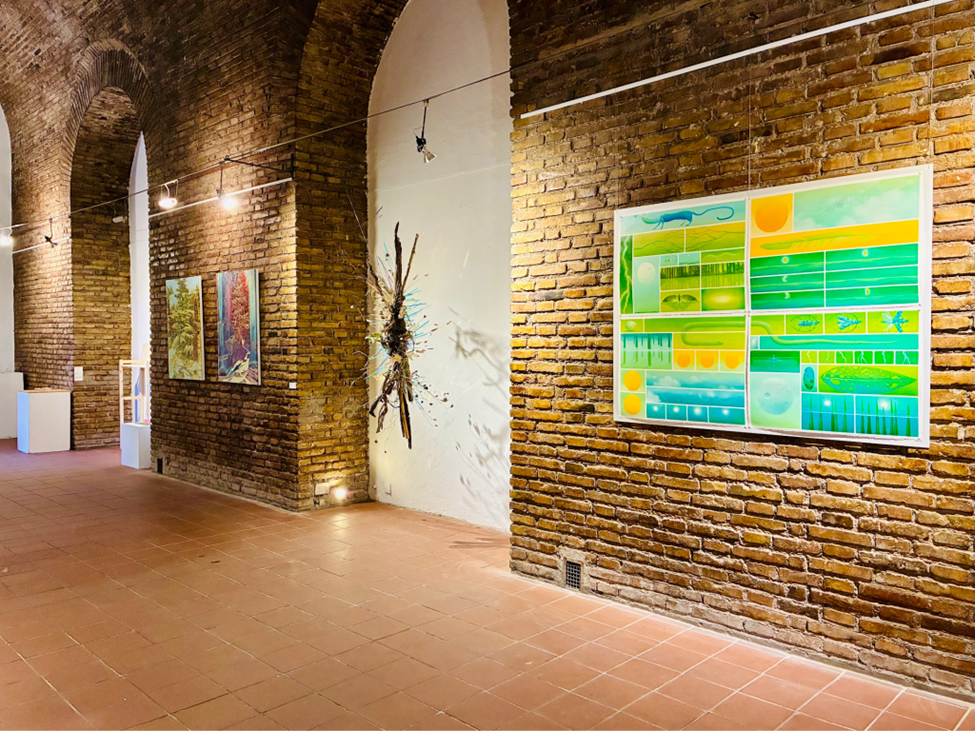
Curator Martina Tanga had been reflecting on the ideas behind Learning With Trees – Artists for Climate and Environmental Solutions long before the exhibition took shape. In 2022, she read Ben Rawlence’s The Treeline, a book tracing how the Boreal forest is shifting under the impact of climate change. That reading sparked the idea that trees could serve as a highly accessible and disarmingly effective way to approach conversations about climate change.
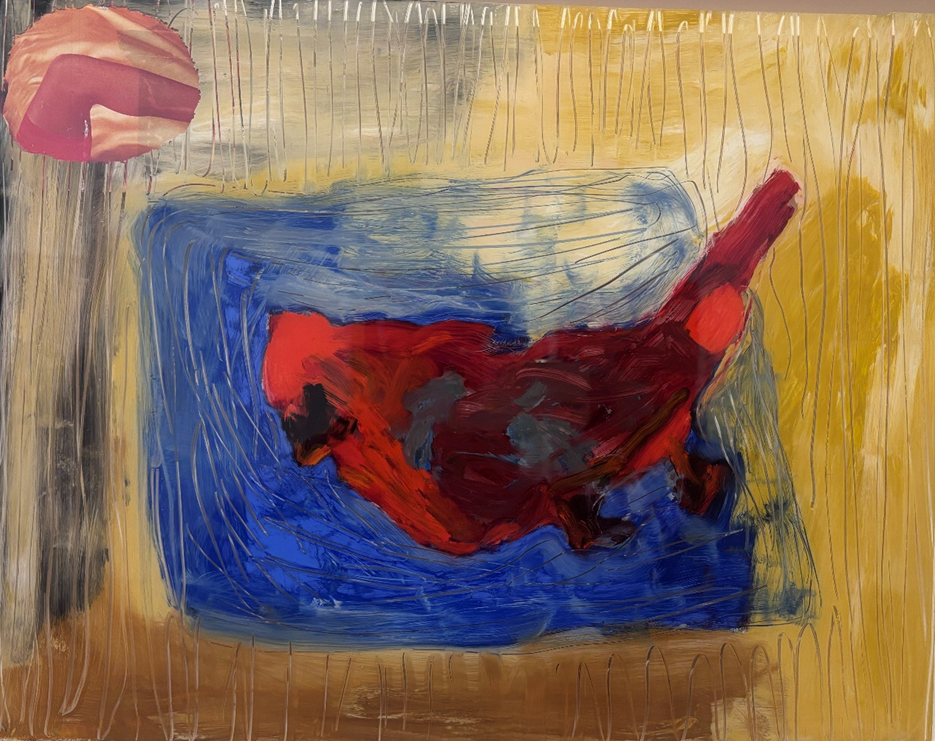
Beverly Semmes, Red Bird on Blue, 2017, 16” x 20”, oil and magazine page collage on glass
I’m deeply grateful for Boston’s university galleries—they consistently fill the gaps left by the local commercial gallery scene, which has been diluted, in my opinion, by the pressure to cover rent. These institutions reliably bring high-quality, thoughtful art and ideas to the city. A short but not exhaustive list would include the Rose Art Museum at Brandeis, the Aidekman Arts Center at Tufts, MIT’s List Visual Arts Center, and the Harvard Art Museums.
Installation photograph of 11:11, at Tappeto Volante
A few weeks ago, Marta Lee visited my studio. A few days after that visit, she texted me:
“Hey, what is the deal with that long wood piece of molding that was kind of to the left of where u were sitting? It’s gorgeous”
Marta was referring to an 8-foot-long piece of molding I’ve used as a mahlstick (also spelled ‘maulstick’) since 2018. I probably found it in the trash in my first studio building on Grand Street in Bushwick, and I’ve never thought of it beyond its use as an object to balance my arm on while painting. But Marta was right – it is sort of gorgeous. It’s got a spiraling geometric pattern carved into it, and paint streaks where I swipe it while lifting brushes. This realization led to another – just how unique Marta’s way of seeing the world really is.
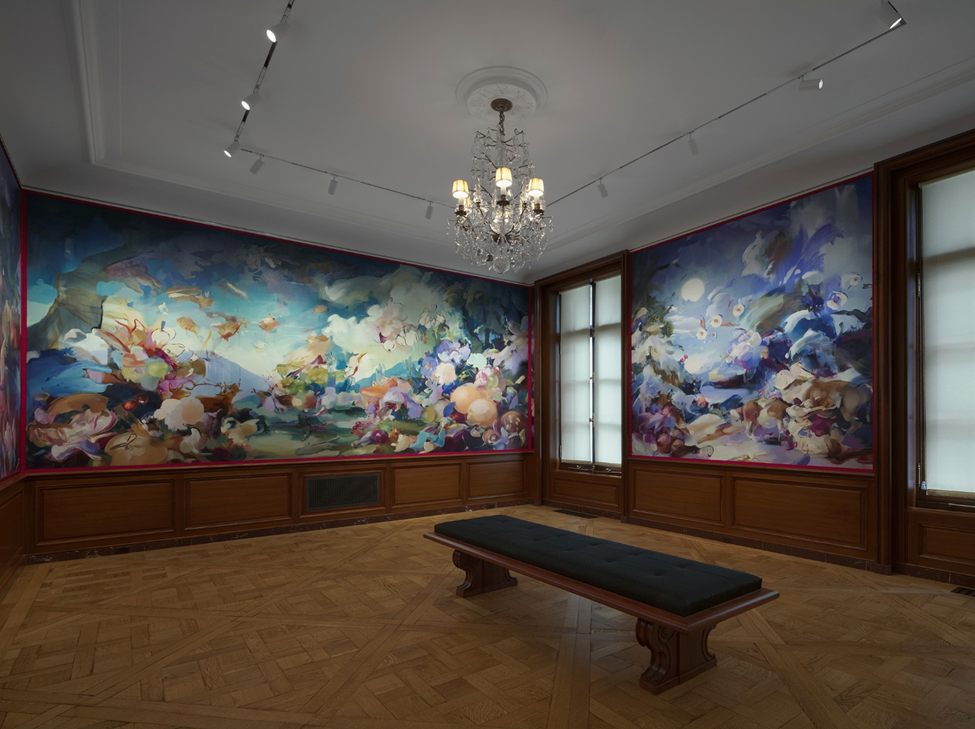
Installation view of Flora Yukhnovich’s Four Seasons in The Frick Collection’s Cabinet Gallery, showing Autumn and Winter. Photo: Joseph Coscia Jr.
What draws artists and audiences back to the Baroque now, in a century shaped by speed and fracture? Perhaps it is the recognition of kinship. The seventeenth century was also an age of cataclysm and wonder — continents mapped, the cosmos recalculated, science expanding perception. The Baroque arose amid fracture: religious schisms, shifting empires, faith and politics entangled. Art became theatrical, constructed to move the spirit through light, motion, and sensation.
Clay as Care Installation view. Photo by The Clay Studio
Just as a solitary action can cause a ripple effect, the sharing of unique ideas can inspire and transform existing systems to include and support different communities. The exhibitions this month demonstrate genuine curiosity and meaningful activation, leading to a trend of revisionist histories in art, institutional displays, or familial archives. Curators Jennifer Zwilling and Nicole Pollard reinvent how gallery exhibitions should be interacted with and ask the question of how clay can assist in caring for mental health at The Clay Studio. Artists Mahsa Attaran, Monica Hamilton, Hanieh Kashani, and Anna Schwartz create a language to describe the power of memory as they mine through personal photographs and materials at Automat Collective. Calero Rodríguez establishes her own History of Art, incorporating Latino, Afro, and Carribean imagery in masterly assembled collages at Taller Puertoriqueño.
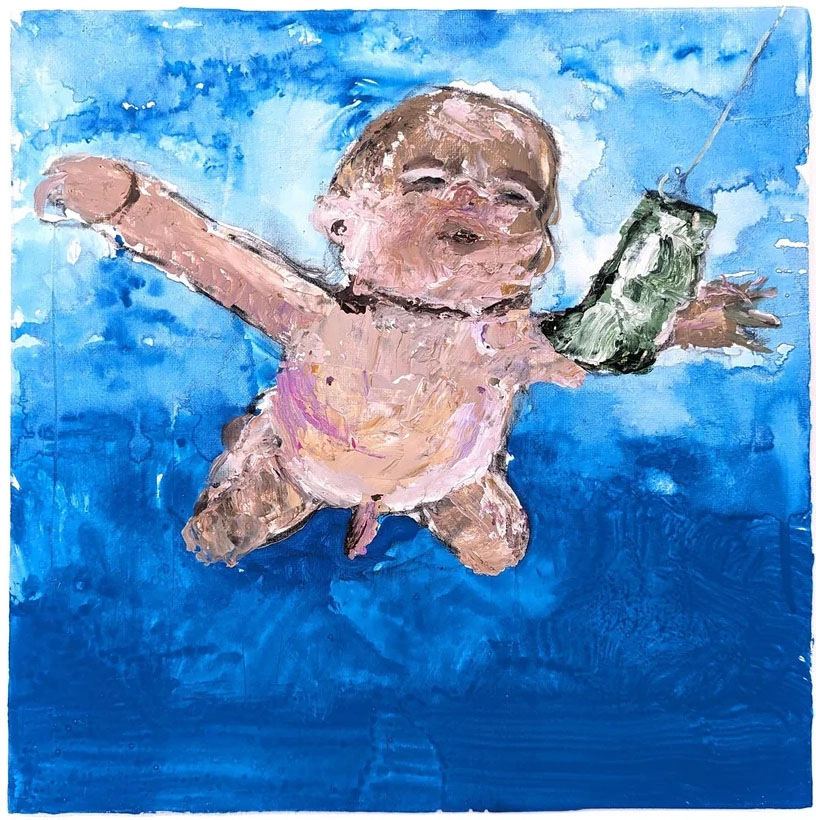
reMastered: Jac Lahav’s Record Paintingsisa solo exhibition at Mana Contemporaryfeaturing a selection of over two hundred intimate 12 x 12 inch paintings of iconic album covers celebrating the slow, tactile process of gouache on canvas. The project asks what painting can add to images that already live in our collective memory. This iteration of Lahav’s work opens a new line of inquiry into what artists listen to, drawing from record collections of artist icons Jackson Pollock, Georgia O’Keeffe, Francis Bacon, and Dan Flavin. Artist Jac Lahav and curator Michele Jaslow sat down to discuss the exhibition for Art Spiel.
Samuelle Green. By Day: By Night. 2025. (variable size) Installation View — Honesdale, PA. steel, reflective material. photo credit: Samuelle Green Studio
In Samuelle Green’s previous installations such as The Paper Caves and Polypore, viewers encountered forms that were wildly organic in appearance. They were comprised of somewhat amorphous essentialized forms in nature that exist on the micro and macro levels, executed on an immersive human scale, enabling viewers to make a variety of associations with the natural world — pollen grains, clouds, or coral reefs. The new work, By Day: By Night, 2025, is much more specific in its references and seeks to speak a different visual language almost entirely.
Installation view, Cavin-Morris Gallery, photo courtesy the artist
In 2017, during post-concussion recovery and before considering any public audience, Frances Smokowski began drawing as part of her wellness routines. She knew even then that the work could one day be useful and inspiring to others, and she never felt it existed only for her. Pandemic-era synchronicities later led to gallery representation, confirming that this is the moment for her bio-glyphics and energy-scapes to come forward.
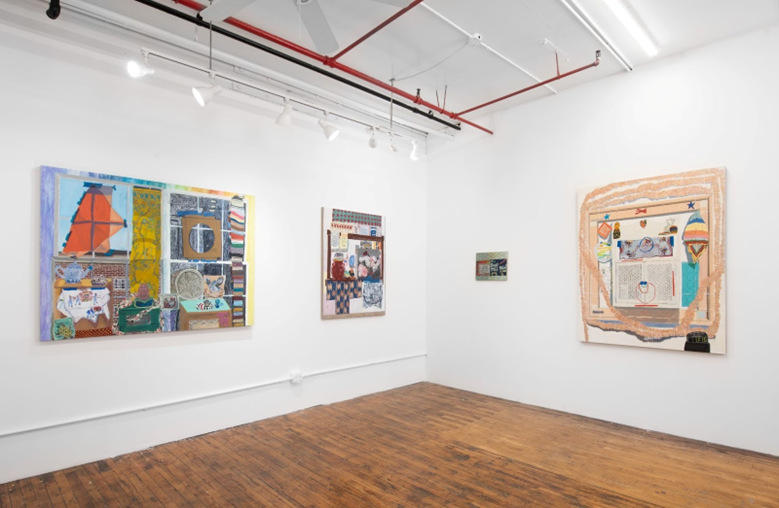
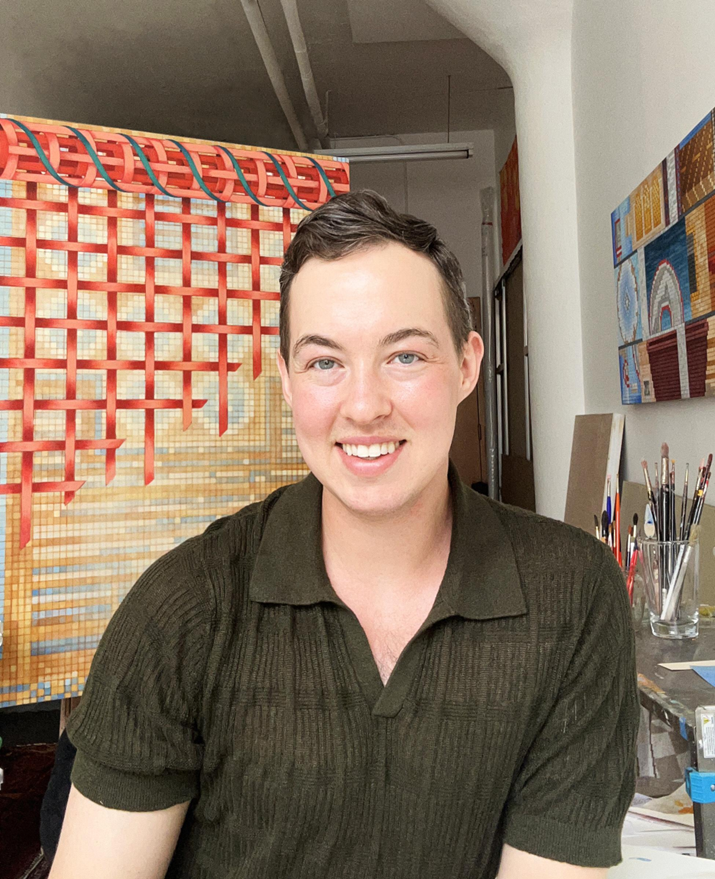
The paintings in James Gold’s solo show, Infinite Scroll, act as intermediaries between past, present and future. These glimmering grids at Morgan Lehman gallery toggle between his deep reverence for history and his active aesthetic imagination. Talking with the painter about his wider practices in collaged artist books and archeological renderings revealed new means of perception and applications of art-making.