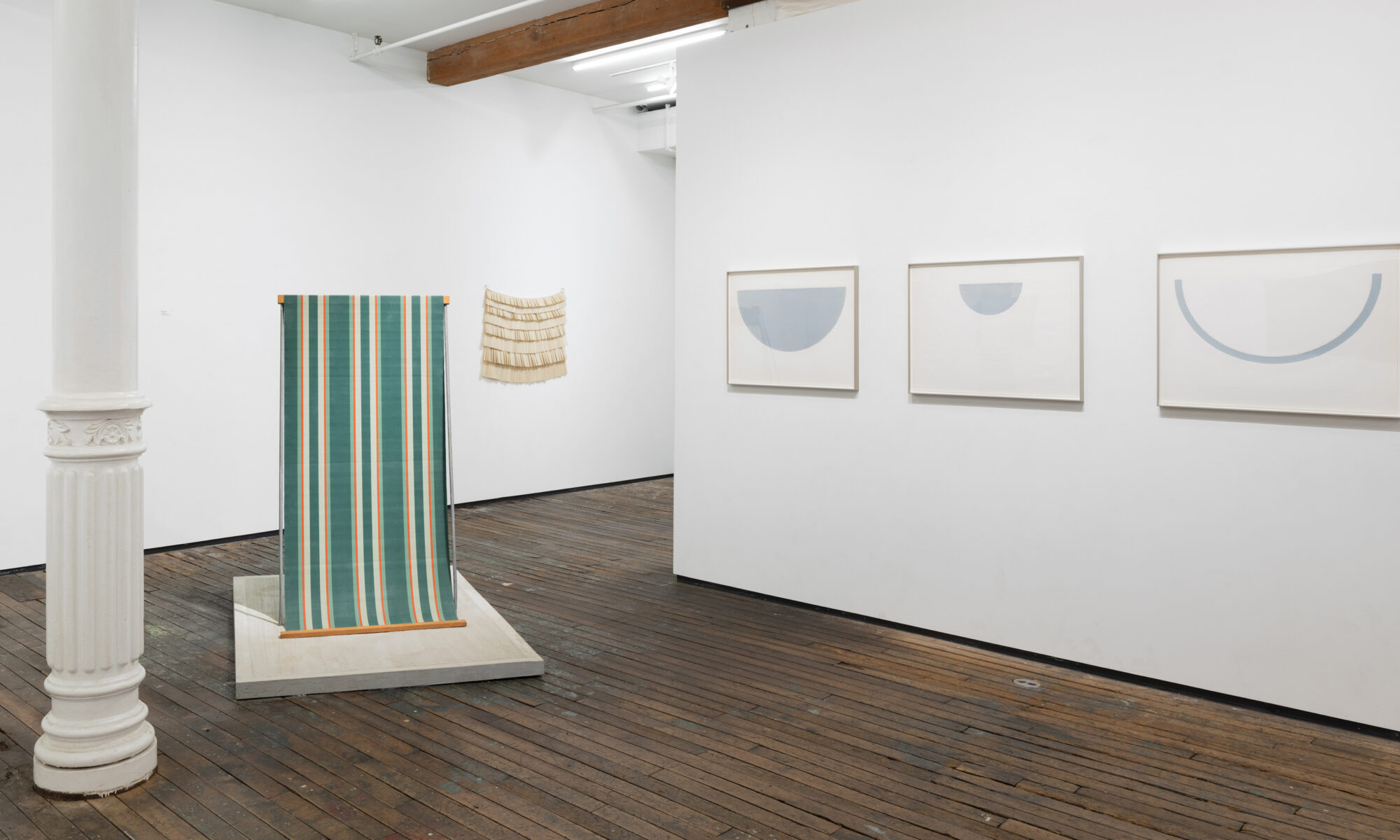
At 33 Bleecker Street, history does not politely vacate.
In the 19th century, Herman Melville grew up at this address, long before the current building rose here in 1900. A century later, Joel Shapiro kept an early studio in the building before moving on to larger quarters. This winter, the ground-floor gallery Zürcher has been restaging a 1972 exhibition titled 13 Women Artists. Museum curators made the trip to NoHo. Emails arrived from outside the city asking for more time.
The show now runs through Saturday, March 7, eliminating the usual New York alibi: I missed it.
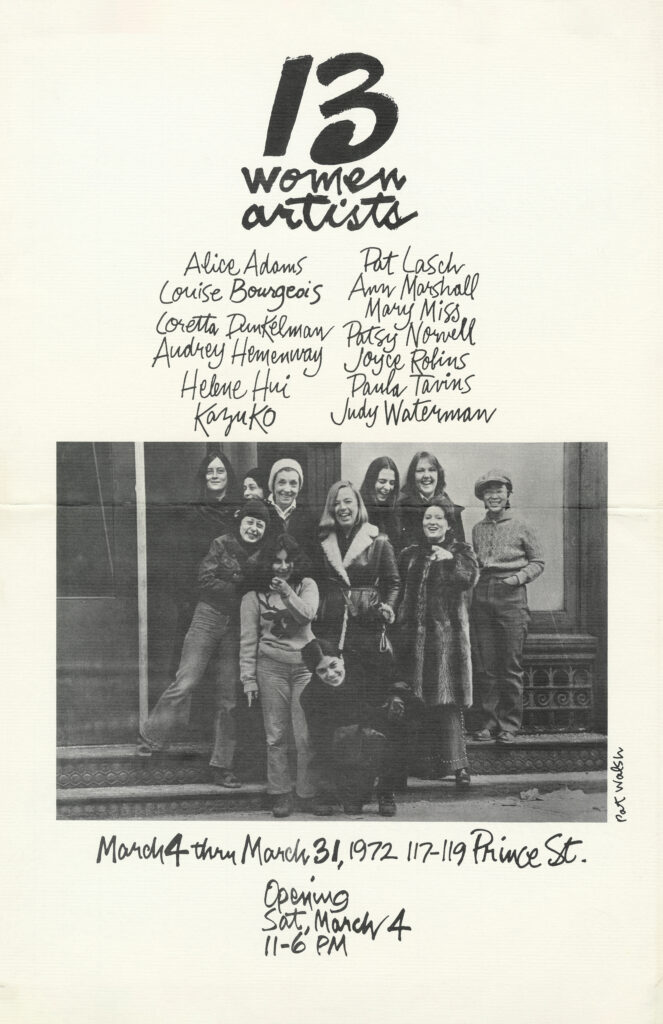
The original 13 Women Artists grew out of a pattern that had become routine. The Whitney Biennial had again given women token presence, and Lucy Lippard was publicly criticizing the imbalance. Joyce Robins and Ann Marshall began talking. Soon, they were renting space. If institutions would not make room for them, they would make room for themselves. They leased a raw room on Prince Street for one month for $650, divided the cost among the thirteen participants, and installed the exhibition on their own.
I was very young then, when SoHo was barely SoHo. I remember lunching at Fanelli’s with my Sunday-artist mother, when cobblestones were not yet an aesthetic, just uneven stone, and on quiet Sundays the streets could feel emptied out, interrupted only by the occasional rat cutting across. Loft spaces were cheap and unfinished. The art world had not yet learned to behave like real estate.
Into that room at 117–119 Prince Street, the collective brought thirteen names, handwritten on a poster without a crest or sponsor logo. Alice Adams. Louise Bourgeois. Loretta Dunkelman. Audrey Hemenway. Helene Hui. Kazuko Miyamoto. Pat Lasch. Ann Marshall. Mary Miss. Patsy Norvell. Joyce Robins. Paula Tavins. Judy Waterman. The list reads like a cross-section of artists working inside post-Minimalism and conceptual practice in a city that still preferred its genius male.
Several were already threaded through the era’s central circuits. Kazuko Miyamoto had assisted Sol LeWitt and developed string constructions that treated line as architecture. Alice Adams pushed sculpture toward hardware-store materials and structural logic. Mary Miss was beginning the trajectory that would define her public work. Patsy Norvell had recently begun using Scotch Magic tape to mount and protect her pieces. She also leaned into sewing, pleating, ruffles, and quilt grids, calling it a “scary departure into women’s work,” and arguing that domestic process could carry formal rigor. The exhibition was not a plea. It was an assertion.

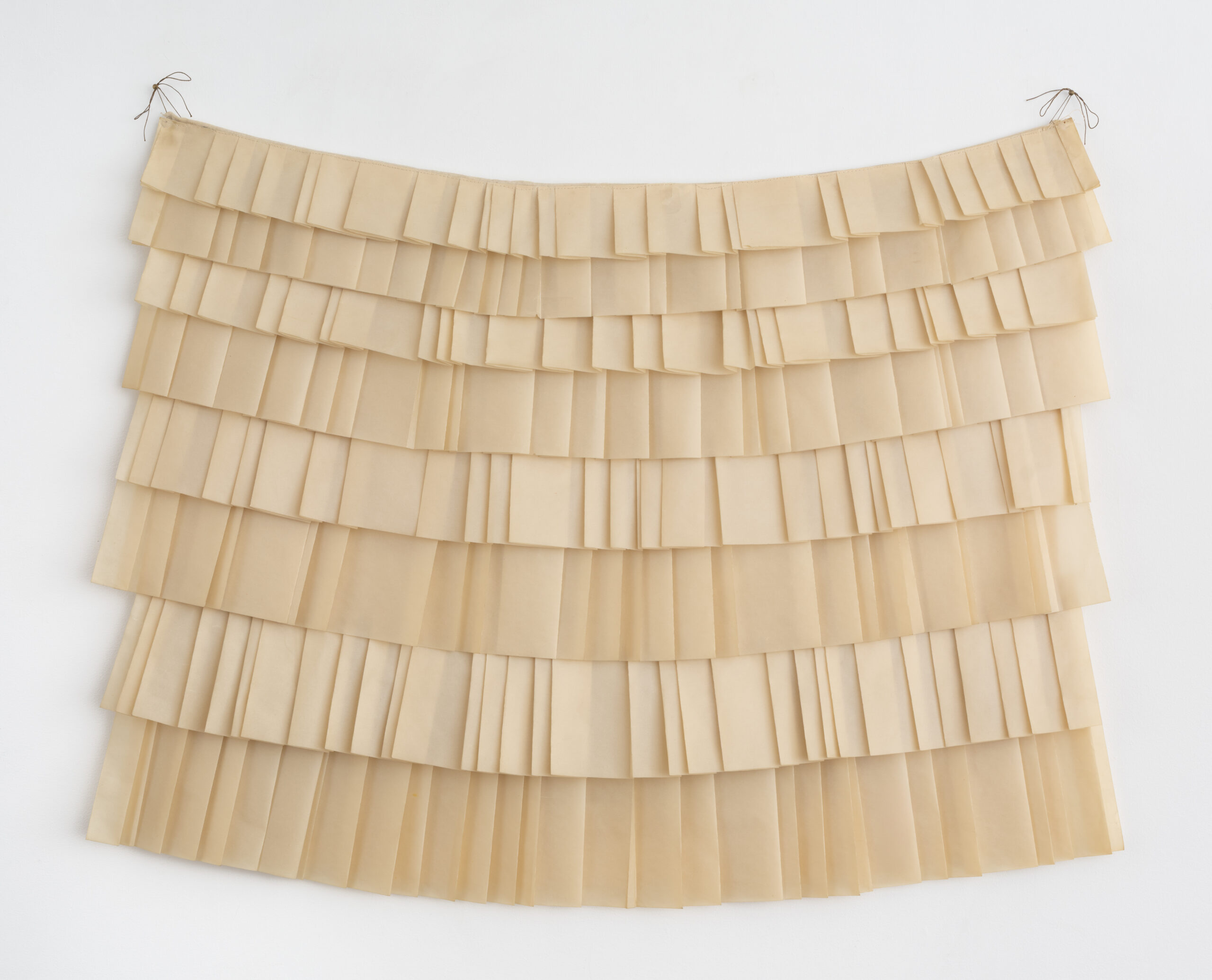
30 x 40 x 1 inches / 76.2 cm x 101.6 cm x 2.54 cm.
It also understood how attention worked. Gwénolée Zürcher, who organized this restaging and co-founded Zürcher Gallery with her late husband Bernard, told me that in the 1970s Louise Bourgeois was “the one who brought people in.” The group needed a draw. Nobody was showing them. No curators were visiting. “They were hungry,” Zürcher said. “Louise was it.”
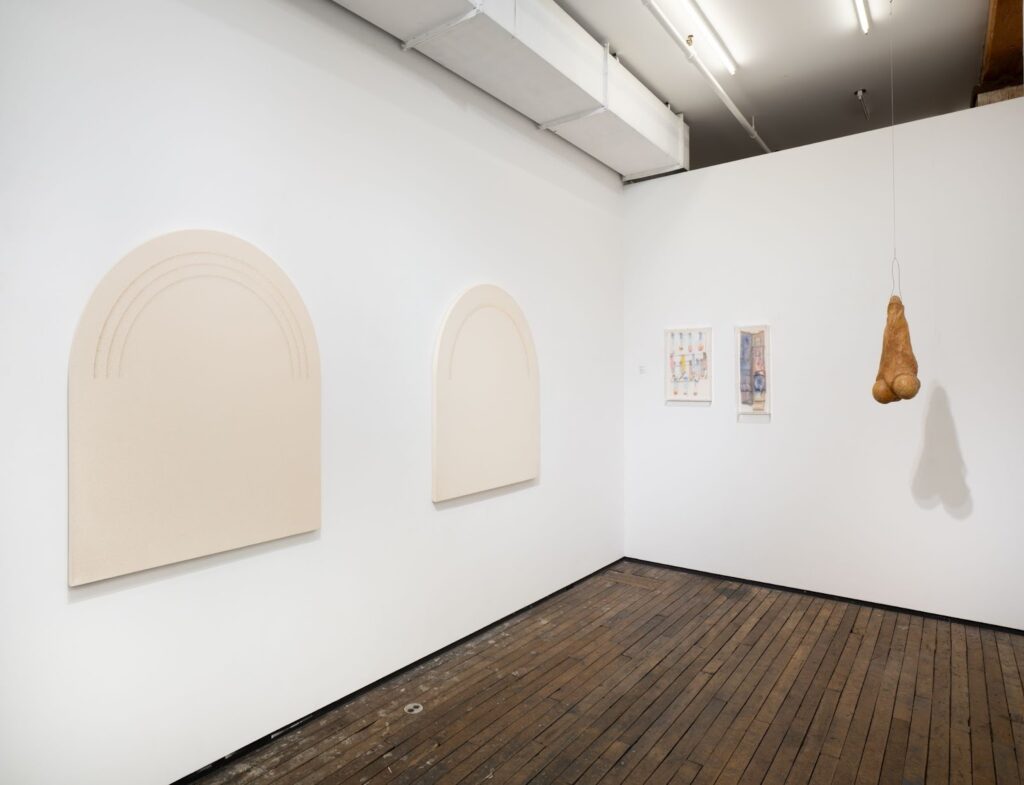
Mary Miss, still working in 2026, recalls that the group initially favored restraint. Bourgeois did not. She insisted on hanging Filette, her large phallic sculpture, in the window. When others objected, she refused to compromise. Two hours before the opening, she poured a gallon of paint onto the wooden floor beneath the piece to prevent viewers from crowding it. At six, when the doors opened, the paint was still wet. Visitors left scraping it from their shoes.

71.7 x 47.6 x 59.8 in / 182 cm x 121 cm x 152 cm.
The show travelled to Williams College and SUNY Albany in 1972. In September of that year, A.I.R. Gallery opened at 97 Wooster, the first cooperative gallery in the United States devoted exclusively to women artists. 13 Women Artists did not wait for institutional framing. Infrastructure was already forming.
Within months, four of the artists from that rented Prince Street room appeared in the 1973 Whitney Biennial: Alice Adams, Louise Bourgeois, Loretta Dunkelman, and Mary Miss.
It is difficult to imagine that no one from the Whitney walked through that Prince Street room and took notes. At the Biennial, Adams showed Long Wall, a spare wooden construction. Bourgeois exhibited Number Seventy-Two, carved in marble. Dunkelman’s Ice Sky moved from downtown to museum walls. Miss contributed an untitled woodwork already pressing toward the architectural language that would define her career.
A $650 self-funded exhibition one year. The Whitney Biennial the next.
Gwénolée Zürcher first encountered the original poster a decade ago after Kazuko Miyamoto showed it to her. “It was like a magnet,” she said. She was not ready then. Later, while working with Alice Adams, the idea returned. In London last year, seeing Adams shown alongside Bourgeois and Eva Hesse clarified the lineage. But intuition was not enough. Many of the artists who have died left no estates or heirs actively preserving their work. “If there’s no one to look after it, it can disappear,” Zürcher said.
Audrey Hemenway had died of cancer; her daughter in Oaxaca suffers from dementia and could not be reached. A longtime doctor of Hemenway’s upstate connected Zürcher with a friend who held several works. Paula Tavins proved equally elusive. Though Tavins had appeared in Lippard’s 1971 Aldrich Museum exhibition, 26 Women Artists, the museum would not share contact information. A visitor to Zürcher Gallery mentioned Tavins’s former husband in Maine. Zürcher called him. Yes, they had been married five years. Tavins, he said, was “extremely difficult,” but “a very, very good artist.” The next morning, he called back. Two works dated 1972 had surfaced in his garage. They now hang in the show.

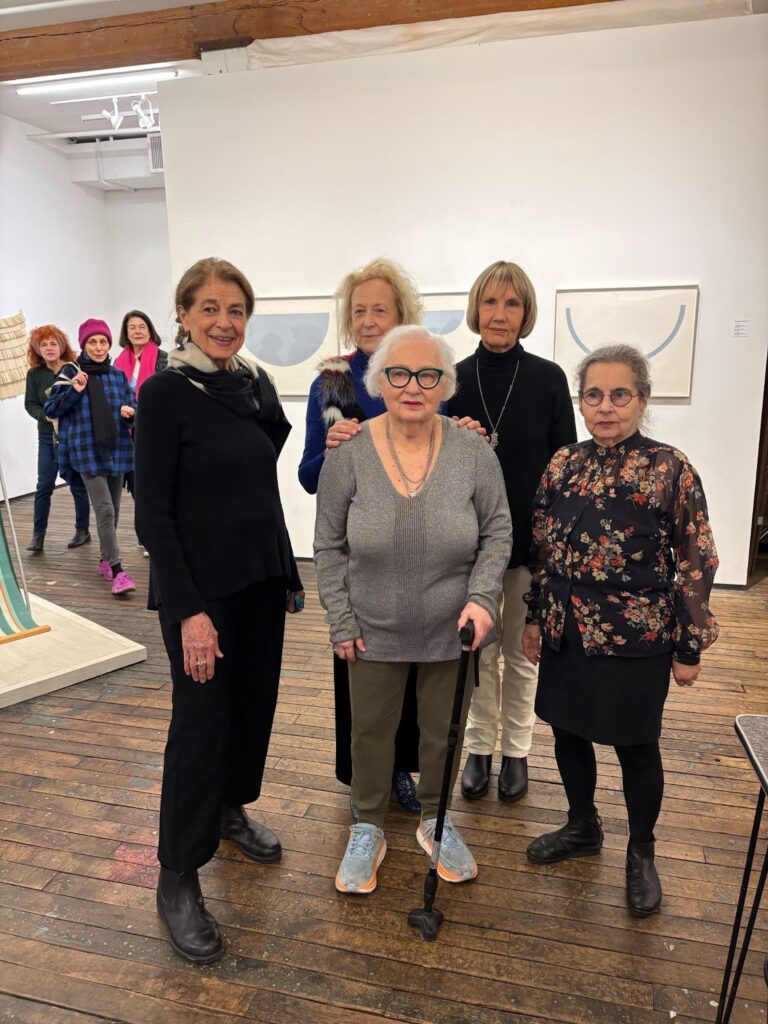
Seven of the thirteen artists from 1972 are still alive; six attended the opening. Alice Adams, 95, is the oldest living participant; Ann Marshall, 78, is the youngest. Bourgeois would be 114.
The official version credits Robins and Marshall with initiating the show. Loretta Dunkelman disputes that, saying she and Marshall began it. Robins disagrees. When Zürcher called for a group photograph, Robins initially refused. Her son persuaded her to stand in. In the photograph, the tension is visible.
Nobody argues over something that did not matter.
Seen in person, the work does not behave like a relic. Miyamoto’s taut lines still press against the walls. Tavins’s three-dimensional grids hover between painting and object. Miss’s rigor remains architectural. Adams’s structural materials retain their intelligence. The questions posed in 1972 about visibility, authority, and who defines seriousness have not dissolved; they have shifted.
The exhibition runs through March 7. The rent is no longer $650. What remains is the memory of a room taken without permission and held long enough to become history.
About the writer: Laurie Gwen Shapiro is the author of The Aviator and the Showman (Viking) and The Stowaway. She teaches journalism at NYU and is at work on a biography of Albert Einstein, also for Viking.