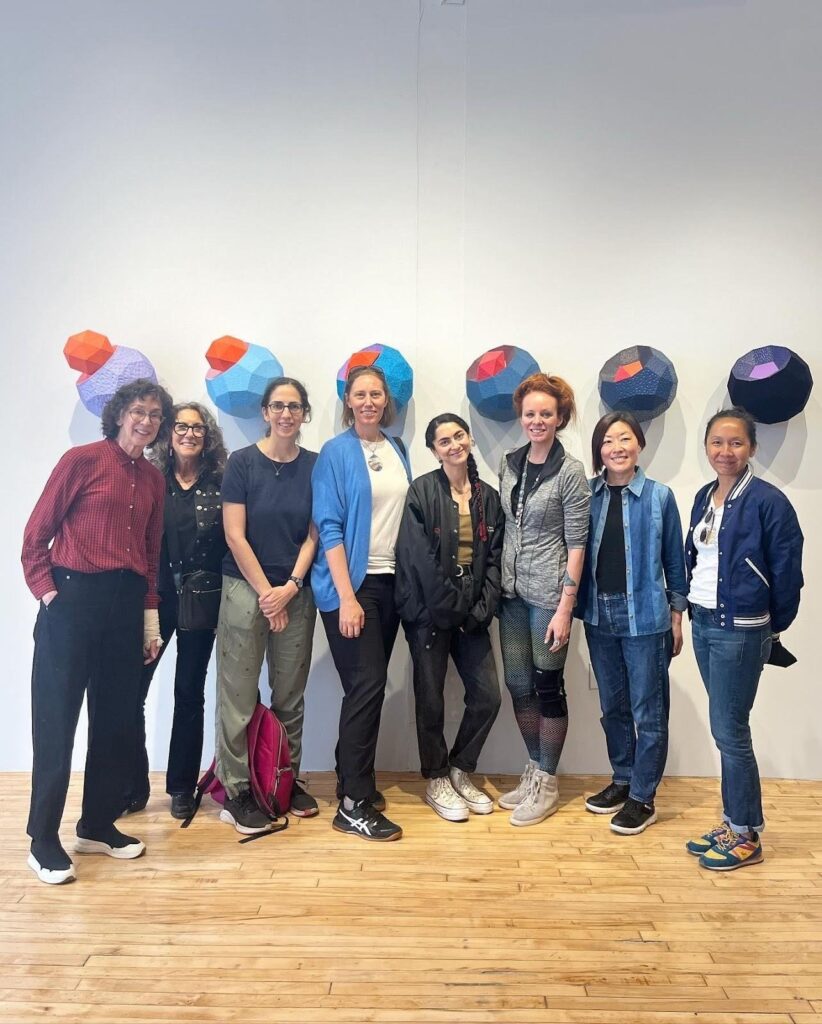
At Silver Art Projects, In the End, Everything Gives brings together more than thirty artists from the Women Sculptors Group (WSG), a New York–based network of women-identifying and non-binary sculptors that now includes over 350 members. Installed within the residency spaces at 4 World Trade Center, the exhibition carries the energy of a working community—artists connected through an ongoing commitment to sculpture and material inquiry.
Curated by artist, writer, and arts leader Sarah Walko, currently Director of Visual and Performing Arts at Lenox Hill Neighborhood House, the show grows out of her long involvement with WSG and her interest in bringing this expanding network into a shared exhibition space. The works span ceramic, metal, textile, glass, and mixed-media forms, reflecting the breadth of practices within the group. In this conversation, Walko and participating WSG artists discuss how the exhibition took shape and how the community continues to inform and sustain their work.
Sarah, let’s start with the title. When you think about the title In the End, Everything Gives, what does “gives” mean here?
The exhibition takes its title from a line by poet Ada Limón, which names both material and emotional states of yielding: “Everything gives way—the shorelines, the house decaying and becoming shrub and moss and haunt, the body that gives and gives until it cannot give anymore.” In the exhibition, giving way is not framed solely as collapse, but as a condition that calls making into being. Creation becomes a form of muscular hope—first for oneself, then extending outward—through which artists hold, shape, and reckon with the complexities of the present moment. I also think about how the act of creating itself is nourishing and life-giving, and “everything giving” in this context acts almost as a primordial space, brimming with potential and possibility.
What was your curatorial starting point for the exhibition?
I have been a part of the Women Sculptors Group for many years, and there are so many incredibly talented and inspiring artists in it. So, I’ve been wanting to curate a selection of works for some time now, and when the opportunity to do it at Silver Art Projects came up, I thought it was perfect. The Women Sculptors Group (WSG) was founded by artist Sarah Bednarek as a series of intimate gatherings of female-identified and non-binary sculptors in New York City. Today, WSG is a network of more than 350 members across New York City, the tri-state area, and upstate New York. Following Sarah’s passing in 2019, the group has been stewarded by members Alta Buden, Dena Paige Fischer, and Heidi Norton, who continue to sustain and expand its founding mission.
I issued a call for applications to the WSG group, so first I waited to see what work came in before putting together a curatorial vision. But, as mentioned above, I was and always am inspired by how artists respond to the challenges and complexities of the times we are living in, how they dive into creating and community as a form of resistance and as an act against complacency. So I was thinking about that a lot as I selected works for the show. I also wanted to show a wide array of mediums that artists were working in, so that led the selection too. Across the works on view, materials range from watercolor, clay, plaster, steel, paper, and canvas to vintage prayer books, horsehair, eelgrass, antelope hide, and horns. Through these varied materials, gestures, and forms, these artists are insisting on the necessity of creation itself and do not offer resolution, but they do offer care—affirming making as a collective act of attention, endurance, and survival.
Let’s think about the site. First, tell us a bit about this venue. Second, how did Silver Art Projects shape your thinking (scale, architecture, circulation) while you were building the exhibition?
Silver Art Projects is a non-profit organization that provides artists with free, year-long studio spaces and career development opportunities that accelerate and enhance their artistic practice at 4 World Trade Center. Founded in 2019 in response to changing models of structural systems that perpetuate a culture of inequity, Silver Art Projects supports artists with critically needed studio space in NYC and builds thriving practices while also contributing to the creative ecosystem of Lower Manhattan. In addition to studio space, Silver Art Projects provides professional development opportunities and connections with museum curators, art leaders, galleries, collectors, thought and business leaders, peer-to-peer and artist mentors, and others to change artists’ lives and enhance careers.
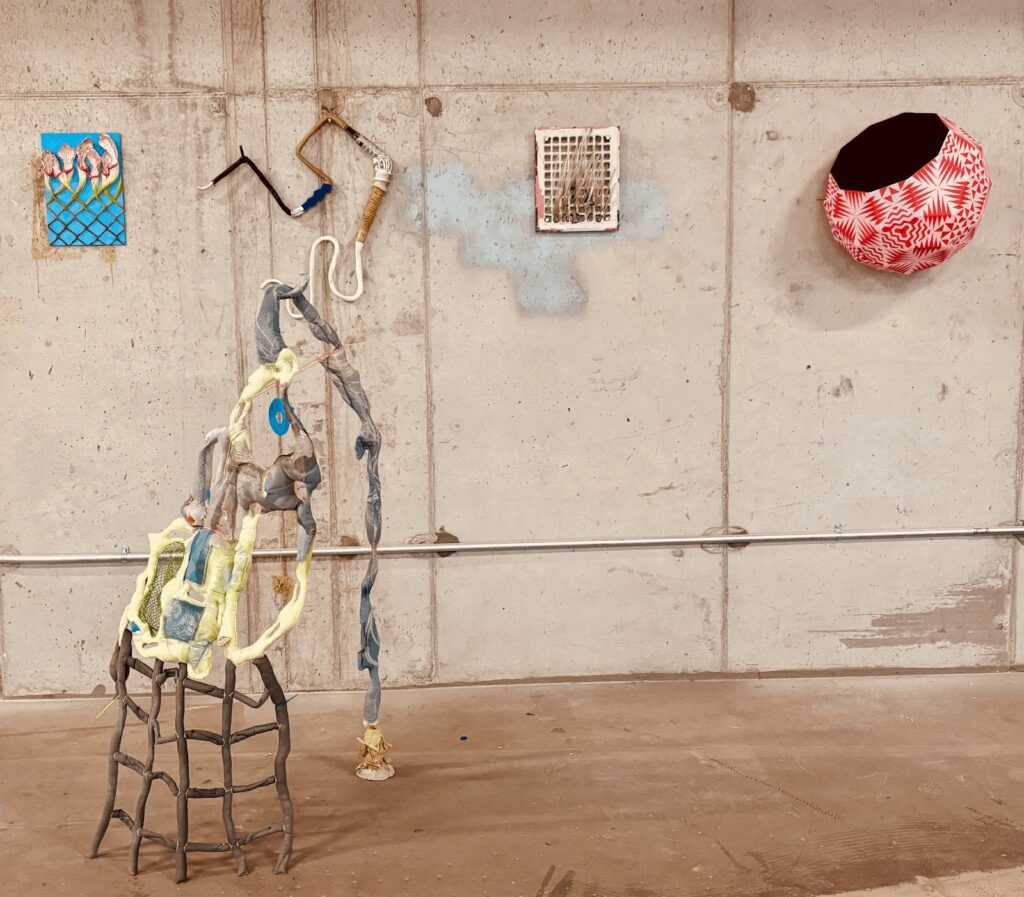
I loved the idea of curating a show within a residency program, which just has a different energy than a gallery or museum. It is the opposite of polished; it’s raw and imperfect, and everywhere, artists are making things. Some of the challenges were that we were installing concrete walls, so we needed to use a concrete drill and be extra cautious. I realized I had more space than I originally thought, so I was able to include thirty-one artists. And last, because the space is so sprawling, I had to think about delineating and creating a feel for the start, middle, and end of the show, so I chose the two corridors and corner gallery space, which has floor-to-ceiling windows and beautiful light.
Sarah, with such a large group show, what guided your decisions—pairings, contrast, pacing, or a specific narrative arc? Please walk us through the show
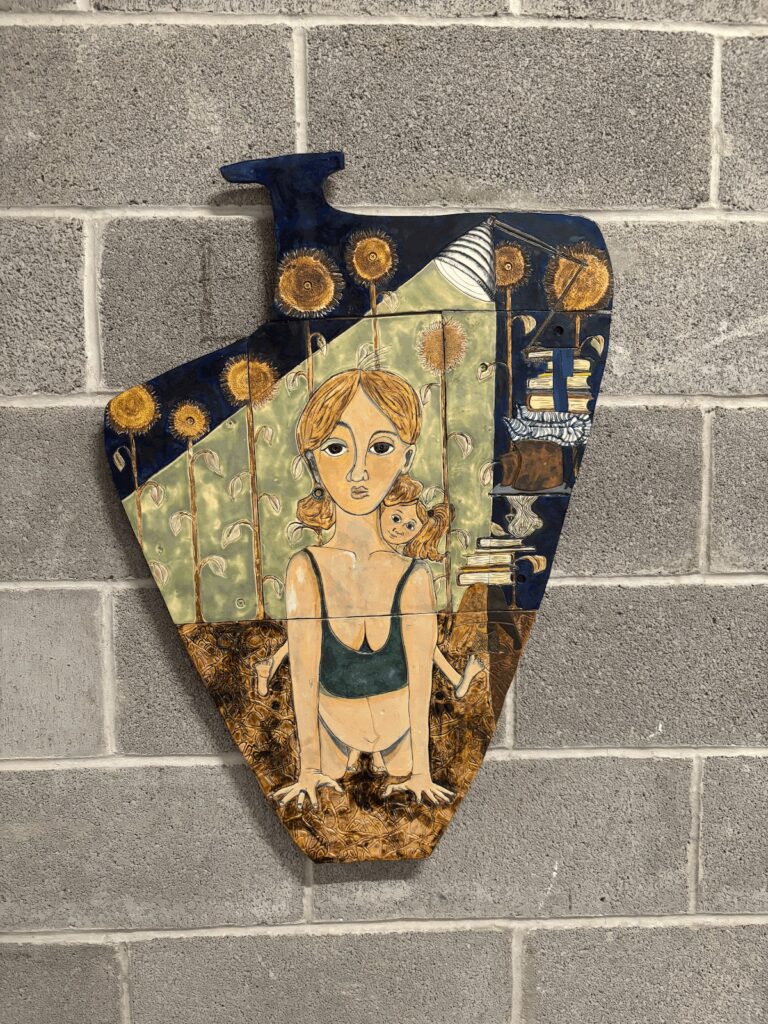
The first corridor and first part of the show includes the works of artists Armita Raafat, Chang Sujung, Corinne Beardsley, Gabriela Vainsencher, Kirsten Ator, Rachel Frank, and Sandra Eula Lee. Many (but not all) of these works share the commonality of being ceramic, but their diversity of expression, material use, and concepts is wide-ranging. For example, Gabriela Vainsencher’s work in ceramics is narrative and about the mythical implications of the reality of motherhood, using reference materials from her life to create new imagery on a form that is a traditional vase form. Rachel Frank is a licensed wildlife rehabilitator specializing in the care of waterfowl birds and raptors, informing her practice, focusing on the connections between non-human species that aid in the protection, healing, or repair of surrounding ecosystems.
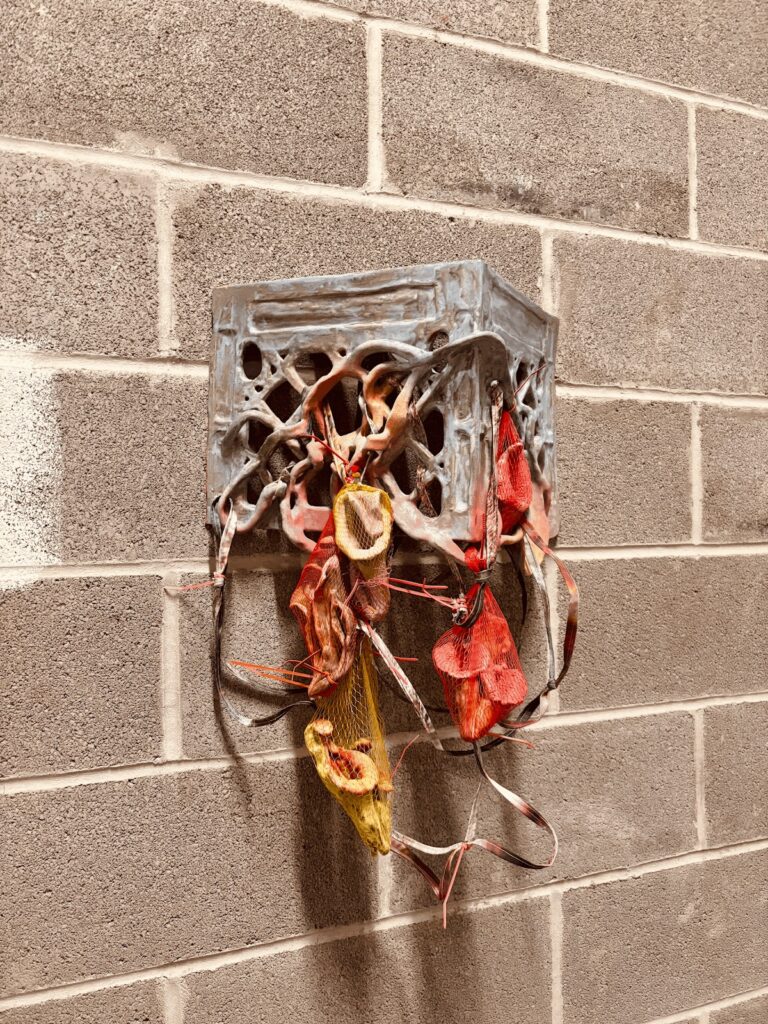
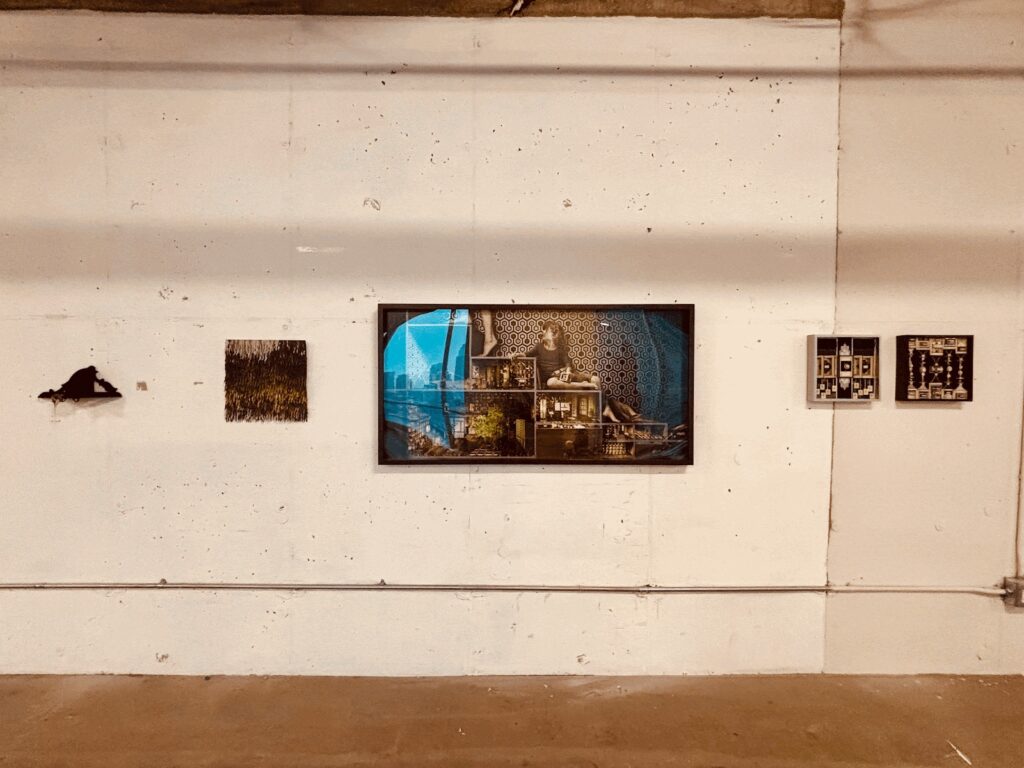
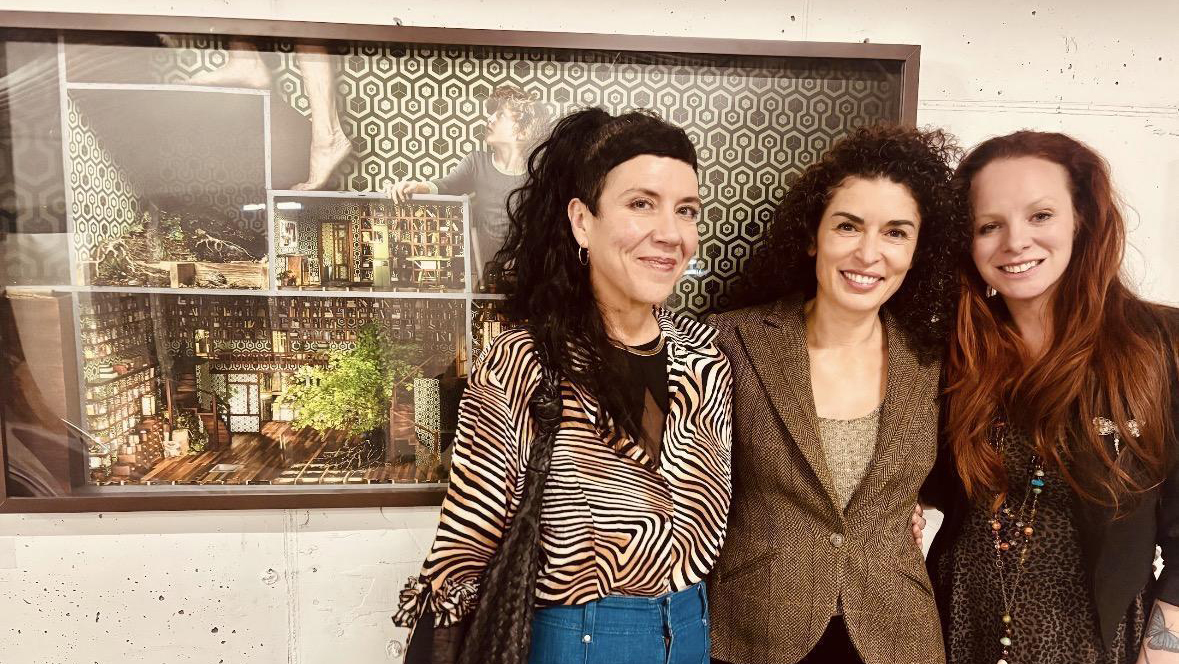
The second section of the show includes artists Kate Stone, Katherine Vetne, Laetitia Soulier, Linda Ganjian, and Liliya Lifanova. Much of this section has an architectural influence; however, the artists veer in differing directions with it. Linda Ganjian is inspired by architecture as a vehicle for revealing personal and communal histories, memories, and stories. The map of Her Prayers series was made after the death of her grandmother and serves as a memorial to her. The large-scale photograph by Laetitia Soulier is part of a series of miniature architectural worlds that she builds by hand as sculptures and then photographs. The environments begin with a fractal pattern—a motif repeated across scales—which becomes both the blueprint and the internal logic of the structure. Katherine Vetne manipulates, distorts, and obscures domestic goods to reveal the ways in which these objects maintain and reinforce social class distinctions. She melts lead crystal tableware, such as vases and candelabras, in kilns and builds malformed configurations out of furniture parts, making them rather animated, intimidating, even monstrous.
Liliya Lifnova’s work is physically fragmenting, shredding, and compressing materials in a laborious process, to reflect the more disorienting aspects of the human condition: incomprehension, brokenness, loss, futility, and lack of resolution, while also holding the persistence of aliveness through pattern and playing with how far she can stretch fragments. All the work in this section consists of pieces that reveal both inner and outer worlds simultaneously, and the environments that reflect what imagination does with uncertainty, and that our objects and environments themselves are neither stable nor neutral.
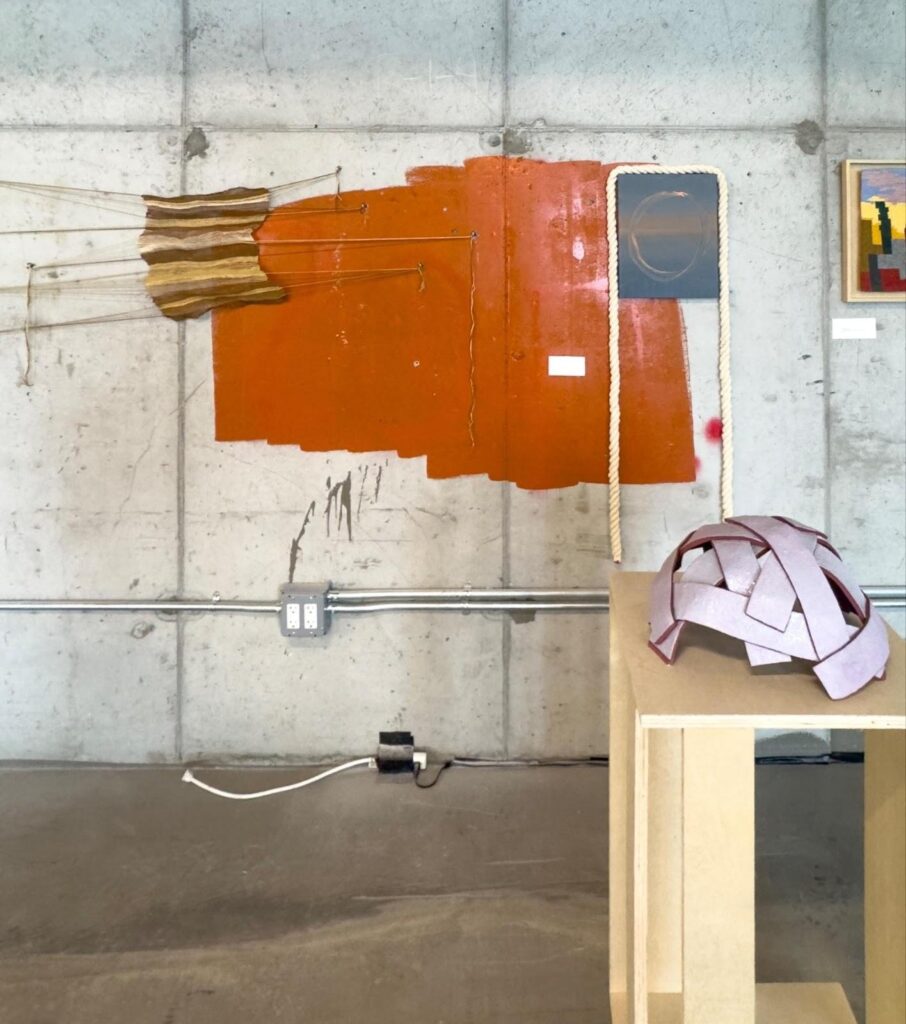
Dina Weiss’s weaving work explores materials and media as a way to respond to the urban landscape and adjacent interior spaces, grounded in feminism and urban theory as a response to her lived experiences as a city dweller and a woman. Kate Bae’s painting leans toward sculpture, encircled by thick rope with loose ends, echoing the way that futures remain open, unfinished, and never fully secured. She explained the piece acknowledges what James Baldwin names: that “there is nothing stable under heaven,” and yet the artist must continue to make, for themselves and viewers, to stay with the unstable present. Sarah Trigg’s ceramic sculptures stand like artifacts born from otherworldly landscapes and hint at some already formed future. And Natalie Moore’s weavings sit at the edge of visibility, treated like three-dimensional drawings with hundreds of intersecting lines, and are influenced by the impending climate change crisis.
I was thrilled that we were able to include Sarah Bednarek’s work in the show, the aforementioned founder of WSG, who passed away in 2019. Her work explores formal relationships such as symmetry, repetition, texture, and color through rigorous geometry and craftsmanship. Her near-death experience following an emergency surgery, where she experienced a light in a tunnel of kaleidoscopic geometric forms. She made that experience visible with these works.
Dena Paige Fischer’s work draws inspiration from tribal culture, rituals, science fiction, machinery, nature, and spirituality, presenting as a product of the future, suggestive of a peculiar device that has yet to be invented. Claire Lachow makes translucent, hollow acrylic sculptures that reference digital origins and uses a fascinating process that involves laser-cutting and thermoforming the pieces into three-dimensional objects with a heat gun by hand. Marianna Peragallo’s work amplifies the personality of the mundane, morphing objects we easily dismiss as ones that hold potential for humor, tenderness, reciprocity, and meaning when given attention. Marilla Cubberley’s modular soft sculptures made of low-tech technologies, like papier mache, knitting, use material experimentation and collecting to consider the fragility of systems that can feel inevitable.
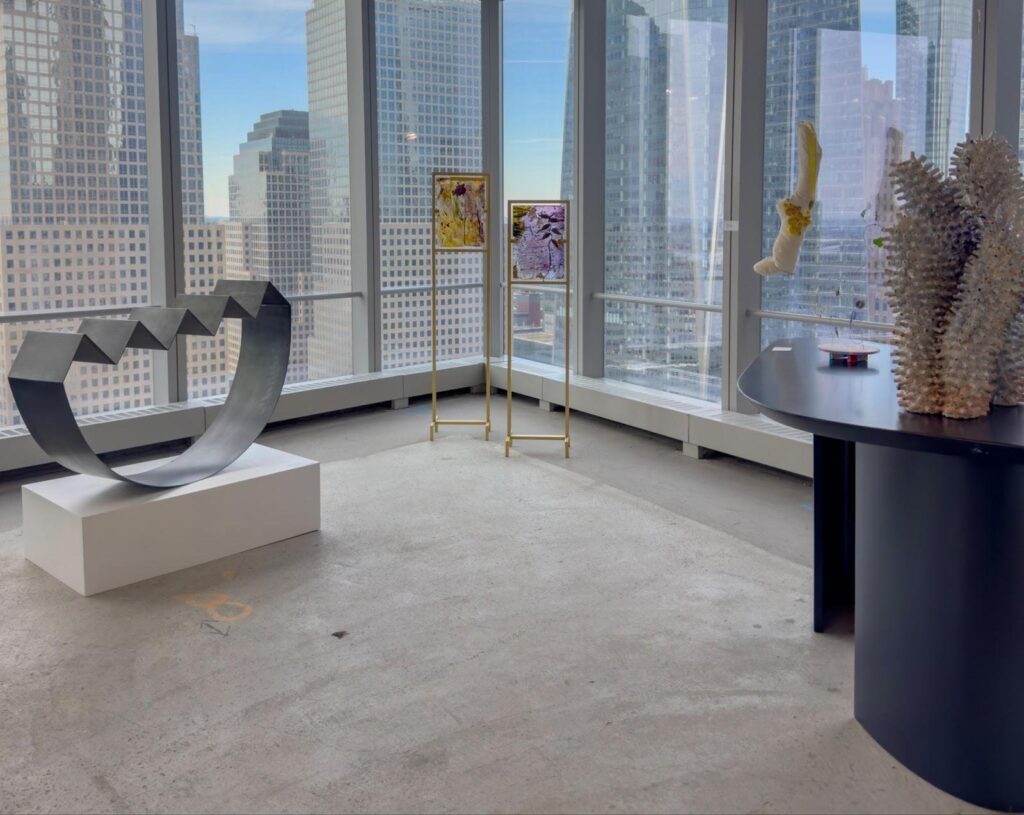
The last part of the show includes the work of Gabrielle Shelton, Heidi Norton, Jemila MacEwan, Kate Bae, Kate Clark, Kate Rusek, Natale Adgnot, Natalie Moore, Niki Lederer, Rose Malenfant, Sonya Blesofsky, and Sun You. Sun You and Natale Adgnot’s sculptures are both informed by their lives traveling between cultures. You’s work is about fluidity and impermanence, flexibility, lightness, and the possibility of spontaneous production, and her piece celebrates women’s labor, domestic ornamentation, and the language of abstraction.
Adgnot’s work incorporates materials that have been a part of different chapters of her life in different places. While living in Japan, she began using thermoplastic to work three-dimensionally and has expanded her mediums to include fabrics, horsehair as a reference to her Texas upbringing, and other materials that signify all of the places she lived as she evolved as an artist. Kate Rusek’s highly tactile sculptures have an emphasis on craft and materiality. Her porcelain piece is a maximalist form with dynamic biophilic textures, informed by her interest in the connective edges and dissonant intersections between systems thinking and the natural world.
Gabrielle Shelton’s sculpture is rooted in the principles of Bauhaus design and minimalism. Using bronze, steel, and aluminum, she fabricates austere yet evocative sculptures that blur the line between architecture and abstraction. Heidi Norton’s pieces combine plants, light, glass, resin, wax, and detritus into altar or stained glass-like forms. The plants act as a metaphor for larger, macro ideas of nature and its cycles and impermanence.
WSG, tell us about The Women Sculptors Group. How did it start? What are your plans? And how can artists join you?
WSG (Women Sculptors Group) was founded by Sarah Bednarek, a Brooklyn-based artist and community builder whose multimedia work takes the form of large geometric sculptures. In 2015, she began to build a network, organizing gatherings that provided a safe space for female and non-binary sculptors to come together, to share their practices and resources. These began as intimate gatherings in studios and homes across NYC. An important aspect for her was that people who didn’t know each other could come together, sometimes awkwardly at first, and leave with new and meaningful connections to fellow artists and their work. Through these series of small gatherings, she created a web of people who came to know, support, and sustain one another.
Since her passing in 2019, the group has been stewarded by Alta Buden, Dena Paige Fisher, Heidi Norton, and the many members who knew and loved her. Today, the group’s role remains closely aligned with its original mission: to create a community centered on three-dimensional practices, where artists can come together to share resources, ideas, experiences, and opportunities.
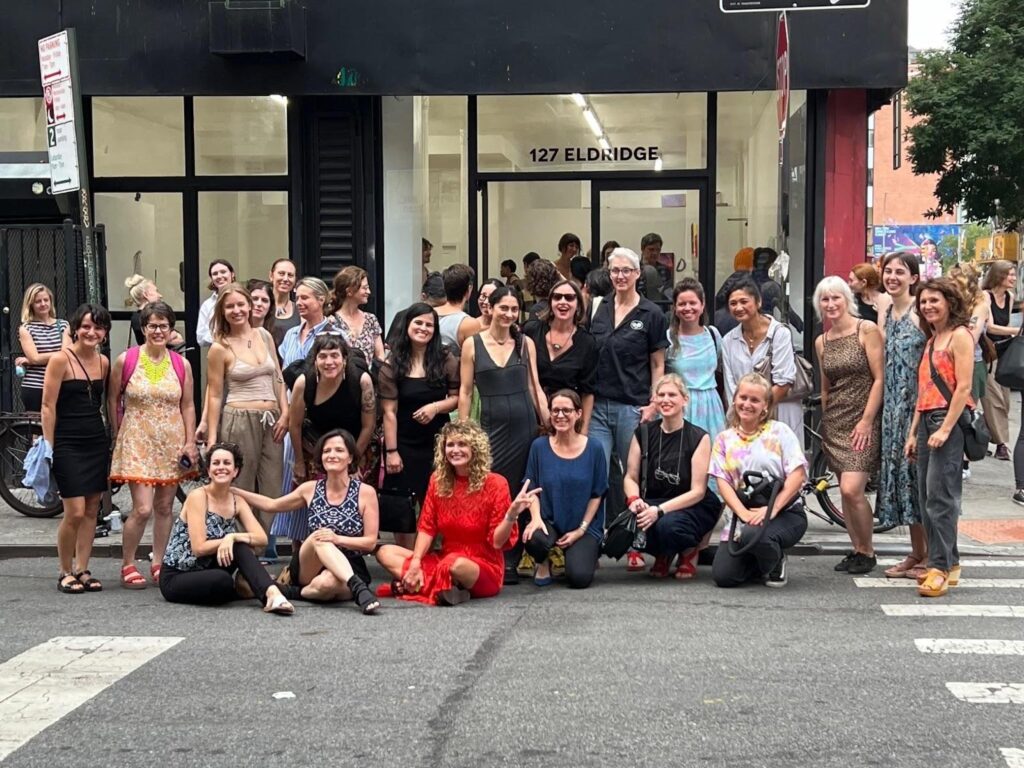
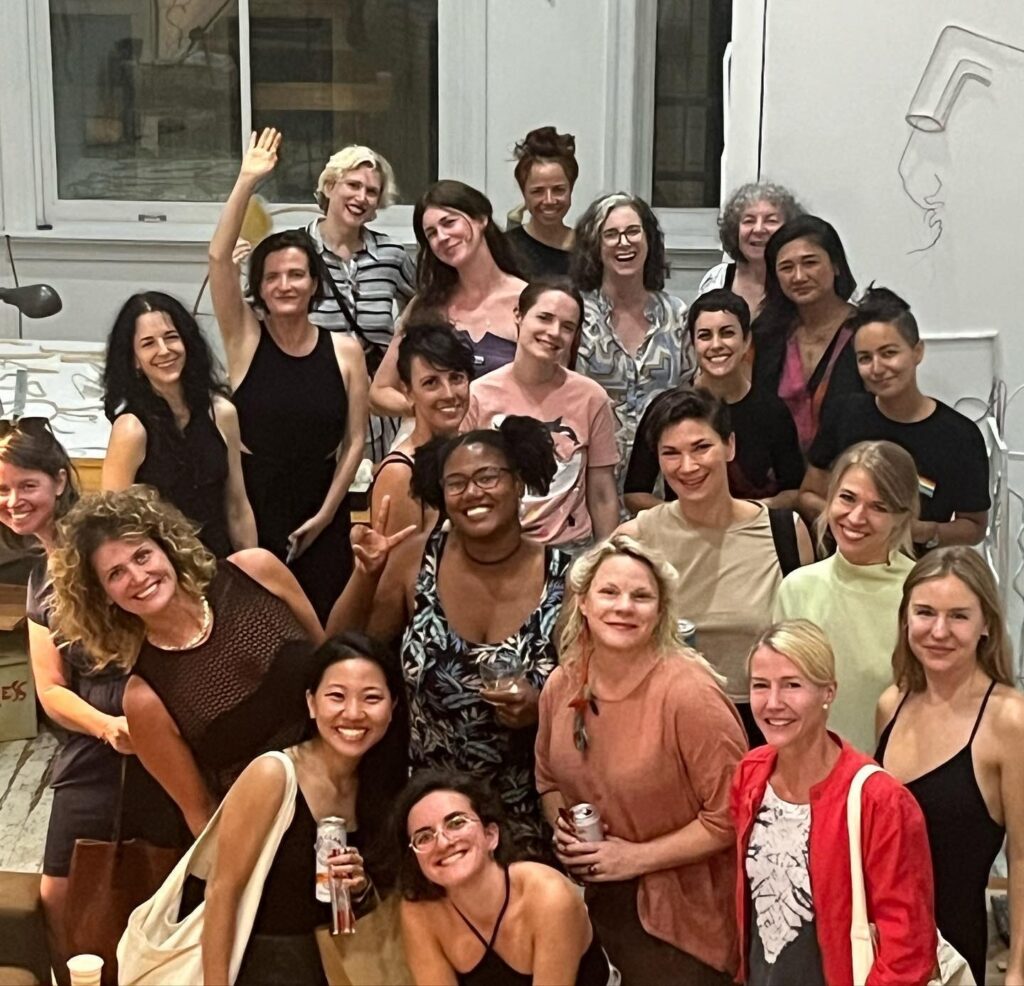
This mission has grown to include larger gatherings, exhibition walkthroughs, and curatorial endeavors. The group now exists in two chapters—one in New York City and one encompassing upstate New York. At the heart of it all is Sarah’s original desire for real connection and the formation of community. Moving forward, we plan to continue this mission through continuing to organize gatherings, assisting in creating opportunities, and real connections through open exchange.
We welcome new members who can reach out via email to [email protected] to join.
In the End, Everything Gives: Women Sculptors Group Exhibition at Silver Art
Projects Curated by: Sarah Walko. Exhibition Dates: January 23 – April 3, 2026
Silver Art Projects Four World Trade Center 28th Floor 150 Greenwich Street New York, NY 10007
Participating Artists: Armita Raafat, Chang Sujung, Claire Lachow, Corinne Beardsley, Dena Paige Fischer, Dina Weiss, Gabriela Vainsencher, Gabrielle Shelton, Heidi Norton, Jemila MacEwan, Kate Bae, Kate Clark, Kate Rusek, Kate Stone, Katherine Vetne, Kirsten Ator, Laetitia Soulier, Linda Ganjian, Liliya Lifanova, Marianna Peragallo, Marilla Cubberley, Natale Adgnot, Natalie Moore, Niki Lederer, Rachel Frank, Rose Malenfant, Sandra Eula Lee, Sarah Bednarek, Sarah Trigg, Sonya Blesofsky, Sun You.
About the Curator: Sarah Walko is an artist, director, curator, and writer. She has her MA degree from the Savannah College of Art and Design and her BA from the University of Maryland. She is currently the Director of Visual and Performing Arts at Lenox Hill Neighborhood House, and she has directed non-profit arts organizations for nineteen years. Her visual art exhibitions include: Umwelt at Gallery Makowski, NY, NY, Every Woman Biennial, NY, NY, Creative Climate Awards Exhibition, Brooklyn, NY, Between the Feast and the Ground is Where We Live Now, a solo exhibition on Governors Island, Urban Reverence at Valerie Goodman Gallery, NY, Raising the Temperature at the Queens Museum of Art and Preternatural at The Museum of Nature in Canada. She is a NYFA Immigrant Artist Mentor and a contributing writer in four anthologies: Sacred Promise (Women Changing the World Press), Neon Guides Me: A Monograph of Artist Anne Katrine Senstad (Praun & Guermouche), Royal Beauty (Arts by the People), and Transpecies Design (Routledge).
About WSG: Women Sculptors Group (WSG) is an artist-run New York network that brings together women-identifying and non-binary sculptors working across a wide range of three-dimensional practices. The group exists to support artists working with form, material, and space by creating consistent opportunities for exchange, learning, and connection. With a subscription of over 350 artists, WSG offers a peer-driven environment where sculptors can engage with one another around both the practical and conceptual realities of working in three dimensions.
WSG functions through regular, member-led activity—studio visits, exhibition walkthroughs, and large-scale gatherings—that prioritize openness, generosity, and shared experience. Rather than operating as an institution, the group is sustained through participation and mutual care, creating access to knowledge, resources, and opportunities that help artists remain connected and supported over time. At its core, WSG is about sustaining artistic practice through community, and we look forward to continuing to grow the group and help support the artists within it.