“Cop,CodPiece, and Tigger”, “Lurking Cop”, “Cutting the Head Off the Thug”, “in the rain i feel myself swallowed, savored, teased by your tongue”
William Norton’s large-scale paintings at The Boiler – ELM Foundation evoke imagery of oppression and protest through gestural graphic marks and bold color on recycled vinyl advertisements as canvas. “We are always being sold something in this age of hyper-ventilating propaganda. And there is just enough of the advertising image left over to titillate the viewers’ eyeballs,” Norton says.
Once, my day job was a freelance graphic designer and I worked from home in Brooklyn. My desk was in a corner of the combination living-room-kitchen-dining-room, right next to the TV. I had cable, and while I worked, I would put on Turner Classic Movies because they didn’t play commercials. And those of us who worked from home during the golden age of cable know that the middle-of-the-day commercials were the most depressing.
TCM showed black and white movies from the 30’s, 40’s and 50’s in an unending ribbon of celluloid, one right after the other. And after months of working like this, it began to amaze me how little the films stuck in my head. They just pleasantly wafted into one ear and floated out the other. There were two exceptions, though, that seemed to have the ability to stick: Stanley Kubrick’s 2001 A Space Odyssey and The Bells of St. Mary (starring Casablanca’s Ingrid Bergman as a nun). And this forgettable/unforgettable phenomenon got me wondering: Why those two? Why did they stick and not the hundreds of others that I had watched?
Kahori Kamiya, Solo show Long Eclipse Installation view at Amos Eno Gallery
Long Eclipse, Kahori Kamiya’s NY debut solo exhibition currently showing at Amos Eno Gallery, delves into the artist’s deeply personal experience of motherhood, breastfeeding, and the impact of the pandemic. Through paintings and sculptures, Kamiya explores the emotions and challenges of this unique time in her life, while also reflecting on themes of racial discrimination and grief. Her organic shapes run through semi-figurative drawings and painted sculptures, resonating with ancient Japanese spirituality and its relation to nature. The show runs through March 26, 2023.
Moby Dick Illustration by Augustus Burnham Shute, Public domain, via Wikimedia Commons
Gather round, me hearties, and let me tell you a tale: a tale about a much-dreaded comment received by many an artist on Instagram and during a studio visit. This comment can sound like a terrifying roar made by a fearsome beast. And it’s called—the “Leave-It-Like-That.
It’s the kind of comment we might receive on our works-in-progress (a struggling fawn just starting its wobbly walk). And we may have blithely thought to ourselves, “Hey, why don’t I post this WIP on the ‘Gram and give people a window into my process!” But…Beware ye who enter here. This generous sneak peek could attract a Leave-It-Like-That (or even its frightening brethren: the “Stop-Don’t-Touch-It” or the “Looks-Finished-To-Me”).
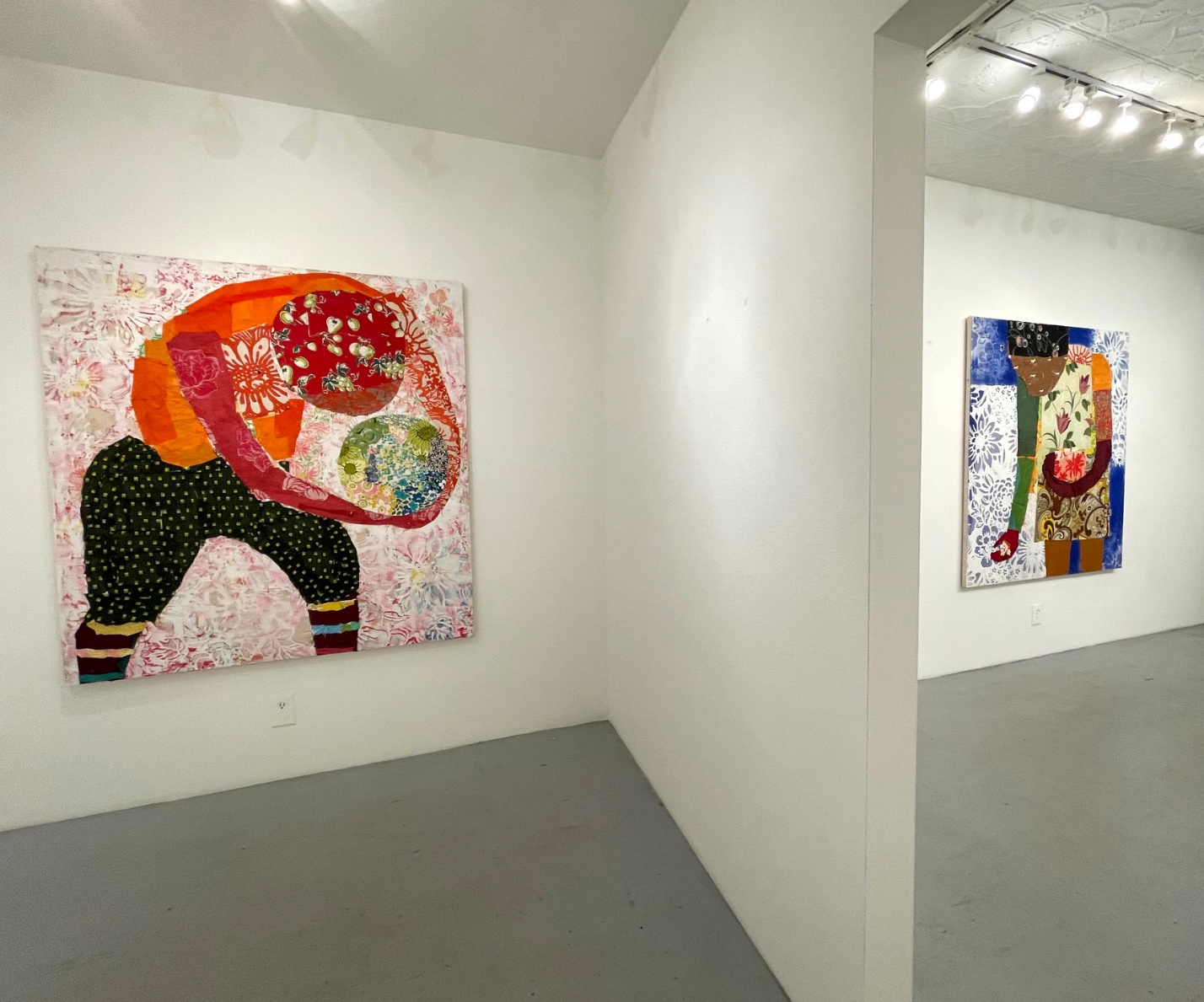
The exhibition PRESENT at 490 Atlantic gallery features nine paintings by Jessica Weiss. In this body of work, made during the pandemic, Weiss continues to combine wallpaper, silkscreened patterns, fabric, and paint—utilizing the optical and psychological power of these scraps from domestic life. Within the colorful and tactile surface, figures appear, and gesture becomes important. The exhibit opens Saturday February 25th, 5-8pm.
A Grain of Salt | Un Grano de Sal, the new exhibition at the Boiler in ELM Foundation features Fernando Ruíz Lorenzo’s new body of work—a series of paintings and installations with solar salt, styrofoam, acrylic, and aerosol paint. Ruíz Lorenzo’s work merges the history and political narratives of Puerto Rico’s colonial relationships to Spain and the United States.
Paintings are the products of imagination whose language is feeling and form. My paintings describe an interior theatre where the relationship of energy to limitation unfolds in a drama that is primarily optical. The work references the natural world filtered through the lens of the marvelous and invites the viewers’ participation and interpretation…. a task ideally suited to painting.
Publicity photo of Peter Falk from the television program “Columbo,” NBC Television
Do you remember how people were bingeing TV shows like The Sopranos or Mad Men during those long pandemic days and nights? Well, I was also bingeing–but on that old television chestnut, Columbo. If you’ve never watched it, Columbo is a detective murder mystery show, but…it’s an anti-whodunnit. The show always opens with all of us witnessing the villain committing the crime (off-camera—which is much appreciated by the squeamish). It’s a unique formula for a detective show because we know right from the get-go who the killer is. The audience watches Peter Falk as Detective Lt. Columbo, guilelessly but cunningly noticing clues, making connections, and solving the case, all the while hilariously pestering the murderer to distraction.
Scherezade Garcia, Paradise According to the Tropics/Sunburnt Jesus, Acrylic, Charcoal on Linen, 72 x 48 inches
Metaphor Projects is an artists-run space for contemporary art and culture founded in 2001 by two working artists. Directors/ Curators: Julian Jackson and Rene Lynch have mounted more than 100 solo and group exhibitions presenting the work of hundreds of artists and spent two decades developing what they call “the social sculpture that is Metaphor.”
Manju Shandler, Wonder Whale 1, 2018, mixed media, 23×19 inch
Luckily, or to many art-mavens’ chagrin, our 21st century art world—in line with the global techno-culture and socio-political processes—seems to have abandoned crusades of “right” or “wrong” related to artistic form (though sometimes that does not apply to content). We are experiencing a dizzying array of aesthetic expressions, where often fast-pace visual trends replace ideologies of form. Unlike some passing trends, visual narratives based on mythological iconography have been central in all art forms since archaic ages, except for the early-mid half of the 20th century when narrative impetus was largely downplayed in most of what was called the “Avant Garde” art of the time.