In Conversation
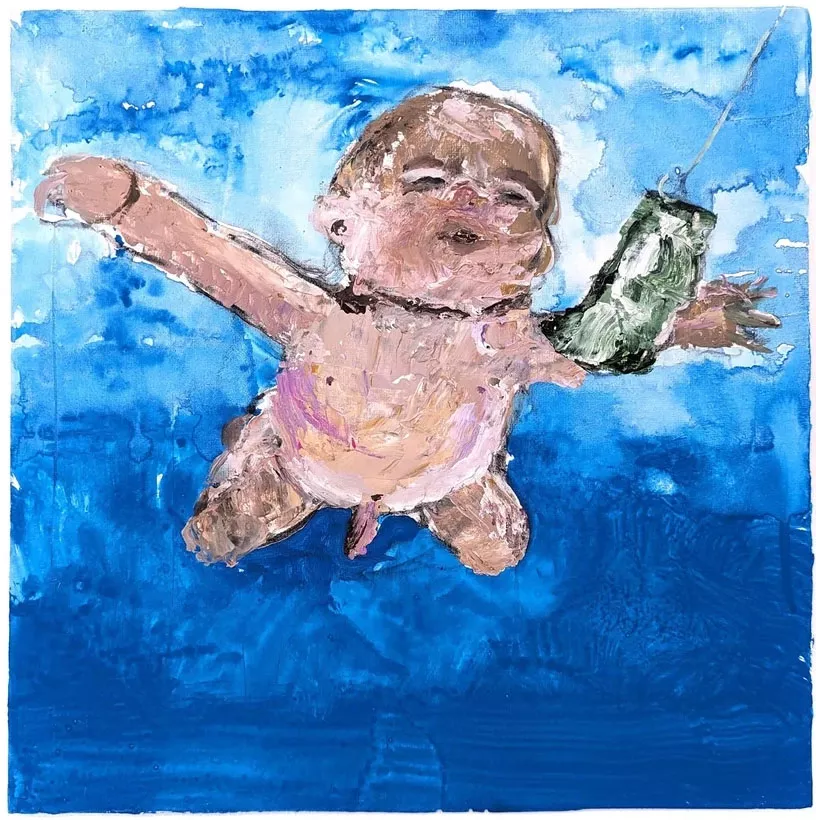
reMastered: Jac Lahav’s Record Paintings is a solo exhibition at Mana Contemporary featuring a selection of over two hundred intimate 12 x 12 inch paintings of iconic album covers celebrating the slow, tactile process of gouache on canvas. The project asks what painting can add to images that already live in our collective memory. This iteration of Lahav’s work opens a new line of inquiry into what artists listen to, drawing from record collections of artist icons Jackson Pollock, Georgia O’Keeffe, Francis Bacon, and Dan Flavin. Artist Jac Lahav and curator Michele Jaslow sat down to discuss the exhibition for Art Spiel.
Michele: Beginnings can be very revealing. They are fueled by a high-energy spark of curiosity chasing an idea. It holds the promise of discovery, a pure moment of creativity and the start of something larger than ourselves. Support is also important and for Record Paintings SPRING/BREAK gave the series its initial platform and important opportunity to develop and connect. Let’s talk a bit about how this series began for you and why records.
Jac: In 2022 I was looking for a new subject, having just finished a large project and exhibition of my Foster Care works. I was looking at my early 48 Jews series, a large group of paintings that explored the potential of painting, stylistic inconsistency, and smooshing around pigment to resemble and deconstruct portraiture. Similarly, I began the record series from a point of experimentation, asking what my hand can add to an image. Also, I was listening to a lot of Nirvana and said to myself “I want to paint that baby.”
Michele: Share the story of the Russian bootleg of a Sonic Youth album that kicked this off.
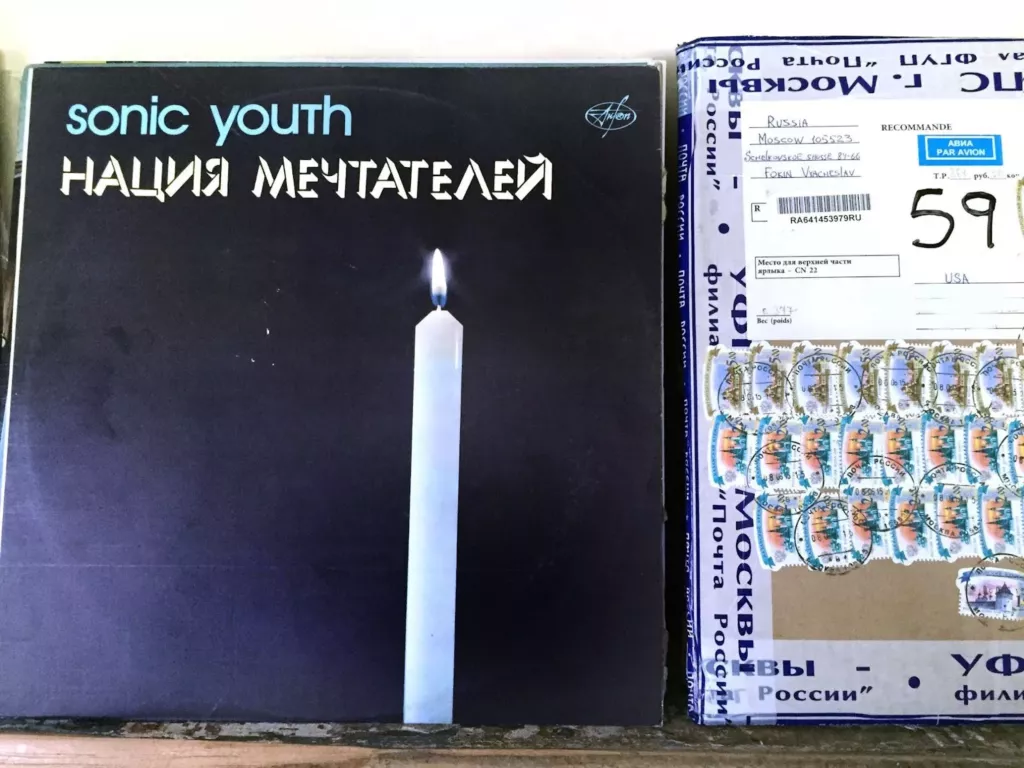
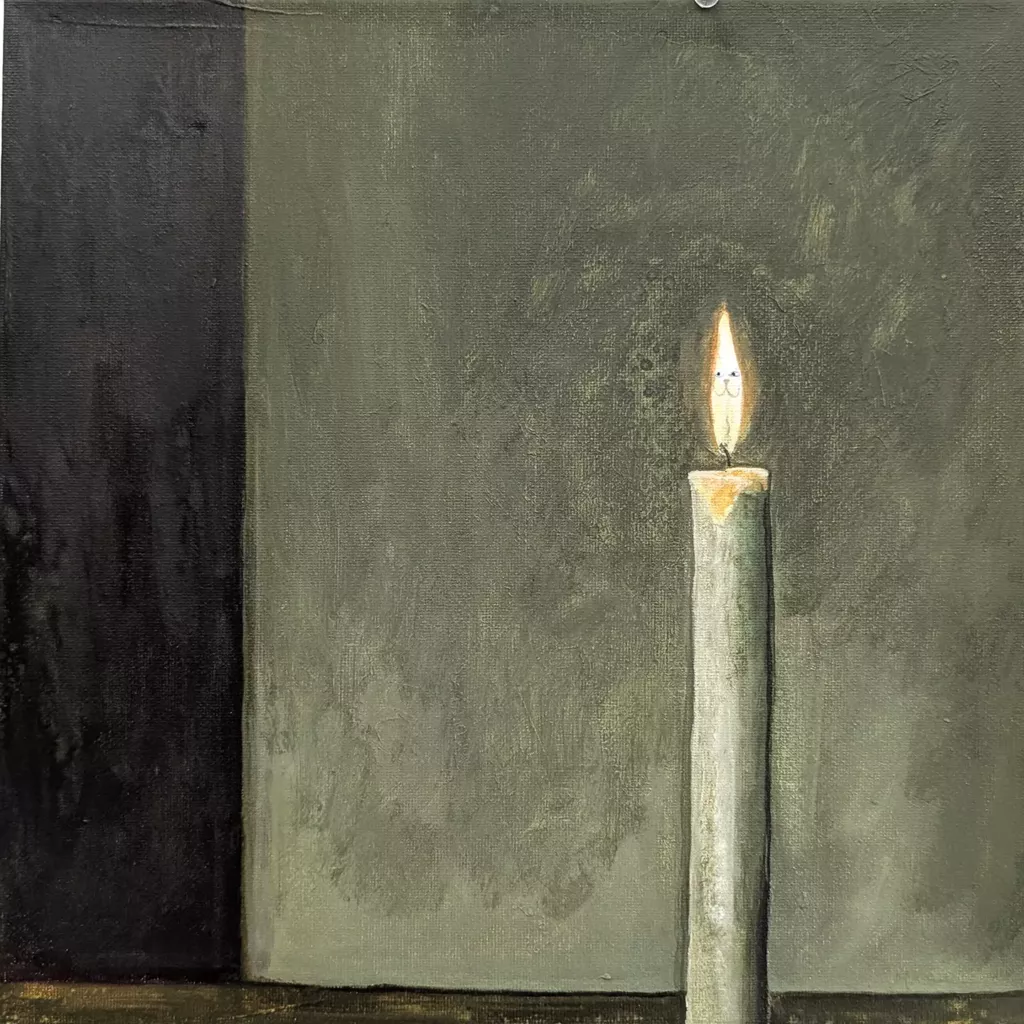
Jac: Around 2012 when I began collecting records, I found a Moscow bootleg of Sonic Youth’s Daydream Nation. The original had Gerhard Richter’s candle painting on the cover, yet whoever produced the bootleg used a random candle photo. When the parcel arrived, it was plastered with stamps upon stamps, an object in itself. I loved it. This was an image standing in for an image that already stood in for a sound.
Michele: Each painting is 12 x 12, the size of a vinyl record sleeve. How did scale shape your approach?
Jac: These works are super intimate. Gouache became essential. It lets me get small, crisp decisions that acrylic did not give me at that scale. I paint them like a watch maker, inches from the surface. Likewise, the ideal viewer will read the works close up, like record album liner notes, discovering each painting’s secrets.
Michele: You move between faithful translation and visible invention. How do you decide?
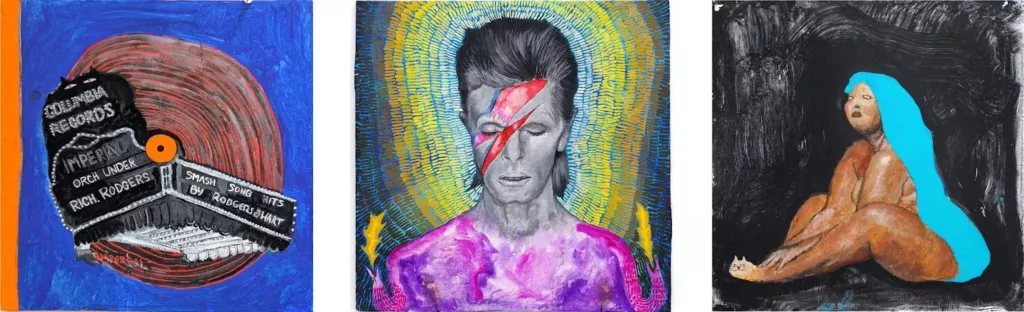
Jac: Images are weird and our relationships with them are confusing. Good painting invites the viewer to actively see the work, the brush, the surface, the weirdness. As a contrarian, I’m shooting myself in the foot when starting with highly recognizable images, especially leaning into recognition with realist technique. I’m looking for that unique viewer who takes time to see the painting and not just the image of David Bowie already in their mind.
Michele: This series has grown in fascinating ways, exploring your self-portrait approach beginning with mining records in your personal collection and smartly expanded to mining the record collections of other artists. Let’s talk about what led you into exploring the archives of other artists’ record collections.
Jac: It was you! After our first show at Spring/Break (and shout out to Ambre and Andrew for supporting this type of work year over year). You texted me a photo from the Pollock Krasner House of their record player. That opened a door. I reached out to the museum, chatting with the director, discovering what was on those shelves. On a subsequent family trip to Dublin, I wondered if Bacon had any vinyl hidden in his train wreck of a studio. Turns out he had a bunch of Edith Piaf. Recently I’ve been talking with O’Keeffe’s foundation. I learned that she had vinyl and to O’keefe listening was an “active” practice. She would sit and do nothing but listen. That idea of attention is key to these paintings.
Michele: Through painting these collections, are you creating a kind of portrait or biography?Jac: That wasn’t my original intention, but yes. A stack of records is a powerful biography of the listener. Dan Flavin’s selections read like a concise biography in eight discs. My own choices also map my life, from the first Public Enemy tape my sister gave me, to the Sonic Youth Richter cover, and more recent listening to Lizzo and T-swift.
Michele: What has surprised you most in the archival digging so far?
Jac: How scarce images once were. A record jacket used to be a rare portal rather than one more tile in our infinite scroll. We can’t check the mail without seeing glossy images. Back in the 50’s and even 80’s, the images on record albums were precious. We would sit in our rooms and devour liner notes, I can imagine Bacon and O’keefe doing the same.
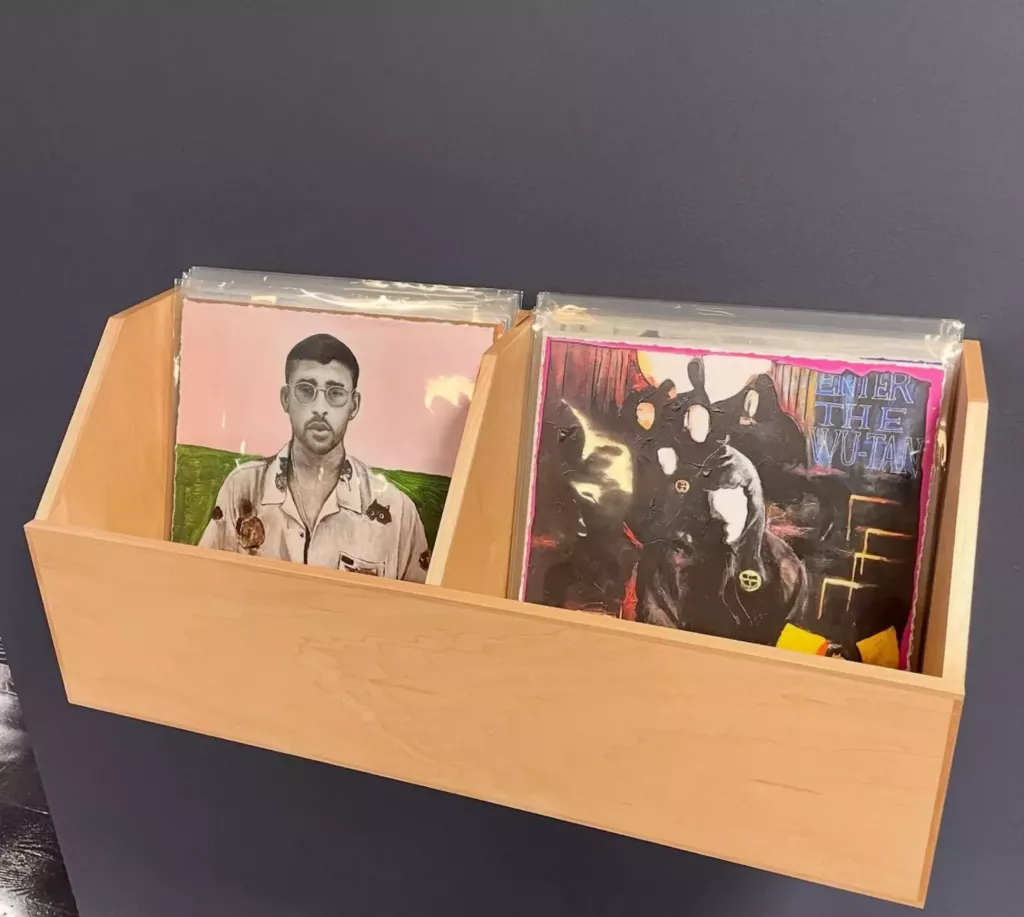
Michele: When shaping this exhibition we discussed issues like the historical significance of album covers in relation to music sales and the changing landscape of visual representation in the digital age. We talked about your research finding of the first graphic album cover by Alan Steinweiss, a young designer working at Columbia Records. This went hand in hand with discussions and the decision to include in this exhibition a space to address censorship. To explore the intersection of culture, art, and commerce, shaping the conditions under which creative expression circulates. Share what led you to this decision and where this fits into your impressive series of over 200 works.
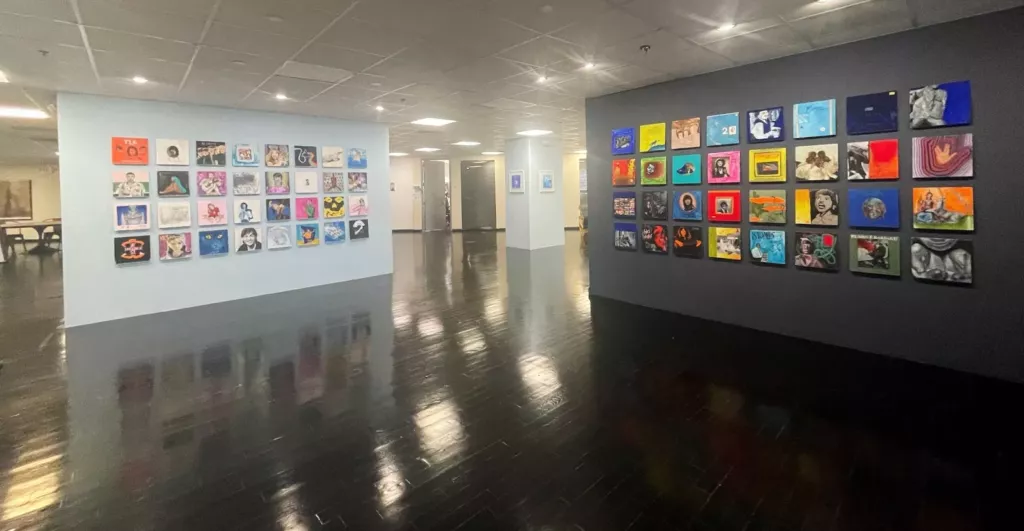
Michele: How does reMastered connect to your larger practice, like Great Americans or 48 Jews?
Jac: All of these works question how an image can stand in for a life. A portrait sits in for a person. A cover tries to represent a body of music. As such, these works are “icons” in the traditional Russian sense. Contemporary pop imagery is its own religion, the church of capitalist branding. My series are all super layered, in paint and in research and bordering on journalistic practices. The works explore our relationship to image in both physical paint and our experience of them online. Through repetition and collection I find meaning.
Michele: What comes next?
Jac: I will keep looking into artist archives while filling in a few gaps in my own collection where the series feels incomplete. But painting and content is infinite. If I keep working on the record series there are supposedly over 3.6 million album covers to choose from. I’ll have to stop sometime, so perhaps this show is simply Volume One.
reMastered: Jac Lahav’s Record Paintings exhibition at Mana Contemporary
888 Newark Ave, Jersey City from Aug 30, 2025 to Jan 14, 2026
Opening October 19, 12-6PM
Jac Lahav is an artist based in Connecticut whose practice spans portraiture, archives, and installation. With 9 solo museum exhibitions, their work has appeared at institutions including the Jewish Museum New York NY and Longview MFA TX and supported by National Endowments of the Arts and the Rauschenberg Foundation. @jaclahav | jaclahav,com
Michele Jaslow is a Brooklyn based independent art curator, writer, and appraiser. Through partnerships with institutional and alternative spaces, Michele champions thought-provoking artists who connect with diverse audiences. Michele holds an MFA Cranbrook, a BFA Purchase, post-graduate NYU New Media, and art appraisal studies Appraisers Association of America. Michele recently co-founded the arts hub ThinkFiner (thinkfiner.com) with exhibitions based in New York City, Loire Valley France, and Budapest Hungary. @radarcurator | radarcuratorial.com