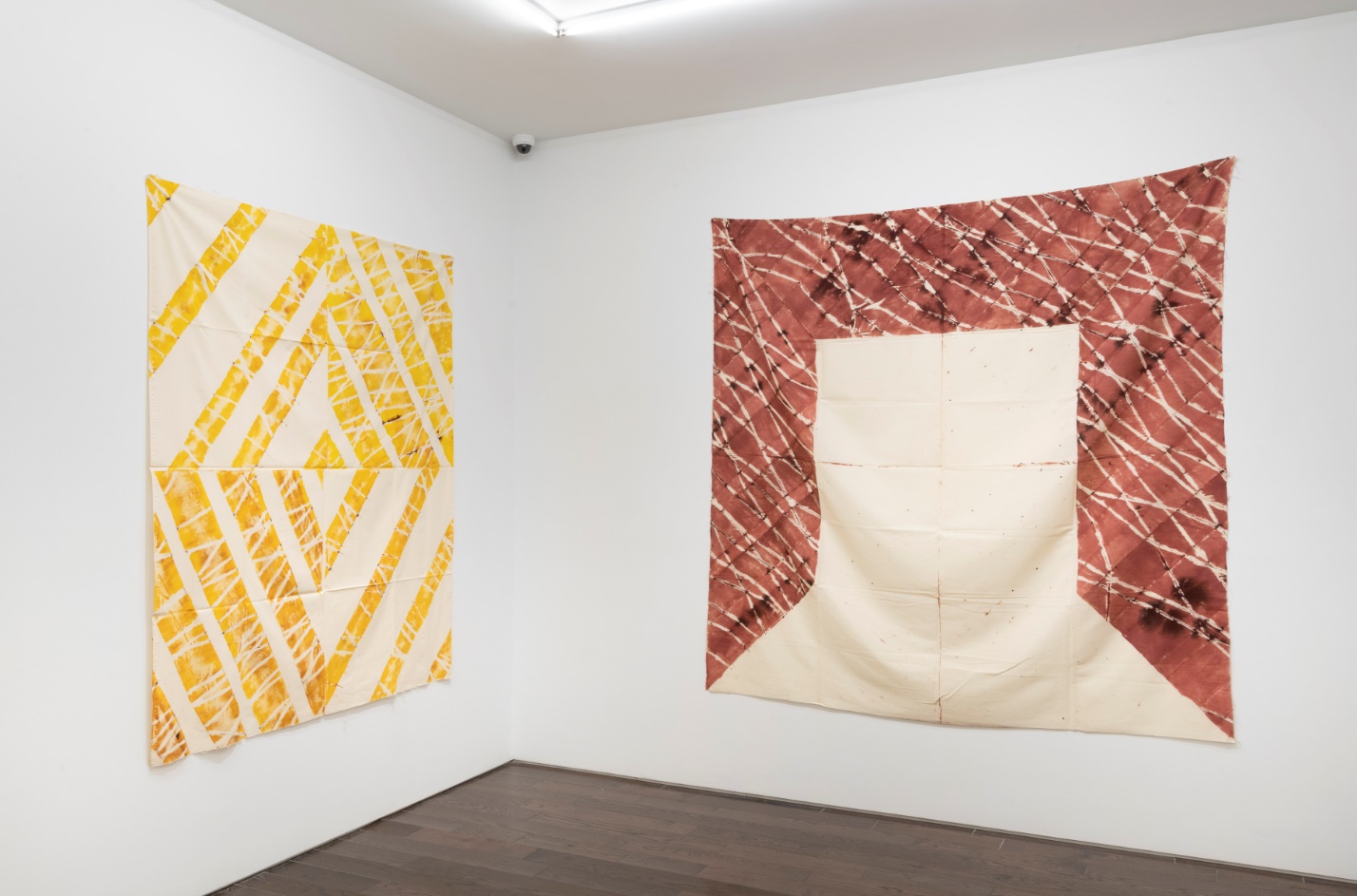
Jules Olitski ,Wanderings: Bilbao, Orange, Yellow and Blue, 2004, acrylic on canvas, 45 ½ x 39 1/2 inches, from the exhibition Jules Olitski: Late Works at the Sam and Adele Golden Gallery on the campus of Golden Artist Colors in New Berlin, New York
Painter Elisabeth Condon’s reflections on a painting by Jules Olitski she had seen at the exhibition Jules Olitski: Late Works—were initially presented in the first episode of Elisabeth Condon Describes a Painting, a new series artist Amy Talluto has recently launched in her podcast Pep Talks for Artists. In each episode in this series Elisabeth Condon shares her way of looking at one painting, here, at the acrylic painting (2004) Wanderings, Bilbao: Orange Yellow and Blue, by Ukrainian- American artist Jules Olitski. The show at the Sam and Adele Golden Gallery in New Berlin, NY is up until March 2023 and another concurrent show of his works was up at Yares Gallery in New York (till February 11, 2023).
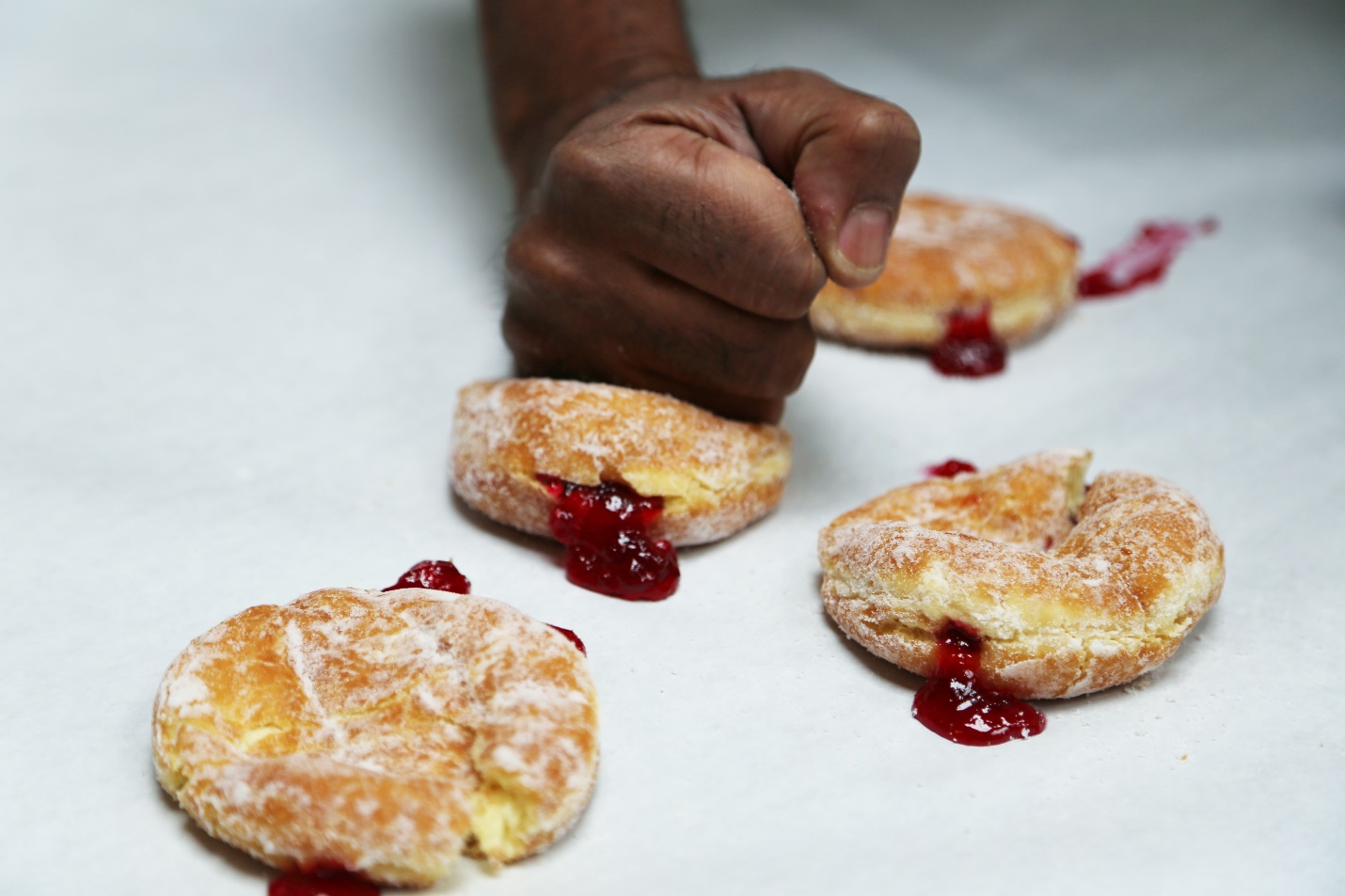
Pope.L, studio, 2022, photo courtesy of David Zwirner Gallery 52 Walker
When I heard about Impossible Failures it promised to be an exciting exhibition, in that it was to bring together Gordon Matta-Clark (1943–1978), a White post-Minimalist artist best known for his site-specific works of cutting through buildings and homes, and Pope.L (b.1955), a Black artist who used to describe himself as the friendliest Black man in America, and is known for his public performances and installations, which address Black racial stereotyping and other such hypocrisies. In a not un-interesting way, the resulting exhibition is a curatorial mash-up in which the works in it are overwhelmed. As such, this is not an exhibition where the works of each artist supply a context for the other, nor does it explore Matta-Clark’s legacy by focusing on Pope.L’s overlapping strategies. Instead it might be thought of as a collaborative installation authored by the curator Ebony L. Haynes.
Publicity photo of Peter Falk from the television program “Columbo,” NBC Television
Do you remember how people were bingeing TV shows like The Sopranos or Mad Men during those long pandemic days and nights? Well, I was also bingeing–but on that old television chestnut, Columbo. If you’ve never watched it, Columbo is a detective murder mystery show, but…it’s an anti-whodunnit. The show always opens with all of us witnessing the villain committing the crime (off-camera—which is much appreciated by the squeamish). It’s a unique formula for a detective show because we know right from the get-go who the killer is. The audience watches Peter Falk as Detective Lt. Columbo, guilelessly but cunningly noticing clues, making connections, and solving the case, all the while hilariously pestering the murderer to distraction.
As an artist, have you ever looked around and felt ancient, withered, and uncool? Well, this pep talk is for you, because we’re about to find out how later in life, big bangs can be the bravest and most creative big bangs of all.
Installation view, André-Pierre Arnal at Ceysson & Bénétière New York. Photo courtesy of Ceysson & Bénétière New York
With the advent of Modernism in the late 19th – early 20th century, differing movements, schools, and networks sprang up internationally—some were generative and sustainable, others dead-ended, though unbeknownst to most of us, traces of these persist or return. This cross-fertilization drove Modernism’s evolution until the post-World War II era the new art made in the U.S. came to dominate the narrative. The triumph of the NY School (AbEx) corresponded to the new political and economic order. In this scenario the vanguards that emerged from the rubble and detritus of the War such as C.O.B.R.A., Nouveau Realisme, Lettrist, Zero, Arte Povera, etc. were trivialized, marginalized, or came to be appropriated. To this day, the European artists whose works come to be acknowledged in the States tend to be those whose works are used to typify the whole of a critical discourse, or style. This has reduced post-War European art to a short list that includes Pierre Soulages, Antonio Tapies, Lucio Fontana, Yves Klein, Francis Bacon, Joseph Beuys, Gerhardt Richter, Anselm Keifer, etc. In this manner, the illusionary status of the U.S. as the cultural leader of the free world is sustained, while European art is made to appear to be broken, fragmented, or at best sporadically relevant, rather than constituting a network of competing histories, practices, and critical discourses.
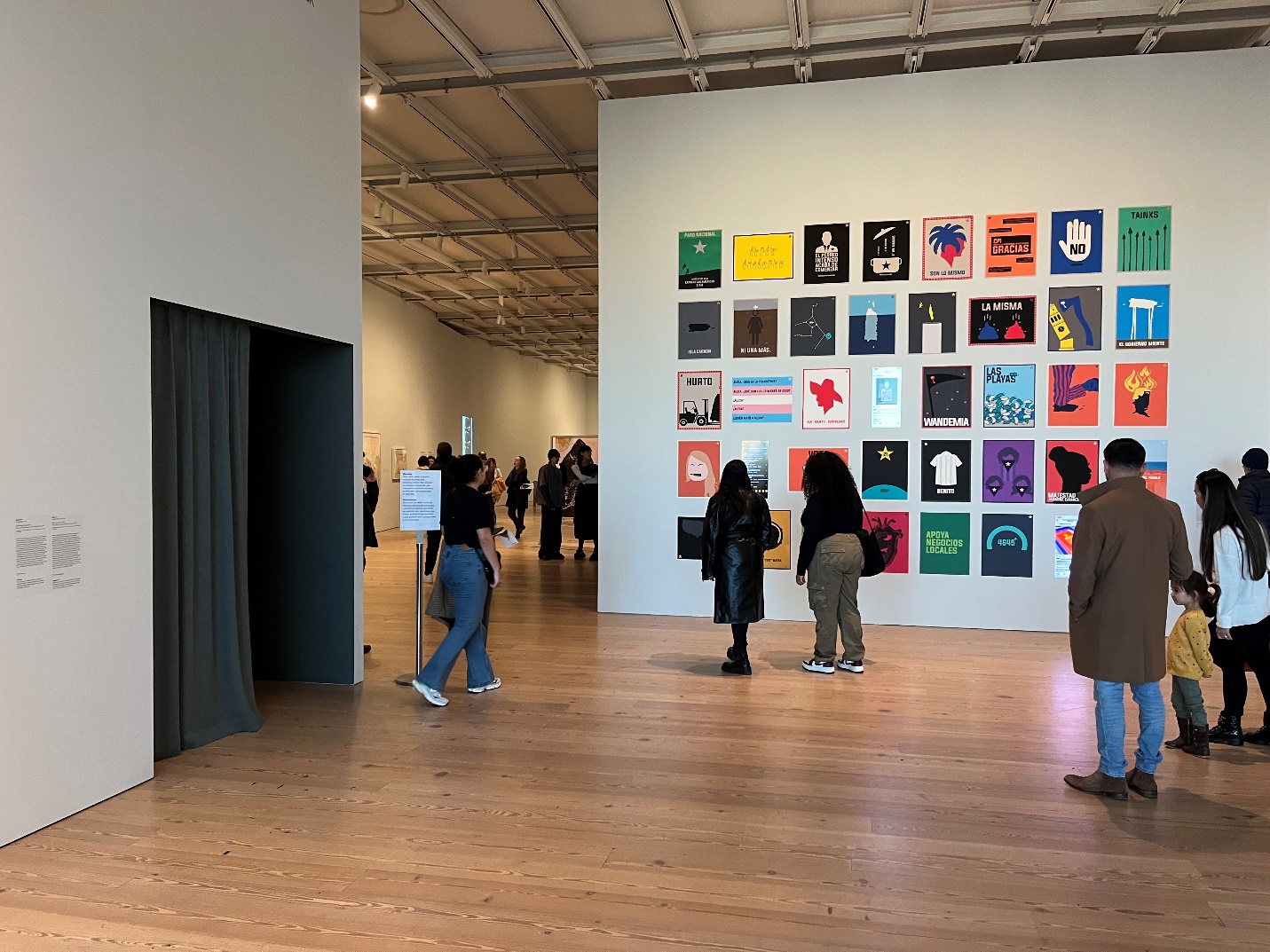
The exhibition no existe un mundo poshuracán: Puerto Rican Art in the Wake of Hurricane Maria, though it includes 50 works by 20 artists, seems overwhelmed given it has been installed in an enormous space. With the exception of two lounge-like areas in which billboard-sized video projections are installed, most of the works, modest in scale, seem to be scattered through the space, or enigmatically clustered together. Ironically, where the Wake of Maria is sparsely installed and attended, the Edward Hopper NY exhibition, given its scale and popularity, would definitely benefit from more space than the half floor it has been jammed into. Another oddity is the disparity in the number and scale of works each artist is represented by. I can only suspect the budget of this show was insufficient to achieve its stated ambition of “presenting artworks made over the last five years by an inter-generational group of artists from Puerto Rico and its diaspora.”
I would hate to think I have become an old and conservative critic who believes our best days are behind us. I would rather believe that my structuralist perspective is capable of evaluating contemporary emerging practices and recognize the social, cultural and political value of these tendencies. What brought this on is having recently seen the 1962–64 exhibition at the Jewish Museum. This show examines how artists living and working in New York during this three-year period responded to rapidly changing social and cultural conditions, by questioning what was considered to be art’s normative forms and subjects. This post-AbEx generation was concerned with creating aesthetic configurations that would result in novel perceptual modes and political subjectivities.
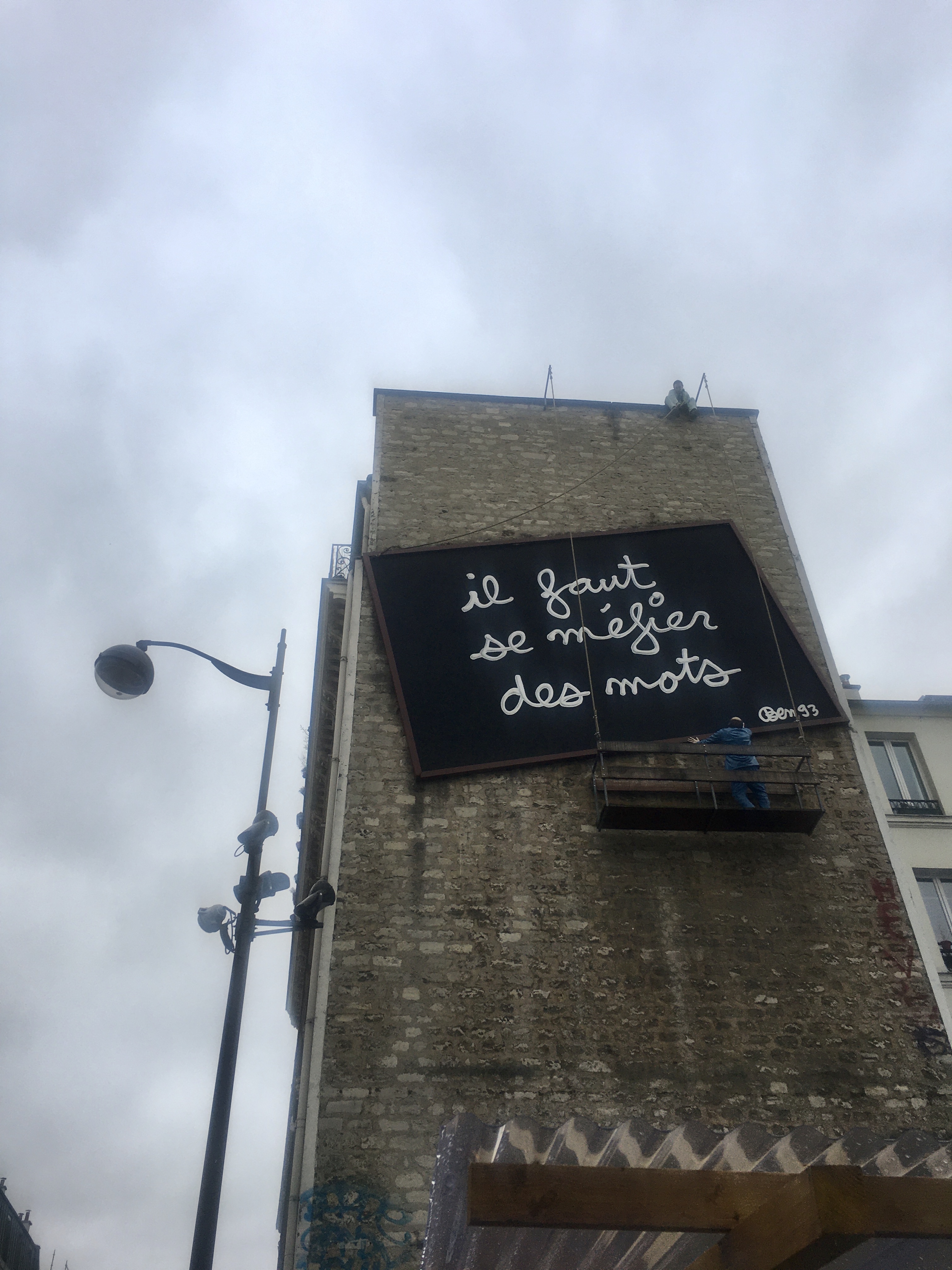
Il faut se méfier des mots (Beware of words), Ben, 1993. Belleville, Paris, France. Photo: Astrid Dick
To make a painting is not easy. To look at a painting is not an easy matter either, as it requires the viewer’s disposition and willingness to engage with it beyond words and labeling. Our brains like to pin things down, using minimum resources to move on to the next task as quickly as possible. They latch on to words. Yet the moment words enter our minds, we’re not really looking anymore.