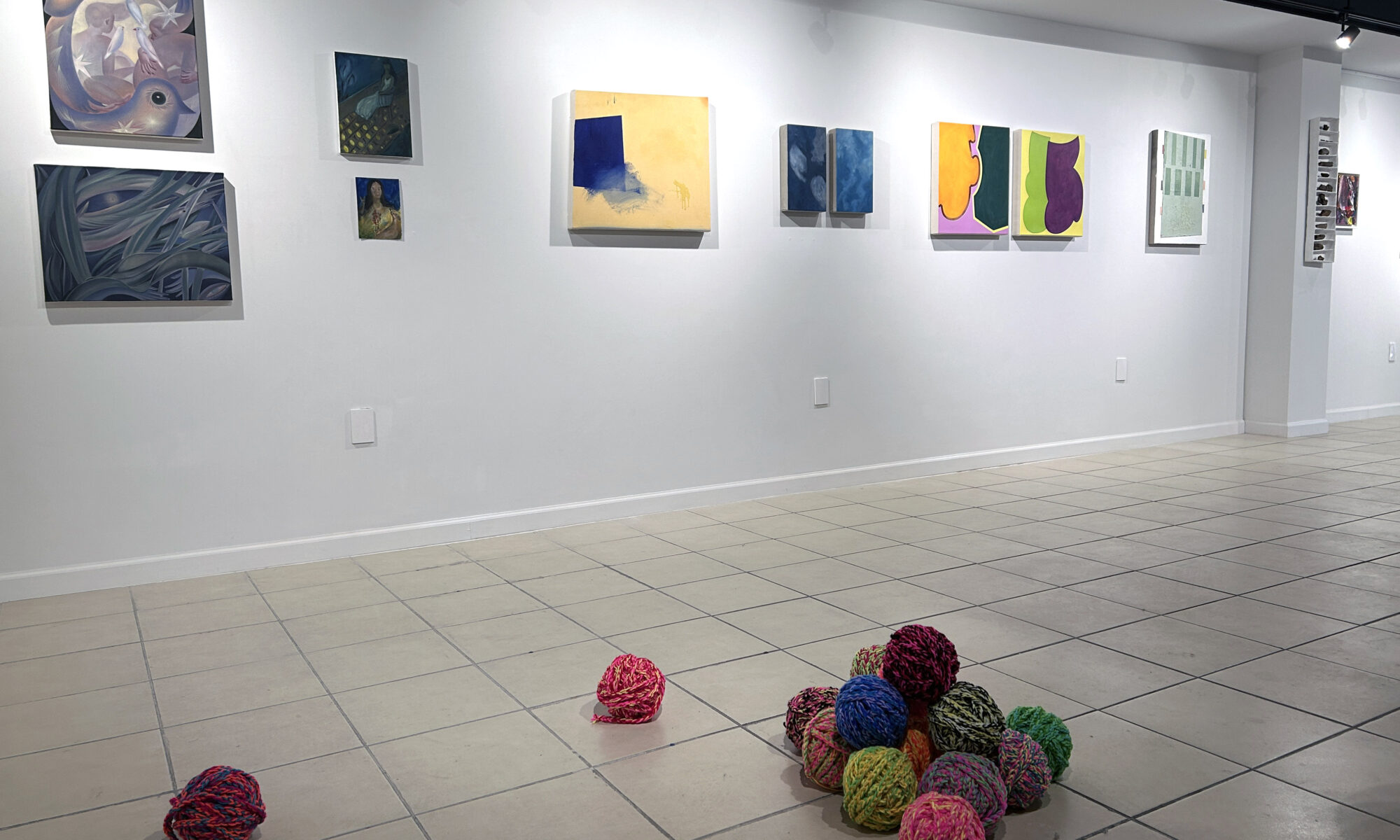
Walking into the space at 86 Bowery, you are greeted by a calm, welcoming exhibition, the walls warmly lit and filled with a wide array of drawings, paintings, and sculptures, featuring works by 24 artists. The exhibition title is Bonesetter, based on the idea of a bonesetter, an individual in many cultures who resets broken bones and dislocations.
The bonesetter, who was also a kung fu practitioner, exemplifies the complete holistic process of the skeletal and nervous systems from protection to destruction to healing. The space, being a doctor’s office as well, makes the title and theme quite fitting. Split between one large room and a smaller, curtained-off annex, the exhibition presents ideas that resonate with both the title and the works. The works exemplify the body, the mind, and aspects that revolve around them: bones, muscles, the senses, alignment, memories, ideas, feelings, clothing, everyday objects, and histories.
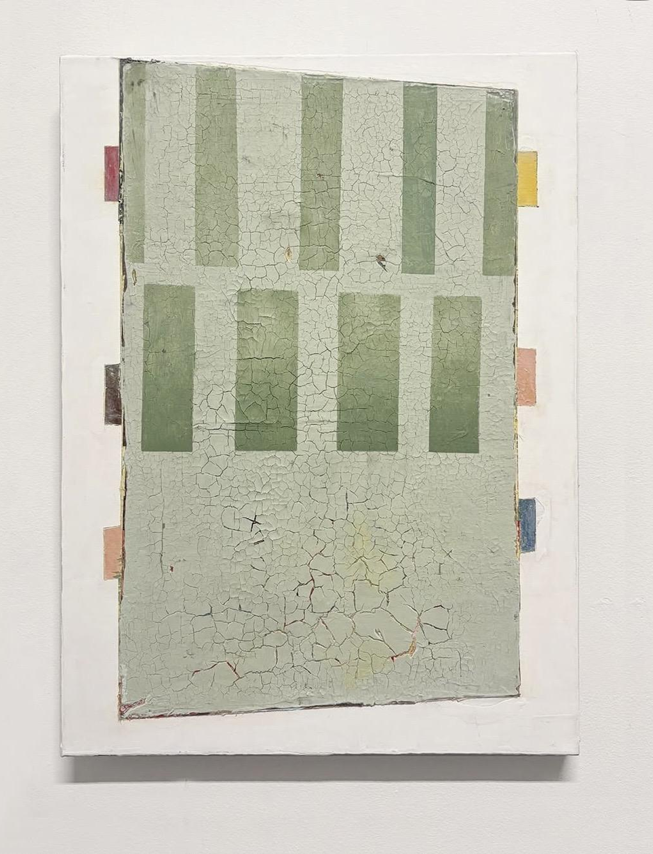
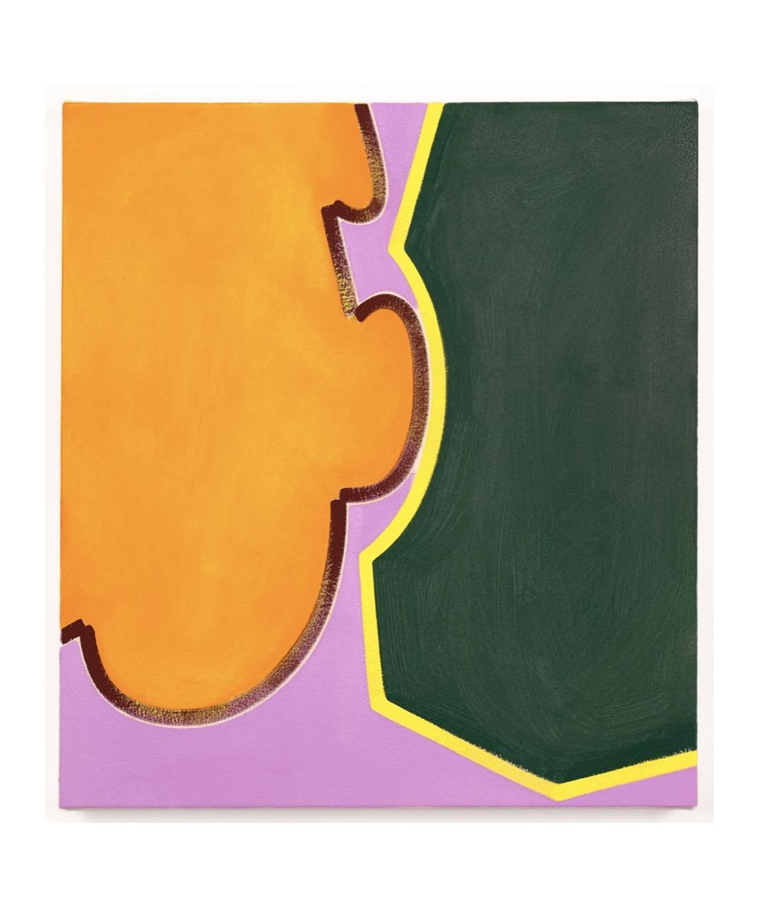
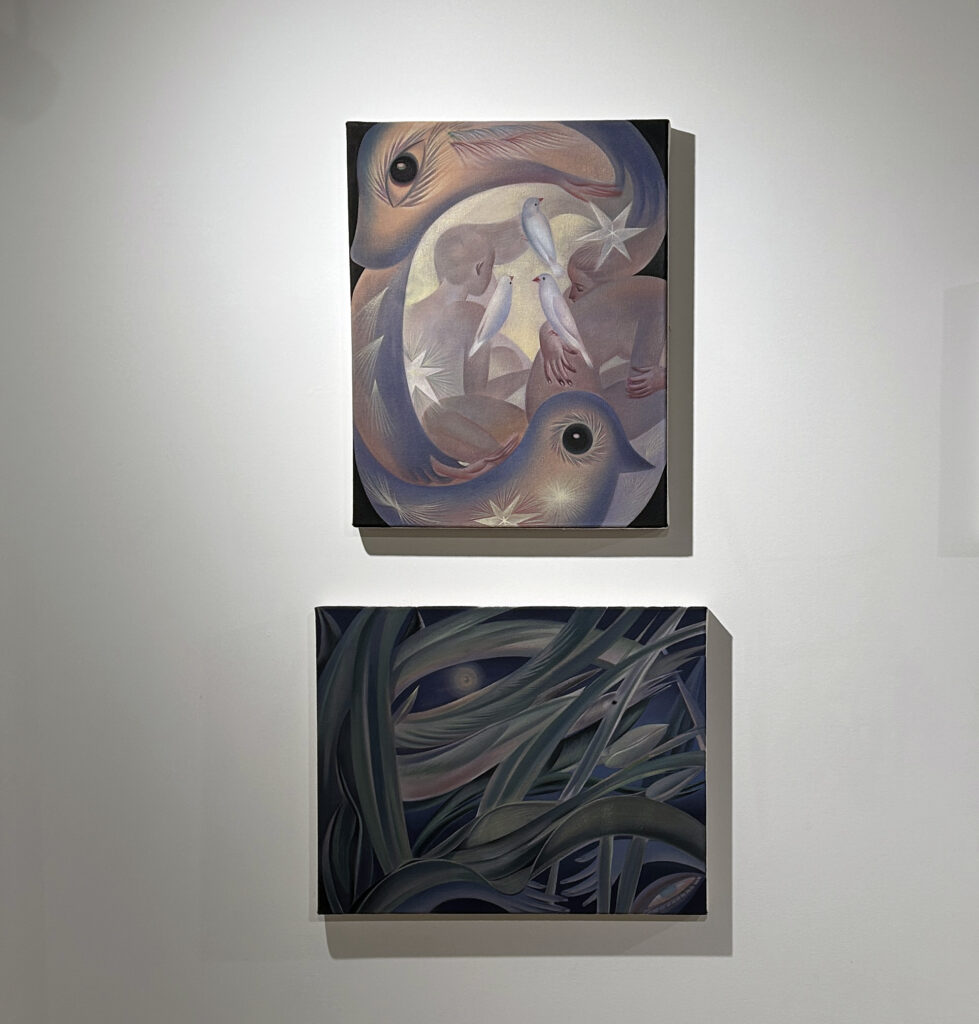
One of the first aspects of the exhibition that drew me in was how unseen aspects of the body were represented, what is shown on the surface, and what emerges through the artists’ decisions and voices. Many of the more abstract works appear delicate, layered, and detailed, yet carry a sound presence. Works that stand as the foundation, the bones of the body, show within the works of Siha Park, Yeonji Chung, Herok, and Seungheon Lee. All of these artists’ works are process-based, surface-focused, and foundational in their exploration of shape, line, and form. These prominent aspects of painting allow for deeper looks into the spaces these works create, such as the works of Park and Herok, pictured below, where the canvas is transformed, and shapes on the surface of the works become portals that take the viewer on a journey alongside the artist, where decisions on color, composition, placement and everything in between is considered.
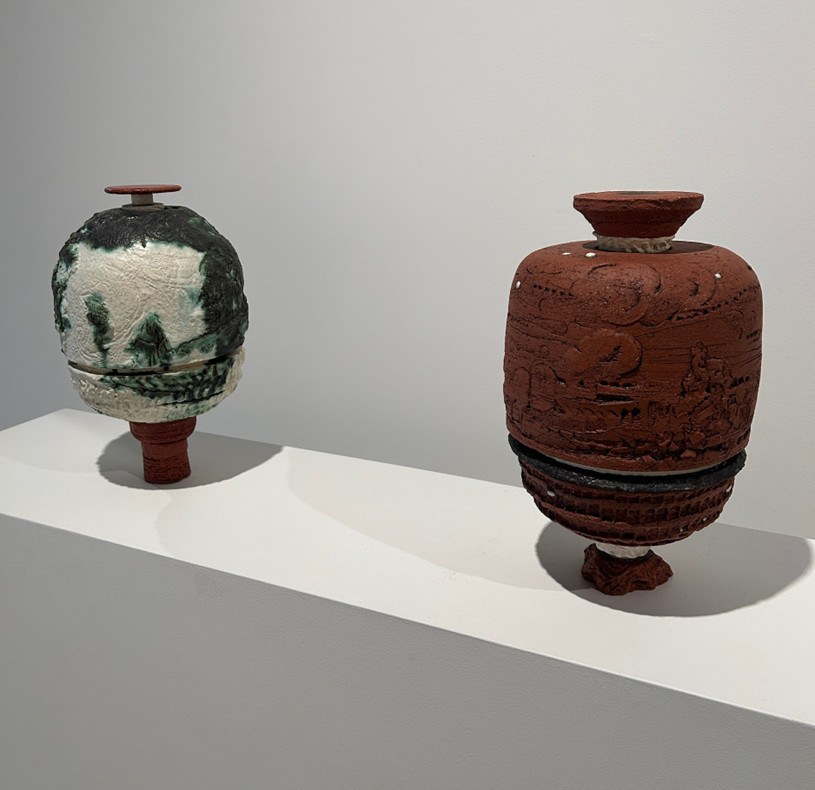
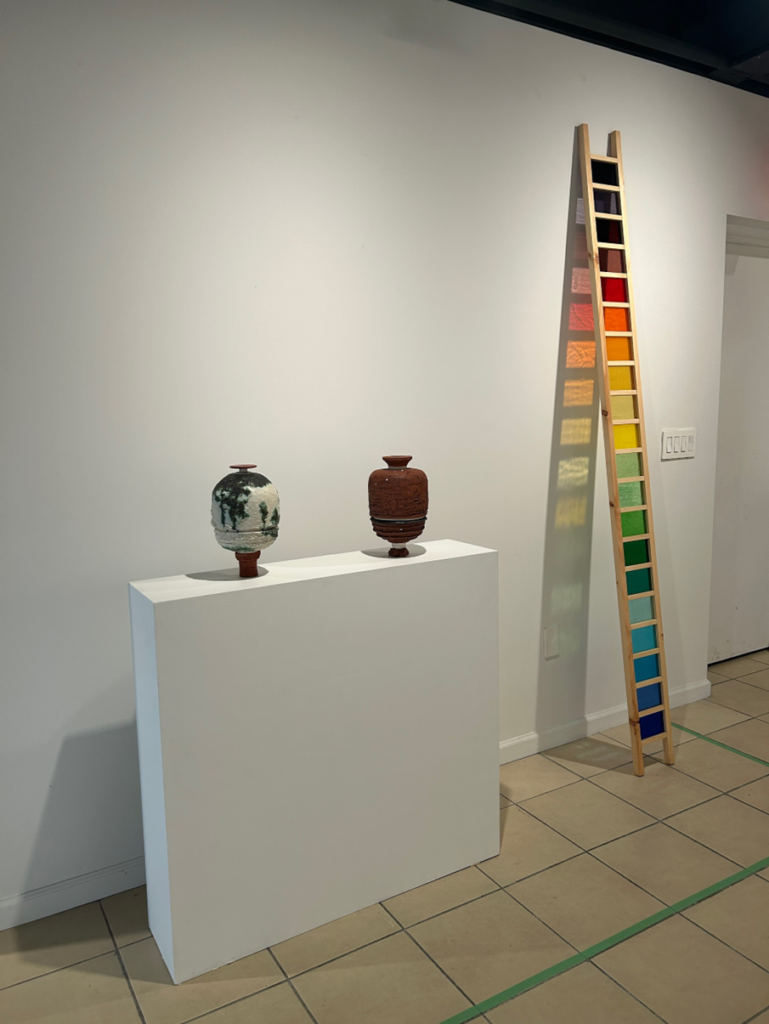
Another theme that runs throughout this show is form: the presence of a form or figure, or of intuition. For instance, in Richard Tsao’s Earthquake #3, the curator noted that Tsao worked on the pieces until he felt it was the right time to stop; this piece exemplifies that process. This is the same idea as Tsao’s yarn balls on the floor near the entrance, which hold a presence on the floor, feelings and intuition unraveled by the artist’s hands, who decided when to stop winding them and when to stop building up their form. In this way, Hilda Shen’s ceramic vessels, Upwelling and Spin, become a solid presence built up over time with clay, and they have the ability to carry something within them. Whether it is something seen or unseen, it doesn’t matter. Their presence on the pedestal carries a particular kind of grounding energy; it makes clear that form itself is important to both the body and its existence.
Taking a deeper look at the body, the idea of alignment and emotional states comes to mind in this next sculpture. Standing next to the ceramic vases, the energy flows into a stained-glass sculpture by Yasunari Izaki, titled niji no michi (pictured below), where the individual-colored rectangles reflect onto the wall, levitating calmly and ethereally. For me, the structure itself resembles a human spine, and the colors become emotions, carrying a sense of alignment. The ladder-like form is solid and a stoic presence.
The works of Yanqing Pei bring us intoa fantastical, whimsical, floating dreamscape, filled with creatures and figures that tell a story: a story from one’s dreams, where the act of remembering and creating is an integral part of human existence. Through symbolism, both Pei and Kosuke Kawahara, whose work is placed slightly further down the wall, create mythical, experimental characters in their paintings, allowing viewers to encounter them and discover elements that are both very familiar and very unfamiliar.
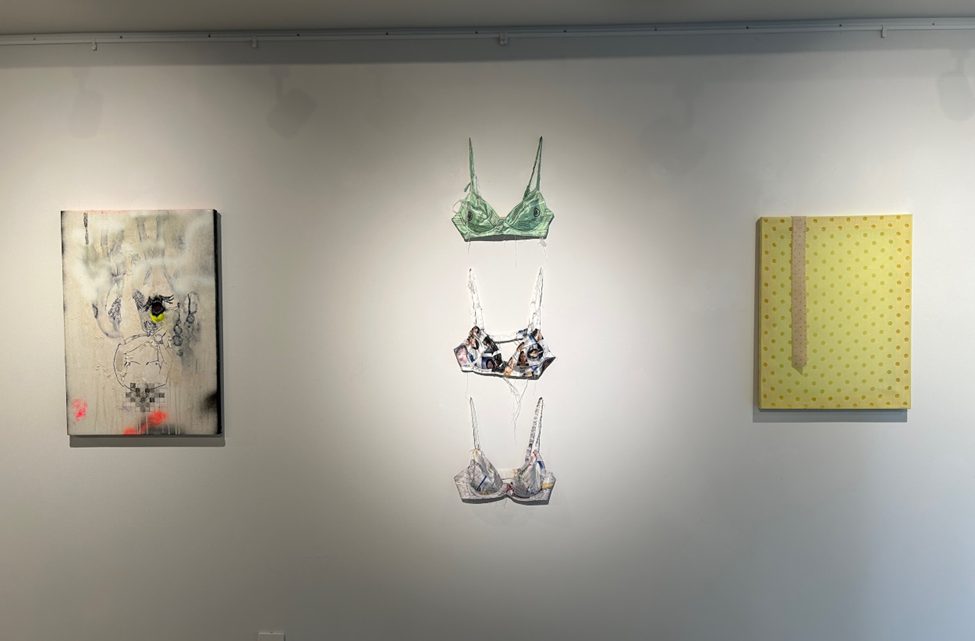
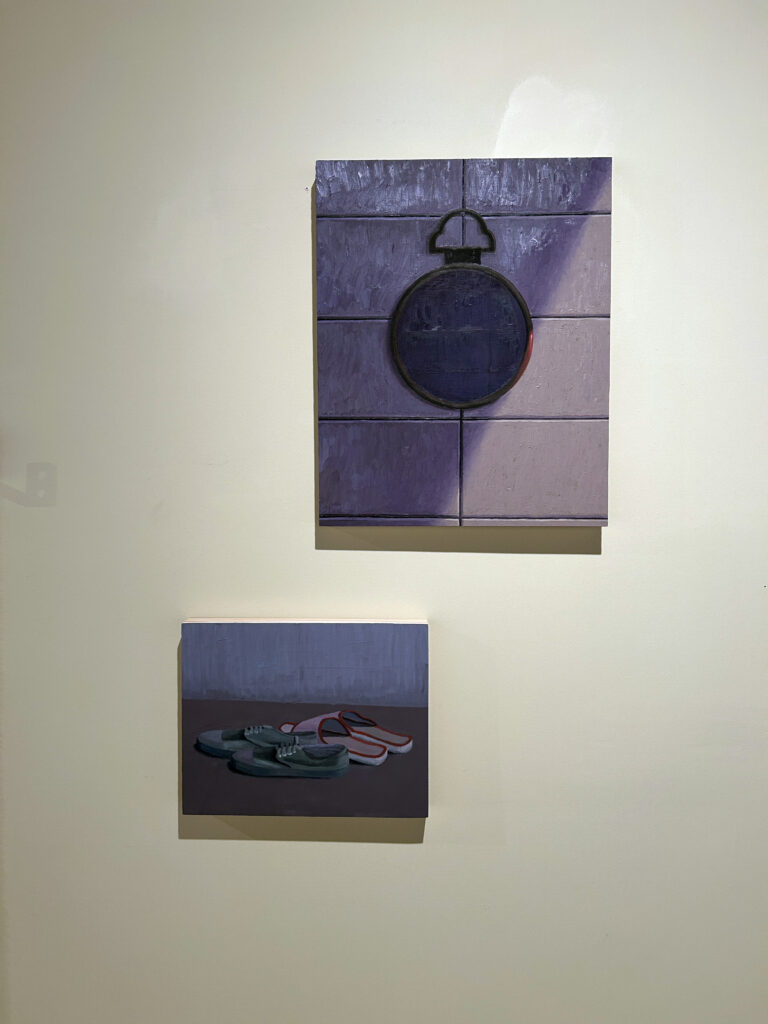
Memories and other external aspects of the body, such as clothes or food, are also prominent pieces within the exhibition. These pieces offer material conversations within the home and the body in their own ways. Through the paintings of Xiangjie Rebecca Wu, memories or past stories are illustrated by items depicted on the canvas, such as shoes—simple, quiet, but prominent. While the shoes are not directly the figure itself, the connection to the figure is still there; the significance of shoes for all of us is familiar. They join us on journeys, they tell stories, and once taken off at the entrance of a home to end the day, these articles of clothing become symbols of the body.
Another work that revolves around clothing is Jiwon Rhie’s Self-Defined series. The printed bras are made from identity documents, reflecting both the artist’s identity and how the article of clothing fits the topography of the feminine body, physically fitting the body as well. Another piece that connects an external aspect to the body is Xiangni Song’s LIME. This small painting, quietly placed in the far side of the gallery, stands stoically as a moment in time. Song depicts food presumably being prepped for a meal, a communal act that means a lot to people in both existence and relationships. While food is not part of the body, it becomes essential to sustaining it.
The sculptural works in the show are very engaging with how they are placed in the space. Whether placed on a pedestal, such as the pancake forms of Sweet Jiggles 7 by Yen Yen Chou, or suspended from the ceiling, like Claire Heidinger’s work, these works can be viewed from all sides. For me, the sculptures in the entire exhibition engage the senses. Some are tactile, some visual, and, as in Sweet Jiggles 7, the sensation of taste is evoked by the imagery of a tall stack of pancakes drenched in sweet syrup. All of the sculptures explore structure, fragility, and how these factors affect the body in many ways: which foods might be best for the body, what brings us joy to experience, or what presence may simply calm the space. The back room is a softer space, where the works offer a serene companion for someone traveling through the show.
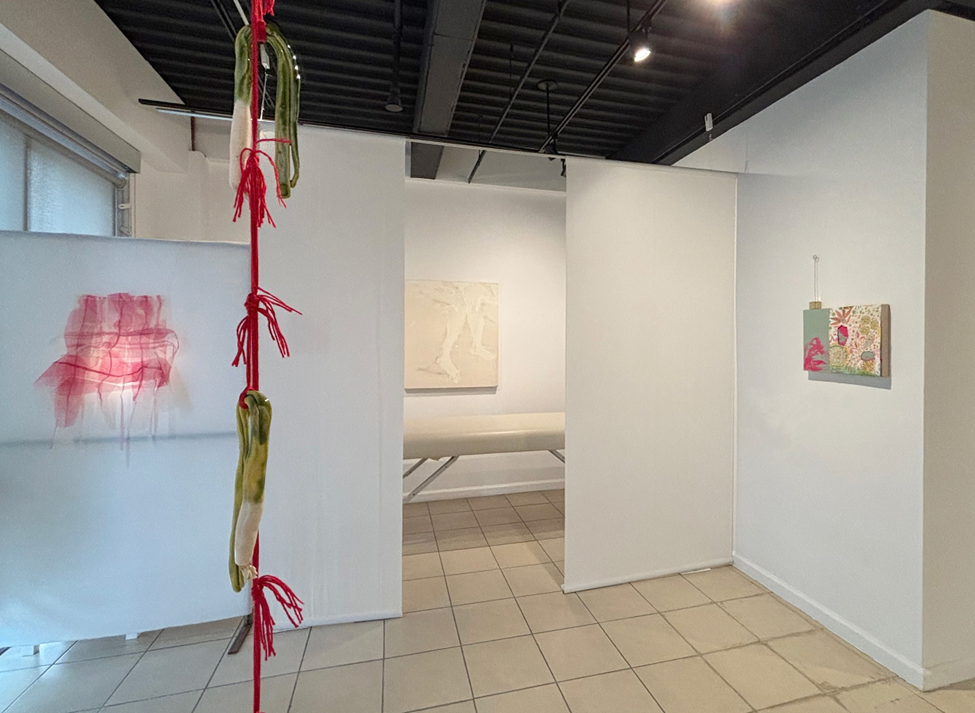
This exhibition is a tightly knit collection of ideas, and each artist’s voice is prominent in their work. They are strong connectors to each other. The works depict many aspects of the body, including balance, fragility, alignment, protection, settling, movement, and dislocation. All of these terms converge into the idea of a bonesetter, with a focus on both the internal and external aspects of the body. The gallery installation offers pockets of vivid color, and softer tones in between- a flow of energy and atmosphere throughout that is both calming and explorative. This show offers a lot to explore, discuss, and consider, and spending time with it is highly rewarding.
Bonesetter, 86 Bowery, Third floor, walk up, Friday and Saturday 10-4, through January 30th, 2026, infoahmorg@gmail.com
Sponsored by Dr. Wah Lee, organized by Nicola Ginzel, Michael Brennan, and Kosuke
Kawahara
Featuring Artists: Jimin Baek, Yen Yen Chou, Yeonji Chung, Claire Heidinger, Junchen Huang, Rhea Eunjoo In, Yasunari Izaki, Kosuke Kawahara, Herok, Kyung Kim, Jeeeun Lara Lee, Seungheon Lee, Xingze Li, Ingrid Lu, Jean Oh, Siha Park, Yanqing Pei, Jiwon Rhie, Ju Ryu, Hilda Shen, Xiangni Song, Richard Tsao, Xiangjie Rebecca Wu, Ayoung Yoo
About the Writer: Taylor Bielecki lives in Gowanus, where her studio is, and works at Pratt Institute, where she earned her MFA, she also studied at Penn State, where she earned a BA in English and a BFA in Fine Arts. She finished as a finalist in the Kennedy Center’s VSA National Emerging Young Artist program for 2017; where she earned an award of Excellence. She has shown prints internationally in a print exchange in Australia and exhibitions in Dubai, India and the Glasgow School of Art. She has also shown paintings internationally in Gallery 24N, PhilaMOCA’s juried exhibitions in Philadelphia, Pa., Perry Lawson Fine Art in Nyack, NY, BWAC in Red Hook, and IW Gallery in Brooklyn. Taylor works periodically for Two Coats of Paint, TUSSLE Magazine and has joined Art Spiel as a contributing writer.
Related articles:
https://artspiel.org/unbind-figuring-the-layers-of-being-with-the-new-york-studio-school
https://artspiel.org/salman-toor-and-intimate-histories-at-luhring-augustine
https://artspiel.org/ghada-amer-new-directions-and-disobedient-thoughts-at-marianne-boesky-gallery/
https://artspiel.org/william-carroll-trees-at-57w57arts/
https://artspiel.org/sarah-martin-nuss-future-currents-at-rachel-uffner-gallery/