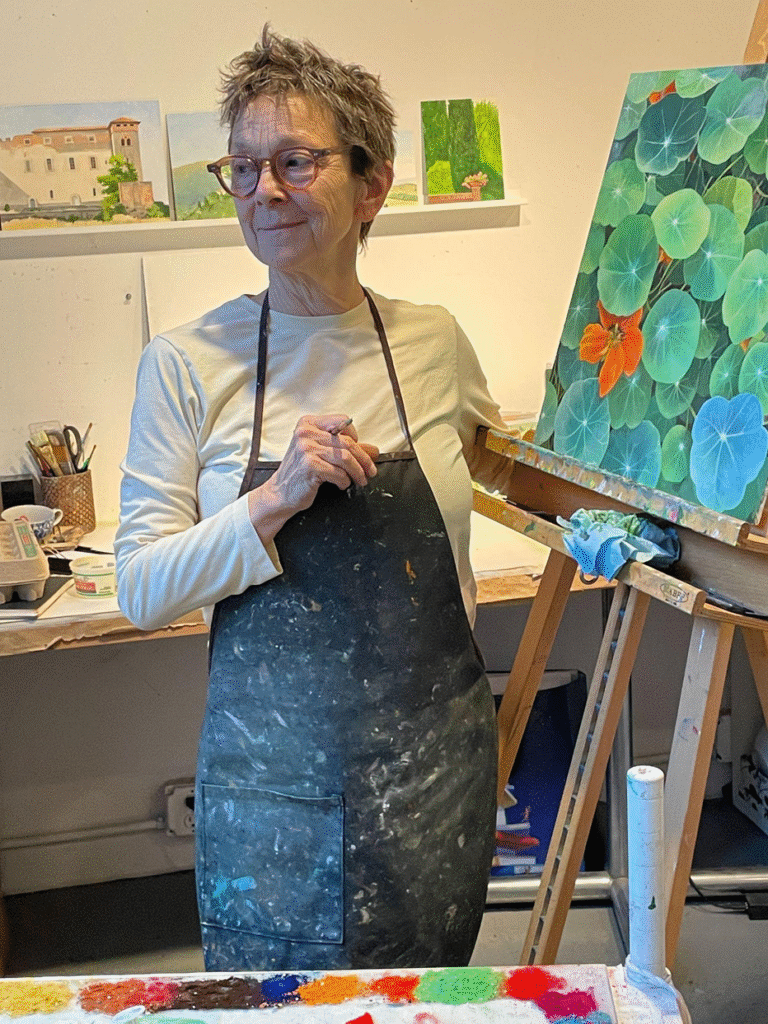
Work in progress, Constellation, Nasturtium, egg tempera on panel. Photo, courtesy of Cecilia Andre
Painter Susan Cohen began her artistic journey by depicting the interiors of the places she lived, drawn to the emotional resonance of light and shadow. While that early intensity has softened over time, her fascination with light remains the core of her practice — animating her still lifes, landscapes, cityscapes, and close-up studies of foliage.
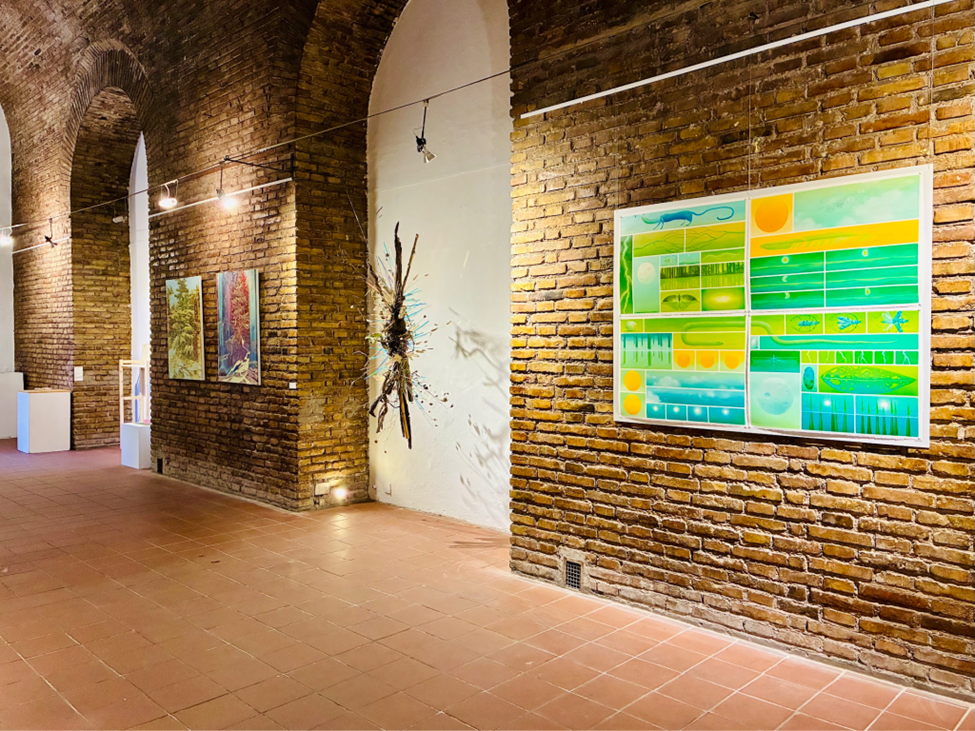
Installation view. Photo courtesy of Martina Tanga
Curator Martina Tanga had been reflecting on the ideas behind Learning With Trees – Artists for Climate and Environmental Solutions long before the exhibition took shape. In 2022, she read Ben Rawlence’s The Treeline, a book tracing how the Boreal forest is shifting under the impact of climate change. That reading sparked the idea that trees could serve as a highly accessible and disarmingly effective way to approach conversations about climate change.
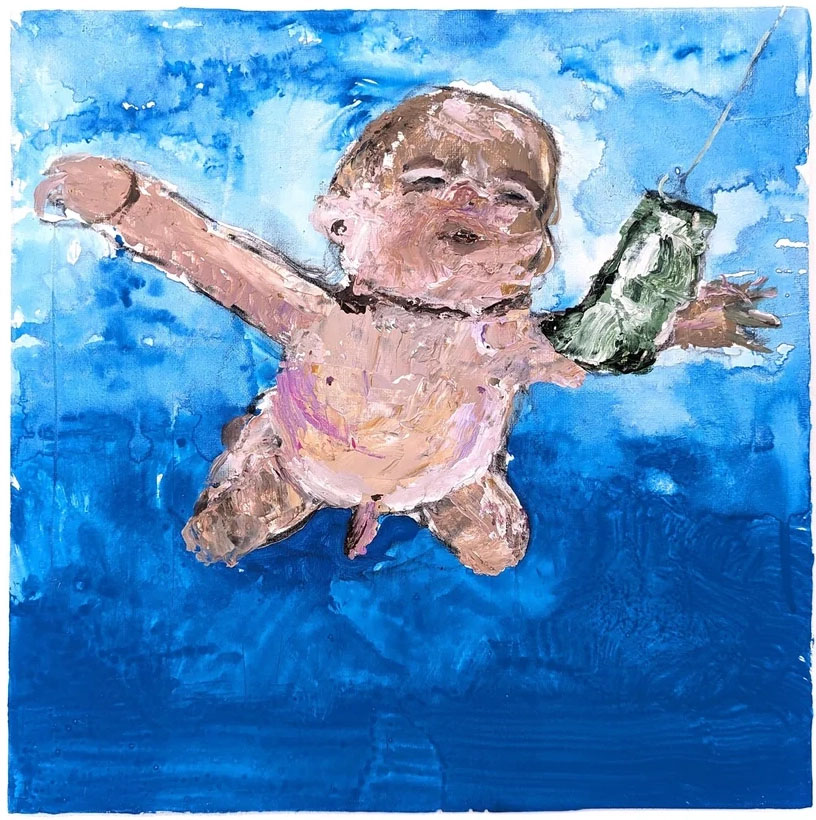
reMastered: Jac Lahav’s Record Paintingsisa solo exhibition at Mana Contemporaryfeaturing a selection of over two hundred intimate 12 x 12 inch paintings of iconic album covers celebrating the slow, tactile process of gouache on canvas. The project asks what painting can add to images that already live in our collective memory. This iteration of Lahav’s work opens a new line of inquiry into what artists listen to, drawing from record collections of artist icons Jackson Pollock, Georgia O’Keeffe, Francis Bacon, and Dan Flavin. Artist Jac Lahav and curator Michele Jaslow sat down to discuss the exhibition for Art Spiel.
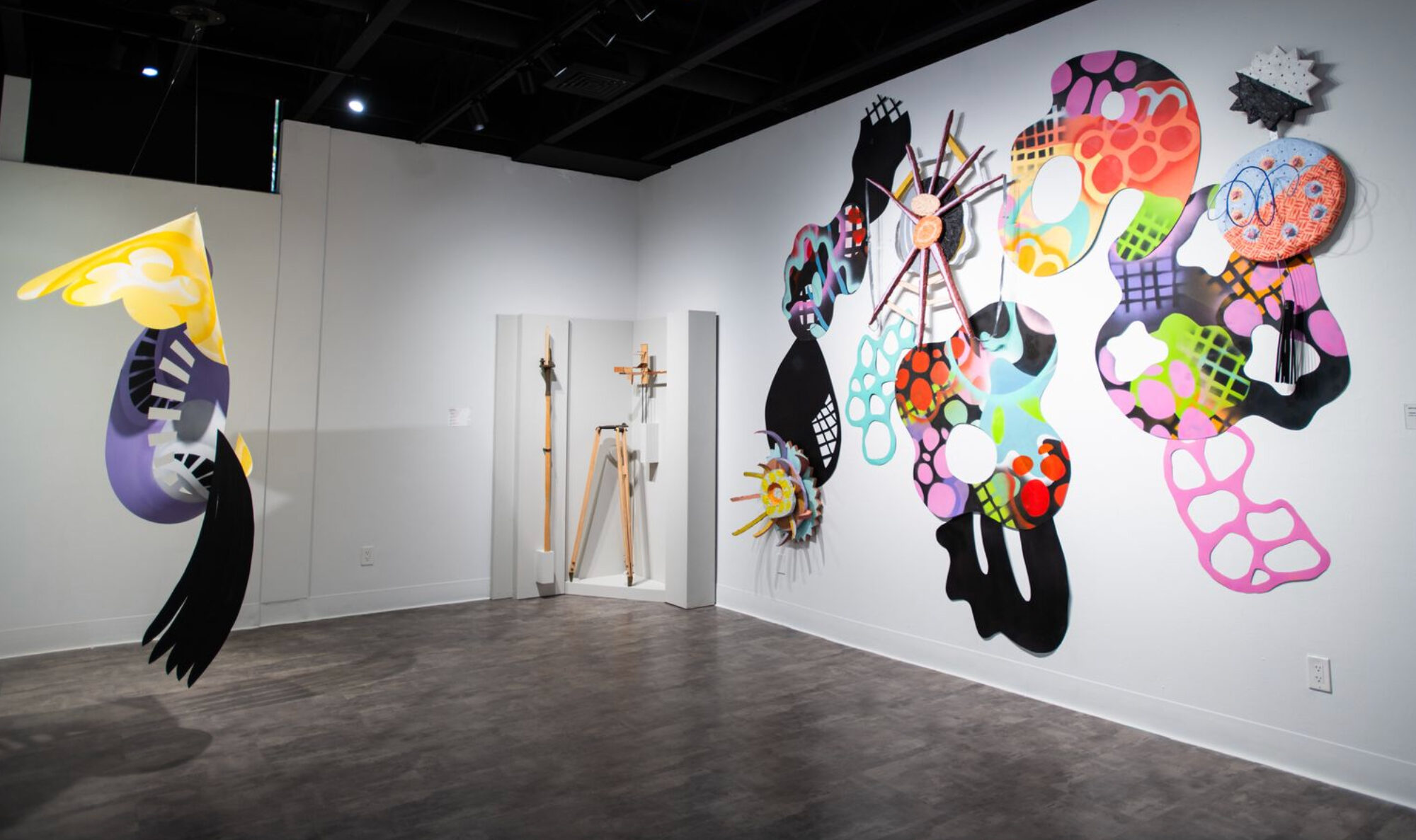
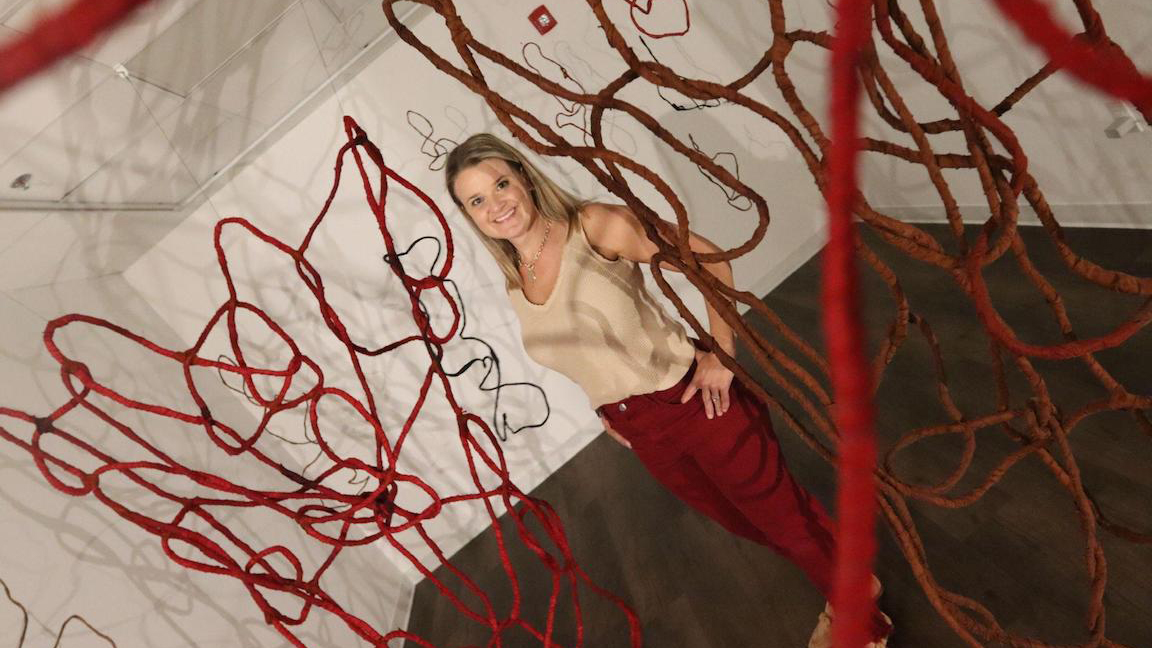
Samuelle Green. By Day: By Night. 2025. (variable size) Installation View — Honesdale, PA. steel, reflective material. photo credit: Samuelle Green Studio
In Samuelle Green’s previous installations such as The Paper Caves and Polypore, viewers encountered forms that were wildly organic in appearance. They were comprised of somewhat amorphous essentialized forms in nature that exist on the micro and macro levels, executed on an immersive human scale, enabling viewers to make a variety of associations with the natural world — pollen grains, clouds, or coral reefs. The new work, By Day: By Night, 2025, is much more specific in its references and seeks to speak a different visual language almost entirely.
Installation view, Cavin-Morris Gallery, photo courtesy the artist
In 2017, during post-concussion recovery and before considering any public audience, Frances Smokowski began drawing as part of her wellness routines. She knew even then that the work could one day be useful and inspiring to others, and she never felt it existed only for her. Pandemic-era synchronicities later led to gallery representation, confirming that this is the moment for her bio-glyphics and energy-scapes to come forward.
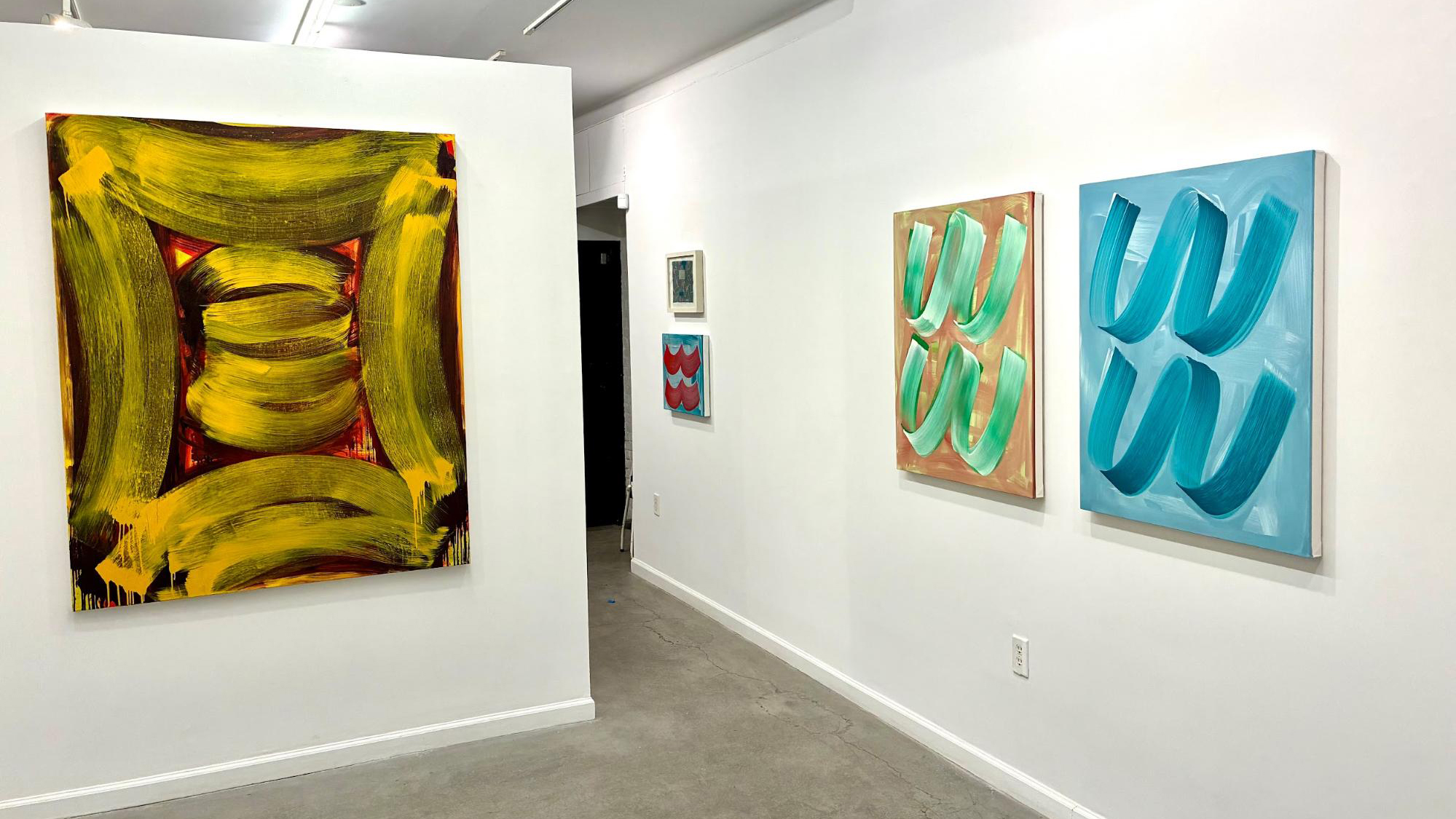
The paintings in James Gold’s solo show, Infinite Scroll, act as intermediaries between past, present and future. These glimmering grids at Morgan Lehman gallery toggle between his deep reverence for history and his active aesthetic imagination. Talking with the painter about his wider practices in collaged artist books and archeological renderings revealed new means of perception and applications of art-making.
Closing Reception, Guests mingle among paintings, neon, and a vintage car, the grungy garage space alive with conversation, community and shared food. Photo courtesy of Jennifer Miller
Aleksandra Scepanovic’s story begins in then-Yugoslavia, where the stark presence of brutalist architecture shaped her early sense of form and space. As a journalist during the 1990s she reported on the Balkan conflicts, bearing witness to the fractured landscapes of cities such as Sarajevo.
Sue and Al Ravitz with paintings by Chris Martin and Robert Swain. Photo by Bill Gentle
Sue and Al Ravitz have run the project space 57W57ARTS over past eleven years, with a focus on reductive and conceptual art. Located in Al’s psychiatric offices in Midtown Manhattan, they see their gallery as a way to show the art they like, and to create a community. 57W57ARTS has presented the work of close to 200 artists, mounting approximately eight shows per year, each consisting of several one-person exhibitions. This September, a new series began with five one-person shows.
In 2019, an art acquisition trip brought curator Lan Shi from Beijing to New York. When the pandemic extended her stay, she shifted her focus and began working as a full-time freelance curator and art agent. Since then, she has organized more than a dozen exhibitions of varying scale, including her current project with artist Jeffrey Morabito.
The Back of the Moon, Caroline Burton, view 2, on view at the Louise Hopkins Underwood Center for the Arts in the Christine DeVitt Exhibition Hall in Lubbock, TX, photo courtesy of Taylor Ernst
What does it take to move an exhibition from one institution to another, and how does it change along the way? Caroline Burton’s The Back of the Moon began at The Clara M. Eagle Gallery at Murray State University, where curator T. Michael Martin first organized the presentation. Recognizing both the impact of Burton’s large-scale works and the practicality of transporting them rolled in tubes, Martin developed opportunities for the exhibition to travel. This led to a partnership with the Louise Hopkins Underwood Center for the Arts (LHUCA) in Lubbock, Texas, where curator Taylor Ernst re-envisioned the show for the Christine DeVitt Exhibition Hall. With each venue offering its own curatorial approach and installation design, The Back of the Moon continues to evolve as it moves between sites. In the following conversation, curators T. Michael Martin and Taylor Ernst discuss the process of shaping this traveling exhibition.