When I was in my thirties, living in Harlem, I was arrested over a traffic ticket. The ticket itself was bogus, issued by a highway patrol officer for an unsafe lane change I hadn’t made. The officer recorded the wrong address, so I never received notice of the court date. My license was suspended without my knowledge. Some time later, while looking for a parking spot with my wife riding shotgun, I was pulled over for a broken taillight. Before I knew what was happening, I was in handcuffs and on my way to the station. I called the arresting officer over to my cell to ask how long it would take to sort things out. His response? “The wheels of justice turn slow.”
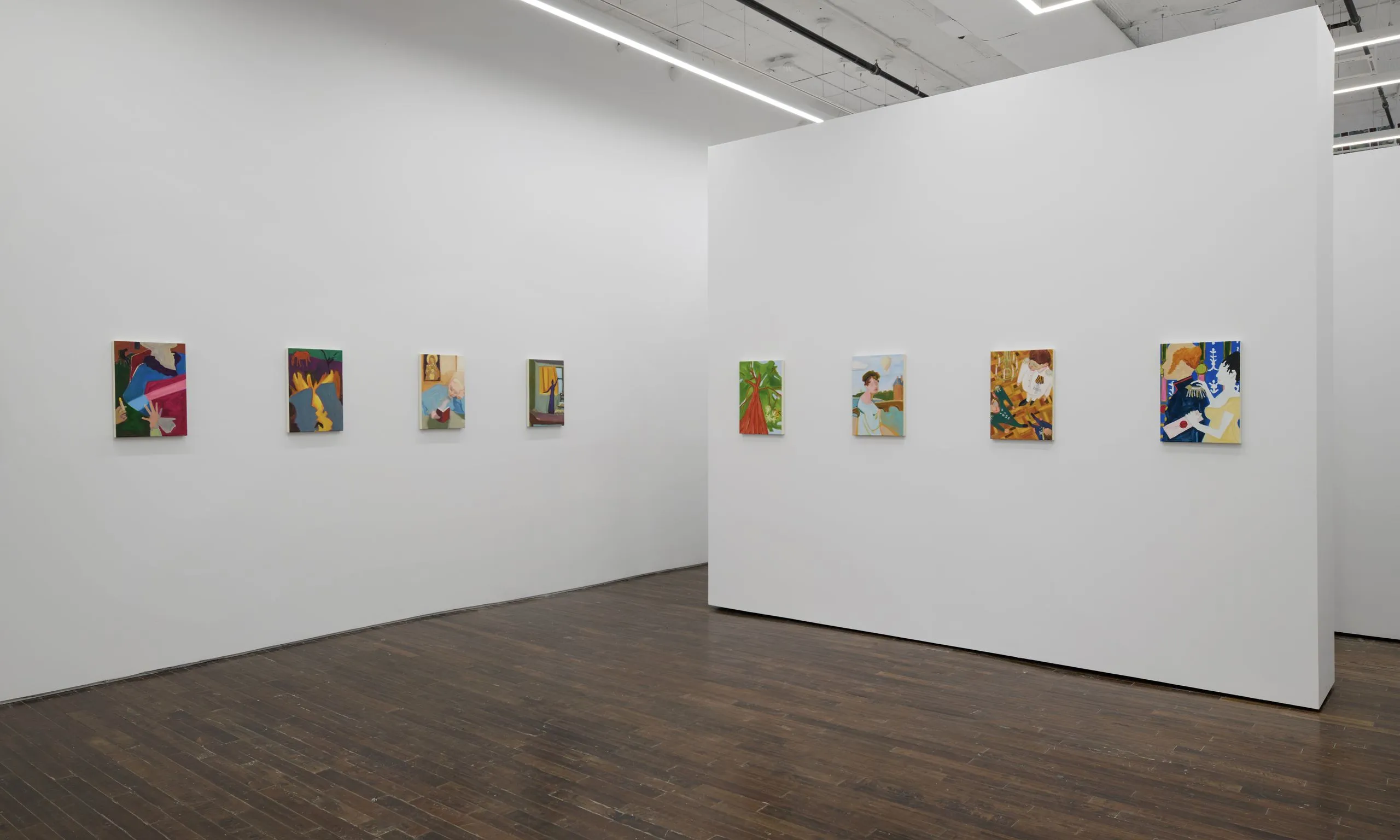
It’s a funny expression until you’re the one waiting for them to turn. And it came back to me while thinking about Maureen O’Leary’s The Linden Trees, an exhibition at Cristin Tierney Gallery that takes up questions of history, representation, and the stories we choose to tell. The project is, in part, an attempt to correct an old imbalance: the way women have been written into history, often present but rarely given the same agency as the men around them.
The art world has made progress in recognizing women artists, though recognition and equality are not the same thing. Decades of advocacy and scholarship have helped bring artists like Lee Krasner and other women associated with Abstract Expressionism into broader public conversation. Even on a recent trip to the Krasner-Pollock show at the Met, I noticed how much of the conversation seemed focused on debating who was better and why. Recently, at the Split Level art fair, a friend’s work had been given a prominent place in the window. When I asked whether she and the curator had requested the placement, the response was, “We’re women. Why would we ask for anything?” It stayed with me. For all the progress we’ve made, the expectation that women should be grateful for whatever space they’re given can be remarkably persistent.
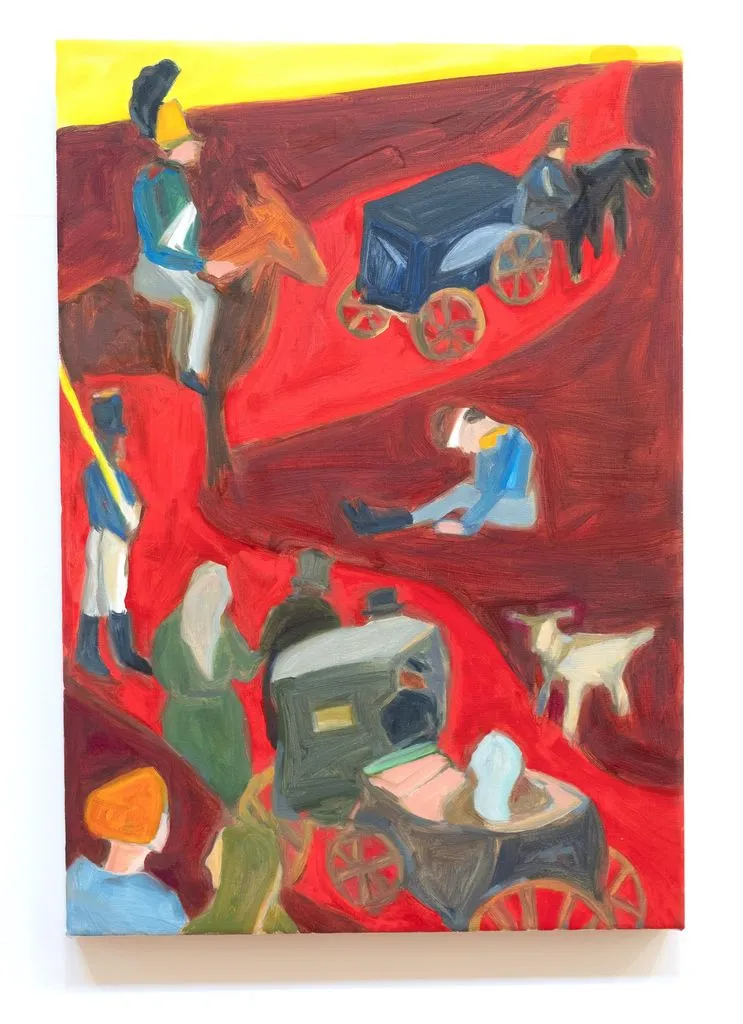
O’Leary approaches this history through literature. The Linden Trees brings together 34 oil paintings and an accompanying tale featuring Natasha Rostova, a character from Leo Tolstoy’s War and Peace, and Princess Polina, from Alexander Pushkin’s unfinished story Roslavlev. O’Leary describes the project as an “answer song,” a response to the way these women have been represented and the limited roles they have been allowed to occupy. Rather than simply revisiting familiar literary characters, she gives them room to make choices, pursue their own interests, and imagine lives beyond the expectations placed on them.
The gallery has published 250 copies of the accompanying book, which it is distributing free to early visitors. For those who don’t get a copy, a printed version of the story is available in the gallery. O’Leary has also turned the paintings and text into an animated short, complete with a Russian-accented narrator and original soundtrack. The result is a poetic and moving collage that functions a little like a learning video at a children’s museum. And hey, if we’re going to get on with dismantling the patriarchy, we may as well start young.
There are some interesting visual precedents for the project. The relationship between painting and text brought to mind Jacob Lawrence’s Migration Series, in which individual panels work together to build a larger narrative. Lawrence used skewed perspectives, absent horizons, and simplified or nearly faceless figures to tell the story of Black Americans migrating north. His paintings convey a collective experience through repeated forms, gestures, and shifts in color and composition. O’Leary draws on a related visual language, with figures that are traveling from one painting to the next. But where Lawrence’s palette and compositions are deeply tied to his subject and historical moment, O’Leary seems more interested in the expressive possibilities of color itself.
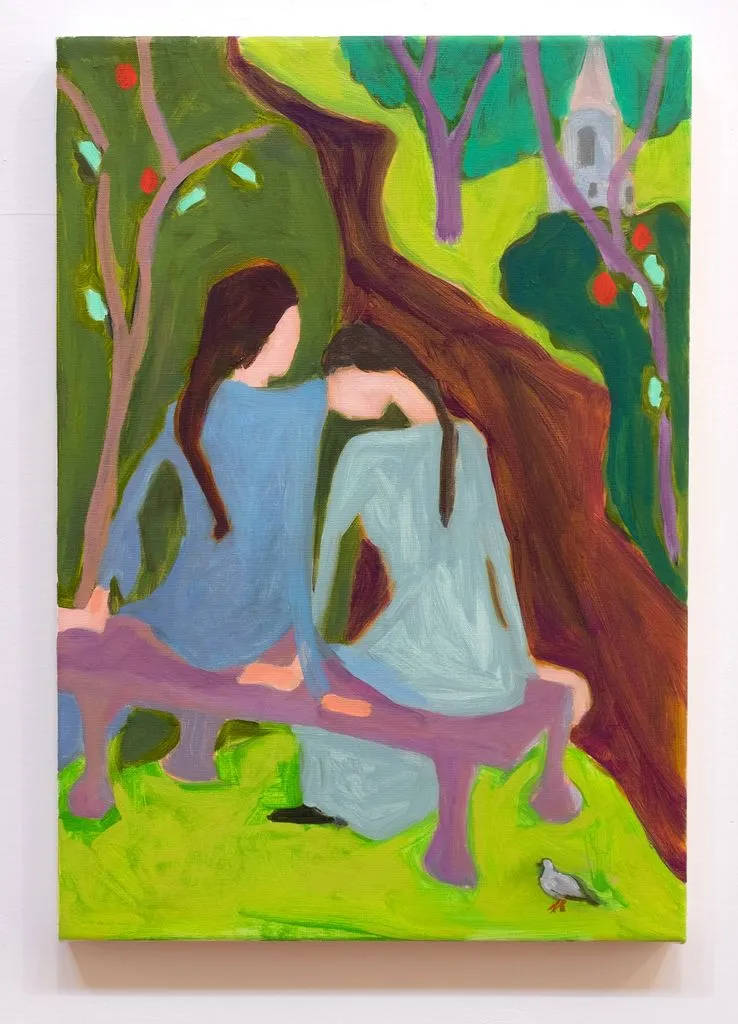
There is also something of David Hockney in the way the paintings function as parts of a larger whole. Hockney’s monumental multi-panel landscapes ask to be experienced together, with each section contributing to a larger visual experience. O’Leary’s paintings operate similarly: they are pieces of a narrative that accumulate as you move through the exhibition. Their meaning is not necessarily contained in any one image.
The paintings themselves are visually engaging. Traces of Edvard Munch’s loopy contours and Félix Vallotton’s figural weirdness run through the work, along with an air of Eastern European quaintness, perhaps most apparent in the palette. O’Leary told me that most of the paintings were made while traveling. She bought an entirely new brand of paint overseas, along with colors she might not normally have chosen. That change in materials seems to have opened up some possibilities. The paintings are loose and bold, with an almost jubilant quality.
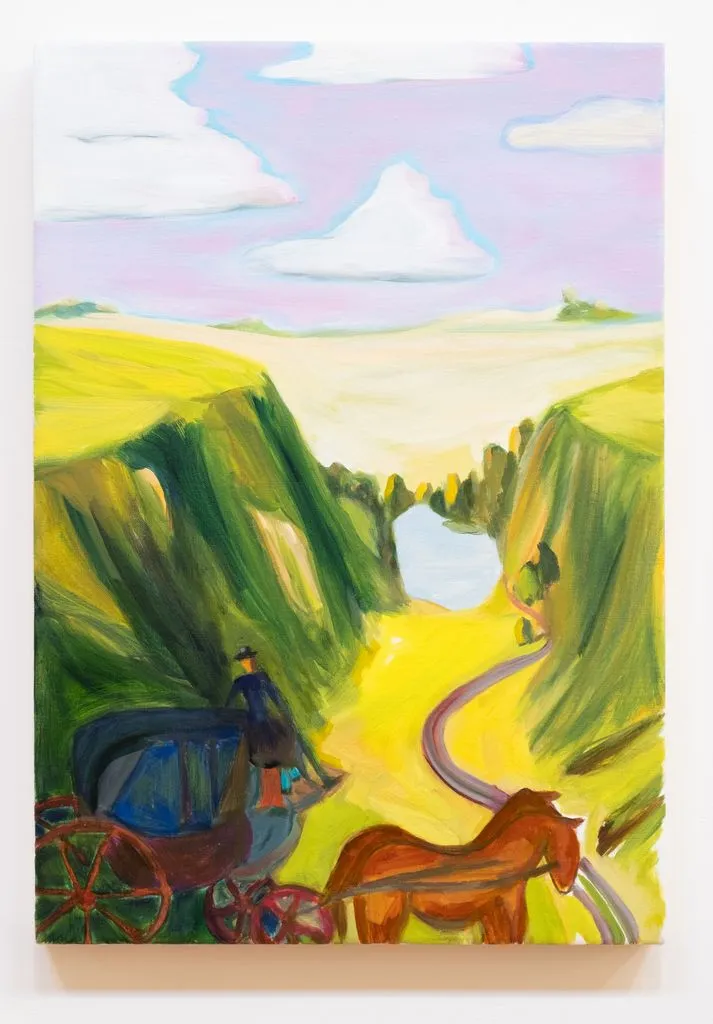
At first glance, they can seem quite reductive, almost as if they could have been made quickly. But spend a little time with them and you begin to notice the adjustments in color, the balance of warm and cool tones, and the care taken to make each composition work. Still, I found myself wondering how much the individual works are meant to hold on their own. Their primary function seems to be to move the story forward. In this sense, O’Leary’s approach is quite different from an artist like Hilary Harkness, whose paintings are elaborate worlds in themselves. Harkness’s narratives are often dense, but the act of looking at the painting is every bit as important as deciphering the story. With O’Leary, the story takes precedence. The paintings serve it rather than compete with it.
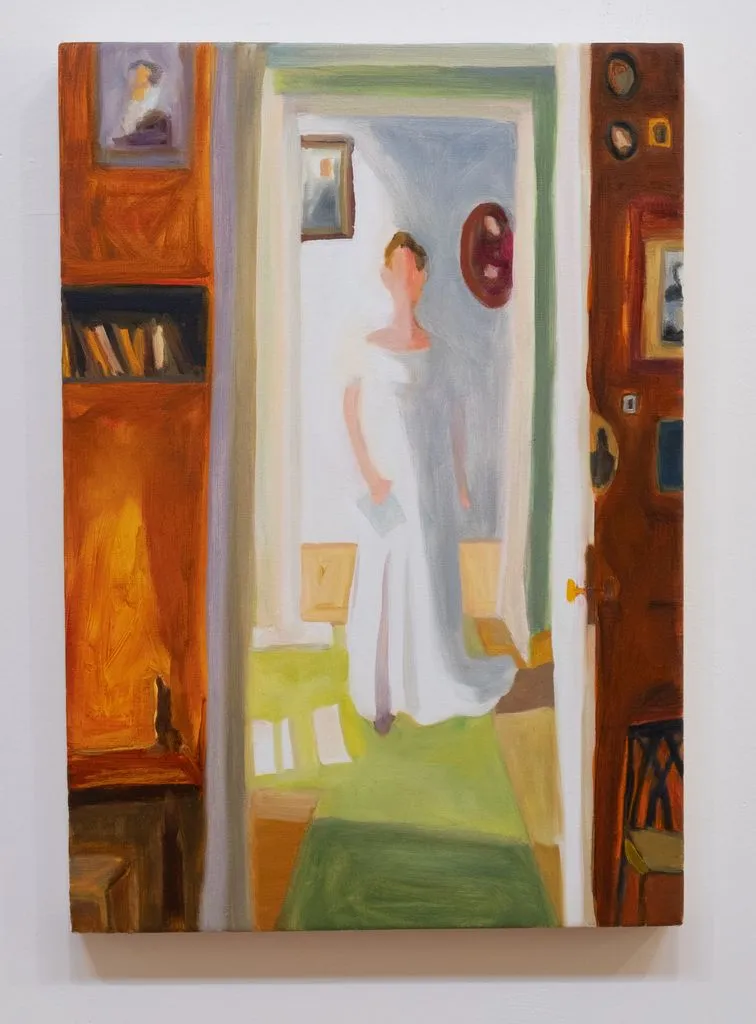
Perhaps this is intentional. The apparent simplicity of the paintings may be part of the strategy. They don’t necessarily ask us to stop at each image and linger so much as to follow the characters through a larger narrative. That doesn’t make them mere illustrations, but it does shift where the weight of the project resides. The paintings give the story a visual life, while the story gives the paintings a larger purpose. Whether each work is equally compelling on its own becomes a less important question than what they accomplish together.
And what they accomplish is not simply a lesson about the past. O’Leary isn’t asking us to feel sorry for these women or presenting their stories as a tidy corrective. Instead, she gives them the opportunity to occupy space, exercise their own will, and pursue creative lives at a time when such possibilities were rarely afforded to women. Rather than politely asking to be heard, O’Leary introduces us to what it means to be unconsidered, something those of us who haven’t experienced it often have the privilege of overlooking.
Perhaps Lawrence is an important point of reference here. His Migration Series demonstrated that painting could do more than illustrate history. It could reclaim it, giving people and experiences pushed to the margins a place at its center. O’Leary takes up that possibility and applies it to a different set of omissions. The wheels of justice turn slowly. Sometimes that’s just another way of saying the system is unfair. Some people get to make the rules; others are left waiting. The Linden Trees make a case for not waiting around for someone else to move things along.
Exhibition: Maureen O’Leary: The Linden Trees at Cristin Tierney Gallery
Dates: October 31 – December 19
All photos courtesy of the gallery unless otherwise indicated
Featured Image: Installation view, Maureen O’Leary: The Linden Trees at Cristin Tierney Gallery, 2026, photo credit: Mikhail Mishin
About the writer: Lucas Moran was born (1973) in Manhasset, New York and was raised in Brooklyn, NY. Moran is a self-taught painter who has held a practice for three decades. He has exhibited across the United States, and most recently was featured at McBride Dillman, and a recent solo show with Visit titled Nothing New. Lucas had his New York solo debut in Chelsea, NY at Vanessa Buia Gallery, Other past exhibitions include ‘Heartbreak Hotel’ at Freight and Volume Gallery, ‘Paper A-Z’ at Sue Scott, and New New York at the University of Hawaii at Manoa where he sat on the panel. Lucas Moran is an artist, writer at large, and the founder of End Scene – A roving endeavor and experiment in instability. He lives and works in Brooklyn, NY.