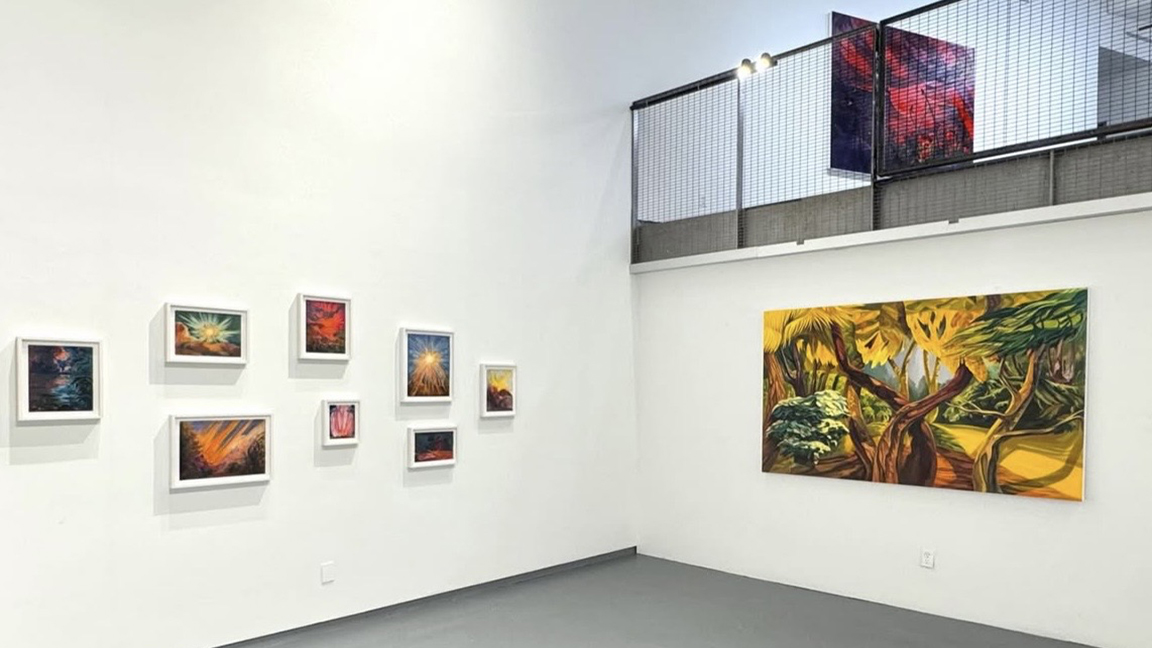
Stepping into Rachel MacFarlane’s exhibition, Afterlight, you enter an atmosphere of radiant, sweltering landscapes and venture towards an unknown future. The unpredictable future of a natural world that is vibrant, strong, and resilient, continuing to grow despite the climate changes and ecological effects that have threatened it. MacFarlane expertly situates the viewer amid a vibrantly colored atmosphere, positioning them as an active participant in the environments the paintings create.
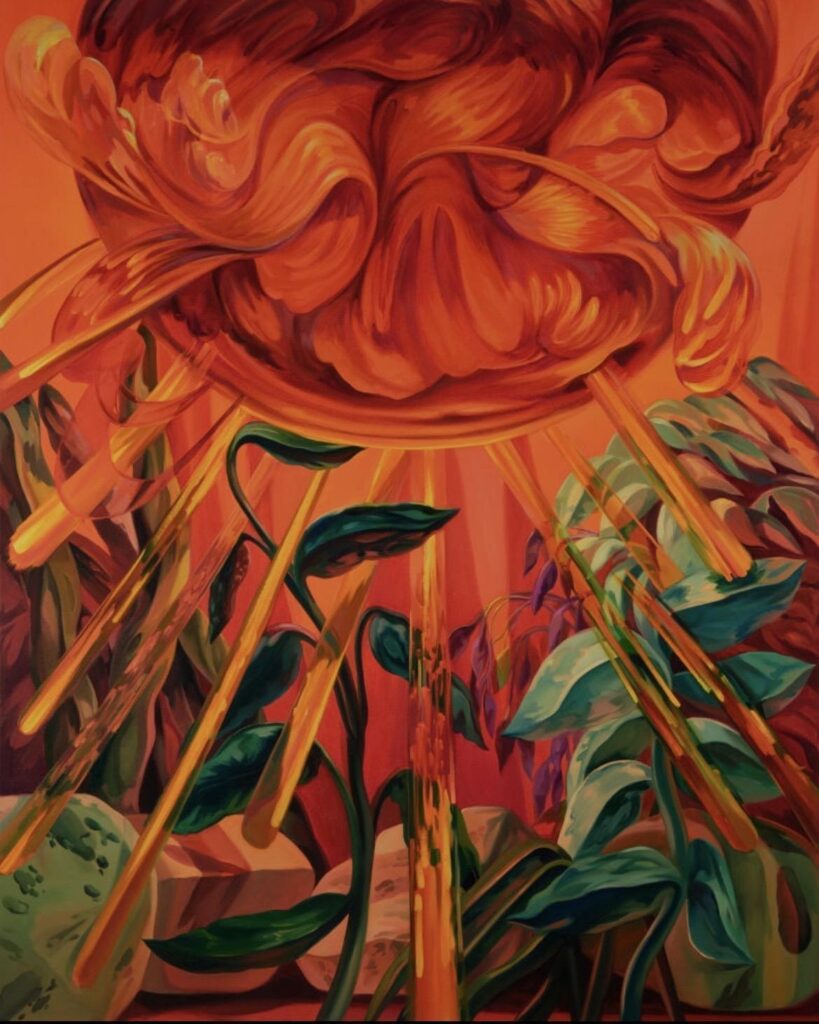
MacFarlane’s oil paintings create a space for viewers to step into and explore. Despite vegetation at times filling the foreground and complicating the view, as in Tongues of Fire, the content, color, and clarity create compositional harmony as the burning sunrays bear down overhead. Inspired by science fiction and creating new environments, MacFarlane constructs spaces that are both beautiful and shocking, mesmerizing and apprehensive. In talking to MacFarlane, she explained how she makes mock-ups before painting each piece, using color, light, and layers of paper, which are considered in the final composition and spatial design. This allows her to test ideas, experiment, and adjust details easily before committing to the canvas.
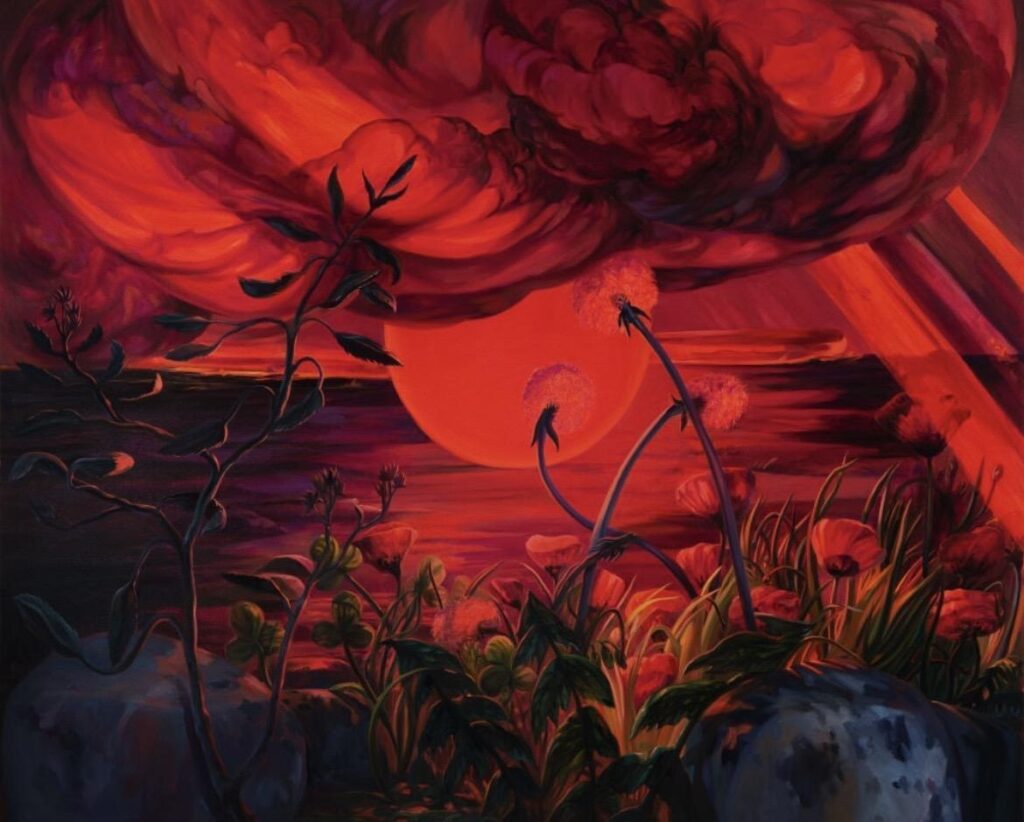
MacFarlane creates spaces where viewers become the figures within the works, often standing on the edge of the scene, as if they are a part of it. Like waiting to wade into the crimson waters of The Change, shocked by the close presence of a large orb and the sweltering sun that appears to be sinking closer, the prelude to a grand cataclysmic event. The precipice of both danger and beauty becomes intertwined. The exhibition, Afterlight, raises questions about what would happen if access to and abundance of nature were lost and whether it could be renewed. The paintings in the show draw inspiration from El Greco, focusing on light and the sun’s dramatic illumination and abstracted rays, as well as from William Blake, with a focus on phenomena and their effect on the natural world.
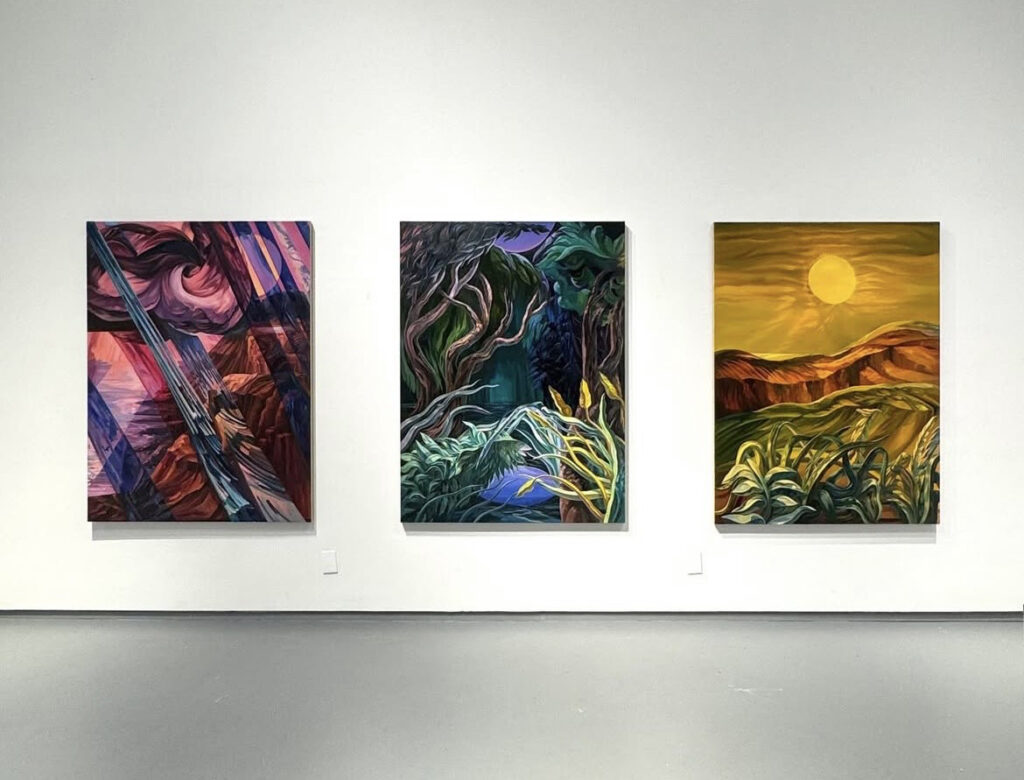
MacFarlane rebuilds landscapes. She recreates the sublime and possibly a post-human world, rebuilding these environments from the foundations of places she visited. Using mock-ups, memory, and intuition, she reassesses space as classical painters would, stretching and evolving it, while focusing on the effects of climate disaster on nature. The triptych in the bottom room of the gallery is grandiose, like an altar piece. In the triptych Roar at Eventide, the piece on the left was inspired by MacFarlane’s trip to Prince Edward Island, Canada, where Hurricane Fiona and erosion deeply affected the area. The land is being forcibly reclaimed by the water, and her abstract rays of energy are in the foreground. While the middle piece, Equinox, offers a darker, alluring, mystical place to explore, the piece to the right, Sun Hold, radiates onto viewers at hill level, under the sweltering sun that appears to be slowly bearing down. Each piece offers an experience, a sensation of surroundings.
While the larger works allow exploration, the smaller and medium-scale pieces offer opportunities for a deeper look. The first paintings you encounter upon entering the gallery showcase aspects of Rachel’s research and snapshots of the world she is creating. The smaller pieces focus on forageable plants with medicinal uses. An interesting example is the painting titled After Burn, which features fireweed, one of the first plants that grows after a fire or disaster. These artworks show how resilient nature can be, reclaiming a space and regrowing despite the perilous environment we created. Many of the mid-sized works offer nocturnal settings that span into high noon, such as in Vespertine Marsh, where contrast and darker tones create expanses of space, serenely illuminated by the moon. The glowing blues and purples are enticing, provoking further exploration. Each piece hovers in a sense of suspension and an atmosphere of mystical wonder.
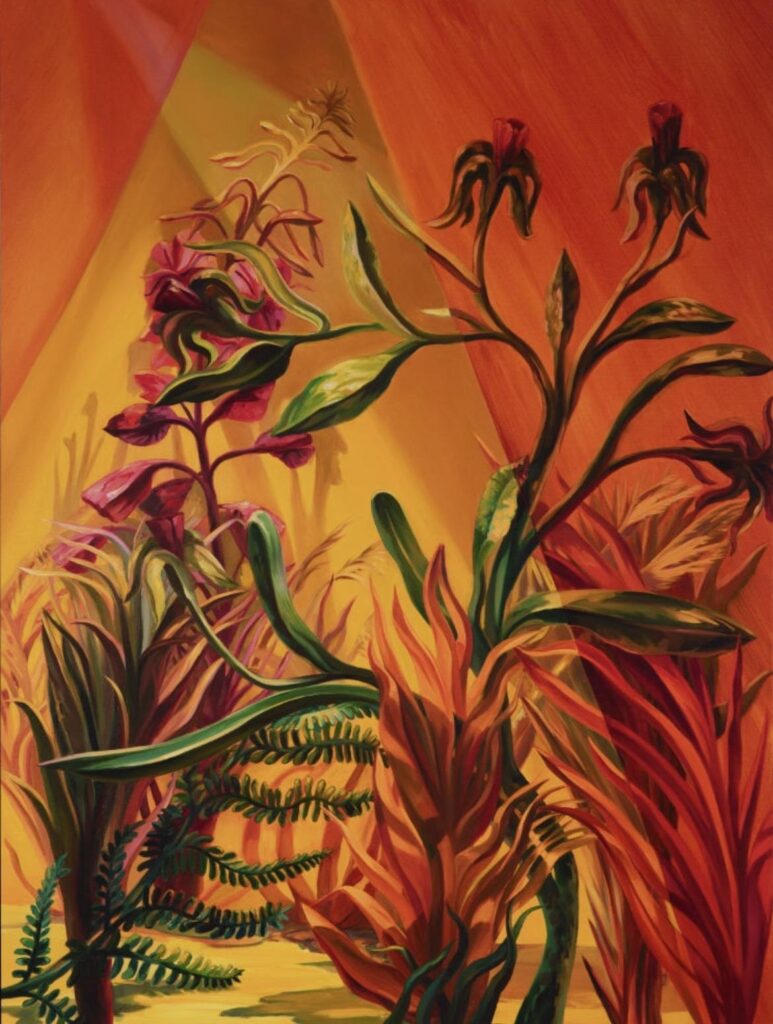
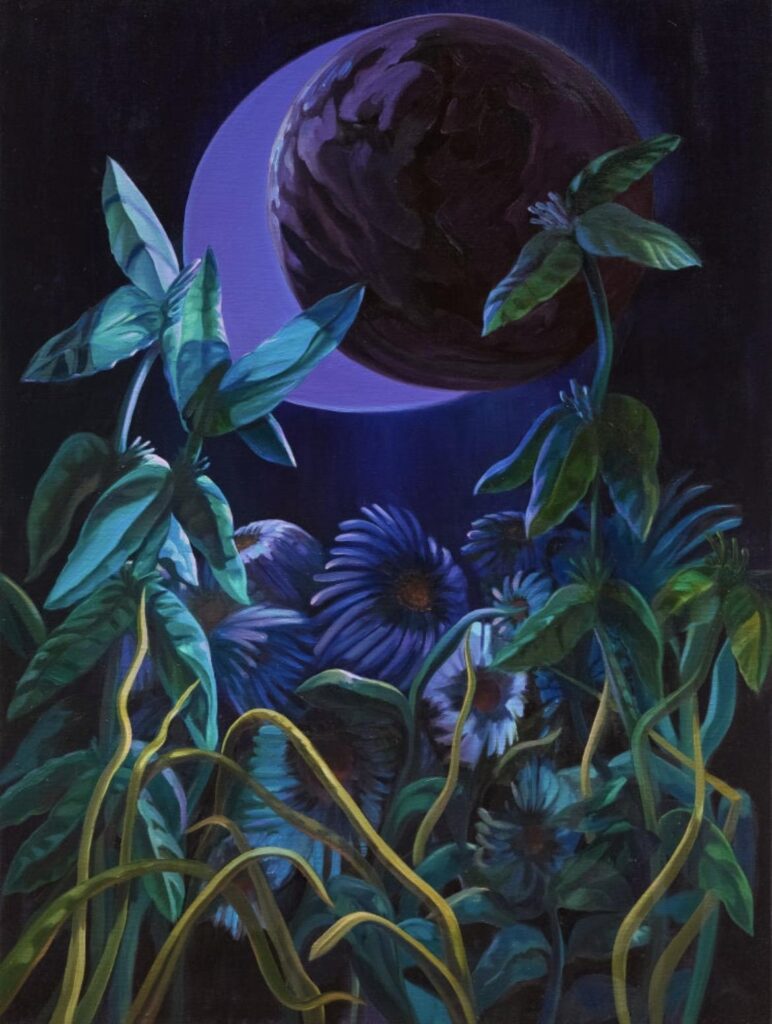
MacFarlane knows how to construct space and use color to emphasize luminosity, with the light reflecting off other colors in a captivating glow. Drawing on her research and travels, she develops a visual language in her work, evident even when it becomes more abstract. The energy she brings to each piece is electrifying, taking viewers on an adventure. As you turn towards each piece, you enter a new space, an environment that has grown from tumultuous times. MacFarlane’s pieces serve as a reminder that nature is experiencing everything alongside us, that we should take notice, or else we may find ourselves in a time when the natural world becomes an unknown world.
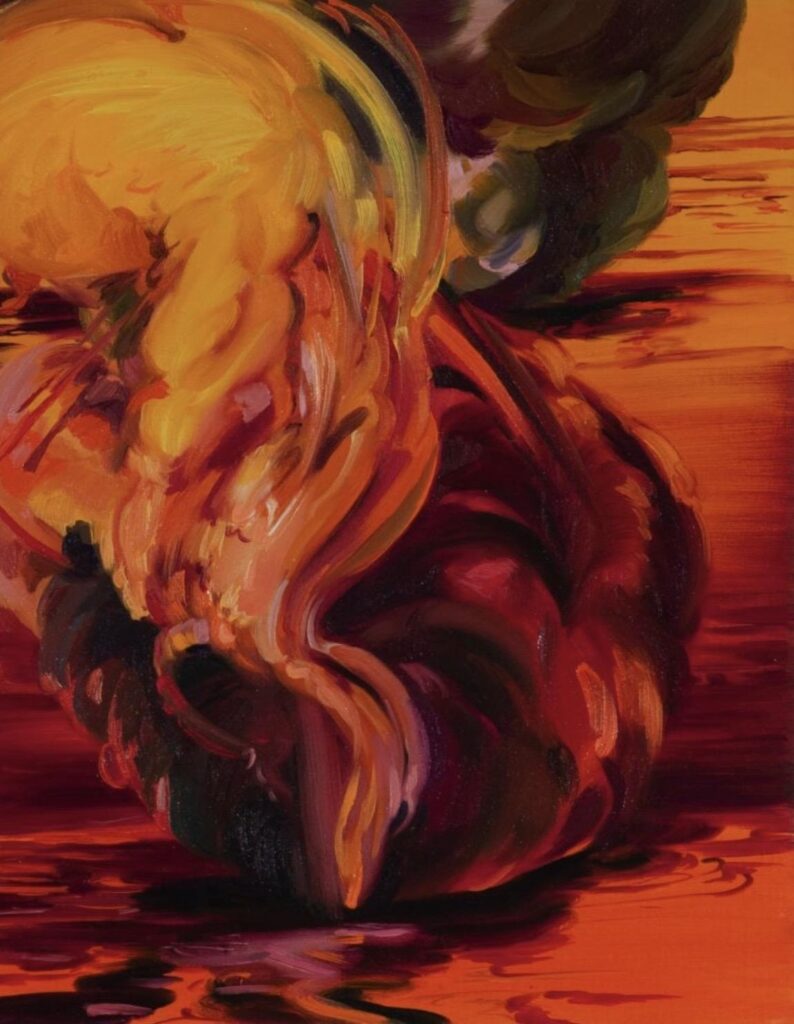
Afterlight, Hollis Taggart Downtown, 109 Norfolk Street, Ground Floor, New York, NY 10002, January 9 – February 21, 2026
About the Writer: Taylor Bielecki lives in Gowanus, where her studio is, and works at Pratt Institute, where she earned her MFA. She also studied at Penn State, where she earned a BA in English and a BFA in Fine Arts. She finished as a finalist in the Kennedy Center’s VSA National Emerging Young Artist program for 2017, where she earned an award of Excellence. She has shown prints internationally in a print exchange in Australia and exhibitions in Dubai, India, and the Glasgow School of Art. She has also shown paintings internationally in Gallery 24N, PhilaMOCA’s juried exhibitions in Philadelphia, Pa., Perry Lawson Fine Art in Nyack, NY, BWAC in Red Hook, and IW Gallery in Brooklyn. Taylor works periodically for Two Coats of Paint, TUSSLE Magazine, and has joined Art Spiel as a contributing writer.