Ashley Garrett: Ambrosia, Garrett’s second solo show at SEPTEMBER in Kinderhook, NY, features a body of work she has made over three years—some evolved over years and others more quickly. Garrett has been working on large-scale 94 x 57-inch paintings on canvas since 2019. Garrett says that the weaving of brushstrokes creates a space that changes perspective between up and down, water and air. The gallery space also offers an experience of movement with sight lines through three distinct rooms. In the installation, small paintings on canvas can be seen from each corner of the rooms to the farthest corners of the gallery.
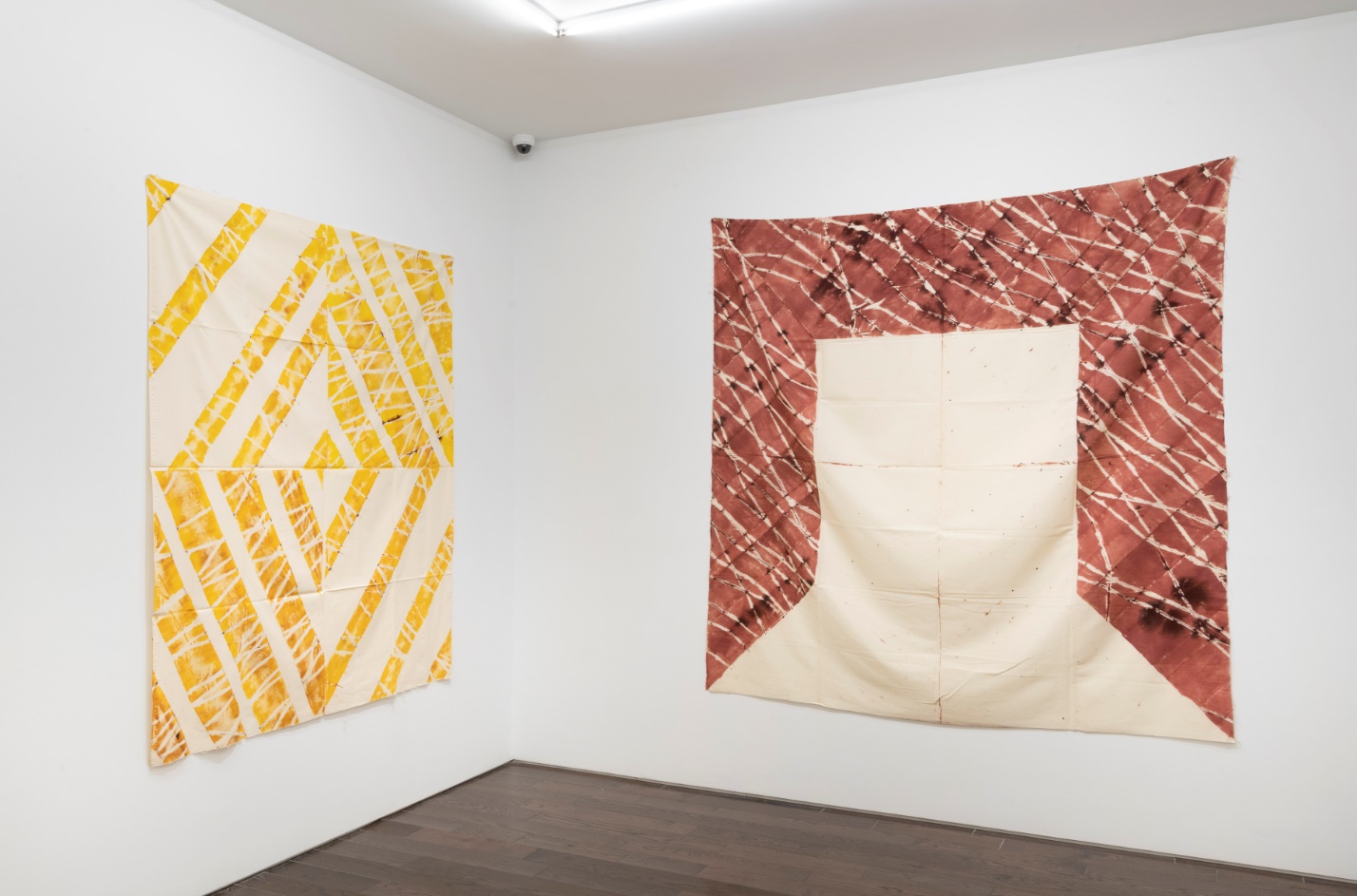
Deanna Sirlin, Wavetable, installation view at 211 East 43rd Street, NYC, NY
Deanna Sirlin’s Wavetable, on view in the lobby of 211 East 43rd Street, New York, includes seven recent paintings, all 7 feet by 5 feet, arranged in a line that turns a corner. Produced between 2020 and 2023, at the height of the pandemic, the paintings in Wavetable offer an eye-popping meditation on connections. As the world went into lockdown and our interactions and connections with others were circumscribed, Sirlin explored interaction and connection through these paintings.
Installation view, David Syre: The Black Drawings, SARAHCROWN New York, 2023.
The creative process is inexplicable. It doesn’t require anything but what the creator needs or chooses to use, and there are no guidelines as to how it works: Tolstoy felt he had to write “each day without fail.” Robert Rauschenberg often had The Young and the Restless on television at his studio. Virginia Woolf used to walk miles and miles. There is no telling what will ignite the process, but like a flash of lightning or fireworks in the night sky, it contains such a force that with the right conditions, generates sublime beauty. American outsider artist David Syre found this force when he was only a child in his Pacific Northwestern family home: The intuitive act of pushing crayons on paper on the floor of his grandmother’s kitchen remained in the heart of his practice. Syre’s art evolved and transformed in time, but the pastels remained––in the end, it turned into a persistent, continuing series of over 4500 pastel drawings on black paper. 40 of these drawings are now hanging on the walls of SARAHCROWN New York, a young contemporary gallery in Tribeca, and at the gallery’s booth at the Outsider Art Fair, gathered for two concurrent solo exhibitions titled David Syre: The Black Drawings.
The oil paintings featured in Shadow Weaving, Melanie Daniel’s second solo show at Mindy Solomon, depict magical landscapes of forests, ponds, and their inhabitants—a moth, a pair of coyotes, a beetle, an occasional mystical spirits. The paintings begin for her as meditations and transform into fleeting environments—both hallucinatory and recognizable. The show runs through March 18th. 2023.
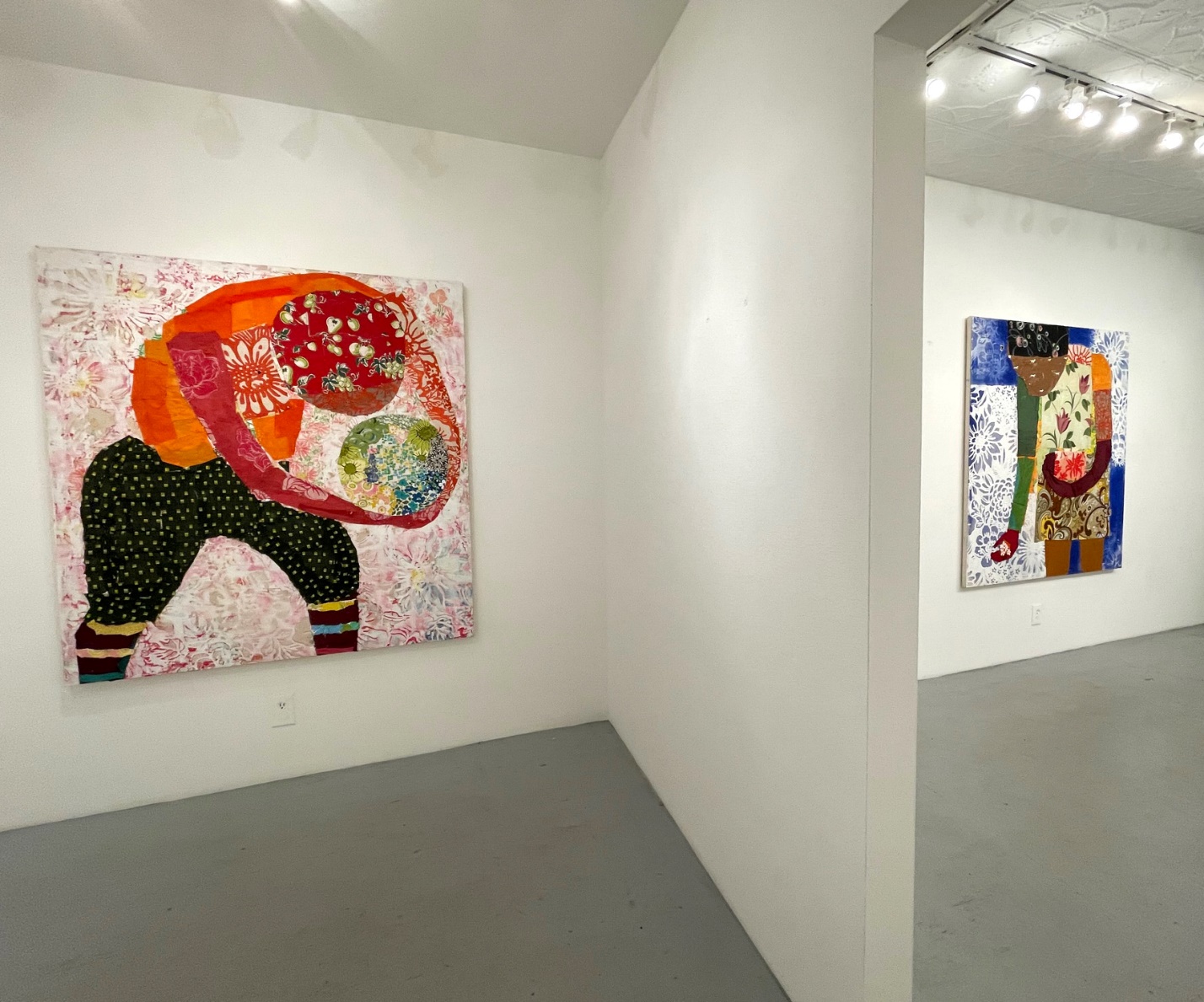
The exhibition PRESENT at 490 Atlantic gallery features nine paintings by Jessica Weiss. In this body of work, made during the pandemic, Weiss continues to combine wallpaper, silkscreened patterns, fabric, and paint—utilizing the optical and psychological power of these scraps from domestic life. Within the colorful and tactile surface, figures appear, and gesture becomes important. The exhibit opens Saturday February 25th, 5-8pm.
Installation view, André-Pierre Arnal at Ceysson & Bénétière New York. Photo courtesy of Ceysson & Bénétière New York
With the advent of Modernism in the late 19th – early 20th century, differing movements, schools, and networks sprang up internationally—some were generative and sustainable, others dead-ended, though unbeknownst to most of us, traces of these persist or return. This cross-fertilization drove Modernism’s evolution until the post-World War II era the new art made in the U.S. came to dominate the narrative. The triumph of the NY School (AbEx) corresponded to the new political and economic order. In this scenario the vanguards that emerged from the rubble and detritus of the War such as C.O.B.R.A., Nouveau Realisme, Lettrist, Zero, Arte Povera, etc. were trivialized, marginalized, or came to be appropriated. To this day, the European artists whose works come to be acknowledged in the States tend to be those whose works are used to typify the whole of a critical discourse, or style. This has reduced post-War European art to a short list that includes Pierre Soulages, Antonio Tapies, Lucio Fontana, Yves Klein, Francis Bacon, Joseph Beuys, Gerhardt Richter, Anselm Keifer, etc. In this manner, the illusionary status of the U.S. as the cultural leader of the free world is sustained, while European art is made to appear to be broken, fragmented, or at best sporadically relevant, rather than constituting a network of competing histories, practices, and critical discourses.
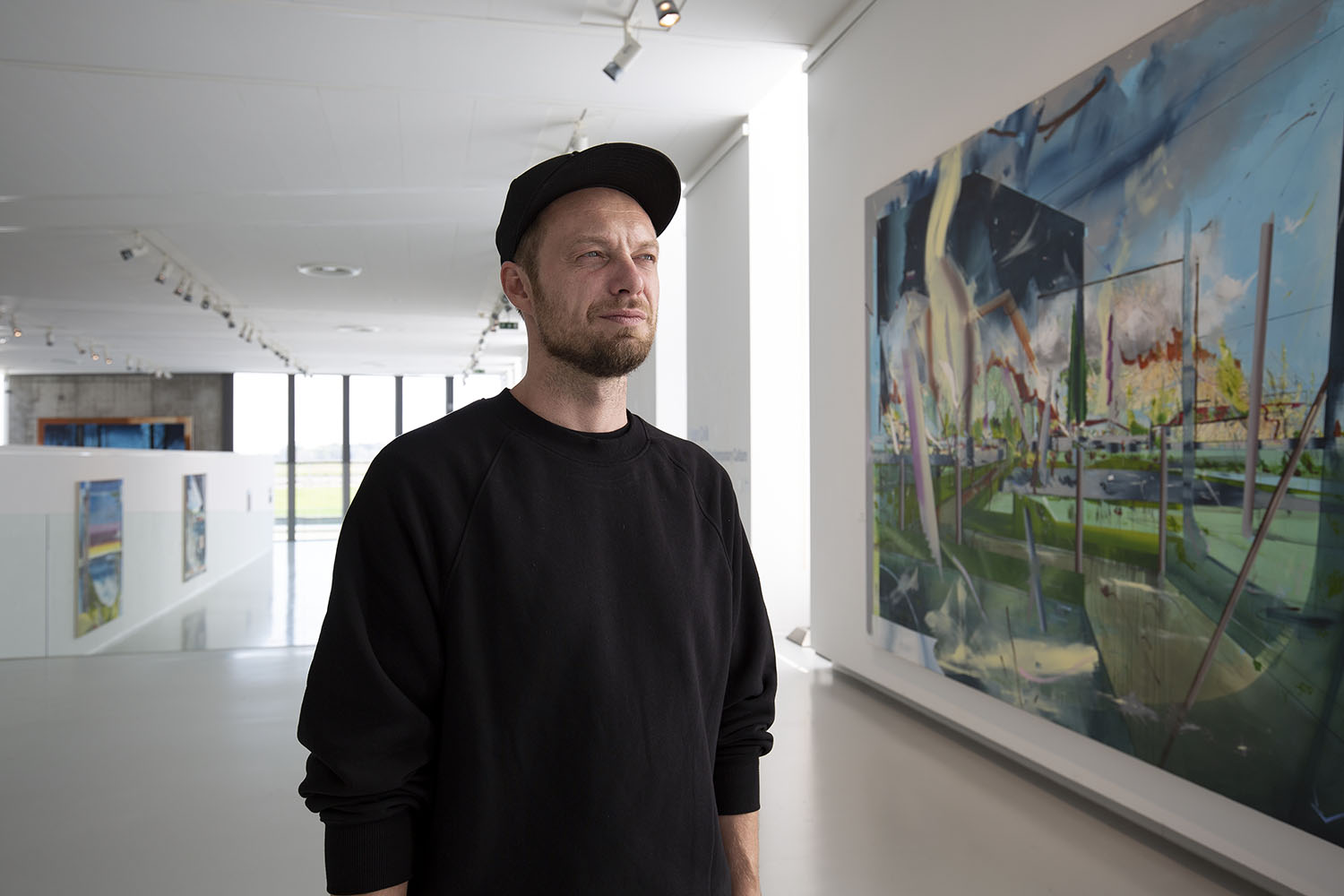
Portrait in Zoya Private Museum Solo Show “semagdniM”. Photocredit: Juraj Fifik
For the last few years the Slovak painter Peter Cvik has been layering different experiences and stories out of sheer visual memory. Without using photos or any other found imagery, Cvik builds new positions of “synthetic” reality that reminds us of something real or experienced within a flux of time where memories float. His landscapes evoke a sense of collision between opposing worlds without evoking the sense of a specific place. Peter Cvik equates his paintings to a sentence that ends with three dots which viewers can complete on their own.
Installation view of Susan Carr’s Girls paintings on top, and self-portraits below, in Magic Mirror
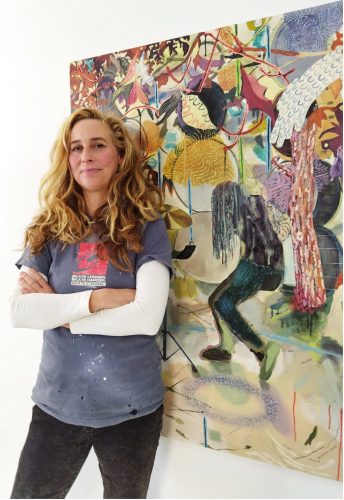
Tired of phrases such as best kept secret, finally receiving her due, and delayed recognition it is time to recognize artists, particularly women artists who are in their prime, evolving both in facility and content. Susan Carr is a quintessential example, an accomplished artist who, over decades, has fearlessly mined the history of her own existence. Her latest exhibit, Magic Mirror at LABspace in Hillsdale New York is a tribute to her dedication, talent and courage.
In conversation with Patrick Neal, Cathy Diamond, and Laurie Fader
Installation of Luscious Wasteland: Cathy Diamond and Laurie Fader at Radiator Arts (All images courtesy Radiator Arts).
The two-person exhibition Luscious Wasteland at Radiator Arts features landscape paintings by Cathy Diamond and Laurie Fader. Both artists embed in their imagery elements from personal experience, nature, visual art, music, literature or science, to create intricate and imaginative landscapes. The exhibition opens Fri, September 16 and runs through October 23, 2022. Art Spiel invited the curator of the show, Patrick Neal, and the two artists, Cathy Diamond and Laurie Fader to reflect on the featured paintings as separate bodies of work and in relation to each other.
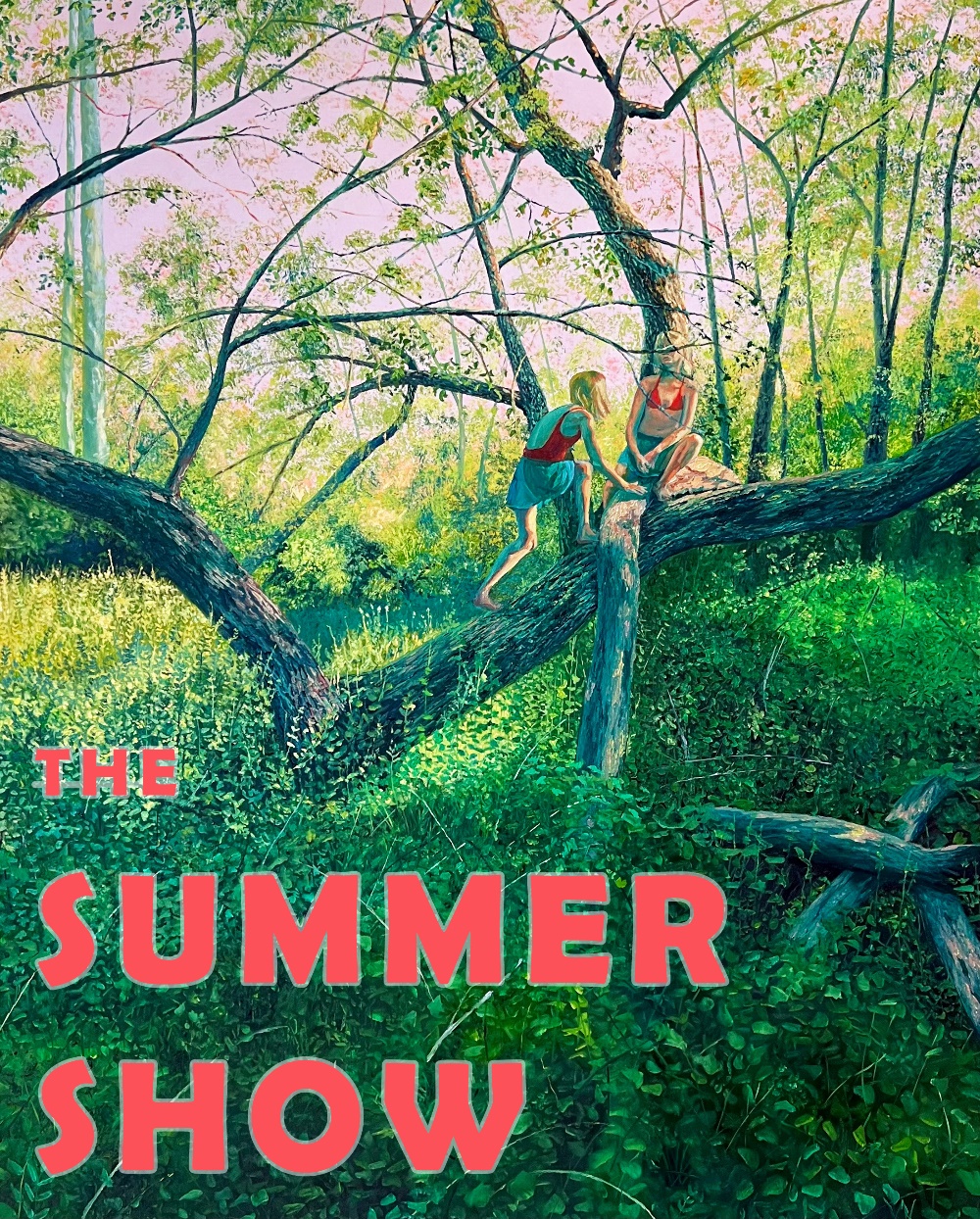
Annika Tucksmith, Something, Somewhere, 2022, oil on panel, 40 x 30 inches (image courtesy of Carrie Haddad Gallery)
Carrie Haddad Gallery’s summer offering, The Summer Show, is a playful wink and a poke to bastion of every gallery’s yearly program: the month of August. Much like the title of the show, this selection of work is self-referential and effervescent. Modernities collide in depictions of leisure, wanderlust is shown as both fantastical and intimate, and universally bold palettes are a sucker punch to the senses. Though they span an array of media, each of the artists incorporate detail with nuance and ease, their pith and wit happily imbibable. The Summer Show features Robert Goldstrom, Hue Thi Hoffmaster, Louise Laplante, Andrea Moreau, Kahn & Selesnick, and Annika Tucksmith and includes painting, collage, and photography.