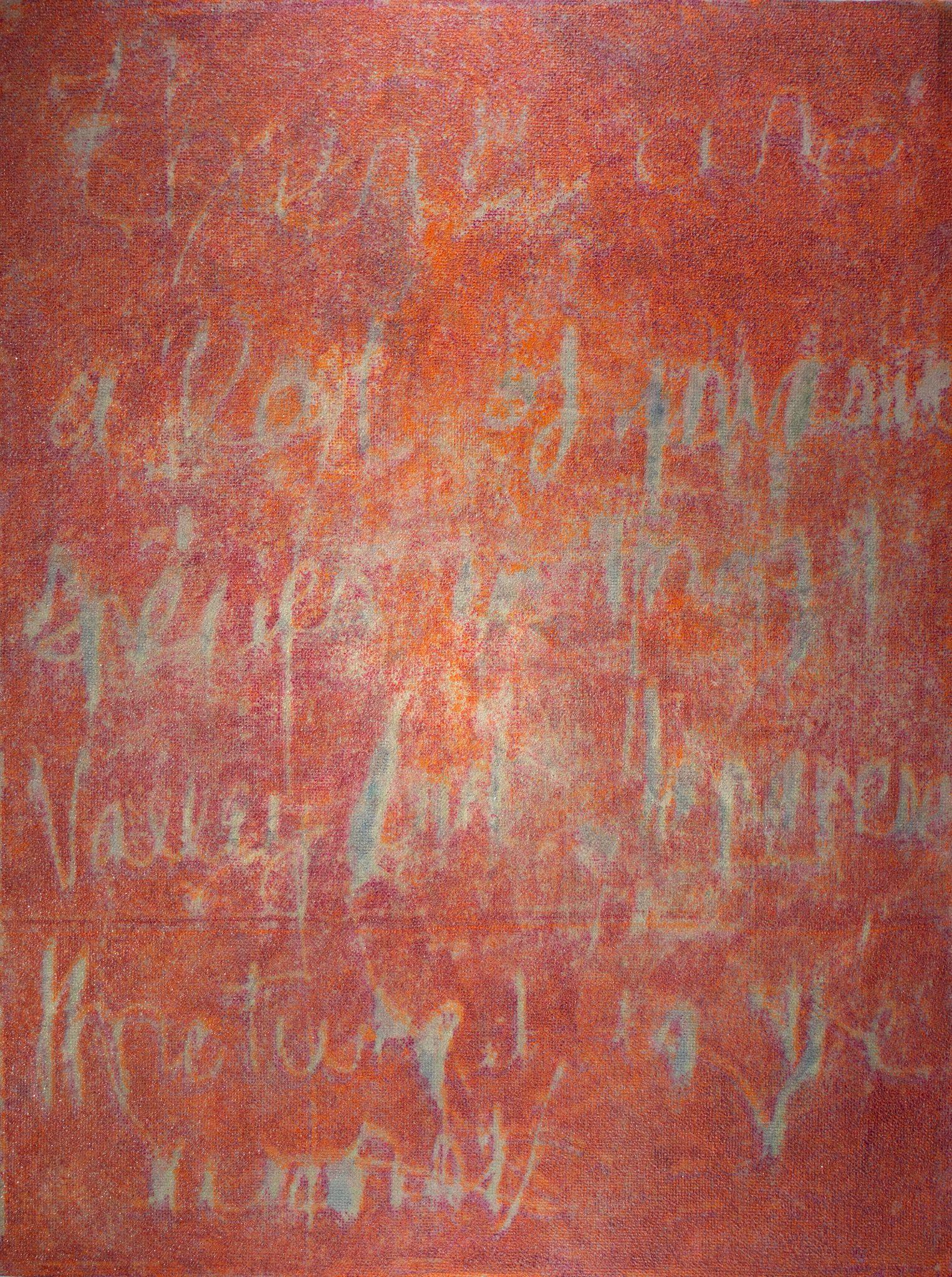
Stephanie Beck: Bough in Wave Hill

hot air

If you haven’t visited the little paradise up in the Bronx called Wave Hill recently, now is the time to go there, not only to experience the beautiful gardens but to see exhibitions that are not to be missed, one of them being Stephanie Beck’s Bough. Beck, who has always been a risk-taking sculptor, either building cities out of paper or manipulating wood into gravity-defying constructions, speaks with me about her latest body of work constructed from materials found at Wave Hill and bringing to light crucial environmental issues beautifully and elegantly. This is the last week to see the show, which runs through December 1st, 2024.

Continue reading “Stephanie Beck: Bough in Wave Hill”
Embodied Futures and the Ecology of Care at BioBAT Art Space

HOT AIR
A room with a large wall with a painting on it

Description automatically generated with medium confidence
Installation view of Katie Hubbell’s, Slow Down Soft Body, Stay with Me, and, Subsuming Solids, photo courtesy of Flaneurshan Studio

In the heart of Sunset Park, within the historic Brooklyn Army Terminal, BioBAT Art Space stands as a pioneering gallery that blurs the lines between art and science. The current exhibition, Embodied Futures & the Ecology of Care, Curated by Elena Soterakis & Eve Barro, showcases eleven artists whose work merges research methods and materials from scientific practices such as genetics, mycology, microscopy, and bacterial cultivation with artistic creation. By using living yeast as their palette and mushrooms as their sculpting medium, these artists challenge conventional artistic norms.

Continue reading “Embodied Futures and the Ecology of Care at BioBAT Art Space”

Watershed—Grace Mitchell in conversation with Mary McCoy

HOT AIR

A landscape with a river and a blue sky

Description automatically generated

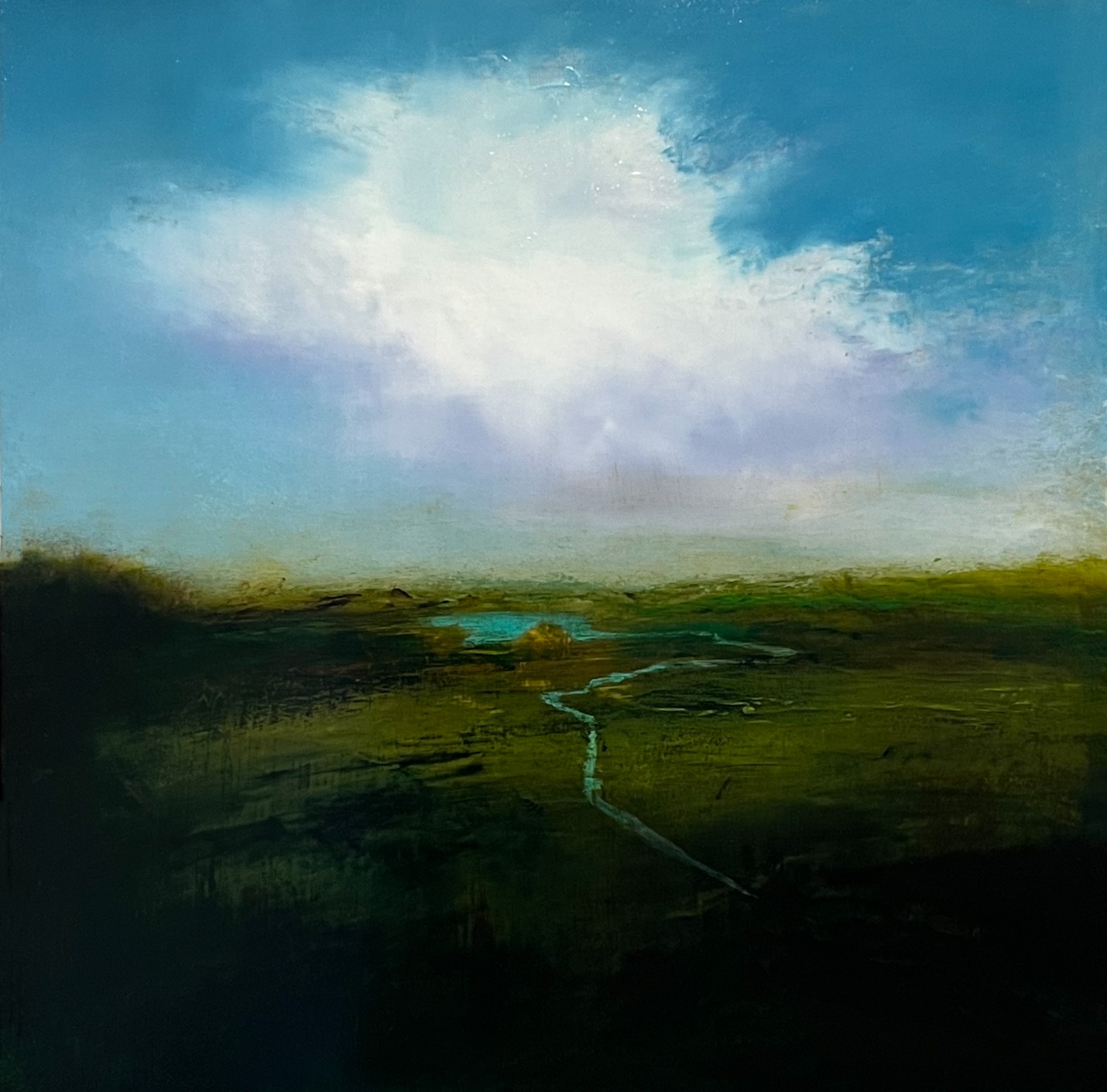
Grace Mitchell-Eternal Return IV, Oil on panel, 30”x30”, 2022

The deep, rich colors and textures of Grace Mitchell’s oil paintings will draw you in, but it’s often the title that sets you thinking. Interweaving layers of color glow through the marsh grasses in her newest series, Watershed Assessment. You could get lost in the sheer beauty of these paintings with their glints of tidal water and shadowy mountains looming in the distance, all saturated with a moist, misty atmosphere that seems to glow with fecundity. But the title gives pause. These lush, luminous landscapes are meant to be “assessed,” and careful observation finds them full of scars and flaws.

Continue reading “Watershed—Grace Mitchell in conversation with Mary McCoy”

Crazy River: Umwelt Series Part III

Featured Project

A picture containing text, fabric

Description automatically generated
Crazy River Umwelt Series Part III

A central theme in my Crazy River project has been highlighting the emotional toll of the climate crisis by putting under a microscope, so to speak, my own feelings about not only the impacts of the crisis but the knowledge that humans’ actions are the cause. This series of three on-line essays, thought experiments if you like, expands that project to change the POV to non-human actors that are inextricably bound with the habitat in the Western Catskills: the black-legged or deer tick (Ixodes scapularis), the white-tail deer (Odocoileus virginianus), and Japanese knotweed (Reynoutria japonica). All three have seen their habitat change dramatically through climate change and human interventions. Using my imagination and research, I try to enter the umwelt of all three species, an impossible task, as Thomas Nagel pointed out in “What Is It LIke to Be a Bat,” for which artistic license may give us the best chance to accomplish. My intentions in doing so fall along three axes: theoretical, aesthetic, and spiritual, dimensions all essential to my own art practice. Part III looks at the umwelt–a term normally applied only to animals whose use in this instance I will explain later–of Japanese knotweed from the perspective of the Vajrayana, or Tantric Buddhism.

Continue reading “Crazy River: Umwelt Series Part III”

Crazy River Umwelt Series: Part II

Featured Project

Hovey Brock: Frost Valley, 2019, 36” x 48”, acrylic on panel

A central theme in my Crazy River project has been highlighting the emotional toll of the climate crisis by putting under a microscope, so to speak, my own feelings about not only the impacts of the crisis but the knowledge that humans’ actions are the cause. This series of three on-line essays, thought experiments if you like, expands that project to change the POV to non-human actors that are inextricably bound with the habitat in the Western Catskills: the black-legged or deer tick (Ixodes scapularis), the white-tail deer (Odocoileus virginianus), and Japanese knotweed (Reynoutria japonica). All three have seen their habitat change dramatically through climate change and human interventions. Using my imagination and research, I try to enter the umwelt of all three species, an impossible task, as Thomas Nagel pointed out in “What Is It LIke to Be a Bat,” for which artistic license may give us the best chance to accomplish. My intentions in doing so fall along three axes: theoretical, aesthetic, and spiritual, dimensions all essential to my own art practice. What follows is a look at the umwelt of white-tailed deer from the perspective of aesthetics.

Continue reading “Crazy River Umwelt Series: Part II”

Crazy River Umwelt Series Part I

Featured Project

Map

Description automatically generated
Hovey Brock: Blackleg Tick, 2021, 24” x 36”, acrylic on panel

A central theme in my Crazy River project has been highlighting the emotional toll of the climate crisis by putting under a microscope, so to speak, my own feelings about not only the impacts of the crisis but the knowledge that humans’ actions are the cause. This series of three on-line essays, thought experiments if you like, expands that project to change the POV to non-human actors that are inextricably bound with the habitat in the Western Catskills: the black-legged or deer tick (Ixodes scapularis), the white-tail deer (Odocoileus virginianus), and Japanese knotweed (Reynoutria japonica). All three have seen their habitat change dramatically through climate change and human interventions. Using my imagination and research, I try to enter the umwelt of all three species, an impossible task, as Thomas Nagel pointed out in “What Is It LIke to Be a Bat,” for which artistic license may give us the best chance to accomplish. My intentions in doing so fall along three axes: theoretical, aesthetic, and spiritual, dimensions all essential to my own art practice. What follows is a look at the umwelt of black-legged ticks from the perspective of theory.

Continue reading “Crazy River Umwelt Series Part I”

Five Points – Judith McElhone: Baby steps quickly

Featured Project

Judith McElhone, Founder – Executive Director Five Points Arts

In 2012, Five Points Gallery, a small 744 square foot contemporary art 501c3 non-profit exhibition space, opened in the heart of historic downtown Torrington. Against all odds, Five Points Gallery, has become Five Points Arts, one of Connecticut’s outstanding visual arts organizations and a cornerstone of Torrington’s transition from an old industrial town into a major arts destination. Judith McElhone, the executive director of Five Points Arts, sheds some light on the vision behind her organization.

Continue reading “Five Points – Judith McElhone: Baby steps quickly”

The Lands of Kats Kill

The Lands of Kats Kill is the second in a series of three interrelated experimental pieces that combine graphics, text, and hyperlinks based on themes coming out of my Crazy River project, for which I gave an interview on this website on May 16th. Crazy River takes a wide-angle view of the climate crisis, ranging from my own climate grief to an in-depth focus on the many causes and effects of rapid environmental changes on the West Branch of the Neversink in Ulster County. In this piece I investigate the idea of the Catskills as a region, and an incongruous bundle of contradictions and coincidences. The Lands of Kats Kill weaves three timelines together: the geologic, the historical, and the personal. This structure repeats throughout my Crazy River project. The previous piece in this series, Invaders, took apart the idea of invasive species. The following will explore the concept of the Golden Spike in stratigraphy as fact and metaphor.

Continue reading “The Lands of Kats Kill”

Nikki Lindt: The Underground Sound Project

Featured Artist


Nikki Lindt recording photo: Joe Klementovich

Artist Nikki Lindt created the interactive pubic artwork titled The Underground Sound Project in collaboration with NYC Parks, USDA Forest Service, the Nature of Cities, and Prospect Park Alliance. It explores the surprising and resonant world of sounds that can be heard underground in environments such as soils, streams, and trees, highlighting collaborations between art and science. The interactive project will be up in Prospect Park starting May14th for a year until May 14th 2023.

Continue reading “Nikki Lindt: The Underground Sound Project”

Fragile Rainbow: Traversing Habitats by ecoartspace

Featured Project: with curator Sue Spaid

A picture containing floor, indoor, ceiling, people

Description automatically generated

Tessa Grundon, Invasive Species, 2018-2021/2022, Asiatic Bittersweet root systems and border fencing, dimensions variable.

The group show Fragile Rainbow: Traversing Habitats at the Williamsburg Art and Historical Center in Brooklyn includes paintings, sculptures, videos, and installations addressing environmental issues by more than fifty artists from the New York City region who are members of ecoartspace. The title is based on Claire McConaughy’s oil painting, Fragile Rainbow, referencing both hope and loss. The show runs from May 7th through June 4th, 2022. Curator Sue Spaid elaborates on this large-scale group show.

Continue reading “Fragile Rainbow: Traversing Habitats by ecoartspace”