Notice: Function WP_Object_Cache::add was called incorrectly. Cache key must not be an empty string. Please see Debugging in WordPress for more information. (This message was added in version 6.1.0.) in /www/artspiel_344/public/wp-includes/functions.php on line 6131
49th Uranium Mining Legacy, Remembrance Day and Action Day, Navajo Nation, Grants Mining Belt, New Mexico, USA, July 12, 2018 .
Irish visual artist and researcher Anna Macleod has spent the last 15 years exploring the environmental, economic, spiritual, political, and scientific aspects of water through interdisciplinary collaborations, performance, public interventions, and socially engaged activism.
Jimmie Durham, Untitled (detail), 2020- Photo credit Francesco Allegretto, Courtesy of the artist’s estate (6)
Coinciding with the 59th Venice Biennale, the seventh edition of Glasstress, running from 3 of June to 27 of November 2022 in Venice, features a group of leading contemporary artists from Europe, the United States, Latin America and Africa in an ambitious exhibition who explore the infinite creative possibilities of glass. The artworks will be exhibited at the Fondazione Berengo Art Space in Murano, an old abandoned furnace that was transformed into a unique exhibition space a few years ago. This extensive group show, curated by Adriano Berengo and Koen Vanmechelen with the contribution of Ludovico Pratesi, channels diverse contemporary art through the ancient art of Murano glassblowing, aiming to search for new contemporary visual vocabulary in glass art.
Grimo, courtesy of the artist and photographer Adam Reich.
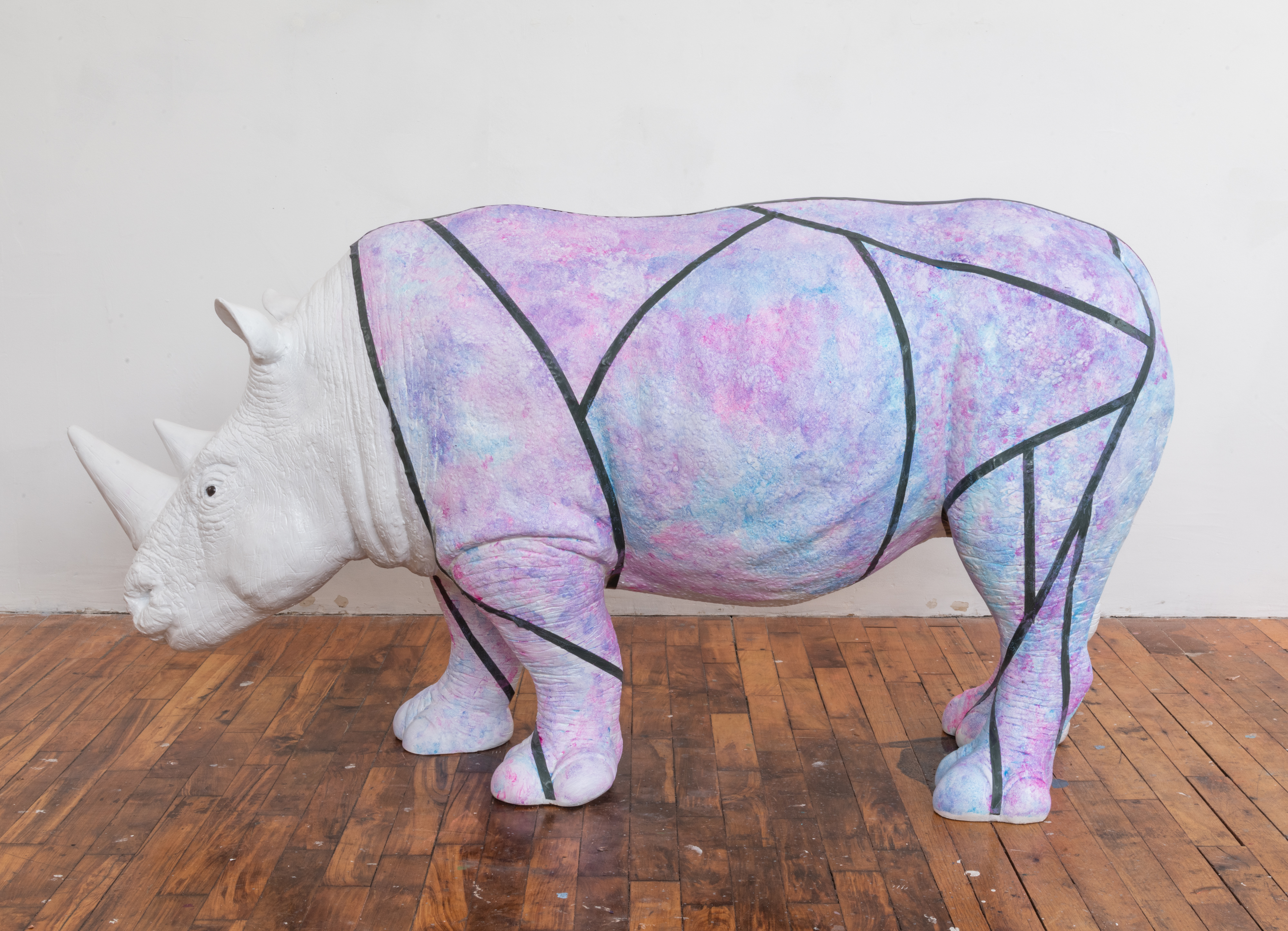
Artist Kristina Libby is no stranger to the power of public art: during the onset of COVID, Libby founded the Floral Heart Project. In collaboration with 1-800-Flowers, The Floral Heart Project created and distributed floral heart wreaths as a tribute to those who lost their lives to COVID-19. Moved by community response to the Floral Heart Project, Libby has created a series of large sculptures of apex animals known as the Chunkos. Greenwich Village, a hot-spot for both art and architecture, will play host to the Chunkos in an immersive exhibition titled In Plain Sight (on view from June 10-12). The exhibit is inspired by the unique history of animals in art and architecture in the neighborhood and is a celebration of the resilience, courage and creativity of New Yorkers from all walks of life. On Friday, June 10th, there will be an interactive public art painting exercise with Libby and the Village Alliance Business Improvement District from 5-7pm. She hopes that the installation of the Chunkos in Astor place will spark new conversations and evoke curiosity from passerbys. Curious artists of all ages are welcome to join as she paints in real time with the help of the community the inaugural animals in her Chunkos series.
Artist Nikki Lindt created the interactive pubic artwork titled The Underground Sound Project in collaboration with NYC Parks, USDA Forest Service, the Nature of Cities, and Prospect Park Alliance. It explores the surprising and resonant world of sounds that can be heard underground in environments such as soils, streams, and trees, highlighting collaborations between art and science. The interactive project will be up in Prospect Park starting May14th for a year until May 14th 2023.
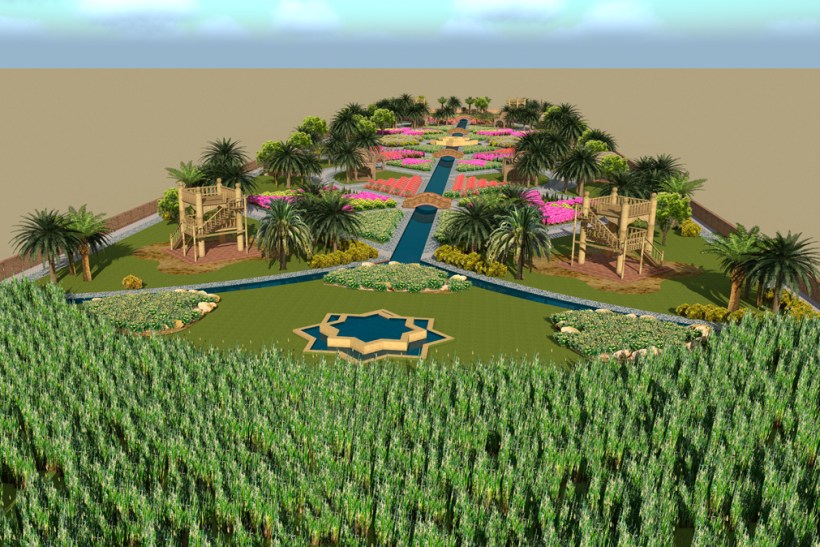
Eden in Iraq Wastewater Garden Project (2011-present), site drawing of El Chibaish, 26,250 square meters (6.4 acres, 2.6 hectares), rendering by Bernard Du, 2017)
In 2011, photographer and environmental artist Meridel Rubenstein envisioned creating a garden in southern Iraq where the Tigris and Euphrates Rivers cross, near the supposed site of the biblical Garden of Eden. However, unlike its idyllic predecessor – a mythical paradise in a newly formed world – this new garden would help to heal what had become a fragile, desert wasteland by cleaning existing wastewater and establishing a culturally significant green space.
Tessa Grundon, Invasive Species, 2018-2021/2022, Asiatic Bittersweet root systems and border fencing, dimensions variable.
The group show Fragile Rainbow: Traversing Habitats at the Williamsburg Art and Historical Center in Brooklyn includes paintings, sculptures, videos, and installations addressing environmental issues by more than fifty artists from the New York City region who are members of ecoartspace. The title is based on Claire McConaughy’s oil painting, Fragile Rainbow, referencing both hope and loss. The show runs from May 7th through June 4th, 2022. Curator Sue Spaid elaborates on this large-scale group show.
Hovey Brock at work on Crazy River, 2019, acrylic on panel, 30” x 40,” a work from his Crazy River series.
Hovey Brock’s current paintings are part of Crazy River, a larger project he has been developing since 2017. The paintings are based on his life-long relationship to the West Branch of the Neversink, which runs between Ulster and Sullivan counties in New York state. The project also includes text and videos, drawing on the artist’s experience and stories about the West Branch and the western Catskill mountains handed down through his family.
Still from Jessica Segall’s film Say When, produced by Little Sun (2021)
Speaking on behalf of all the amazing artists I’ve interviewed over the past four years for this monthly Renewable Energy series, I think that one of the greatest compliments any of us could ever hope to receive would be to be described as a “superhero” by Olafur Eliasson.
Blazing, California Dreamin’, acrylic painting incorporating original hand-painted paper on stretched canvas, 30”x 40
Over the past decade, we have witnessed a proliferation of climate-related disasters across the world. Storms have become stronger, wildfires more intense. Sea ice is melting at a higher rate as the earth grows hotter. Each of these problems alone endangers human welfare. Together, they represent an existential threat. Scientists often describe our position as nearing a “tipping point” at which we teeter at the precipice of an irreversible cascade of ecosystem collapse. My new collaboration with fellow artist Carin Walsh presents a different view of our role in this crisis. It serves as a reminder that we are not passive observers of this disaster, but active agents with the ability to change course and build a safer and healthier future. Our message is that while the climate is approaching a tipping point, our society is at a turning point. We have the power to choose whether we will continue on our current path, or whether we will turn to embrace the measures necessary to reverse climate change.
Sea-Change Installation at MARS gallery, Melbourne, Australia, 2017. Photo by Matthew Stanton
Many artists have begun making work related to the climate crisis in recent years. But Australian visual artist Penelope Davis decided to address the subject eight years ago. Originally trained as a photographer with a portfolio including mainly camera-less photographs, she turned to sculpture and the looming environmental disaster after observing her first jellyfish blooms along the Melbourne coastline. Although alarmed by what appeared to be an unnatural and terrifying phenomenon, she was also attracted aesthetically to the jellyfish’s semi-transparency and how they reflected light.