Notice: Function WP_Object_Cache::add was called incorrectly. Cache key must not be an empty string. Please see Debugging in WordPress for more information. (This message was added in version 6.1.0.) in /www/artspiel_344/public/wp-includes/functions.php on line 6131

Whisperings from the Wormhole with @talluts

The Proof is in the Punctum

A picture containing blur

Description automatically generated
Film still from 2001: A Space Odyssey (1968)

Once, my day job was a freelance graphic designer and I worked from home in Brooklyn. My desk was in a corner of the combination living-room-kitchen-dining-room, right next to the TV. I had cable, and while I worked, I would put on Turner Classic Movies because they didn’t play commercials. And those of us who worked from home during the golden age of cable know that the middle-of-the-day commercials were the most depressing.

TCM showed black and white movies from the 30’s, 40’s and 50’s in an unending ribbon of celluloid, one right after the other. And after months of working like this, it began to amaze me how little the films stuck in my head. They just pleasantly wafted into one ear and floated out the other. There were two exceptions, though, that seemed to have the ability to stick: Stanley Kubrick’s 2001 A Space Odyssey and The Bells of St. Mary (starring Casablanca’s Ingrid Bergman as a nun). And this forgettable/unforgettable phenomenon got me wondering: Why those two? Why did they stick and not the hundreds of others that I had watched?

Continue reading “Whisperings from the Wormhole with @talluts”

Beyond the Digital at Venus Over Manhattan (uptown)

Opinion

Installation view of "Beyond Digital", Venus Over Manhattan, 2022
Installation view of “Beyond Digital”, Venus Over Manhattan, 2022. Photo courtesy of Venus Over Manhattan

Artists have been working with technology since the beginning of the 20th Century. This represents an important moment in artmaking’s evolution, which until recently collectors and institutions haven’t wanted much to do with—the result is a lack of historical presence for such works. Without recourse to a history, every few decades promoters herald the emergence of an exciting new realm of expression or experimentation related to a new media, which appears to the uninformed to be without precedence—most recently it was the crypto-driven NFT market. It is this lack of a sense of history that makes it possible for the organizers of Beyond Digital to claim that this exhibition brings together pioneering artists whose works explore the possibilities of bridging the digital and physical realms. Problematically, this project is more than 50 years old and is built upon one that dates back to the start of the 20th century, when artists working in the modernist tradition started to adapt technology to art to produce light organs, slideshows and kinetic art.

Continue reading “Beyond the Digital at Venus Over Manhattan (uptown)”

Elisabeth Condon Describes a Painting – Wanderings, Bilbao

WANDERINGS: BILBAO, ORANGE, YELLOW AND BLUE, 45 1/2 X 39 1/2, Acrylic on Canvas, 2004 //Jules Olitski Art Foundation Inc. / 2022 Licensed by VAGA at Artists Rights Society (ARS), NY
Jules Olitski ,Wanderings: Bilbao, Orange, Yellow and Blue, 2004, acrylic on canvas, 45 ½ x 39 1/2 inches, from the exhibition Jules Olitski: Late Works at the Sam and Adele Golden Gallery on the campus of Golden Artist Colors in New Berlin, New York

Painter Elisabeth Condon’s reflections on a painting by Jules Olitski she had seen at the exhibition Jules Olitski: Late Works—were initially presented in the first episode of Elisabeth Condon Describes a Painting, a new series artist Amy Talluto has recently launched in her podcast Pep Talks for Artists. In each episode in this series Elisabeth Condon shares her way of looking at one painting, here, at the acrylic painting (2004) Wanderings, Bilbao: Orange Yellow and Blue, by Ukrainian- American artist Jules Olitski. The show at the Sam and Adele Golden Gallery in New Berlin, NY is up until March 2023 and another concurrent show of his works was up at Yares Gallery in New York (till February 11, 2023).

Continue reading “Elisabeth Condon Describes a Painting – Wanderings, Bilbao”

André-Pierre Arnal at Ceysson & Bénétière New York

Opinion
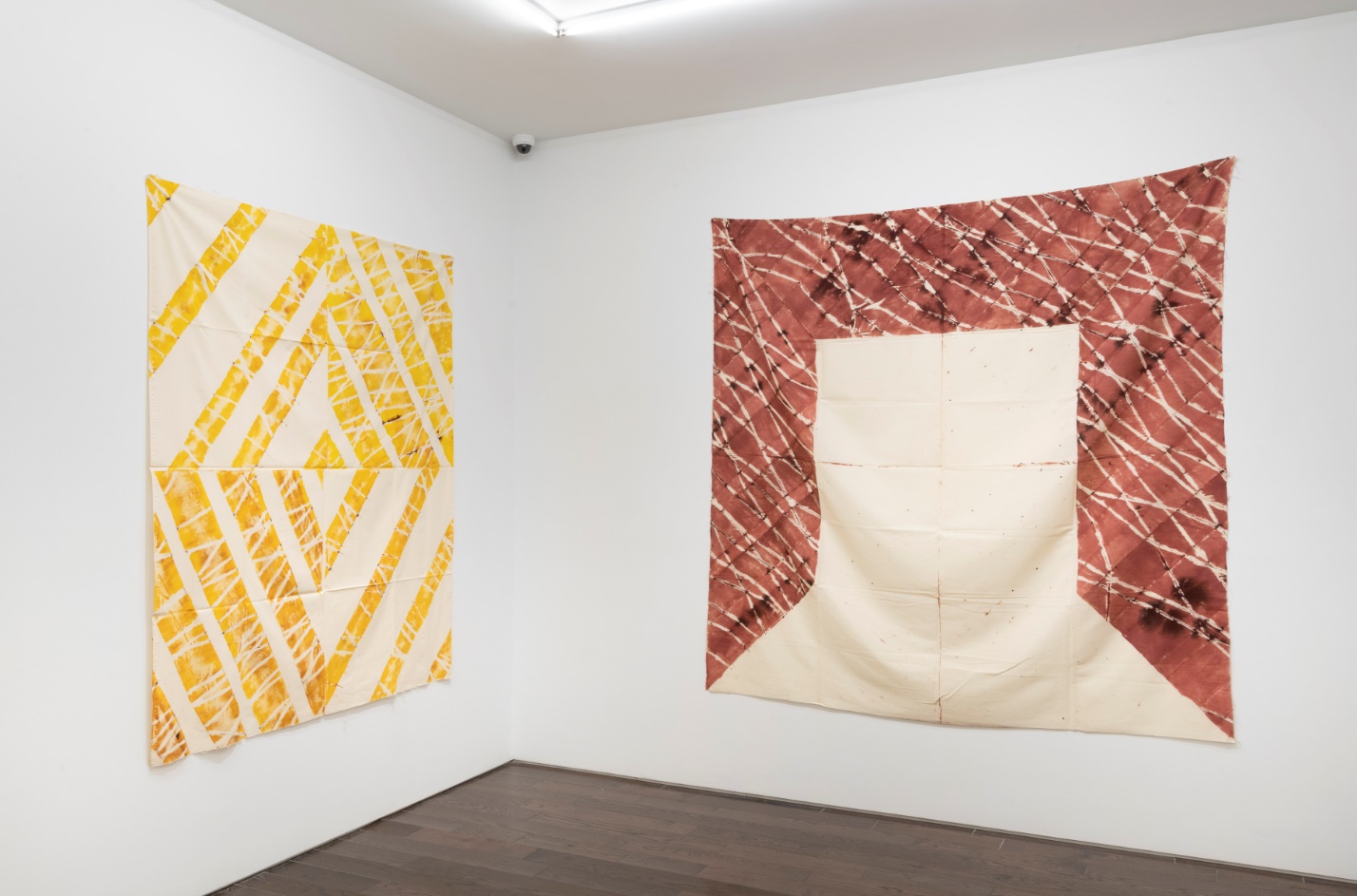
Exhibition-View-Andre-Pierre-Arnal-2022-©Adam-Reich-courtesy-Ceysson_Bénétière(1)
Installation view, André-Pierre Arnal at Ceysson & Bénétière New York. Photo courtesy of Ceysson & Bénétière New York

With the advent of Modernism in the late 19th – early 20th century, differing movements, schools, and networks sprang up internationally—some were generative and sustainable, others dead-ended, though unbeknownst to most of us, traces of these persist or return. This cross-fertilization drove Modernism’s evolution until the post-World War II era the new art made in the U.S. came to dominate the narrative. The triumph of the NY School (AbEx) corresponded to the new political and economic order. In this scenario the vanguards that emerged from the rubble and detritus of the War such as C.O.B.R.A., Nouveau Realisme, Lettrist, Zero, Arte Povera, etc. were trivialized, marginalized, or came to be appropriated. To this day, the European artists whose works come to be acknowledged in the States tend to be those whose works are used to typify the whole of a critical discourse, or style. This has reduced post-War European art to a short list that includes Pierre Soulages, Antonio Tapies, Lucio Fontana, Yves Klein, Francis Bacon, Joseph Beuys, Gerhardt Richter, Anselm Keifer, etc. In this manner, the illusionary status of the U.S. as the cultural leader of the free world is sustained, while European art is made to appear to be broken, fragmented, or at best sporadically relevant, rather than constituting a network of competing histories, practices, and critical discourses.

Continue reading “André-Pierre Arnal at Ceysson & Bénétière New York”

Some last words on the Whitney Biennial as a cultural labyrinth

Opinion
Photo from the Whitney 2022 Biennial

I would hate to think I have become an old and conservative critic who believes our best days are behind us. I would rather believe that my structuralist perspective is capable of evaluating contemporary emerging practices and recognize the social, cultural and political value of these tendencies. What brought this on is having recently seen the 1962–64 exhibition at the Jewish Museum. This show examines how artists living and working in New York during this three-year period responded to rapidly changing social and cultural conditions, by questioning what was considered to be art’s normative forms and subjects. This post-AbEx generation was concerned with creating aesthetic configurations that would result in novel perceptual modes and political subjectivities.

Continue reading “Some last words on the Whitney Biennial as a cultural labyrinth”

Let the silence take over: On words, inner compass, and patience

Looking at Art

ilfautseméfierdesmots.jpg

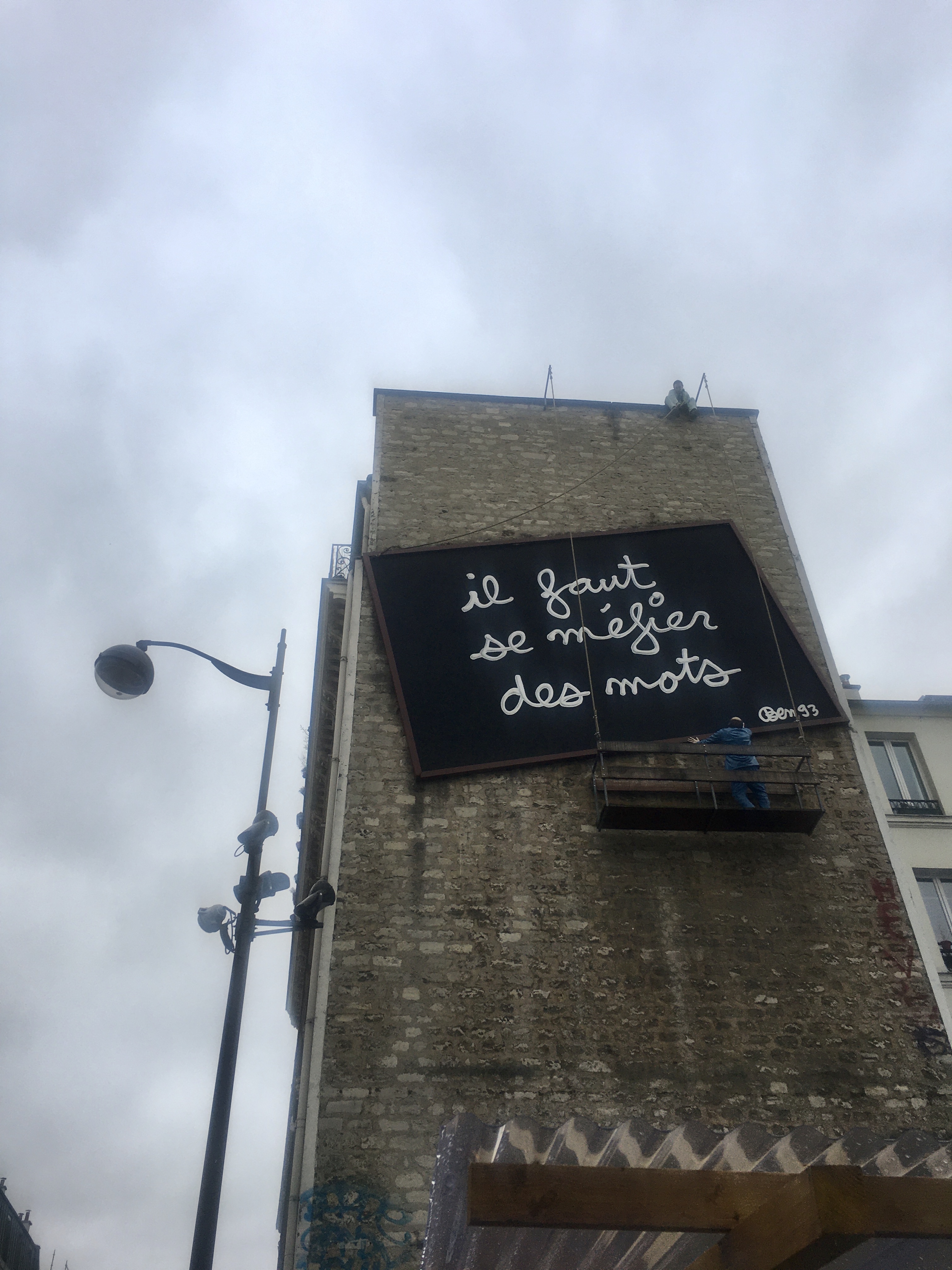
Il faut se méfier des mots (Beware of words), Ben, 1993. Belleville, Paris, France. Photo: Astrid Dick

To make a painting is not easy. To look at a painting is not an easy matter either, as it requires the viewer’s disposition and willingness to engage with it beyond words and labeling. Our brains like to pin things down, using minimum resources to move on to the next task as quickly as possible. They latch on to words. Yet the moment words enter our minds, we’re not really looking anymore.

Continue reading “Let the silence take over: On words, inner compass, and patience”

William Corwin – Flattening of Time

Pazuzu, 2018, hydrocal. Photo courtesy the artist

Experiencing William Corwin’s sculptures may resemble opening a time capsule filled with mysterious objects made of familiar materials like sand, rope, clay and wood. By drawing on references ranging from architecture to archaeology, totems to teeth, Corwin’s sculptures resonate with archaic civilizations — removed yet urgently present. William Corwin shares with Art Spiel what brought him to sculpture, takes a look at some of his projects, and sheds some light on his curatorial and art writing practices.

Continue reading “William Corwin – Flattening of Time”

Anne Sherwood Pundyk With Art Spiel – Part 3

 AS: What can you tell me about your painting process?

Anne Sherwood Pundyk Mattituck, NY studio exterior
with canvas works in progress summer 2018.
Anne Sherwood Pundyk at work, Mattituck, NY studio spring 2018, photo courtesy The Suffolk Times.

Anne Sherwood Pundyk: To begin, I am alone in my studio out in the country. I clear away the past. I am free. I don’t need to do anything. I have no expectations based on prior work. I wait. An urge eventually calls me toward my materials. My materials are humble drop cloth canvas and house paint. They will be transformed and elevated. I want to make something new. It will affirm a hopeful light. It will hold a dark truth. It will be more than the sum of its parts. It will take whatever size and shape it needs to take. I am there to shepherd its creation. I start by mixing a color that matches my mood. I pour a large quantity of paint onto canvas on the floor of my studio or outside on the lawn. I watch the movement and density of the paint. I pour more paint or water to compose in response to what I see. I work with large heavy pieces of canvas sometimes soaking wet with paint and water, bending, rolling, and pulling. I learn as I go. I extend my body to my materials. The canvas becomes my skin and the paint is a bodily life fluid. Action becomes image.

Continue reading “Anne Sherwood Pundyk With Art Spiel – Part 3”

Anne Sherwood Pundyk With Art Spiel – Part 1

Art Spiel’s Interview with artist and writer Anne Sherwood Pundyk has evolved into a cohesive and richly layered personal essay that will be published in sections over three days – one part a day.  Anne Sherwood Pundyk’s essay in three parts seals Art Spiel’s Interview series for 2018, while opening a portal into 2019 with fresh insights and new writing formats. 

Continue reading “Anne Sherwood Pundyk With Art Spiel – Part 1”

Color Matters at Galerie Richard

Color is a function of reflected light and it is intrinsic to everything we see. Color is also freighted with emotion for humans – certain colors can excite or depress us even without our awareness – teases, shouts, whispers, sings. Color can be fugitive or it may sound an alarm. As a painter and former paint-maker, color has been a lifelong obsession for me. It’s also the focus of a new, stunning group show at Galerie Richard on the Lower East Side.

Work by Carl Fudge facing work by Jamie Martinez
Continue reading “Color Matters at Galerie Richard”