Lineage and Latitude – Divergent views sparking newfound conversations at IW Gallery

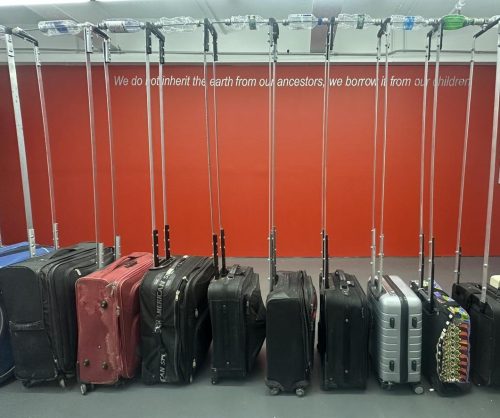
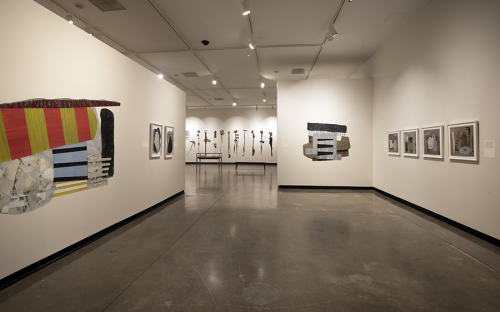
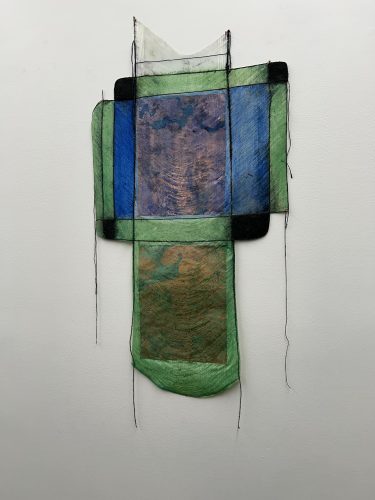
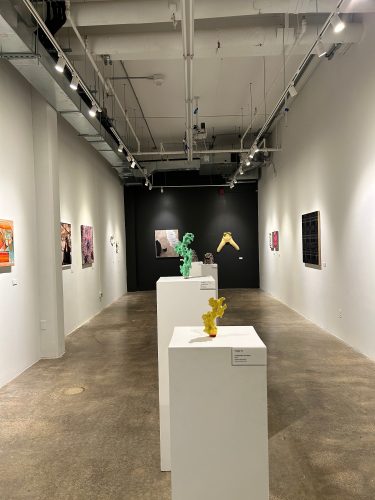
This group exhibition at the IW Gallery brings together a wide array of artists, visions, and mediums. Each of the eighteen artists in the show is connected in some way, whether it be from Pratt Institute, they are former international students who have decided to stay and continue making work, all the way to friends and former classmates. This grouping is an eclectic amalgam of stories and inspirations that diverge in their own ways and reconverge to create new conversations. Many of the artists in this exhibition use their work to embody their stories, memories, and histories. Pieces of their lineages, carrying across various places to join together in one location starting an ever expanding dialogue with each other.
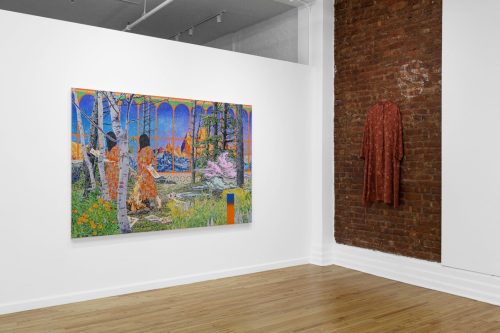
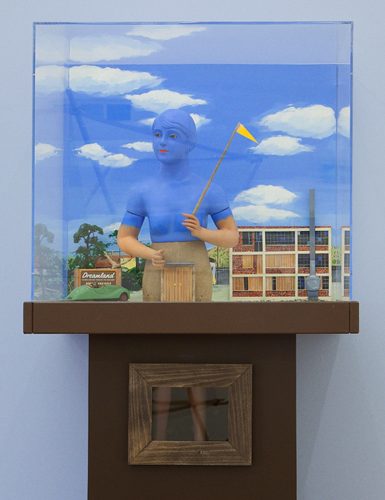
A painting on a wall AI-generated content may be incorrect.

Naomi Okubo: Resonance on a Surface at Fou Gallery

When Naomi Okubo decides to begin working on one of her enthralling paintings, there is a multistep process that far proceeds the brush gracing the canvas. The careful preparation of materials, digital and physical, allow Okubo to consolidate her thoughts and produce an organic depiction of her personal experience. The authenticity with which this is depicted is a result of the forethought and boundless introspection that she imposes upon herself. It is important to note that the artworks selected for the exhibition Naomi Okubo: Resonance on a Surface currently on view at Fou Gallery, weave a narrative fabric that chronologizes Okubo’s development as a visual artist.

Phantom Attractions at Astor Weeks

When my mother was very old, I wanted to tell her what it was like to be in the art world. I said, “It is a little like joining the carnival.” While not affording her much comfort, I tried to convey the disorderly balancing act of the ridiculous and the transcendent, the illusory and the real, the sincere and the piratical. I wanted to suggest a midway of precarious lives, thrill rides, and a dubious game of chance.

Why Black Art Is Rarely Just Abstract

Why Black Art Is Rarely Just Abstract

Algernon Miller’s work bends space, time, and expectations, redefining what abstraction means when history isn’t optional

I met Algernon Miller the way I tend to meet people in the art world: by asking too many earnest questions at a panel. That day, at a Mel Edwards talk at Hauser & Wirth, I caught a smile from the soft-spoken man next to me. We chatted and clicked. Two native New Yorkers—he from Harlem, I from the Lower East Side—drawn together by chance, we followed each other with no particular reason, and what felt like nothing quietly became something.

Art Spiel Picks: NYC Exhibitions in July 2025

HIGHLIGHTS

Pathways of migration, transit, turbulence, and foundational knowledge lead us across the city through three boroughs that speak to time and reflection. Through the slightest gestures cleverly calculated by the selected artists, we can trace symbolic movements as indicative of something greater and inherently profound. This lineup is a reminder to delve into one’s humanity and to mine for empathy and change. These themes are as relevant today as they were long ago, and it’s important to acknowledge the work of artists who are using their talents to envision an equitable world for all. Let us carry forth this mindset so that the present we build is a true path forward towards a more mindful future.

The Time It Takes to Look: Jaqueline Cedar’s Art of the Almost Seen

The Time It Takes to Look: Jaqueline Cedar’s Art of the Almost Seen

At Andrew Rafacz, Jaqueline Cedar’s Slide delivers small paintings with big temporal ambition. In her first Chicago solo show, the artist captures time not as a line but a loop—blurred, fragmented, and thick with atmosphere. Figures flicker in and out of clarity; gestures repeat like memories misfiring. The intimacy of scale invites close-contact peering, while layered forms resist quick comprehension. It’s a slow burn of perceptual dissonance, pitched somewhere between deep dreaming and déjà vu. In many ways, Cedar paints observation itself—its rhythms, glitches, and gaps—inviting us to dwell in the space between glancing and seeing.

Nanette Carter: A Question of Balance at Montclair Art Museum

Nanette Carter: A Question of Balance at the Montclair Art Museum is an extensive survey of 46 works from throughout the artist’s career curated by Mary Birmingham. Carter is known for her boundless abstractions and innovative works on mylar. This long-awaited show reflects Carter’s long history with the museum, the community, and the town itself. As one enters the show, the first piece is a video titled The Weight from the pandemic days, where Carter films herself balancing various pieces of her two-dimensional painting as more pieces get “stacked” onto the main mass. Setting the mood for the show, it not only introduces Nanette Carter in flesh but also important themes she has been working on throughout her career.

Feeling the Onslaught of the Moment at Field of Play

The exhibition at Field of Play gallery titled Onslaught of the Moment was wonderful, intriguing and timely all in one. The gallery’s exhibitions are always deeply considered and engaging, even within a smaller space, the works all shine and carry with them quite the presence. The shows are always curated with care, and this exhibition was no exception. Curated by Kate Sherman, the works of Lauren Clark, Masie Love, and Brian Karlsson each traverse space and show a progression of both time and experience through each artist’s process.

Cambridge-based Contemporary Landscape Painter Julia S. Powell in Conversation with MFA Boston Curator of Painting Katie Hanson

In Dialogue

Julia S. Powell, Kitchen Morning, 2024. Oil on canvas

MFA Boston Curator of Painting Katie Hanson visited the studio of the landscape painter Julia S. Powell. The resulting interview gives us an insight into Powell’s artistic process and her concept of a “fiction painter,” one that creates work at the intersection of abstraction and realism. Besides references to contemporary Impressionism, the interview addresses creating thickly-layered artworks that inspire introspection and acceptance of previous experiences—especially the unwanted ones. These layers serve as metaphors for embracing past struggles without regret. Powell’s work also provides an emotional refuge as a response to a chaotic and increasingly anxious life.

Natalia Zourabova: Nightlight at Kaliner Gallery

Natalia Zourabova: Nightlight at Kaliner Gallery

I am meeting Natalia at Kaliner gallery on a steamy day in June. The artist, who arrived here for this milestone exhibition, her first solo in New York, is uncertain when and how she will be able to return home to Israel. The war in Iran was launched just a week after the opening. Stranded away from her family, she remains determined and optimistic. This toughness in the face of chaos is also evident in her artwork. The paintings in Nightlight are vibrant, large, and striking.