A collage of hands holding a clay dog Description automatically generated

Rachel Frank: Ritual and Rehabilitation

Hot Air

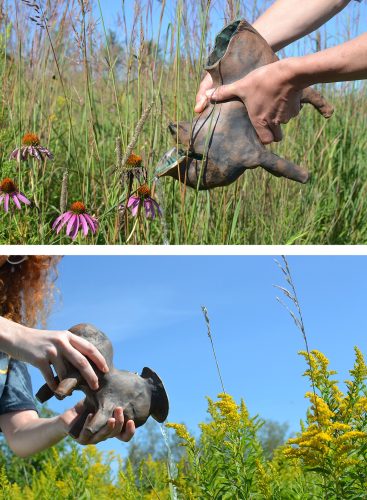
Rachel Frank is a Brooklyn-based artist whose practice includes sculpture, video, and performance. Her art explores our shifting perspectives towards natural history, climate change, and relationships with non-human species. She grew up near Big Bone Lick, Kentucky, the birthplace of American paleontology, where large mammoth and other megafauna fossils were found, altering Western views on extinction and evolution. She works as a staff wildlife care manager at The Wild Bird Fund, a wildlife rehabilitation center in Manhattan.
Image

­­Zahra Nazari: Interiors

In Dialogue

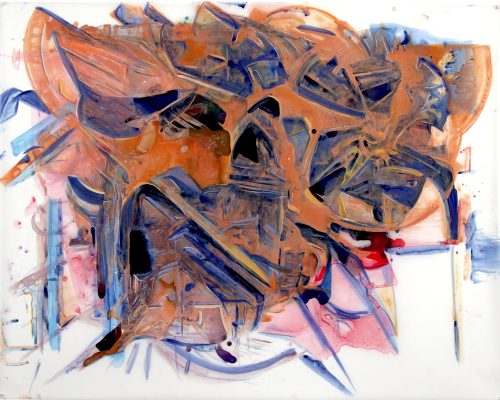
In her Interiors painting series, American Iranian-born painter Zahra Nazari draws on prominent features in classical Persian and Islamic architecture—decorative botanical motifs, arch, and particularly, iwan, the large, vaulted hall semi-enclosed and usually walled on three sides, with one end entirely open. Many scholars believe its origin can be traced back to the Parthian era. While looking at Nazari’s luminous surfaces, it may be interesting to keep in mind the dual role of the Persian arch—it serves both decorative and functional purposes—this richly decorated key aesthetic element in Persian architecture functions not only as an ornament but also as a structural support that provides stability. It is also designed to moderate the amount of sunlight that enters space, especially in iwans or other open spaces. Nazari’s frequent use of Mylar as a surface stirs a play on the notion of external and internal light, and simultaneously, her saturated color palette invokes a hot and arid climate with bright, sunlit days and crisp nights. Repetitive and rhythmical, these motifs coalesce into energetic, translucent, and luminous surfaces, evoking an interior space in flux. Zahra Nazari elaborates on her ideas and process in this interview with Art Spiel.

The Immigrant Artist Biennial, In Dialogue

Maya Hayuk and Kathie Halfin Discuss Ukrainian Heritage and Identity

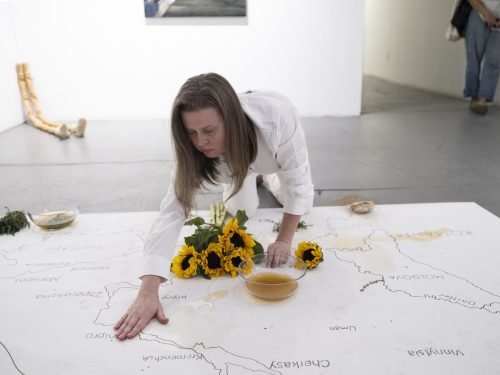
Having forced nearly one-third of Ukrainians to flee their homes as of 2022, the Russo-Ukrainian War has been a potent reminder of the absolute necessity to uphold peace, justice, and international solidarity in times of humanitarian crisis. Both being part of The Immigrant Asrtist Biennial 2023, Maya Hayuk and Kathie Halfin are artists who are inspired and empowered by their shared Ukrainian identity and heritage. Hayuk’s processes involve “set and setting,” mapping, and traditional design techniques, which is echoed by Kathie Halfin’s performance and hand-woven tapestry shown at Enmeshed: Dreams of Water. Together with TIAB’s writer-in-residence Xuezhu Jenny Wang, they speak about how their art grows out of cultural and political convictions.

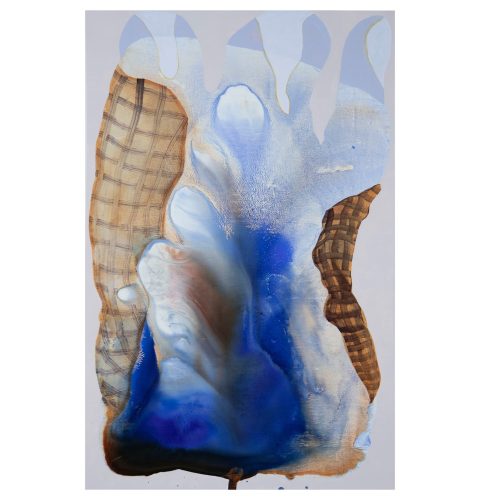
A blue and brown abstract painting Description automatically generated

Amy Talluto Describes an Elisabeth Condon Painting – Dusk, 2023

Amy Talluto’s reflections on a painting by Elisabeth Condon were initially presented in an interview with the artist in podcast episode 59 for Pep Talks for Artists. Elisabeth Condon is a frequent guest on the show, contributing to the series Elisabeth Condon Describes a Painting. In conjunction with Condon’s solo exhibition and participation in the Untitled fair, both with Emerson Dorsch Gallery in Miami,[LINK: https://emersondorsch.com/] Amy interviewed Elisabeth and described Condon’s Dusk, 2023, acrylic and mediums on linen, 30 x 21 inches, a painting included in her show. Dusk will be on view at the gallery from December 3, 2023, through February 3, 2024, in the exhibition Tempus Fugit.

Elizabeth Gilfilen: Denouement at Yi Gallery

In Dialogue

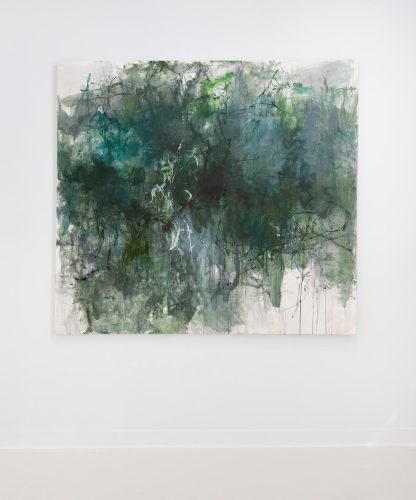
Elizabeth Gilfilen’s debut solo show at YI Gallery presents oil paintings that exhibit a meticulous yet bold exploration of color and texture. Her strokes span from boldly assertive to gently nuanced, each adding to her work’s visual depth and dynamic feel. Eschewing neat conclusions, her paintings are presented as evolving works, with each layer suggesting new narratives in an unfolding journey. The synergy of color and form in her paintings creates a dynamic tableau, inviting viewers to interact with the canvas, drawing them into the active narrative of the art’s continuous unfolding.

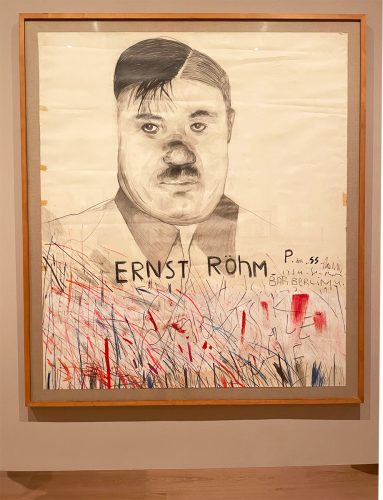
A drawing of a person Description automatically generated

Stéphane Mandelbaum at The Drawing Center

Who was Stephane Mandelbaum? A closeted gay man? The child of Holocaust survivors? A liar? A thief? A brilliant artist you’ve never heard of? All of the above and perhaps more.

The Drawing Center is presenting the first-ever show of Mandelbaum’s work in the US, and it is a show that left me gob-smacked. The combination of Mandelbaum’s brilliant drawing, deeply personal vision, and the complexity of his backstory is a tale made for cinema. Born in 1961 to a family of paternal Polish Holocaust survivors and maternal Belgian Armenians, Mandelbaum grew up in the town of Namur, about an hour and a half from Brussels. His Father, Ari, was a well-known painter, and his mother, Pili, was an illustrator. There is no record of siblings. A gifted draftsman from a young age but dyslexic and eccentric, Mandelbaum moved from Namur to Brussels, where he seemed to devote his time to making drawings and engaging in what is termed “petty crime.” He married a woman from Zaire (now called The Democratic Republic of Congo) and lived between the worlds of Belgian Africans, the Belgian crime underworld, and his own artistic imagination.

Linda Sok: Biomythorgraphies

Linda Sok: Biomythorgraphies

In Dialogue

Linda Sok uses in her fiber-based sculptures elaborate dyeing techniques practiced throughout Asia and imagery of her family she receives through social media to convey narratives of migration and cross-cultural pollination. Linda Sok is a second-generation descendant of survivors of the Khmer Rouge Regime, a genocidal period in Cambodia’s history that forced her family to flee Cambodia. By accessing fragments of Cambodia’s traumatic past, she attempts to recontextualize lost traditions and culture to allow living descendants to process the history through a contemporary lens.

Patricia Satterlee at Gold Montclair

Patricia Satterlee at Gold Montclair

In Dialogue

Patricia Satterlee wrote this concise statement to contextualize the work she exhibits in her third solo show at Gold Montclair:

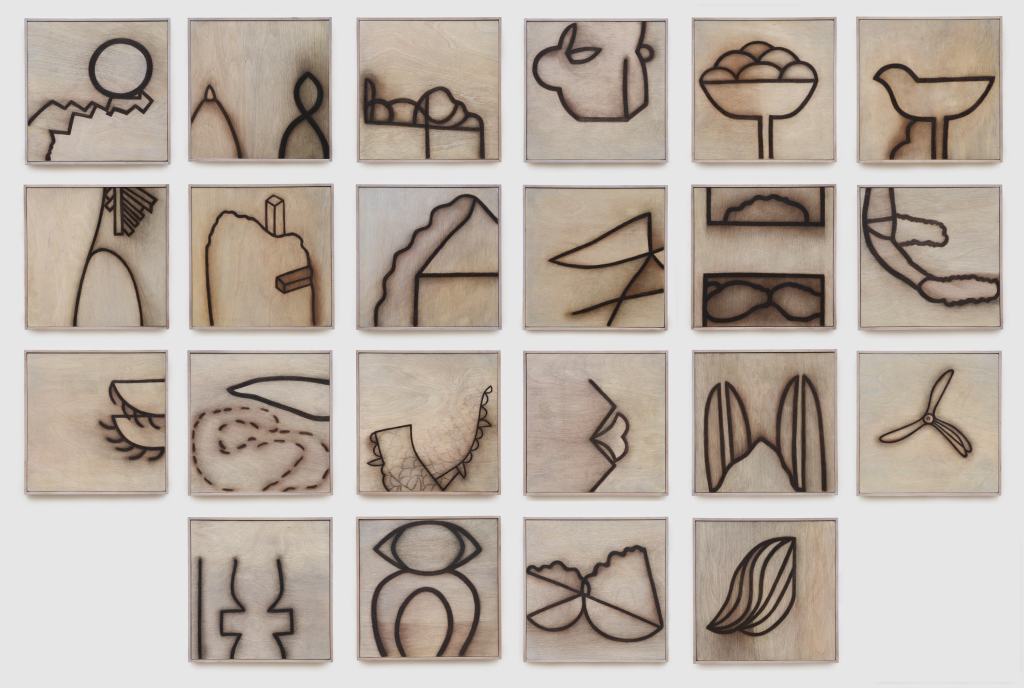
This work resists the feeling that everything is falling apart. Holding on to a real or imagined moment without the noise. A particular way of being a boat on a stream passes in time. A figuration of forms floating and morphing, rediscovered as they’re painted.

An interview with curator and gallery founder Jennifer Wroblewski gives us more insight into her curatorial vision and the featured artworks.

A white room with a white floor and a white rectangular object Description automatically generated with medium confidence

Shay Arick: Demons and Fields

Featured Exhibition

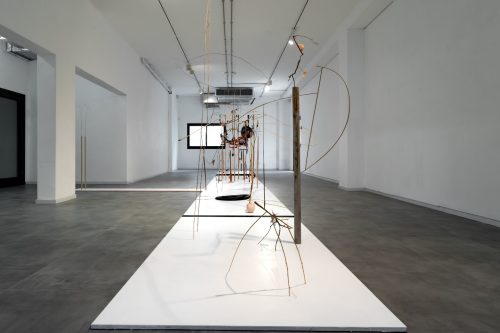
In Demons and Fields, Shay Arick’s solo show in Tel Aviv Artists’ Studios Gallery, most sculptures are made of dried Ficus leaves he collected near his home. The vertical constructions are like linear drawings of delicate figures—they sway gently with the air or rotate in place through an automated mechanism. Each has its rhythm and character, evoking wonder and awareness of life’s fragility. Arranged along an extended white platform reminiscent of a road, these characters appear as if caught in a paused procession—some still move but remain anchored as part of a collective entity, an undefined network, or an intricate matrix. It is a nuanced and powerful metaphor for life’s transience in a complex reality. It is the second exhibition by Shay Arick since his return from New York City to Israel a year and a half prior. The show, curated by Eitan Bognim, opened on October 6th but was closed the next day on October 7th, due to the devastating Hamas attack on southern Israel and the subsequent ongoing war. The conversation with Shay Arick focuses on his art and his process.

The Immigrant Artist Biennial, In Dialogue

The Immigrant Artist Biennial, In Dialogue

Sanié Bokhari and Umber Majeed Discuss the Forbidden

As part of The Immigrant Artists Biennial: Contact Zone, Sanié Bokhari, and Umber Majeed present their work in the Enmeshed: Dreams of Water group exhibition. As artists of Pakistani descent currently residing in the US, both Bokhari and Majeed tap into the changing landscape of globalization and the unstable experience of international migrants’ identity formation. Evoking water as a symbol of fluidity and change, Bokhari’s painting and Majeed’s video deploy a metaphoric framing that is beautiful and complex. In this conversation with Jenny Wang, they critically reflect on the geopolitics of belonging and identity.