Impossible Failures at Zwirner

Opinion
A photo of Pope.L in his studio, dated 2022
Pope.L, studio, 2022, photo courtesy of David Zwirner Gallery 52 Walker

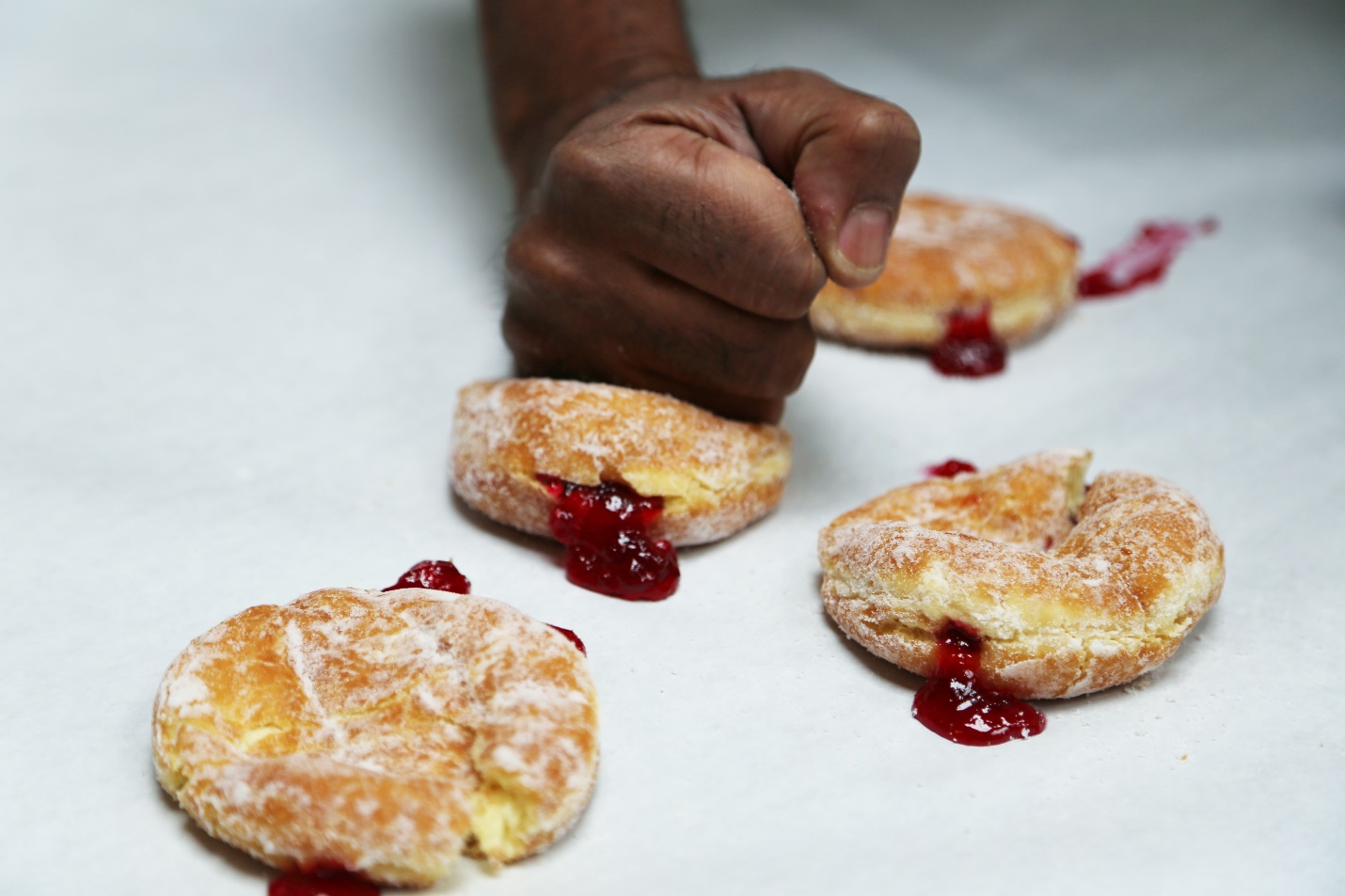
When I heard about Impossible Failures it promised to be an exciting exhibition, in that it was to bring together Gordon Matta-Clark (1943–1978), a White post-Minimalist artist best known for his site-specific works of cutting through buildings and homes, and Pope.L (b.1955), a Black artist who used to describe himself as the friendliest Black man in America, and is known for his public performances and installations, which address Black racial stereotyping and other such hypocrisies. In a not un-interesting way, the resulting exhibition is a curatorial mash-up in which the works in it are overwhelmed. As such, this is not an exhibition where the works of each artist supply a context for the other, nor does it explore Matta-Clark’s legacy by focusing on Pope.L’s overlapping strategies. Instead it might be thought of as a collaborative installation authored by the curator Ebony L. Haynes.

Continue reading “Impossible Failures at Zwirner”
André-Pierre Arnal at Ceysson & Bénétière New York

Opinion
Exhibition-View-Andre-Pierre-Arnal-2022-©Adam-Reich-courtesy-Ceysson_Bénétière(1)
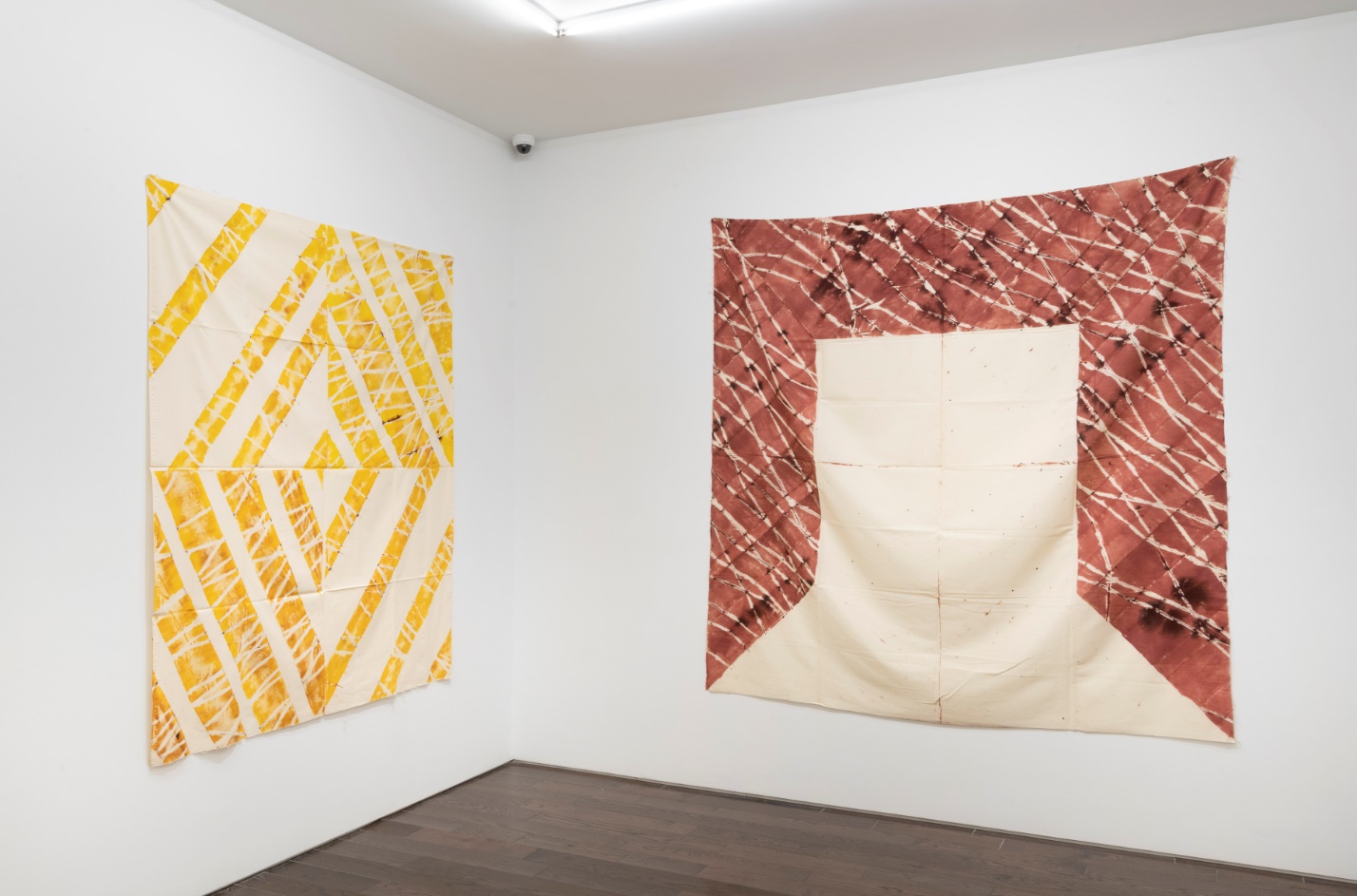
Installation view, André-Pierre Arnal at Ceysson & Bénétière New York. Photo courtesy of Ceysson & Bénétière New York

With the advent of Modernism in the late 19th – early 20th century, differing movements, schools, and networks sprang up internationally—some were generative and sustainable, others dead-ended, though unbeknownst to most of us, traces of these persist or return. This cross-fertilization drove Modernism’s evolution until the post-World War II era the new art made in the U.S. came to dominate the narrative. The triumph of the NY School (AbEx) corresponded to the new political and economic order. In this scenario the vanguards that emerged from the rubble and detritus of the War such as C.O.B.R.A., Nouveau Realisme, Lettrist, Zero, Arte Povera, etc. were trivialized, marginalized, or came to be appropriated. To this day, the European artists whose works come to be acknowledged in the States tend to be those whose works are used to typify the whole of a critical discourse, or style. This has reduced post-War European art to a short list that includes Pierre Soulages, Antonio Tapies, Lucio Fontana, Yves Klein, Francis Bacon, Joseph Beuys, Gerhardt Richter, Anselm Keifer, etc. In this manner, the illusionary status of the U.S. as the cultural leader of the free world is sustained, while European art is made to appear to be broken, fragmented, or at best sporadically relevant, rather than constituting a network of competing histories, practices, and critical discourses.

Continue reading “André-Pierre Arnal at Ceysson & Bénétière New York”

Magic Mirror: Susan Carr at LABspace

Installation view of Susan Carr’s Girls paintings on top, and self-portraits below, in Magic Mirror

Tired of phrases such as best kept secret, finally receiving her due, and delayed recognition it is time to recognize artists, particularly women artists who are in their prime, evolving both in facility and content. Susan Carr is a quintessential example, an accomplished artist who, over decades, has fearlessly mined the history of her own existence. Her latest exhibit, Magic Mirror at LABspace in Hillsdale New York is a tribute to her dedication, talent and courage.

Continue reading “Magic Mirror: Susan Carr at LABspace”

The Interaction of Light and Shadow: Susan English at Kathryn Markel

Graphical user interface

Description automatically generated with low confidence
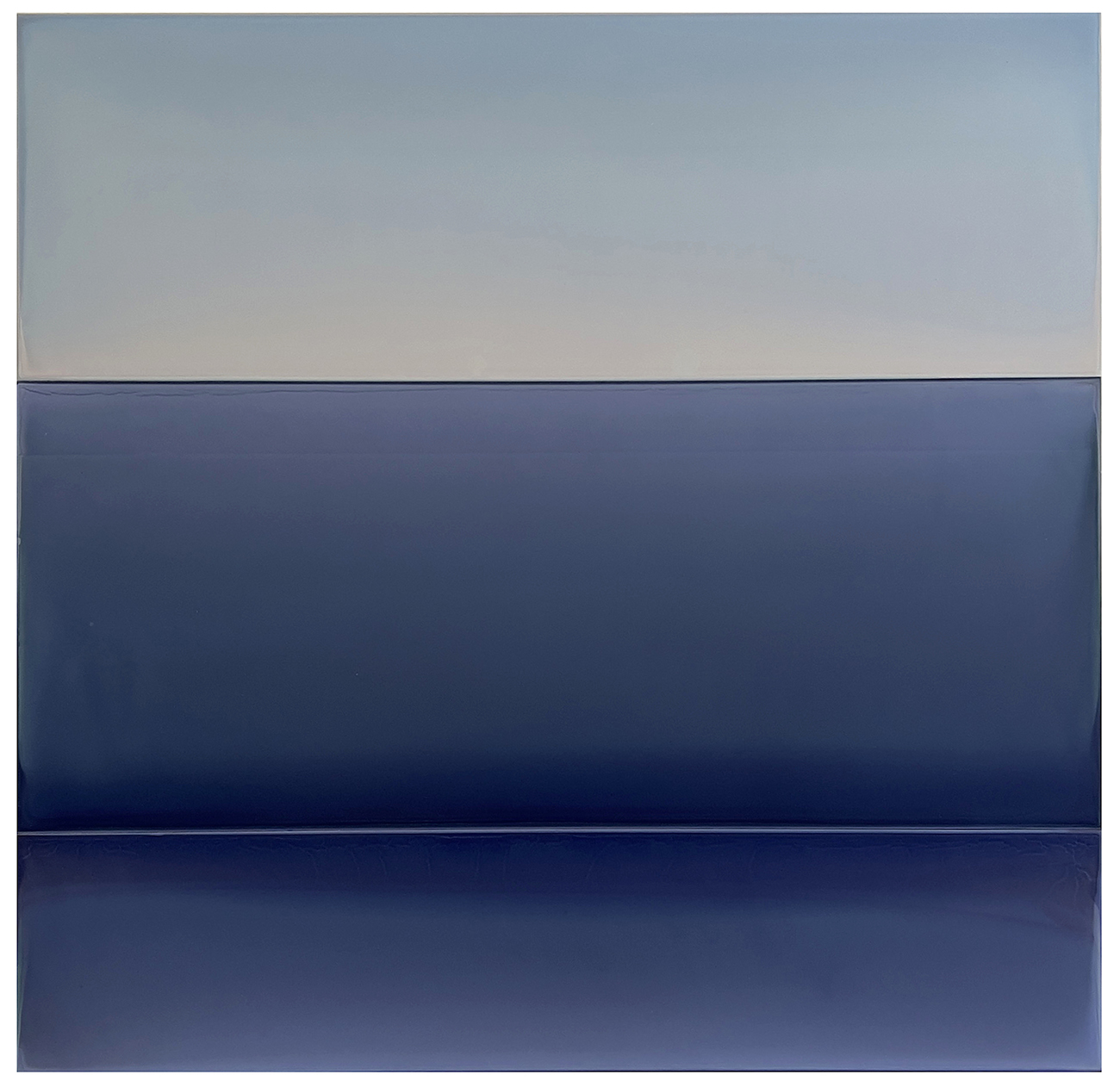
Susan English, Still Light, 2022, tinted polymer on Dibond panel, 34 x 35 in. Courtesy of Kathryn Markel Fine Arts

To confront a person with their own shadow is to show them their own light.

– Carl Jung

In her current exhibition at Kathryn Markel Fine Arts, Light to Light, Susan English explores the vagaries of light as it penetrates layers of polymer and pigment. Subtle gradations in color are infused with radiant light, recalling the sfumato in Van Eyck’s translucent skies or Cimabue’s blushing Virgins. The seamless transitions are achieved through the artist’s unorthodox technique of pouring thin layers of tinted polymer onto panels, then tilting the panels while the pigments settle and dry. The multiple layers interact with light to create varying effects – sometimes luminous, sometimes opaque – which are punctuated by cracks and blemishes in the medium as it dries. These accidents are essential to the piece, as they provide a counterbalance to the exquisite surfaces and tight control of their execution. Indeed, English manipulates the panel in such a way that crackling is anticipated, and she views the result as a simulation of the fissures and fractures found in nature.

Continue reading “The Interaction of Light and Shadow: Susan English at Kathryn Markel”

Some last words on the Whitney Biennial as a cultural labyrinth

Opinion
Photo from the Whitney 2022 Biennial

I would hate to think I have become an old and conservative critic who believes our best days are behind us. I would rather believe that my structuralist perspective is capable of evaluating contemporary emerging practices and recognize the social, cultural and political value of these tendencies. What brought this on is having recently seen the 1962–64 exhibition at the Jewish Museum. This show examines how artists living and working in New York during this three-year period responded to rapidly changing social and cultural conditions, by questioning what was considered to be art’s normative forms and subjects. This post-AbEx generation was concerned with creating aesthetic configurations that would result in novel perceptual modes and political subjectivities.

Continue reading “Some last words on the Whitney Biennial as a cultural labyrinth”

Zinaida: Ukrainian Artist With Important Works in Venice and New York

Zinaida. Courtesy of the artist.

Zinaida is one of the most important Ukrainian artists working today. Her practice revolves around the study of mythologies, national symbols, archaic imagery, and the role of women as carriers of sacred knowledge, stemming from the Kyiv-based artist’s extensive ethnographic research and close collaboration with indigenous communities in remote areas of her country. Marina Abromović has described Zinaida’s practice as subtly balancing her work “at the juncture of historical symbolism and modernity. She uses traditional imagery, rituals and crafts to convey meanings that are relevant to a vibrant and fluid culture. Zinaida is a rebel. She was in many dangerous zones (on Maidan during the Revolution of Dignity, Chornobyl, in the war zone in the Eastern Ukraine). To me she is like a Ukrainian “Guerilla Girl.” Zinaida’s work is currently on view in Venice and New York.

Zinaida’s solo pavilion Without Women is an official Ukrainian Collateral Event at the Venice Biennale. The exhibition’s curator, Dallas Contemporary Executive Director Peter Doroshenko, introduced Zinaida as “a national cultural figure for Ukraine.” He says that over the last fifteen years, she has “summarized, documented and interpreted contemporary Ukrainian society through her work. Zinaida’s works have become an important and seminal influence for all the contemporary Ukrainian artists.”

Continue reading “Zinaida: Ukrainian Artist With Important Works in Venice and New York”

Pauline Decarmo: Exit – the Path to New Beginnings at LABspace


Installation view of Pauline Decarmo: Exit at LABspace, 2022, photo courtesy LABspace

Some artists paint stunning abstractions, some artists deftly execute exquisite realistic images, while others ingeniously develop astute conceptual work, but the truly magical art is work that can intelligently create the aura of time, space, and experience. Fortunately Pauline Decarmo, by using any means necessary, does exactly that in her exhibition, Exit, on view at LABspace in Hillsdale NY through May 29.

Continue reading “Pauline Decarmo: Exit – the Path to New Beginnings at LABspace”

Jesus Benavente: Que no Quede Huella (Let There Be No Trace) at Home Gallery

A picture containing text, graffiti, painted, shop

Description automatically generated

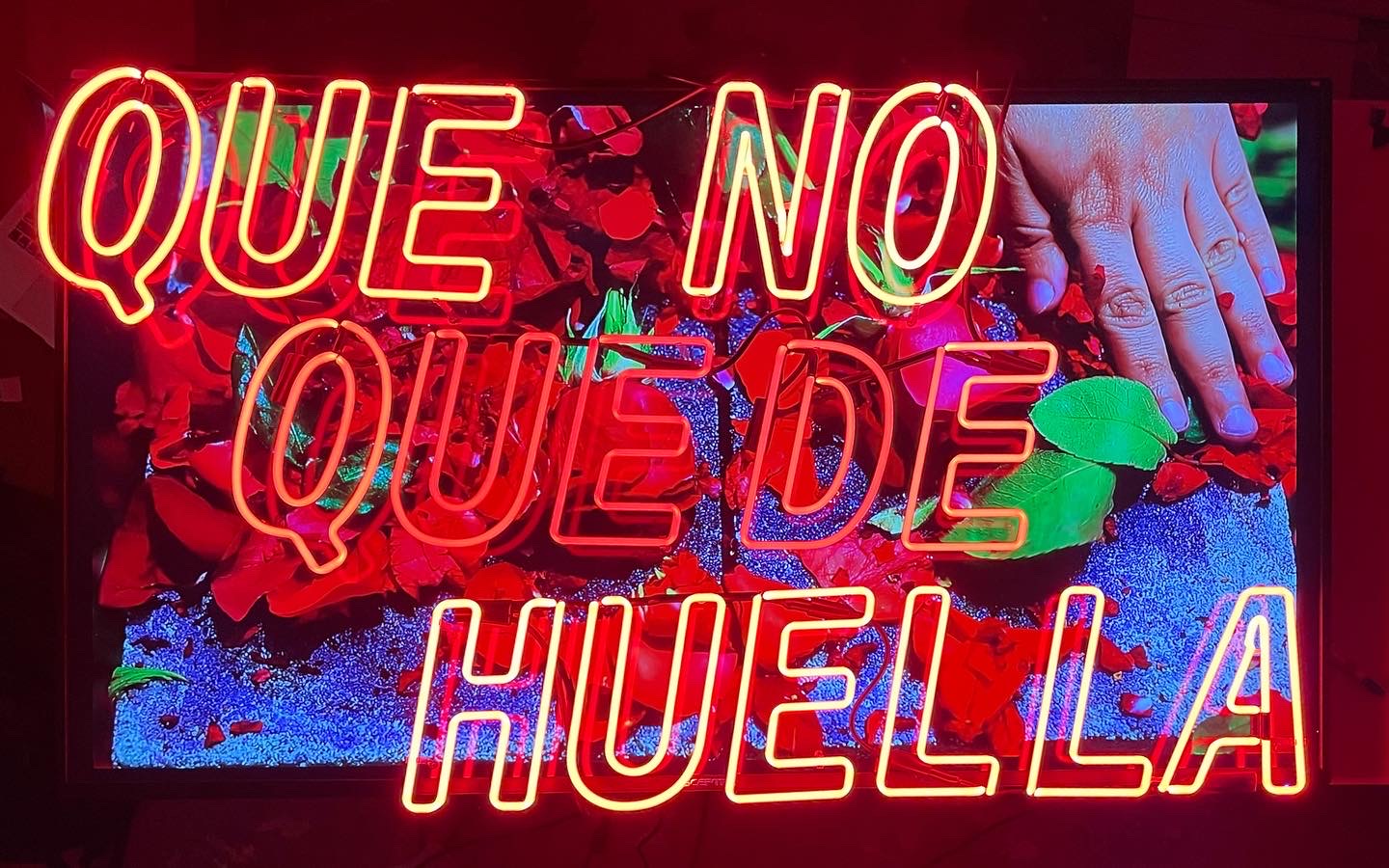
Jesus Benavente, Quede Huella (Let There Be No Trace), 2022, Neon video, 49.5 x 29 x 8 inches. Photo courtesy the artist.

At 291 Grand Street, a bright red glow radiates from Home Gallery, a storefront window exhibition space in the Lower East Side. The light comes from large, fluorescent neon letters that spell out “Que no Quede Huella,” which are layered over a flat screen TV playing a rotating series of videos. The installation is the latest iteration of multimedia artist Jesus Benavente’s neon video sculptures, displayed in the exhibition Que no Quede Huella (Let There Be No Trace), curated by Elisa Gutiérrez Eriksen. 

Continue reading “Jesus Benavente: Que no Quede Huella (Let There Be No Trace) at Home Gallery”

Hovey Brock: Crazy River

In Dialogue with Hovey Brock

A person painting a picture

Description automatically generated with medium confidence

Hovey Brock at work on Crazy River, 2019, acrylic on panel, 30” x 40,” a work from his Crazy River series.

Hovey Brock’s current paintings are part of Crazy River, a larger project he has been developing since 2017. The paintings are based on his life-long relationship to the West Branch of the Neversink, which runs between Ulster and Sullivan counties in New York state. The project also includes text and videos, drawing on the artist’s experience and stories about the West Branch and the western Catskill mountains handed down through his family.

Continue reading “Hovey Brock: Crazy River”

The Agreement: Chromatic Presences – Funky and Formal at Zurcher

A picture containing indoor, wall, ceiling, floor

Description automatically generated

 Installation view of The Agreement: Chromatic Presences, curated by William Corwin at Zürcher Gallery. Photo: Adam Reich. Courtesy of Zürcher Gallery NY/Paris.

I’ll start with a question: does a critic have an obligation to propose a solution to an enigmatic puzzle an exhibition might pose? What has led to this, is reading William Corwin’s catalog essay for The Agreement: Chromatic Presences, in which he ignores recounting the history of sculpture and color—deemed for a very long time to be irreconcilable like fish and cheese. It is now common knowledge, sculpture till the time of the renaissance was largely polychromed, but a neo-classical notion of purity and essentialism came to be imposed upon it to differentiate it qualitatively from painting. As a result, sculpture came to be limited to the colors of its materials—marble, bronze and wood. In the West, this formalism was institutionalized by the Enlightenment’s and was the excepted norm until the mid-20th century, when art’s traditional forms began to morph. Consequently, we must ask if there is a more contemporary issue concerning color and form at the heart of Corwin’s The Agreement: Chromatic Presences, and if so, what might it be?

Continue reading “The Agreement: Chromatic Presences – Funky and Formal at Zurcher”