This month’s Manhattan highlights focus on artists tapping into the natural world, where these practices converge with the man-made in a clash of stunning reinvention and compelling engagement. These exhibitions channel the experimental through exploratory processes that harness our attention and hold us in their spell.
Lorna Simpson, did time elapse, 2024, acrylic and screenprint on gessoes fiberglass @Lorna Simpson
Cecilia Vicuña, Lorna Simpson and Nour Mobarak powerfully and eloquently broach heavy subject matter with diligent research in their attempts to preserve significant stories amidst the burdens of colonialism. Each artist speaks to various experiences as they contend with complicated histories of peoples, lands, and the dynamics between them in an array of circumstances. These exhibitions take on the task of engaging with past and present, depicting resourcefulness and perseverance amid the tangled threads of imperialism that wreak havoc across the globe. Viewers are offered context as they enter works that embody life through organic matter, curious objects, and ethereal modalities.
Born in 1913, Canadian American painter Philip Guston began his career in the 50’s in New York during the Abstract Expressionist movement. The Ab-Ex-ers were sweeping the country as the next great thing and developing a bit of a swagger. Painters everywhere were ditching representational painting for the new experimental style of pure abstraction, and Guston was no exception. Well-esteemed and well-reviewed, he was a part of the in-crowd. Everyone loved the guy.
Last year, I watched a TikTok video where Kiersten Lyons, an actor, was hilariously recounting all her many misfortunes in love and career. Her whole video read like a voyage of self-discovery through rejection, a tale familiar to anyone pursuing a creative life. It was part of a trend on the app that encouraged creators to pair their comeback stories with a gospel song: In the Sanctuary by the Kurt Carr Singers. In the Sanctuary is one of those songs that seems to end, but then a few moments later, starts up again. And this plays out over and over, to almost comic effect, until you don’t know if it will ever end. And it really struck me as an analogy that could be widely applied to all the arts.
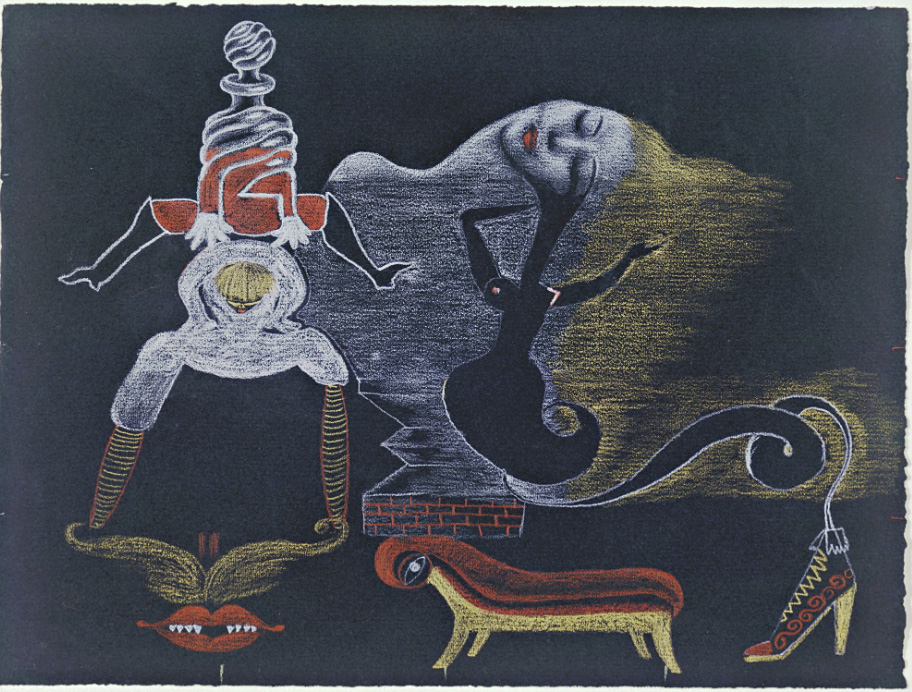
Cadavre Exquis with Valentine Hugo, André Breton, Tristan Tzara, Greta Knutson Landscape c.1933, Museum of Modern Art, Purchase
In an online artists’ talk in January 2022 between artists Chie Fueki, Alexi Worth and Catherine Murphy at DC Moore Gallery (produced by Painters’ Table), Murphy mentioned that her paintings were occasionally based on dreams. She revealed that her most recent show at Peter Freeman Inc. included two dream paintings: Flight (2020) and Begin Again (2019). “Flight” shows a gingham apron splayed at the bottom of four carpeted stairs and “Begin Again” shows five blue hand outlines on yellow-green wallpaper. During the course of the conversation, Worth also noted that Jasper Johns’ Flag painting came from a dream. And it got me wondering: How common is dream inspiration in art?
As an artist, have you ever looked around and felt ancient, withered, and uncool? Well, this pep talk is for you, because we’re about to find out how later in life, big bangs can be the bravest and most creative big bangs of all.