Notice: Function WP_Object_Cache::add was called incorrectly. Cache key must not be an empty string. Please see Debugging in WordPress for more information. (This message was added in version 6.1.0.) in /www/artspiel_344/public/wp-includes/functions.php on line 6131

Artist Kristina Libby and the Village Alliance Welcome New Animal Inspired Public Art Exhibition – In Plain Sight

Macintosh HD:Users:alexandraisrael88:Downloads:Kristina Libby (artist) - Grimo - Adam Reich (photographer).jpeg.jpg

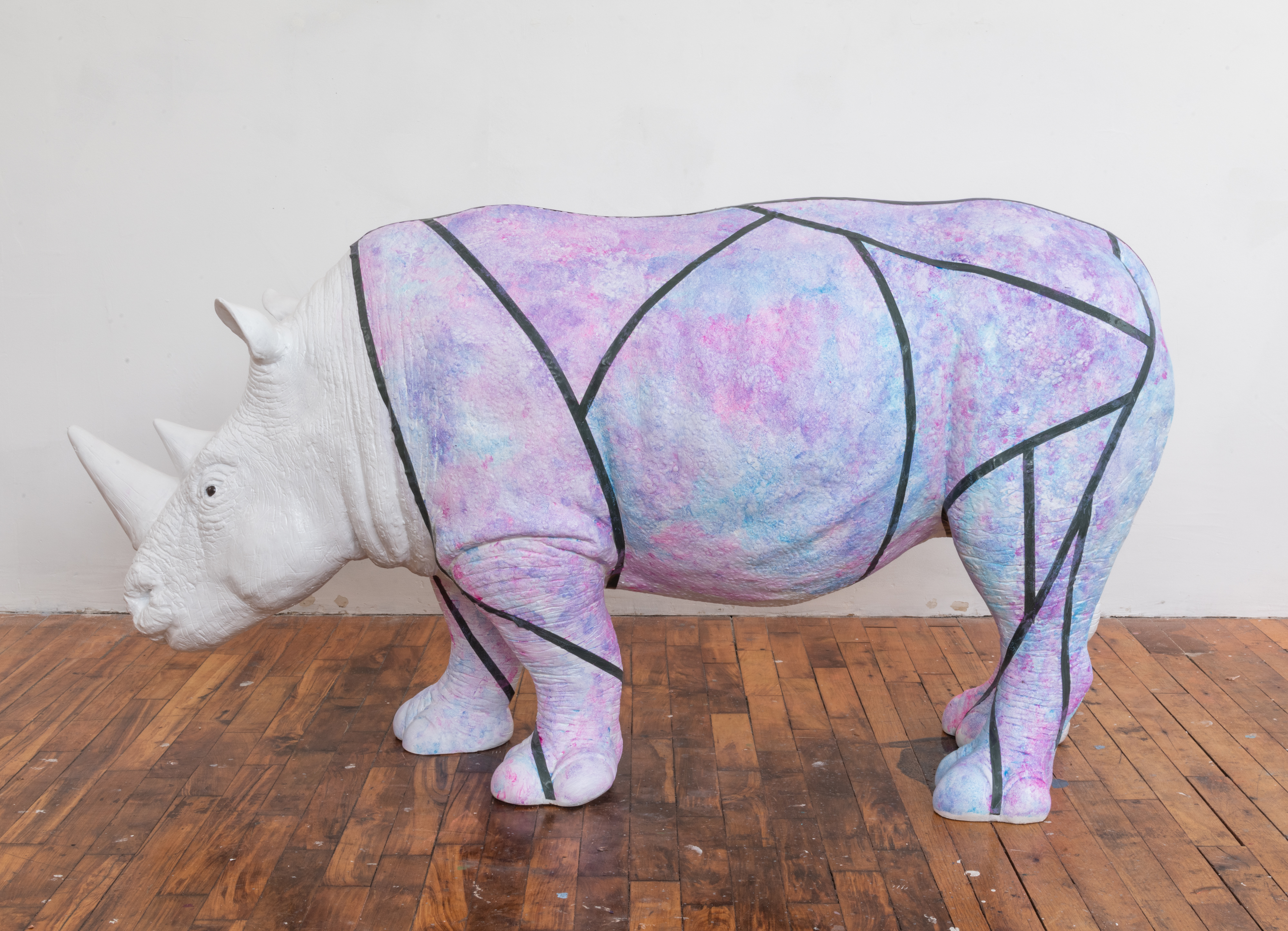
Grimo, courtesy of the artist and photographer Adam Reich.

Artist Kristina Libby is no stranger to the power of public art: during the onset of COVID, Libby founded the Floral Heart Project. In collaboration with 1-800-Flowers, The Floral Heart Project created and distributed floral heart wreaths as a tribute to those who lost their lives to COVID-19. Moved by community response to the Floral Heart Project, Libby has created a series of large sculptures of apex animals known as the Chunkos. Greenwich Village, a hot-spot for both art and architecture, will play host to the Chunkos in an immersive exhibition titled In Plain Sight (on view from June 10-12). The exhibit is inspired by the unique history of animals in art and architecture in the neighborhood and is a celebration of the resilience, courage and creativity of New Yorkers from all walks of life. On Friday, June 10th, there will be an interactive public art painting exercise with Libby and the Village Alliance Business Improvement District from 5-7pm. She hopes that the installation of the Chunkos in Astor place will spark new conversations and evoke curiosity from passerbys. Curious artists of all ages are welcome to join as she paints in real time with the help of the community the inaugural animals in her Chunkos series.

Continue reading “Artist Kristina Libby and the Village Alliance Welcome New Animal Inspired Public Art Exhibition – In Plain Sight”

ELM Foundation: Art and Healing

In conversation with founder Melinda Riddle McCoy

A person sitting in a chair

Description automatically generated

Melinda Riddle McCoy, inside Tomas Vu’s spherochromatic dome. Photo by Nathan West @nathanwestphoto

The mission of ELM Foundation is to promote the healing power of the arts. Our methods include advocating the benefits of arts therapy, providing multidisciplinary arts education, and building sustaining mentorships—all working together to cultivate a lifelong love of self-expression and awareness through a creative process. ELM Foundation was launched on February 20th, 2019 in honor of Emma Lauren McCoy whose intense childhood experience inspired the creation of this nonprofit organization which offers children who have experienced parental loss or family structure adjustments, paths for healing through art and art therapy. In addition to its multidisciplinary art education and therapy, ELM hosts at the adjacent boiler space exhibitions, currently featuring Tomas Vu’s solo project, The Man Who Fell to Earth 76/22. Melinda McCoy, the founder of ELM sheds some light on the foundation and how art plays a pivotal role in it.

Continue reading “ELM Foundation: Art and Healing”

Nikki Lindt: The Underground Sound Project

Featured Artist


Nikki Lindt recording photo: Joe Klementovich

Artist Nikki Lindt created the interactive pubic artwork titled The Underground Sound Project in collaboration with NYC Parks, USDA Forest Service, the Nature of Cities, and Prospect Park Alliance. It explores the surprising and resonant world of sounds that can be heard underground in environments such as soils, streams, and trees, highlighting collaborations between art and science. The interactive project will be up in Prospect Park starting May14th for a year until May 14th 2023.

Continue reading “Nikki Lindt: The Underground Sound Project”

What Happens When an Artist Goes to Eden

A picture containing plant, grass

Description automatically generated

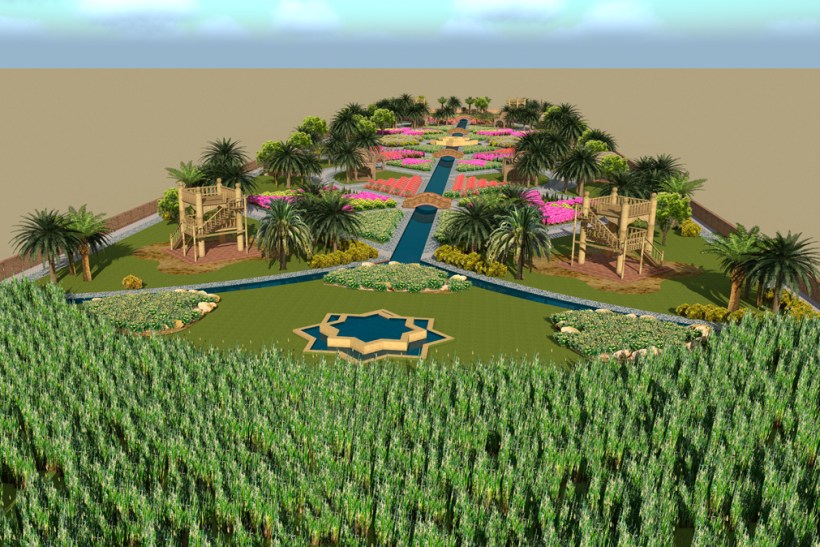
Eden in Iraq Wastewater Garden Project (2011-present), site drawing of El Chibaish, 26,250 square meters (6.4 acres, 2.6 hectares), rendering by Bernard Du, 2017)

In 2011, photographer and environmental artist Meridel Rubenstein envisioned creating a garden in southern Iraq where the Tigris and Euphrates Rivers cross, near the supposed site of the biblical Garden of Eden. However, unlike its idyllic predecessor – a mythical paradise in a newly formed world – this new garden would help to heal what had become a fragile, desert wasteland by cleaning existing wastewater and establishing a culturally significant green space. 

Continue reading “What Happens When an Artist Goes to Eden”

Fragile Rainbow: Traversing Habitats by ecoartspace

Featured Project: with curator Sue Spaid

A picture containing floor, indoor, ceiling, people

Description automatically generated

Tessa Grundon, Invasive Species, 2018-2021/2022, Asiatic Bittersweet root systems and border fencing, dimensions variable.

The group show Fragile Rainbow: Traversing Habitats at the Williamsburg Art and Historical Center in Brooklyn includes paintings, sculptures, videos, and installations addressing environmental issues by more than fifty artists from the New York City region who are members of ecoartspace. The title is based on Claire McConaughy’s oil painting, Fragile Rainbow, referencing both hope and loss. The show runs from May 7th through June 4th, 2022. Curator Sue Spaid elaborates on this large-scale group show.

Continue reading “Fragile Rainbow: Traversing Habitats by ecoartspace”

Jesus Benavente: Que no Quede Huella (Let There Be No Trace) at Home Gallery

A picture containing text, graffiti, painted, shop

Description automatically generated

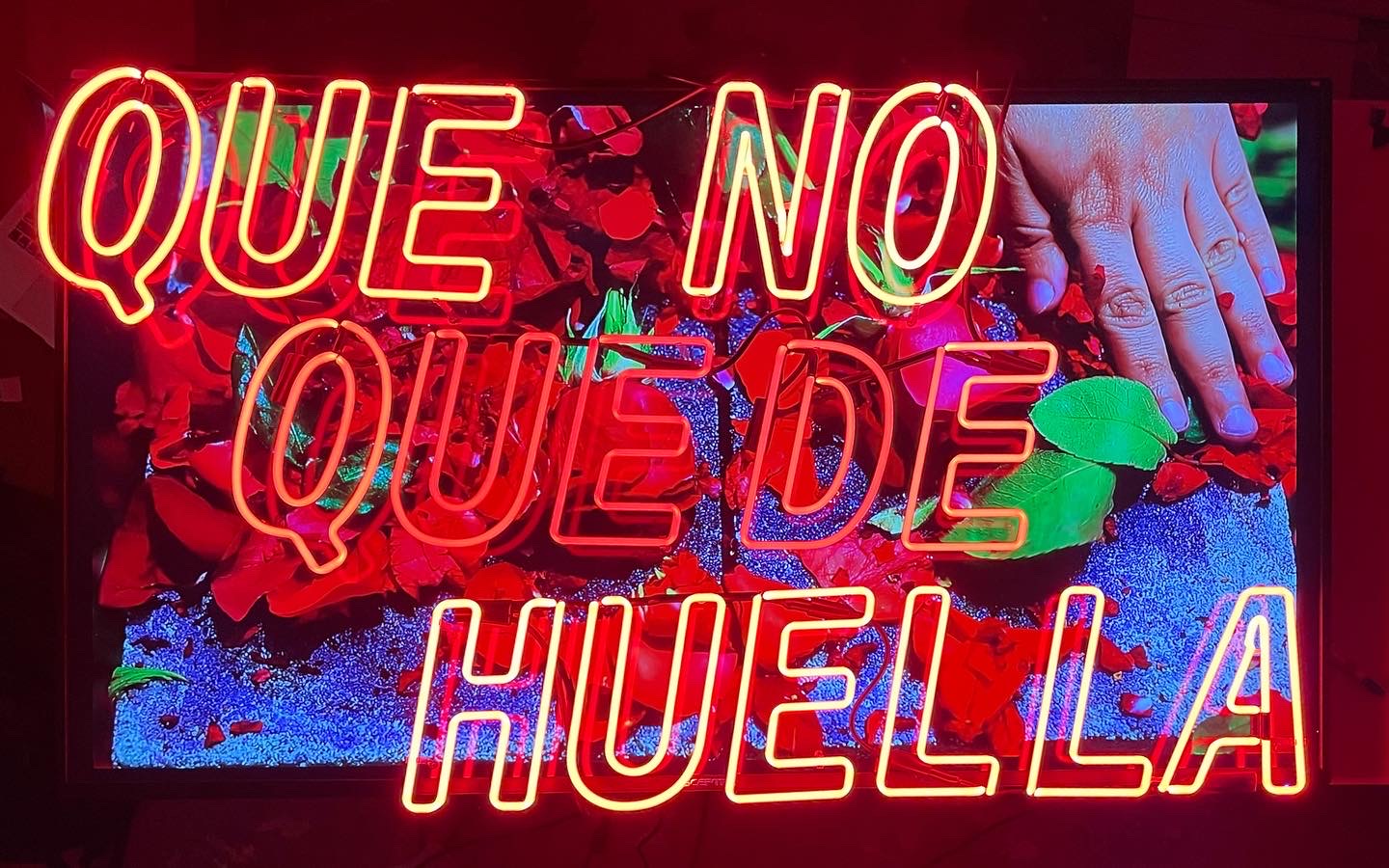
Jesus Benavente, Quede Huella (Let There Be No Trace), 2022, Neon video, 49.5 x 29 x 8 inches. Photo courtesy the artist.

At 291 Grand Street, a bright red glow radiates from Home Gallery, a storefront window exhibition space in the Lower East Side. The light comes from large, fluorescent neon letters that spell out “Que no Quede Huella,” which are layered over a flat screen TV playing a rotating series of videos. The installation is the latest iteration of multimedia artist Jesus Benavente’s neon video sculptures, displayed in the exhibition Que no Quede Huella (Let There Be No Trace), curated by Elisa Gutiérrez Eriksen. 

Continue reading “Jesus Benavente: Que no Quede Huella (Let There Be No Trace) at Home Gallery”

How Soon is Now? On Cat Del Buono’s Art

A picture containing indoor

Description automatically generated

Installation view, Cat Del Buono, “Voices,” July 17 – 31, 2020 at Microscope Gallery, New York, NY. Photo by Seze Devres. Courtesy of Microscope Gallery.

The time is passing but the image dwells. 47 men are posing to get their picture taken, completely still. These men in suits and ties are U.S. Attorneys in the year 1933, basking in their moment of power and glory. Above them, an old wall clock’s pendulum keeps moving from one end to the other, its ticking sound loud and clear. The moment is eternalized, and the power remains, even now. 89 years and the image is still relevant: White men are in charge. Artist Cat Del Buono’s video piece Time (2011) is an illusory work in between a video and a still, framed and hung like a photograph that uncannily moves, and it displays a perpetual stalemate.

Cat Del Buono, Time (video still), 2011, video frame with mat. Courtesy of the artist.
Continue reading “How Soon is Now? On Cat Del Buono’s Art”

The Agreement: Chromatic Presences – Funky and Formal at Zurcher

A picture containing indoor, wall, ceiling, floor

Description automatically generated

 Installation view of The Agreement: Chromatic Presences, curated by William Corwin at Zürcher Gallery. Photo: Adam Reich. Courtesy of Zürcher Gallery NY/Paris.

I’ll start with a question: does a critic have an obligation to propose a solution to an enigmatic puzzle an exhibition might pose? What has led to this, is reading William Corwin’s catalog essay for The Agreement: Chromatic Presences, in which he ignores recounting the history of sculpture and color—deemed for a very long time to be irreconcilable like fish and cheese. It is now common knowledge, sculpture till the time of the renaissance was largely polychromed, but a neo-classical notion of purity and essentialism came to be imposed upon it to differentiate it qualitatively from painting. As a result, sculpture came to be limited to the colors of its materials—marble, bronze and wood. In the West, this formalism was institutionalized by the Enlightenment’s and was the excepted norm until the mid-20th century, when art’s traditional forms began to morph. Consequently, we must ask if there is a more contemporary issue concerning color and form at the heart of Corwin’s The Agreement: Chromatic Presences, and if so, what might it be?

Continue reading “The Agreement: Chromatic Presences – Funky and Formal at Zurcher”

Susan Rostow: Biomorphic Figurations


Description automatically generated

Susan Rostow in her studio, Brooklyn, New York, photo courtesy of Carole d’Inverno

Susan Rostow’s sculptures resemble archeological artifacts with biomorphic characteristics, inviting us to probe into their origin, meaning and what they are made of. Textures of abrasive material such as clay and moss-like surface, along with graphic symbols such as linear markings of shore tides and other signifiers from old maps, fuse into hybrid forms where the lines between past and future, what is natural and what is fabricated, are seamlessly blurred.

Continue reading “Susan Rostow: Biomorphic Figurations”