Notice: Function WP_Object_Cache::add was called incorrectly. Cache key must not be an empty string. Please see Debugging in WordPress for more information. (This message was added in version 6.1.0.) in /www/artspiel_344/public/wp-includes/functions.php on line 6131
A cavernous cubbyhole with a variety of enigmatic gunmetal stalagmites emerges from the relative monotony of the urban backdrop of St. John’s Place in Crown Heights. Janet Goldner’s collection of sculptures, called Zigzags, populate FiveMyles’ exterior space, and while the viewer can enter this space through the gallery, the initial impression of jagged edges, pent-up energy, and the cold solidity of the welded metal objects makes one relieved there is a metal gate between us, the viewer, and them, the sculptures.
Martha Bone, Mapping the Invisible #3, 2020, acrylic, aluminum enamel, charcoal, joint compound, pastel on pieced paper, 63 x 88 in., photo courtesy of the artist.
Two artists currently showing at Garrison Art Center use scale, structure, and geometry to examine and reinterpret their respective environments. Martha Bone’s large-scale paintings and assemblages express a sweeping view of the cosmos, bringing the macrocosm within our reach, while Janice Caswell’s small-scale sculptures find the infinite within the microcosm, showing us the vast potential in all forms. Both Bone and Caswell photograph their natural and man-made landscapes, later referring to these images when creating their works. And both artists construct their forms as improvisations inspired by their observations, although neither artist is interested in a literal interpretation of nature. But this is where the similarities end, their distinctive styles diverging toward an expansive contemplation of form and space and an intimate exploration of the fabricated structures that inhabit our lives.
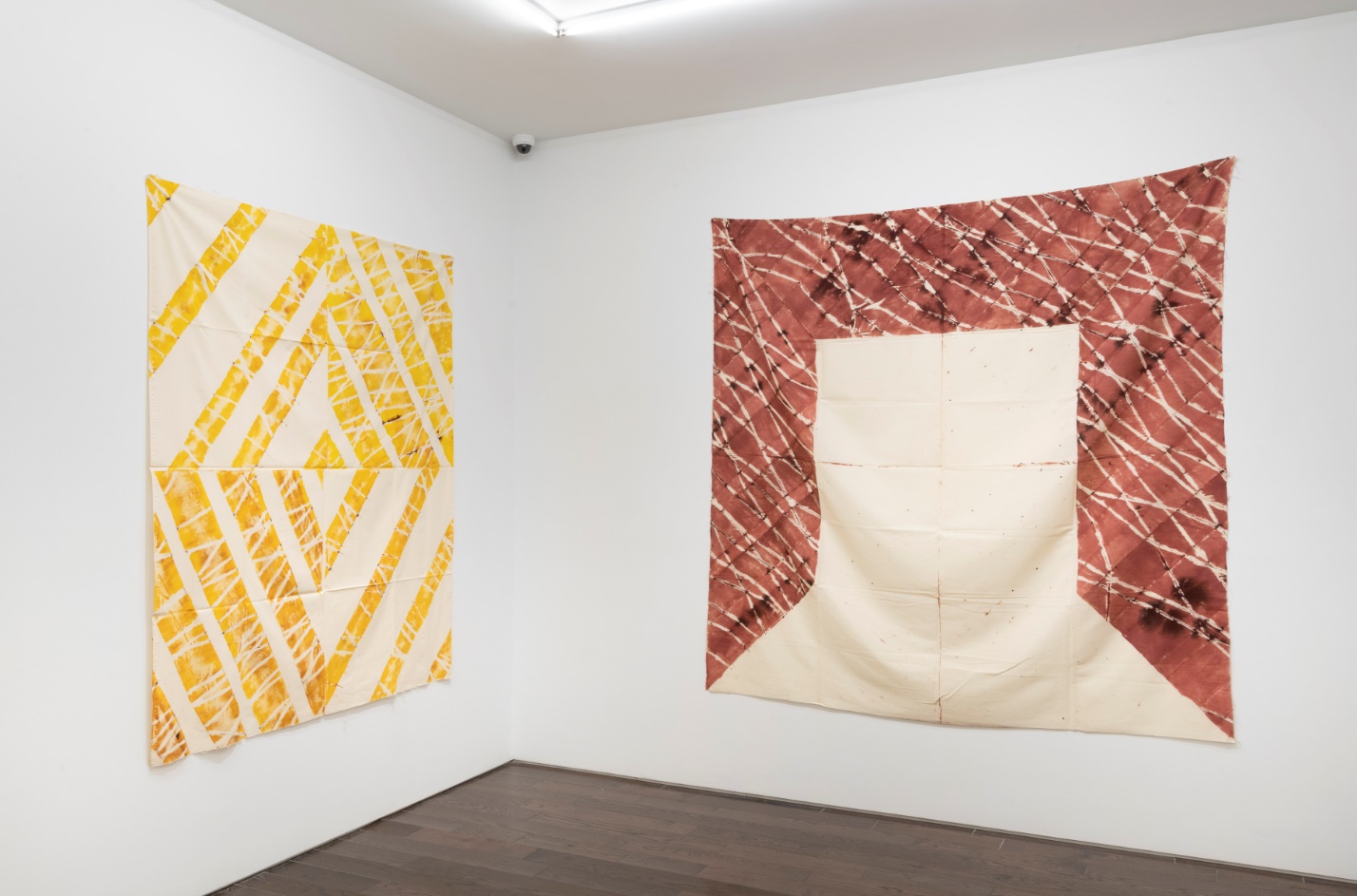
Installation view, André-Pierre Arnal at Ceysson & Bénétière New York. Photo courtesy of Ceysson & Bénétière New York
With the advent of Modernism in the late 19th – early 20th century, differing movements, schools, and networks sprang up internationally—some were generative and sustainable, others dead-ended, though unbeknownst to most of us, traces of these persist or return. This cross-fertilization drove Modernism’s evolution until the post-World War II era the new art made in the U.S. came to dominate the narrative. The triumph of the NY School (AbEx) corresponded to the new political and economic order. In this scenario the vanguards that emerged from the rubble and detritus of the War such as C.O.B.R.A., Nouveau Realisme, Lettrist, Zero, Arte Povera, etc. were trivialized, marginalized, or came to be appropriated. To this day, the European artists whose works come to be acknowledged in the States tend to be those whose works are used to typify the whole of a critical discourse, or style. This has reduced post-War European art to a short list that includes Pierre Soulages, Antonio Tapies, Lucio Fontana, Yves Klein, Francis Bacon, Joseph Beuys, Gerhardt Richter, Anselm Keifer, etc. In this manner, the illusionary status of the U.S. as the cultural leader of the free world is sustained, while European art is made to appear to be broken, fragmented, or at best sporadically relevant, rather than constituting a network of competing histories, practices, and critical discourses.
The curatorial team held a fascination with exploring and activating the ceiling, corners, and floors of Equity Gallery via the works that comprise Making Sense Without Consensus. Here are 2 examples of this; on the left, Linda King Ferguson’s work stretching downward to the floor; and on the right, Diogo Pimentão’s work installed to live and extend around the corner of a gallery wall.
Now on view at Equity Gallery in the Lower East Side is a notable group exhibition, cogently titled Making Sense Without Consensus, with works by 14 remarkable artists and 3 astute curators at the helm. The exhibition statement says that these artists explore reality through fragmented connections and geometric materiality, “investigating whether the linearity of time is real or if past and future overlap.” In further absorbing what this exhibition might represent, I also want to offer an illuminating quote from The Radicant (2009), an essay by celebrated curator and critic Nicolas Bourriaud. This thought piece provides context for the development of Making Sense Without Consensus:
“In ordinary language, ‘modernizing’ has come to mean reducing cultural and social reality to Western formats. And today, modernism amounts to a form of complicity with colonialism and Eurocentrism. Let us bet on a modernity which, far from absurdly duplicating that of the last century, would be specific to our epoch and would echo its own problematics: an alter modernity …”
In Jon Bunge’s exhibition, Presence, at the Bonsack Gallery of John Burroughs School in St. Louis, Missouri, 23 sculptures, moving and turning in invisible air currents, appear to float inches above a hardwood floor. Made from the branches of trees, they evoke both a sense of mystery and a clear expression of the universe’s forces. Eight more works are included in a display case outside of the installation.
Rosa Valado, Time, detail, mixed media on paper, 8′ x 16′, 2017 , photo courtesy of Rosa Valado
The Spanish born NYC based artist Rosa Valado has prompted in her immersive installations multi-layered sensory experiences, utilizing diverse approaches, from the smell of burning wax and music to architectural elements and engineering problem solving. Throughout her body of work which includes besides installation, drawings and paintings, she has been exploring notions of space and time by engaging with ideas on architecture and light. Rosa Valado shares with Art Spiel some of her formative art experiences, her process, ideas, and projects.
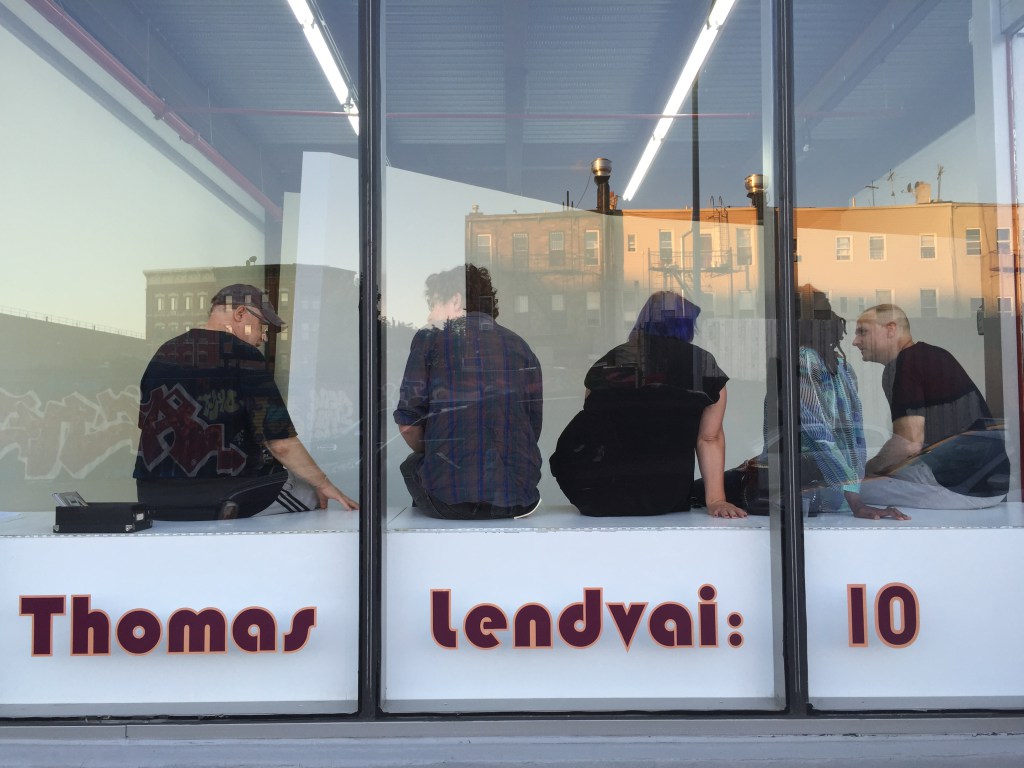
For Ellen Hackl Fagan, ODETTA’s gallerist and curator, titling the current sculpture show Thomas Lendvai: 10 was a no-brainer. When artist Thomas Lendvai came up with the title “Ten,” which marks the first time in ten years that the sculptor has been given a chance to show his large-scale sculptures in a New York gallery, Hackl Fagan embraced it willingly. Serendipitously, it also marks the tenth show at ODETTA. Continue reading “Searching for the Meaning of Art: ‘Thomas Lendvai: 10’ at ODETTA”