Helen Twigge-Molecey: Fungi at Palazzo Mora

Featured Artist


Helen Twigge-Molecey with glass fungi sculptures photographed by Sylvain Deleu

UK based artist Helen Twigge-Molecey’s installation at Palazzo Mora in Venice depicts a group of colorful fungi. Each hand-blown recycled glass piece features individual shapes and interconnects with its neighbours through translucency and color. This installation is part of the Venice 2022 Art Biennial organized by the non-profit organization European Cultural Center, running from April 23, 2022 through November 27th, 2022.

Continue reading “Helen Twigge-Molecey: Fungi at Palazzo Mora”
Susan Rostow: Biomorphic Figurations


Description automatically generated

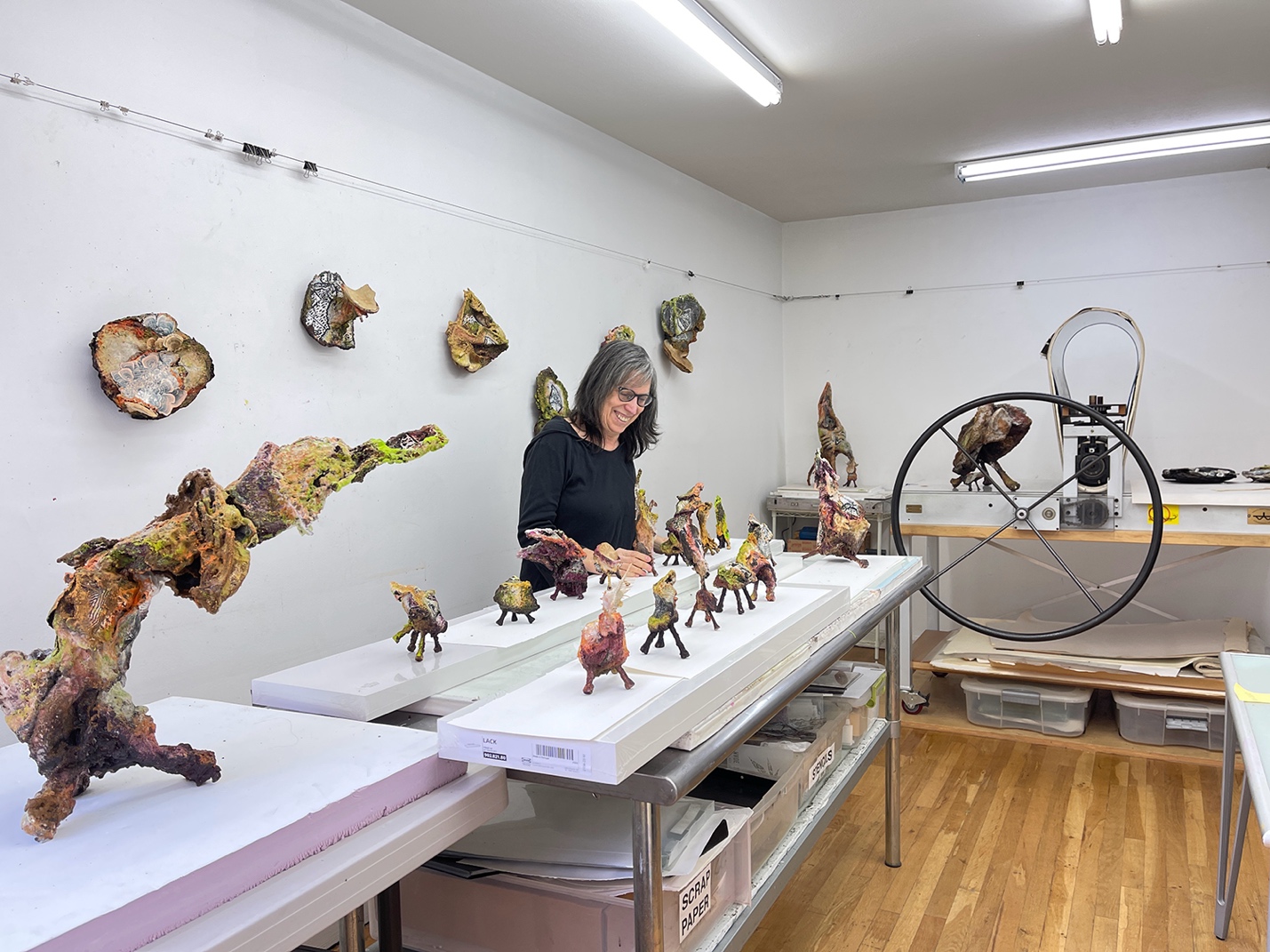
Susan Rostow in her studio, Brooklyn, New York, photo courtesy of Carole d’Inverno

Susan Rostow’s sculptures resemble archeological artifacts with biomorphic characteristics, inviting us to probe into their origin, meaning and what they are made of. Textures of abrasive material such as clay and moss-like surface, along with graphic symbols such as linear markings of shore tides and other signifiers from old maps, fuse into hybrid forms where the lines between past and future, what is natural and what is fabricated, are seamlessly blurred.

Continue reading “Susan Rostow: Biomorphic Figurations”

On Water as Polluted Body, Place of Solace, and Life Force

A picture containing text, transport

Description automatically generated

sTo Len, detail of FOAM (FutureOfAMaterial) installation. Gomitaku print, sumi ink on linen, 64” x 360,” 2020.

Since June of 2017, artists Jarrod CluckGina R. FurnarisTo LenLeslie Sobel and Rachel Wojnar have been on an intense physical, emotional, spiritual, and art-making journey, which culminated with their MFA Thesis Exhibition, Confluence, on view at the Joseloff Gallery of the Hartford Art School, University of Hartford (Connecticut) from September 10-19, 2020. They are the third cohort to complete the Nomad Interdisciplinary MFA program. Founded by director Carol Padberg in 2015, the program uses an innovative field-based model and offers a curriculum that includes art, ecology, the study of place, indigenous knowledge systems, and technologies. Encompassing two hands-on residencies per year, the Nomad MFA provides courses in El Salvador; New York City; New Mexico; Mexico; Oakland, California; Miami; and Minneapolis.

Continue reading “On Water as Polluted Body, Place of Solace, and Life Force”