Decolonizing Ecological Encounters at The Gallatin Galleries

Featured Project with Co-Curators Anastasia Amrhein and Patricia Eunji Kim

Gallery view with works by Tessa Grundon, David Nasca, Joiri Minaya, Himali Singh Soin and Alexis Rider, and micha cárdenas.

Fluid Matters, Grounded Bodies: Decolonizing Ecological Encounters at the Gallatin Galleries in New York City explores complex questions around impermanence, belonging, transformation, and erasure as they relate to human and non-human lives and the earth itself. The exhibition showcases the work of several contemporary artists, of various backgrounds, who utilize a broad range of media. It includes work by Farah Al Qasimi, Beatriz Cortez, micha cárdenas, Tessa Grundon, Joiri Minaya, Ada M. Patterson, Himali Singh Soin, and Alexis Rider, among others. The show runs from July 22 to August 17, 2022. Co curators Anastasia Amrhein and Patricia Eunji Kim shed some light on this group show.

Continue reading “Decolonizing Ecological Encounters at The Gallatin Galleries”
Invaders


Feral Hog, 24” x 36”, 2021, Acrylic on Panel. © Hovey Brock

Invaders is the first in a series of three interrelated experimental pieces that combine graphics, text, and hyperlinks based on themes coming out of my Crazy River project, for which I gave an interview on this website on May 16th. Invaders plays with the idea of invasive species, which has to be the misnomer of the century. So-called invasive species do reduce biodiversity in their new ecosystems but they are all the result of human intervention. International trade has been the main agent for transport to new locations, but climate change has also forced many species to move beyond their original habitat in order to survive. Every invasive species does what all living creatures do, including our own: take advantage of opportunities. Invaders includes my Crazy River paintings, photographs, and a list of 100 species from an on-line source: The Global Invasive Species Database, produced by the Invasive Species Specialist Group, a global network of scientists dedicated to identifying and tracking invasives.

Continue reading “Invaders”

What Happens When an Artist Goes to Eden

A picture containing plant, grass

Description automatically generated

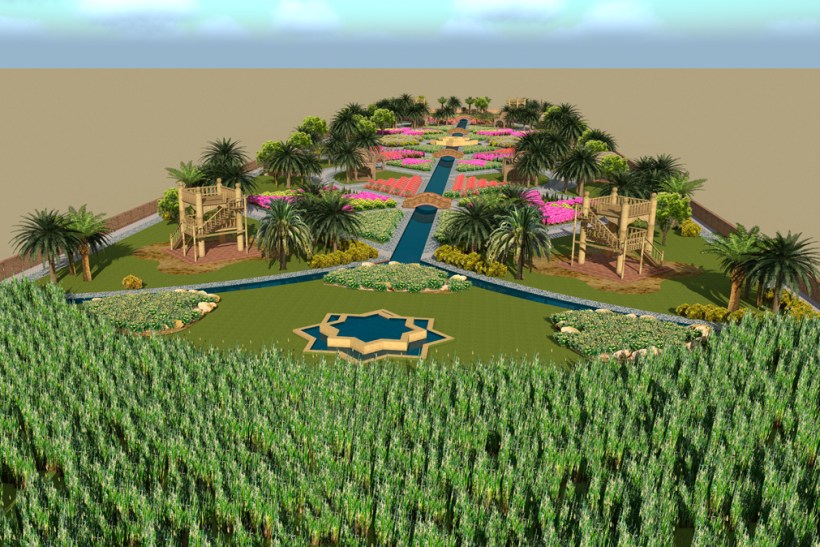
Eden in Iraq Wastewater Garden Project (2011-present), site drawing of El Chibaish, 26,250 square meters (6.4 acres, 2.6 hectares), rendering by Bernard Du, 2017)

In 2011, photographer and environmental artist Meridel Rubenstein envisioned creating a garden in southern Iraq where the Tigris and Euphrates Rivers cross, near the supposed site of the biblical Garden of Eden. However, unlike its idyllic predecessor – a mythical paradise in a newly formed world – this new garden would help to heal what had become a fragile, desert wasteland by cleaning existing wastewater and establishing a culturally significant green space. 

Continue reading “What Happens When an Artist Goes to Eden”

Earthscapes: Emerging to a Brighter World: Pamela Casper at Wisner House

Art Spiel Photo Story


Installation view

In her solo art exhibition at Reeves-Reed Arboretum, Pamela Casper invites the garden-loving public to reconcile a personal relationship of guardianship that goes beyond admiring nature’s beauty. The artist says that the trajectory of the work in this show follows her own path of transformation—from observing beauty and imagining nature “above ground” to exploring the endless networks hidden below. The show is curated by Executive Director Jackie Kondel and runs through October 31tst, 2021.

Continue reading “Earthscapes: Emerging to a Brighter World: Pamela Casper at Wisner House”

Joyce Yamada: Contemplating the Human Species


Joyce Yamada, Portrait, 2019, photo courtesy of Nila Onda

Painter Joyce Yamada grew up on the west coast. She spent her childhood vacations in the beautiful national parks of the US and Canada where pristine forests and the Pacific coast were imprinted in her visual memory. She recalls that although as a teenager she realized that art is her task in life, struggling to survive by minimum wage work led her to medical school which she completed and then subsequently became a diagnostic radiologist. This science background has fed her mind and artwork ever since. Yamada says she is a painter because she conceptualizes in images rather than in words — “when puzzled, my mind juxtaposes or fuses unexpected images, often leading to new work,” she says. For instance, an early series, Body, Earth, came to her in art school — while looking at the hills across the bay from San Francisco she saw the low rounded hills as the reclining body of a woman. The juxtaposed imagery meant to her that we are intimately and indivisibly part of earth and of nature, that what we do to the earth we do to ourselves. She has subsequently seen this idea expressed in indigenous cultures, and it became central in her work.

Continue reading “Joyce Yamada: Contemplating the Human Species”

Gal Nissim – Sci-Art Encounters


Gal Nissim & Leslie Ruckman, SurveillAnts at Science Gallery Detroit, 2018, live ants, acrylic, sand, wood, electronics. 41.5 X 29 X 29 Inch. Image courtesy of the artist. Photo by Mark Sullivan.

Gal Nissim creates collaborative experiential multi media installations which stimulate the visitor to track and decode the behaviors of animals through audio-visual patterns, ranging from a colony of living ants in a gallery space to wild life in Central Park. Nissim shares with Art Spiel her fascination with the link between science and art, some insight into her elaborate collaborative process, and on her projects. Our interview process had been taking place before the pandemic and the artist was given an opportunity to bring her responses fairly up to date.

Continue reading “Gal Nissim – Sci-Art Encounters”

Elena Soterakis – Intersecting Sci-Art

Elena Soterakis is an artist and curator who has explored the intersection between art and science throughout her whole artistic practice. She shares with Art Spiel some background on BioBAT Art Space, her upcoming curatorial project with Jeannine Bardo, as well as some insight on her own artwork.

Elena Soterakis, Not a Drop to Drink, (2017) oil, molding paste, and collage on panel, 18 x 24 inches. Photo Credit Scott Rosenberg
Continue reading “Elena Soterakis – Intersecting Sci-Art”