Whisperings from the Wormhole with @talluts

A Meditation on Artists’ Residencies, a Dune Shack and the Twilight Zone

Ray Wells dune shack with well pump in the bottom left foreground, Provincetown/Truro 2016, photo courtesy of the writer

Sometimes I find myself scrolling Instagram on a dark day in February or March, just wondering what it would be like to make art in a lighthouse…or in Robert Rauschenberg’s old fishing shack…or in a Florida swamp…or in a small RV in a Utah ghost town…or on an island in Italy. Artists’ residencies are a nice thing to dream about when you feel stuck or in a rut and when life is wearing you down with mundane pressures. Sure, there are the big ones like MacDowell and Yaddo, but those are uber-competitive and hard to get into. There are so many other off-the-beaten-path secret outposts that will happily allow a creative person to try on their lifestyle for a bit. As an artist, it’s so helpful to get out of dodge now and then and hit the road for new sights and sounds.

Continue reading “Whisperings from the Wormhole with @talluts”
The Interaction of Light and Shadow: Susan English at Kathryn Markel

Graphical user interface

Description automatically generated with low confidence
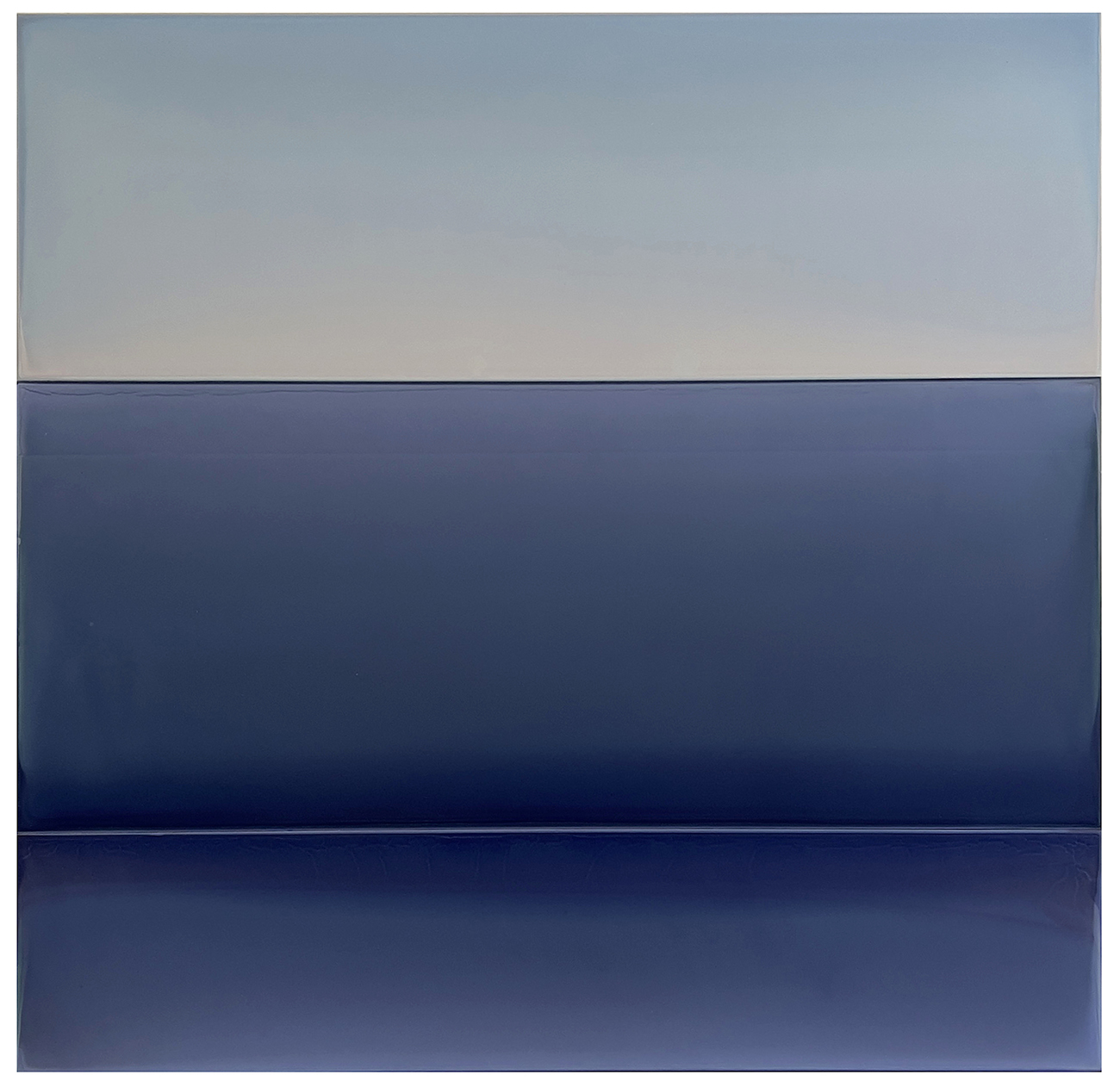
Susan English, Still Light, 2022, tinted polymer on Dibond panel, 34 x 35 in. Courtesy of Kathryn Markel Fine Arts

To confront a person with their own shadow is to show them their own light.

– Carl Jung

In her current exhibition at Kathryn Markel Fine Arts, Light to Light, Susan English explores the vagaries of light as it penetrates layers of polymer and pigment. Subtle gradations in color are infused with radiant light, recalling the sfumato in Van Eyck’s translucent skies or Cimabue’s blushing Virgins. The seamless transitions are achieved through the artist’s unorthodox technique of pouring thin layers of tinted polymer onto panels, then tilting the panels while the pigments settle and dry. The multiple layers interact with light to create varying effects – sometimes luminous, sometimes opaque – which are punctuated by cracks and blemishes in the medium as it dries. These accidents are essential to the piece, as they provide a counterbalance to the exquisite surfaces and tight control of their execution. Indeed, English manipulates the panel in such a way that crackling is anticipated, and she views the result as a simulation of the fissures and fractures found in nature.

Continue reading “The Interaction of Light and Shadow: Susan English at Kathryn Markel”