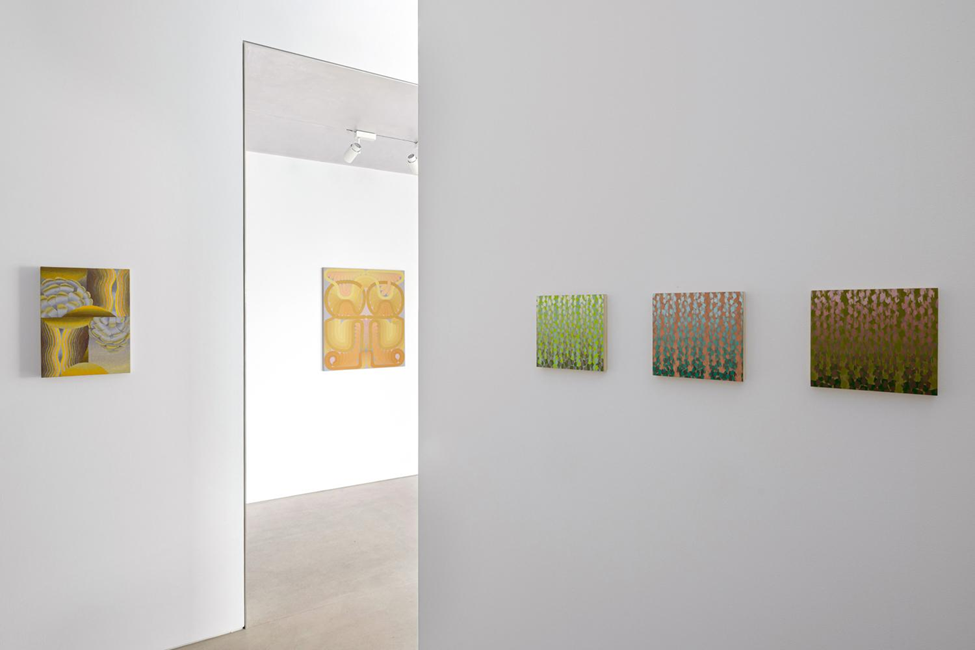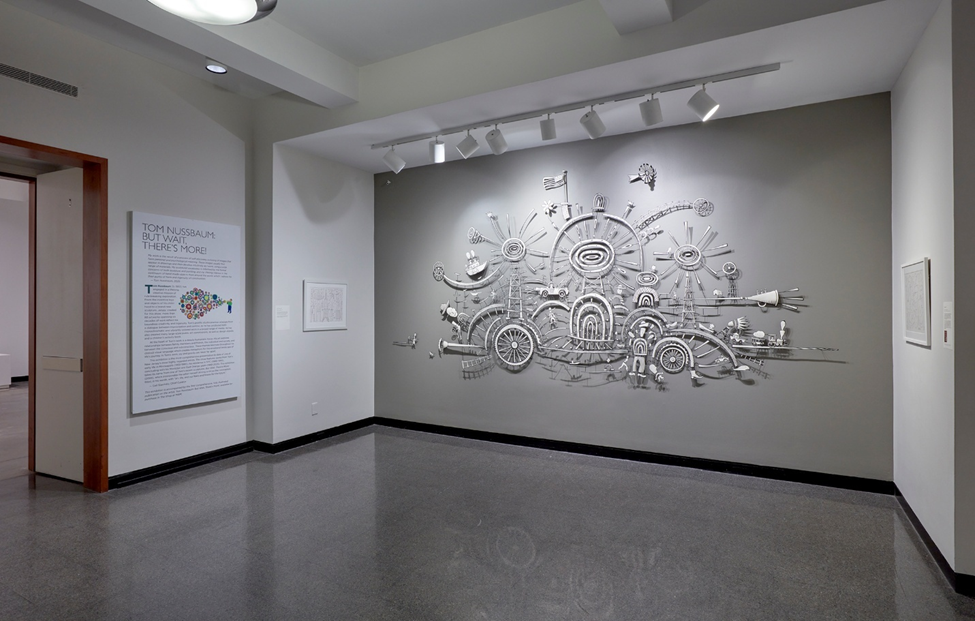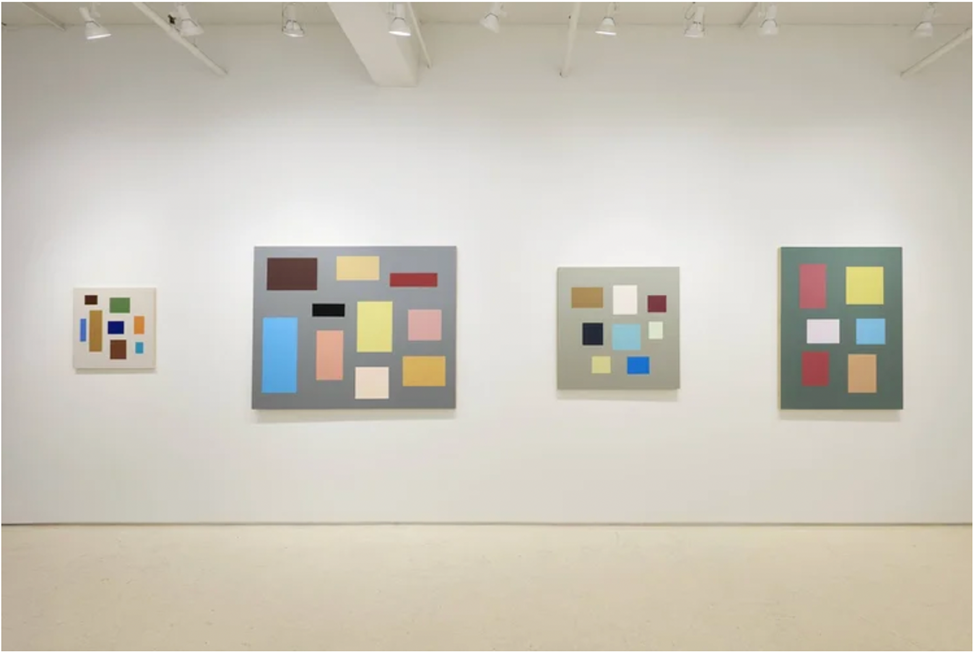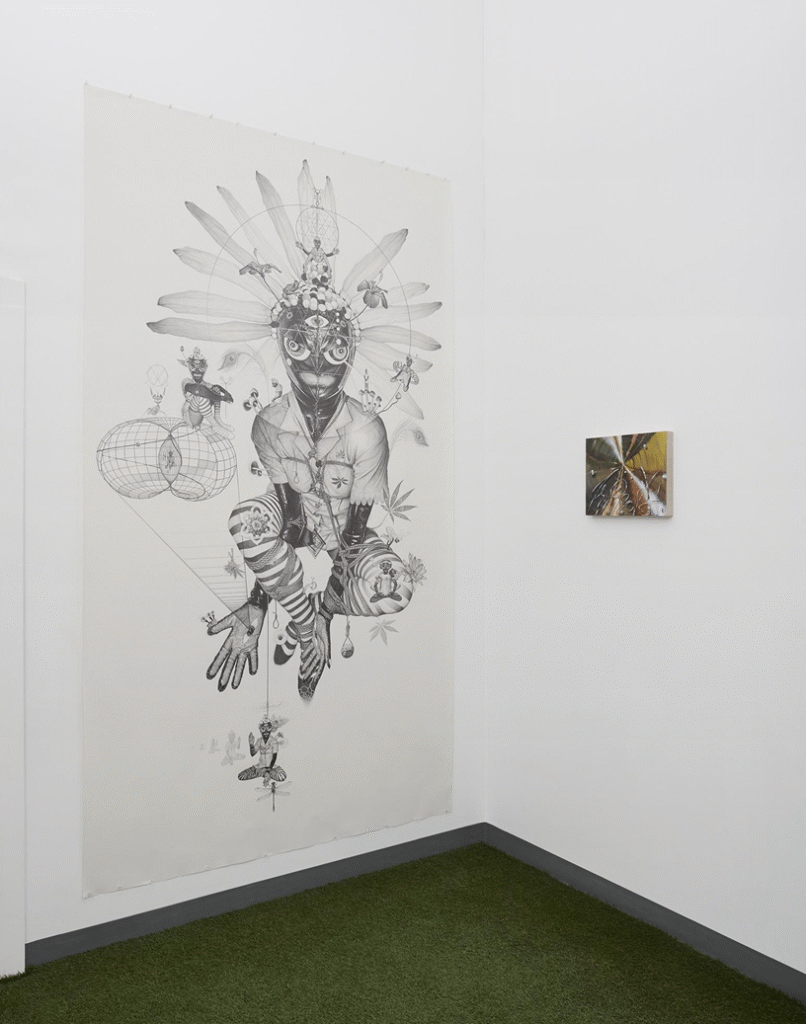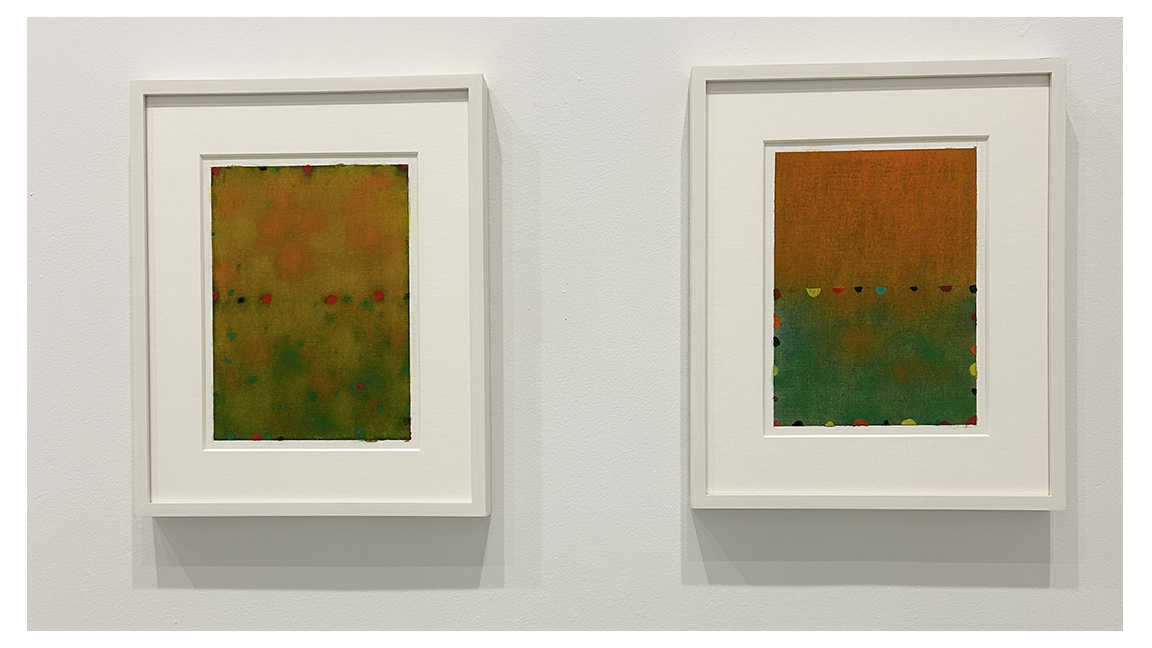
Walking into the group exhibition, Like Cotyledons Buckled with Loam at Art Cake, curated by David Dixon, you are first greeted with a piece by Thomas Nozkowski. This piece is one of three included in the exhibition, each serving as a foundational anchor point in the show. Within the paintings, Nozkowski abstracts forms or fractions of events, allowing viewers to experience the essence and bring their own associations to the works. These impressions and modes of abstracting flow into the other works of Jodie Manasevit, Louis Block, Joseph Brock, and David Dixon himself. Each of the artists exhibiting in this show draws inspiration from Nozkowski’s work, an artist they all admire.
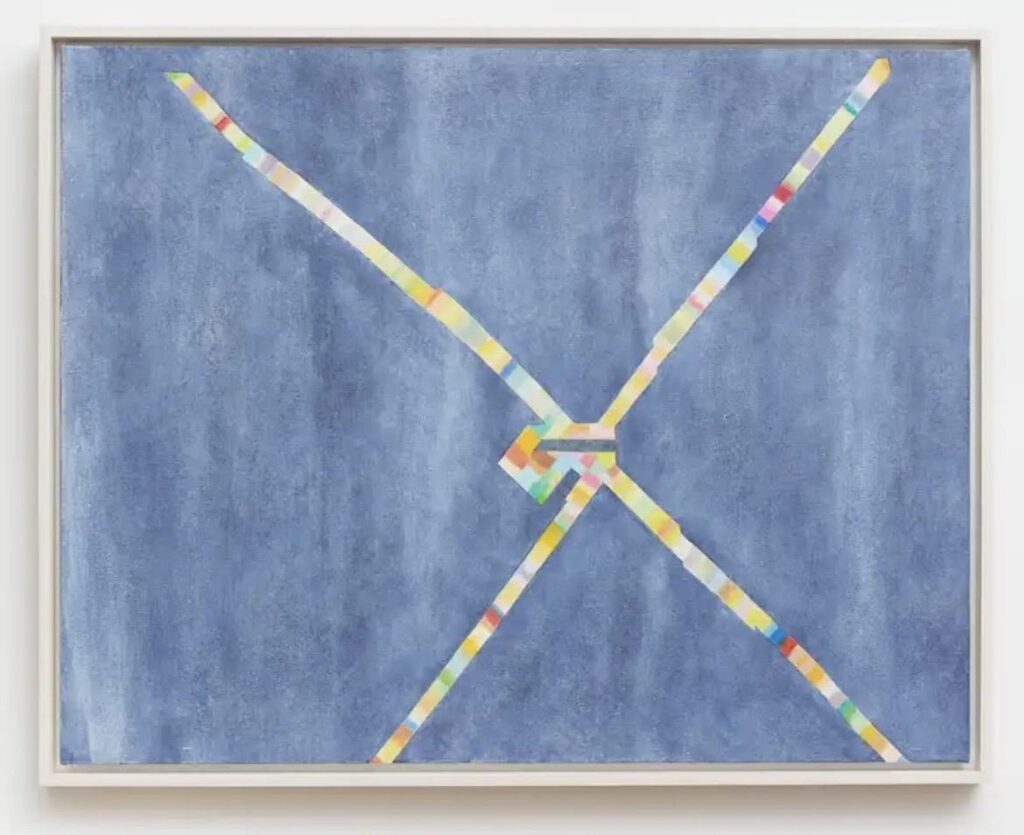
The work of Thomas Nozkowski forms the foundation on which Dixon builds the exhibit’s visual dialogue and from which the artist’s conversations extend. Dixon chose the other artists in the show because they each take inspiration from Nozkowski in some way, both his body of work and process, and continue the conversation that he started. The Nozkowski work in the back room, pictured below, feels as if it is hovering over the wall, the surface carefully scraped, light permeating the blue, like ripples in water. The colorful forms on top of the blue appear to both hover and wrap around the piece, as if they are containing the piece itself. Color, form, and energy become aspects that bridge the conversations between his pieces, crystallizing and expanding into a deeper conversation on abstraction and ways of seeing.
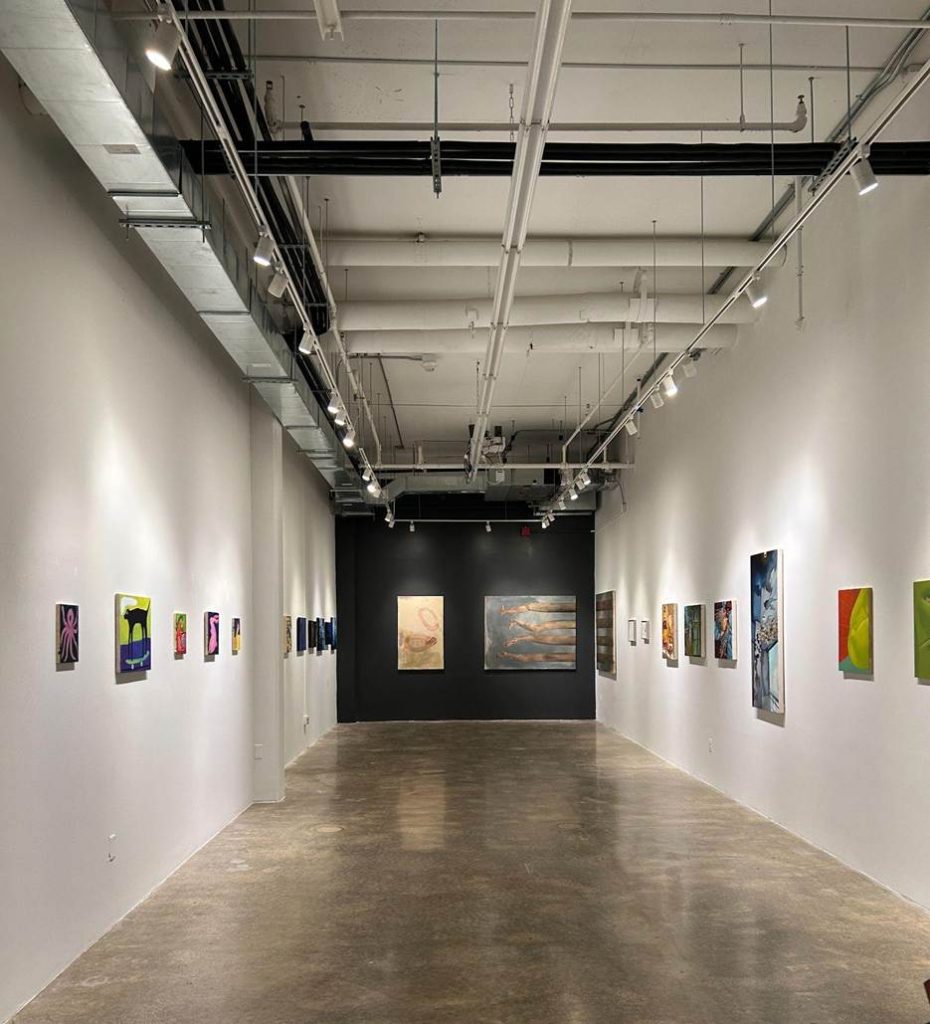
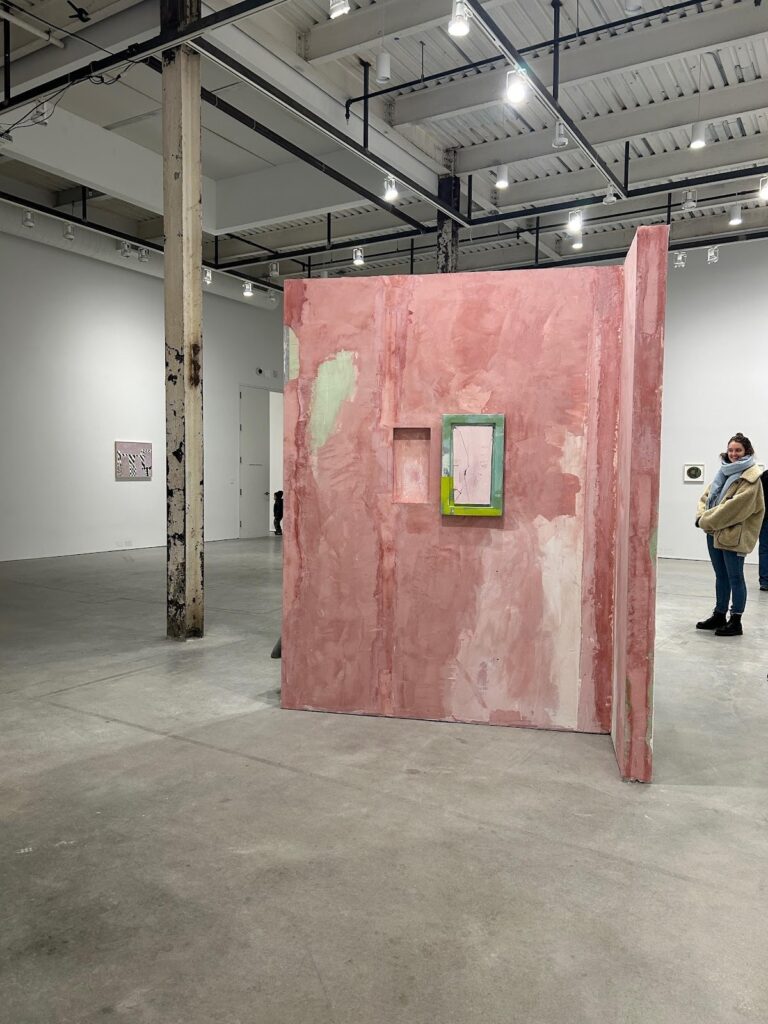
Built as an iteration of a previous show featuring Jodie Manasevit’s works, Dixon reconstructed the walls and collaborated with Manasevit by integrating her works into the wall space, allowing them to sit within various colorful frames. The edges of the work, such as Cathected (Sea Roses), vibrate and settle against the lighter or darker tones that Dixon chose to complement the pieces. The walls themselves are textured, revealing layers and pops of color, and creating inviting corners for viewers to explore. Each turn is a surprise, slowing my pace. This allows for a rewarding, deeper introspection of the works, as I can gravitate towards them at my own pace. The walls flow into the works themselves and become the connectors within this conversation that Dixon is creating on the exhibition’s outer walls, as the pieces within the entire exhibition speak to one another.
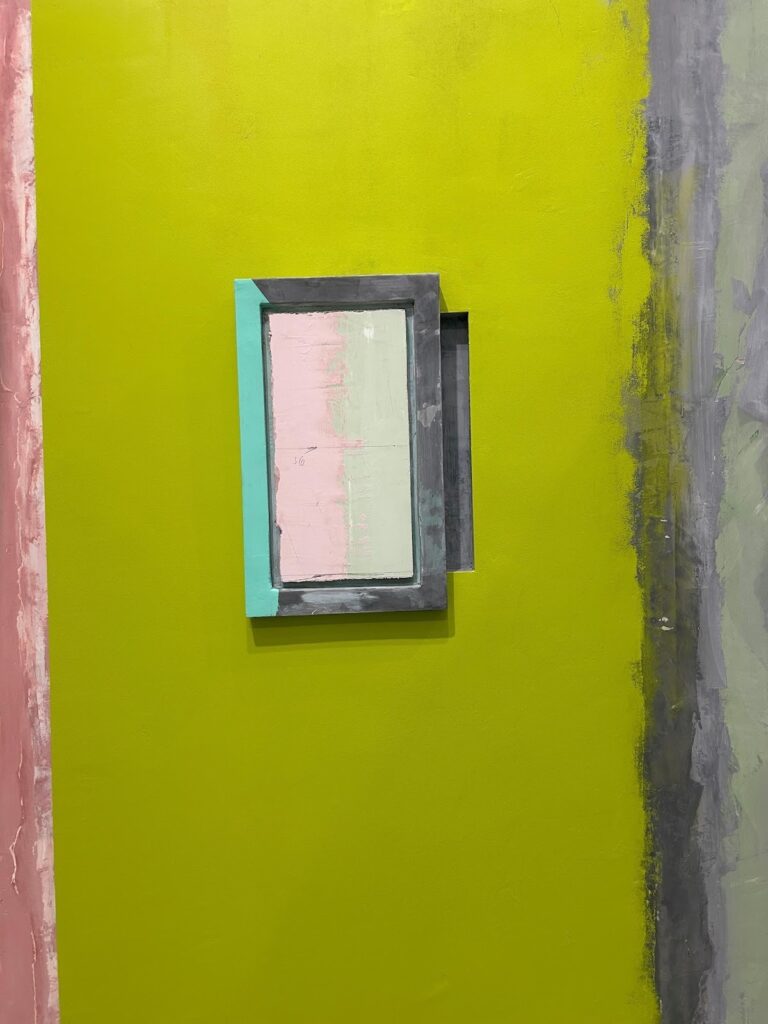
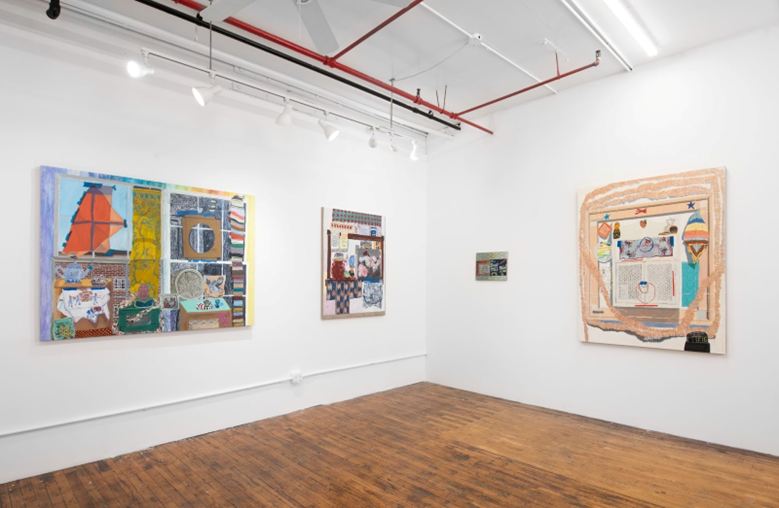
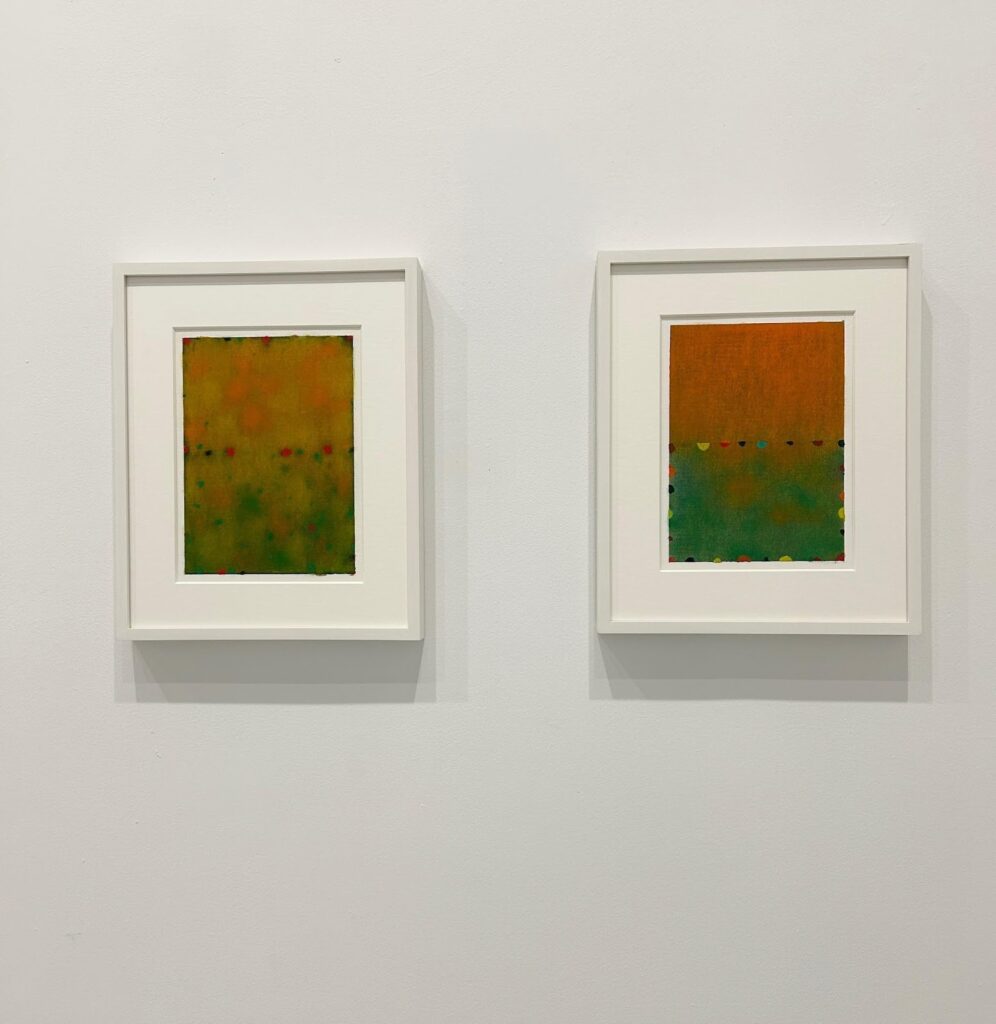
The works of Jodie Manasevit expertly focus on surface, color, form, and shape. Manasevit creates a space within the canvas that expands and contracts within the room, against both the gallery’s white walls and Dixon’s constructed walls. The pieces shown on prepared paper feel ethereal, the colors and marks creating energetic movement that curves low and crescendos, vibrating amongst each other. This is evident in the works pictured below, particularly Untitled, where the smaller shapes appear to levitate into a warm glow. Whereas the pieces included in Dixon’s walls appear to float, a surface above a surface, color fields interacting and color quadrants vibrating at the edges against one another, visually energizing.
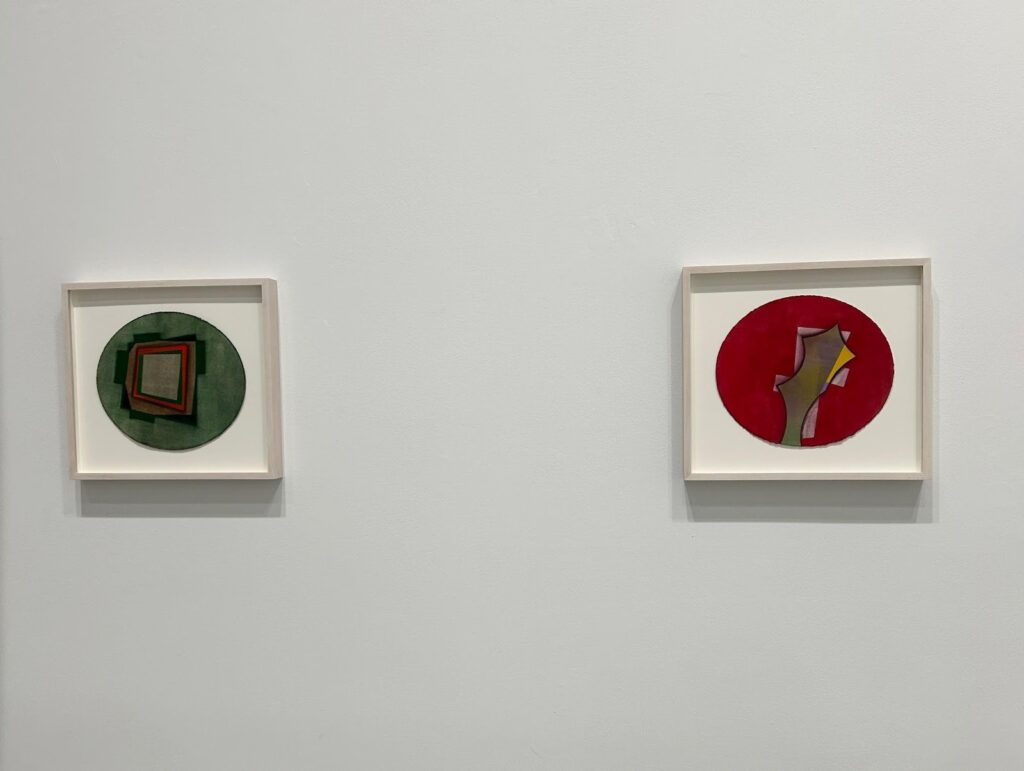
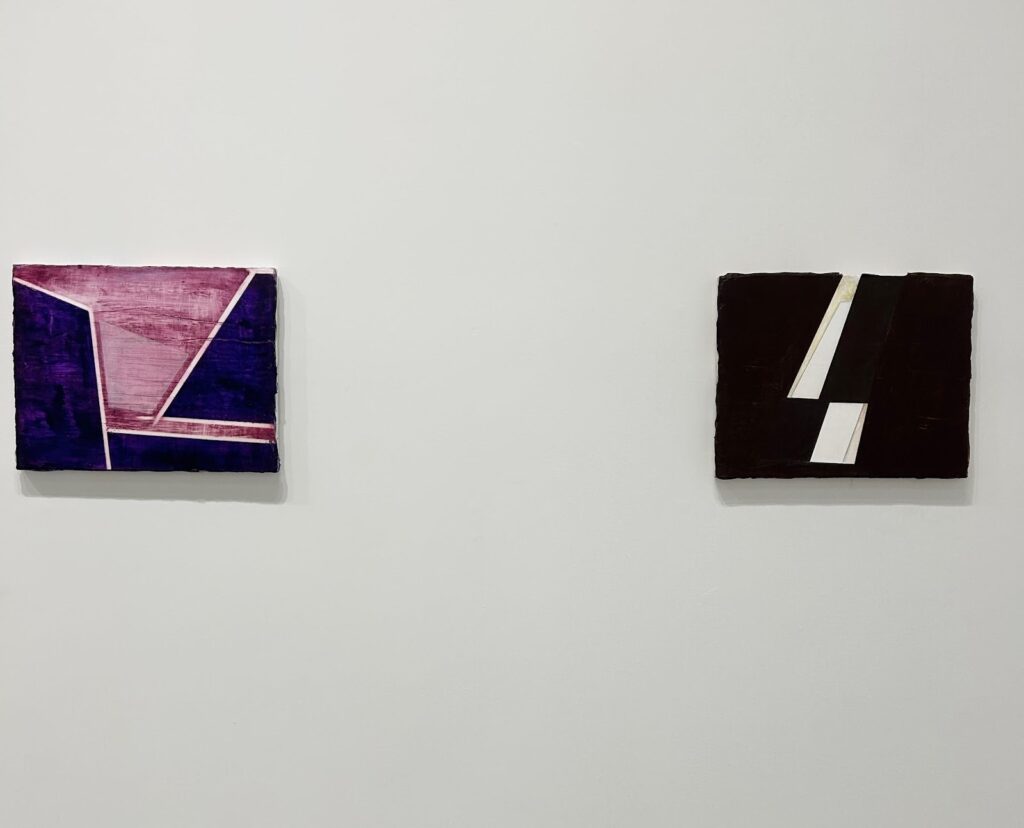
The works of Joseph Brock and Louis Block resonate with one another, creating a strong visual harmony. Each offers intricate details if you spend time up close to the works. They become a visual language, revealing just enough to the viewer to allow an open-ended conversation, similar to how Nozkowski created his own visual language within his pieces. The circular surfaces from Block create portals of color, light, and exploration – each full of experimentation and the layering of color, form, and space. One prime example is the pair of framed watercolor paintings, where the colors complement each other, and the shapes are compositionally placed to push the depth of space. Whereas Brock’s works are a play with surface and edge. The surfaces are layered, shiny, glossy, smooth, and upon a closer look, the edges reveal great surprises. The layers are indicative of how Brock constructs his visual language, of symbols and shapes, but Brock offers no name for the forms he uses. Brock lets us derive our own meaning. As Brock uses shape, edges, and overlap to create a convergence of forms, like in the pieces Platformer (S.1) and Universe Tree Bang (C.3), a connection emerges between the lines, and the composition feels magnetic.
The video by Casimir Nozkowski, Thomas Nozkowski on a Hike, included in the exhibition inside the larger room, is a recording of the artist speaking on perception and the act of seeing. As a show composed mostly of painting, this video, projected among the works, further situates the artworks within Nozkowski’s ideas of perception. The artworks and voices of the artists may be separate, but their influence, conversation, and exploration of process and surface intertwine throughout this exhibition. Nozkowski has his own visual language and understanding of the world through color, and Manasevit, Block, and Brock carry on this visual language. Their own styles are rooted in value, color, and form, as well as in how they interact with space and one another. Dixon allows each work the appropriate spacing, and the open space along the gallery walls is energized by the works that hang nearby. Nozkowski considered everything in life when making his abstract paintings. His forms allow viewers to derive their own interpretations, and his influential ideas of perception and ways of seeing, shape the artist’s work around him.
Like Cotyledons Buckled with Loam is on view at Art Cake, 214 40th Street, Brooklyn, NY 11232, through January 31, 2026.
Hours: Thursday – Sunday, 12-6 pm.
Featuring Artists: Louis Block, Joseph Brock, David Dixon, Jodie Manasevit, Casimir Nozkowski, Thomas Nozkowski.
About the Writer: Taylor Bielecki lives in Gowanus, where her studio is, and works at Pratt Institute, where she earned her MFA. She also studied at Penn State, earning a BA in English and a BFA in Fine Arts. She finished as a finalist in the Kennedy Center’s VSA National Emerging Young Artist program for 2017, where she earned an award of Excellence. She has shown prints internationally in a print exchange in Australia and exhibitions in Dubai, India, and the Glasgow School of Art. She has also shown paintings internationally in Gallery 24N, PhilaMOCA’s juried exhibitions in Philadelphia, Pa., Perry Lawson Fine Art in Nyack, NY, BWAC in Red Hook, and IW Gallery in Brooklyn. Taylor works periodically for Two Coats of Paint, TUSSLE Magazine, and has joined Art Spiel as a contributing writer.