The 2025 art fair season has descended upon us, and with it comes a myriad of activities. Amidst the hustle and bustle of moving around the cities to see what’s on view, there were many standouts at this year’s presentations at the Armory and Art on Paper.
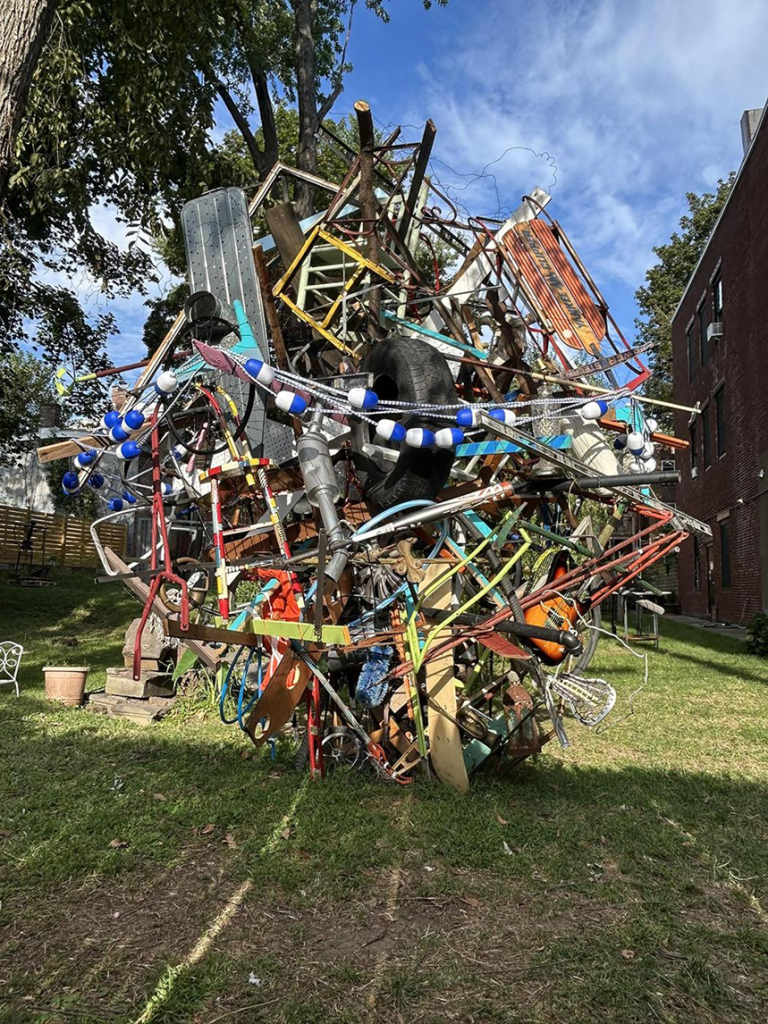
Holland Tunnel Newburgh opens its sculpture garden. Julie Lindell, Everything, 2025, 144x144x144 in. Mixed media, found objects. Photo courtesy of Julie Lindell
When artist Alexandra Limpert invited Janet Rutkowski to co-curate Reclamation in honor of her longtime friend and Holland Tunnel founder Paulien Lethen, Rutkowski accepted without hesitation. Although she had just finished curating and exhibiting in several projects, she embraced the challenge with what she describes as her “devil-may-care” approach. The exhibition’s title emerged quickly, reflecting her interest in the idea of recovery and renewal.
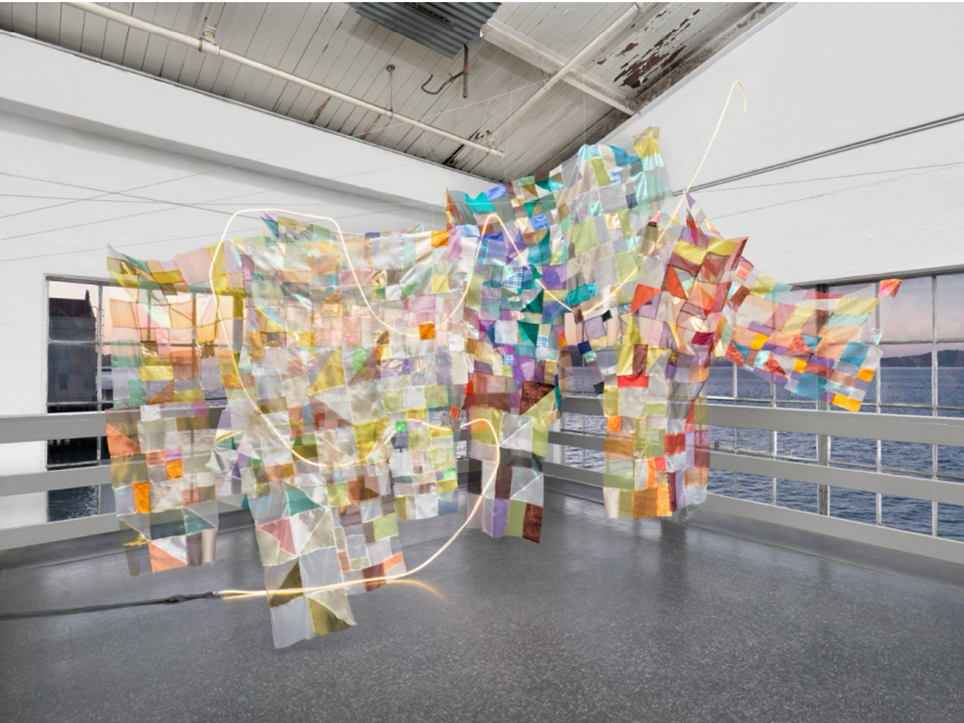
“Coming full circle and making whole” is how Holly Wong describes her process of repair—working with memory, reassembling fragments, and layering paint, fabric, and light into new forms. On view at SLATE Contemporary in Oakland from September 5 through October 11, 2025, Full Circle is her second solo exhibition with the gallery. It brings together collaged paintings on shaped aluminum and wood panels, mixed media drawings, wall-based fiber and LED installations, and a heat-molded acrylic assemblage, presenting a mid-career survey of her work.
Installation view, Sylvia Schwartz, Temperature Gauge and Word Landscape and Green, photo courtesy of Helm Contemporary
In MIST, four artists are brought together to take the inspiration of summer, and find a way to break through the heatwaves that have recently hit New York. There is a dialogue between the artists and their various takes on works on paper, bringing forth summer sensibilities, airiness, freshness, and a feeling of being free. Each artist offers a different series of works.
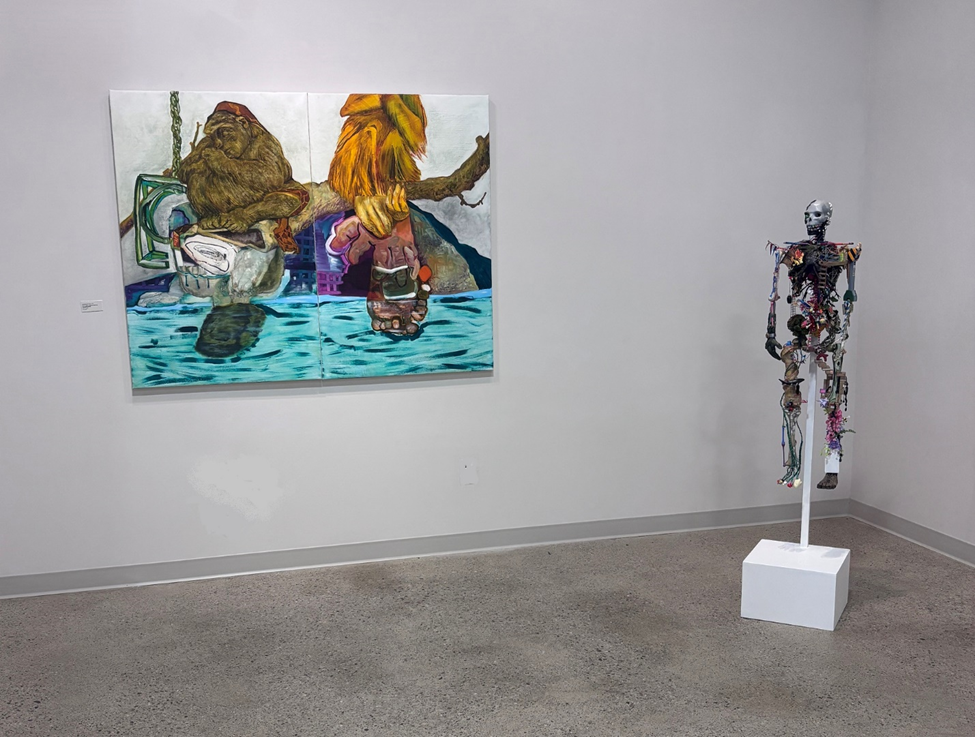
left, Jennifer Amadeo-Holl, Earth Suits – Reflections on Thought, 2022, oil on canvas,, 49” x 64”, right, Mike Libby, Quarter Vital Amalgam, 2025, Apoxie sculpt and mixed media, 14” X 14” X 66”, photo by Adria Arch
The two-person exhibition Earth Suits and Beast Machines at Cove Street Arts in Portland, Maine, orchestrates a compelling conversation between Boston painter Jennifer Amadeo-Holl and Maine sculptor Mike Libby. This thoughtfully curated show rewards careful attention, presenting work that resists easy consumption and demands genuine engagement from viewers willing to slow down and look deeply.
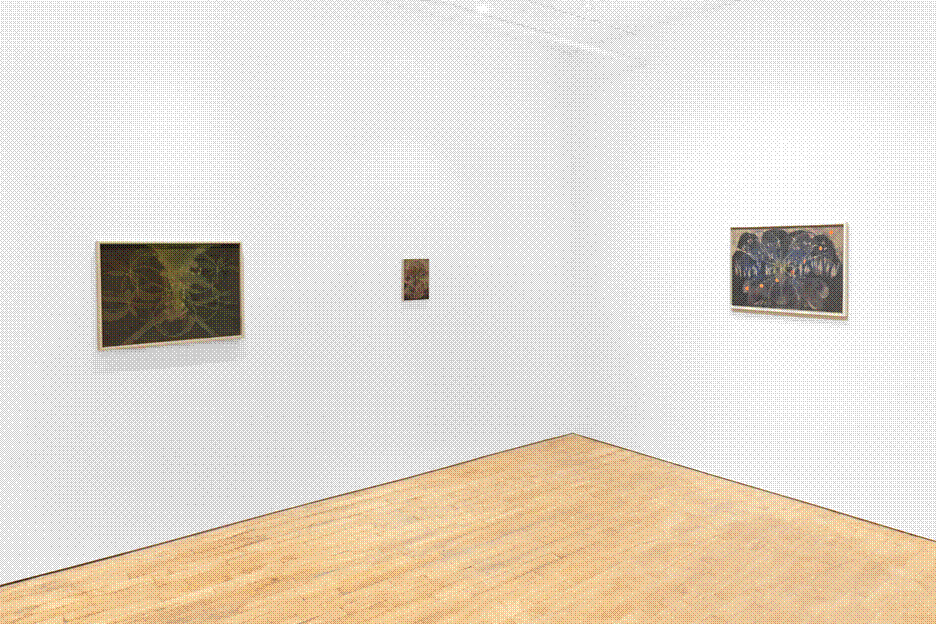
An occult presence pervades the sylvan scenery of Comet Eater, a solo show from Terra Keck. In these nightswept graphite drawings, trees shimmer and sway. Leaves levitate and glow. Stars or fireflies illuminate ornate paths. Among other sources, Keck hybridizes the ghostly impressions of Anna Atkins’s botanical cyanotypes and the mystic geometry of Hilma af Klint’s paintings.
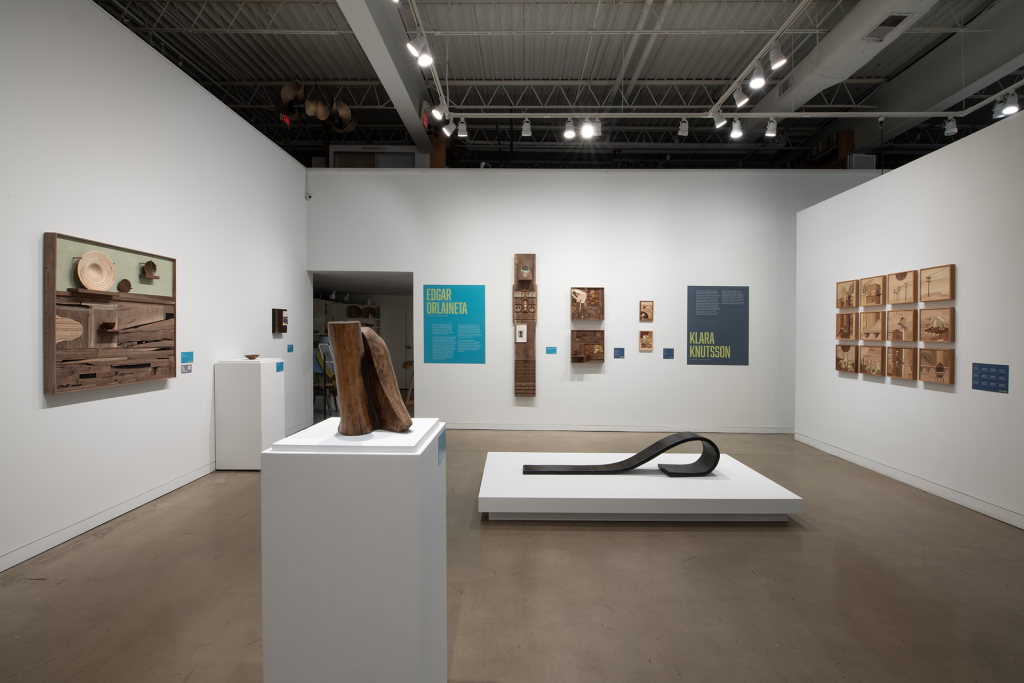
Installation images of WARP Wood 2025: A Plank in a Shipwreck. Photo credit: John Carlano
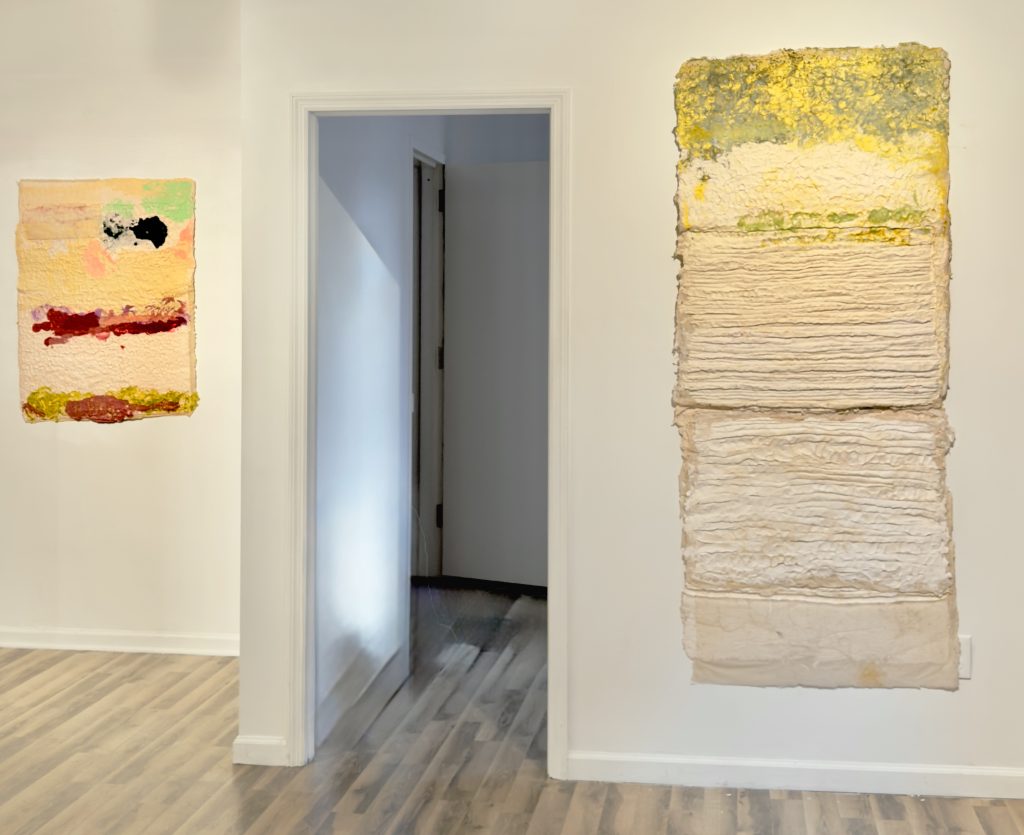
Across the city, artists are focused on the meaning of visible labor and extracting the potential in the most innocent of found materials. Through unconventional mediums and reclaiming disregarded items like paper or rubber bands, artists are able to tap into universal experiences that inject value and sacredness into everyday objects. At PEEP Projects, Maria Ah Hyun constructs layered paper vessels to serve as ritual objects and gateways into cultural landscapes. Gabrielle Constantine transforms Blah Blah Gallery into a romantic archive of working class textures and sensibilities that honor the excesses of labor. Museum of Art and Wood presents the 2025 cohort for their Windgate Arts Residency program, inviting experimentation and individual perspectives in wood in A Plank in a Shipwreck.
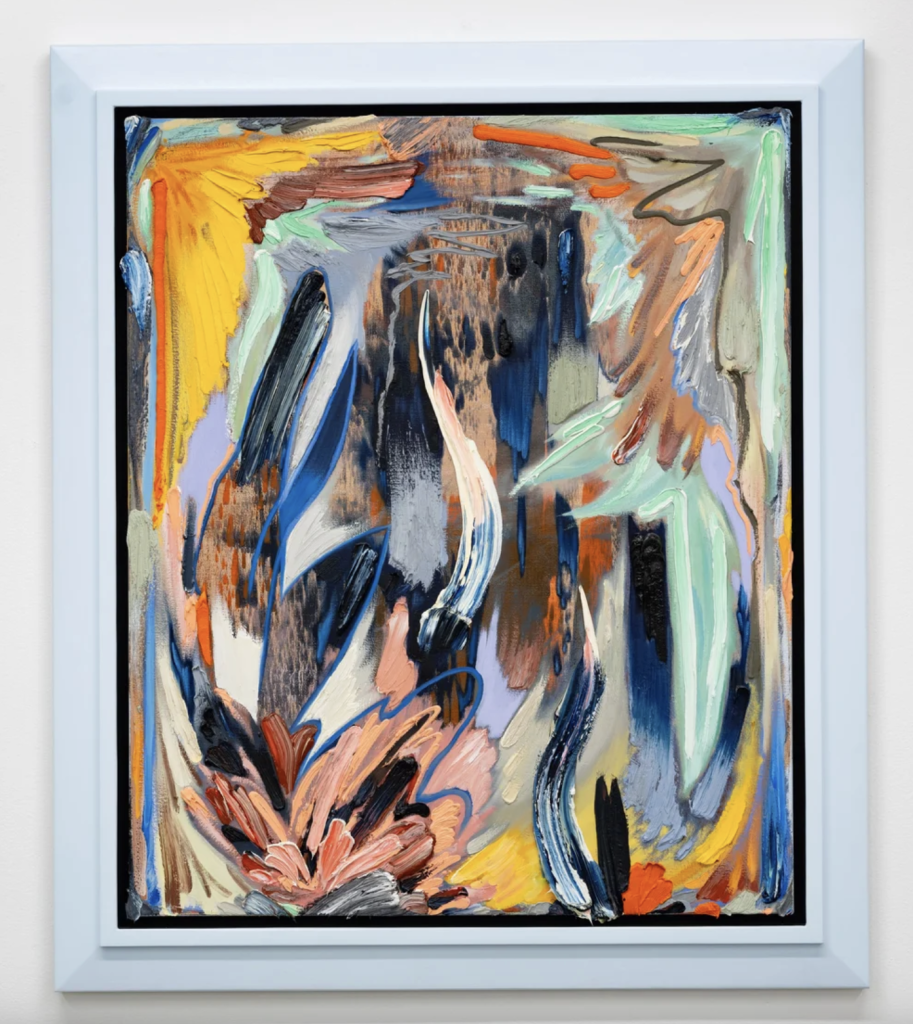
Jonathan Syme, Receding, Shy Daylight, 2024, oil on canvas in artist frame, 43” x 37”. Courtesy of Royale Projects
Jonathan Syme paints like someone coaxing spirit from matter—a phrase that sounds mystical until you’re standing in front of the work, where it becomes simply descriptive. As restless as they seem, his canvases don’t argue or perform; they resonate, like a vibration passed through the soles of your feet. Thick skeins of paint are unearthed, revealing strata in a geologic dig of intuition. There’s a kind of archaeology to the gesture: gouges, stains, and eruptions of impasto build a type of sedimentary record, chronicling attention. The eye slows down, and with it, thought.
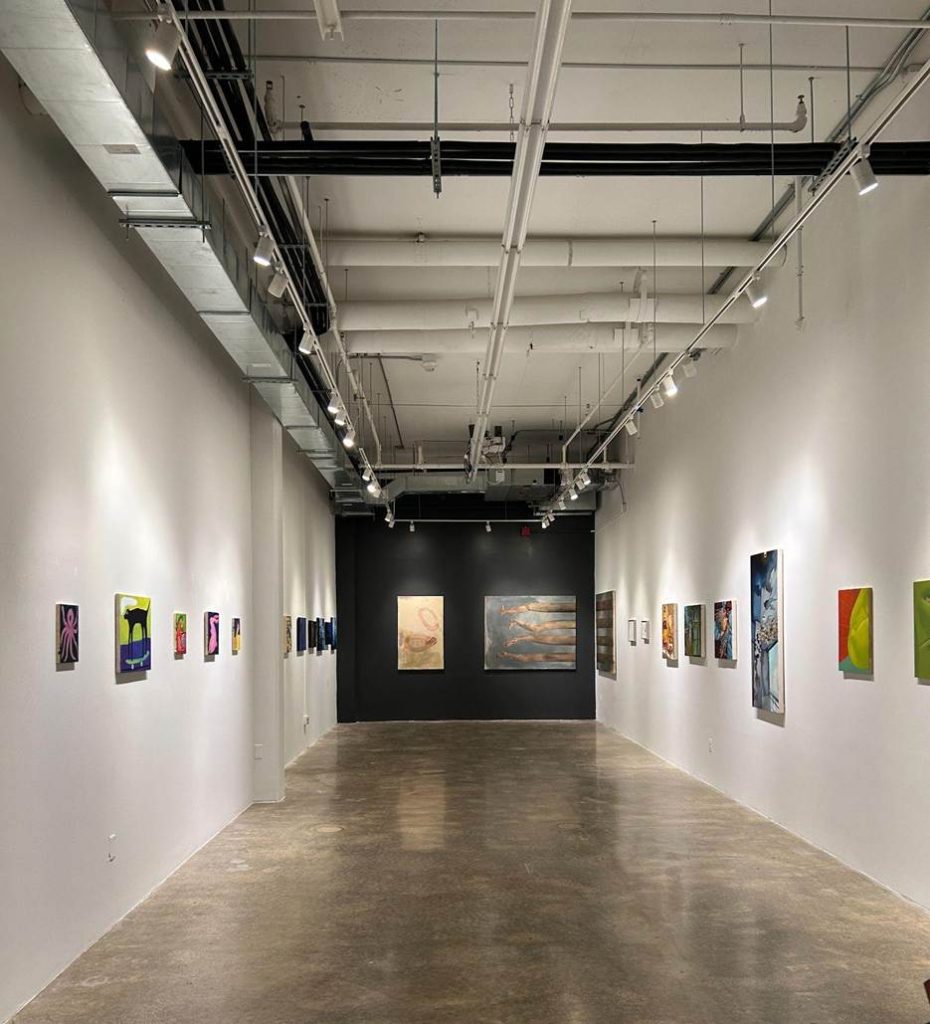
The Essence of a Moment, a group exhibition presenting a collection of artists’ contemplations on the makings of a moment. A moment is by its nature fleeting, and it’s by our nature as people that we seek to extend or preserve them; despite their intangibility. This group show engages with the questions – How can one define something as nebulous as a moment? Is it done retrospectively after it has passed? Is it a confluence of occurrences? Or perhaps it exists with the body’s perception of the present moment? These works offer a variety of insights and perspectives into understanding a moment.
Almond Zigmund, figure ground yellow, 2023, acrylic on paper, 36 x 53”, photo credit: Jenny Gorman
Almond Zigmund’s work occupies the charged space between structure and disruption. Moving fluidly across sculpture, painting, and installation, her practice explores the intersection of geometry, architecture, and lived experience—often in subtle yet powerful ways. I have the pleasure of discussing her work at the end of her recent exhibition at East Hampton’s Guild Hall. In this interview exchange, Zigmund speaks about the formative influences that shaped her, from growing up in a creative household to navigating the distinct geographies of Brooklyn, Las Vegas, and the East End of Long Island. The conversation delves into the improvisational roots of her approach, her ongoing engagement with spatial systems, and how tension—between control and spontaneity, place and perception, the built and the organic—continues to animate her work. With references to theorists, artists, Zigmund offers a thoughtful and richly textured account of how art can be both experiential and critical, formal and deeply human.