Notice: Function WP_Object_Cache::add was called incorrectly. Cache key must not be an empty string. Please see Debugging in WordPress for more information. (This message was added in version 6.1.0.) in /www/artspiel_344/public/wp-includes/functions.php on line 6131
A picture containing indoor, wall, ceiling, floor Description automatically generated

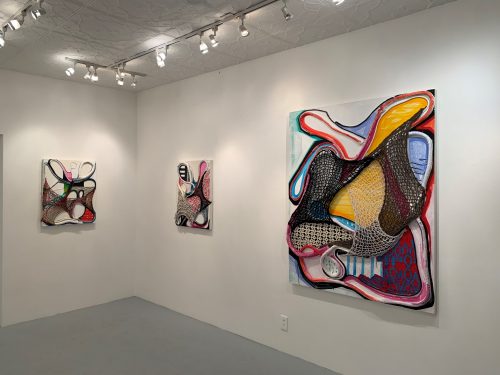
The Agreement: Chromatic Presences – Funky and Formal at Zurcher

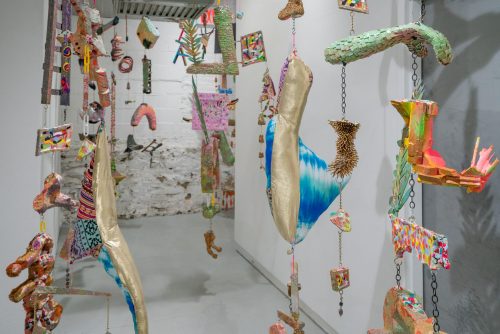
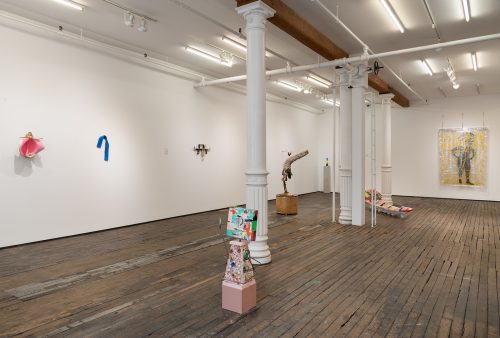
I’ll start with a question: does a critic have an obligation to propose a solution to an enigmatic puzzle an exhibition might pose? What has led to this, is reading William Corwin’s catalog essay for The Agreement: Chromatic Presences, in which he ignores recounting the history of sculpture and color—deemed for a very long time to be irreconcilable like fish and cheese. It is now common knowledge, sculpture till the time of the renaissance was largely polychromed, but a neo-classical notion of purity and essentialism came to be imposed upon it to differentiate it qualitatively from painting. As a result, sculpture came to be limited to the colors of its materials—marble, bronze and wood. In the West, this formalism was institutionalized by the Enlightenment’s and was the excepted norm until the mid-20th century, when art’s traditional forms began to morph. Consequently, we must ask if there is a more contemporary issue concerning color and form at the heart of Corwin’s The Agreement: Chromatic Presences, and if so, what might it be?
A picture containing text, indoor, floor, painting Description automatically generated

Natalie Westbrook: Faces at Zynka

Previewing

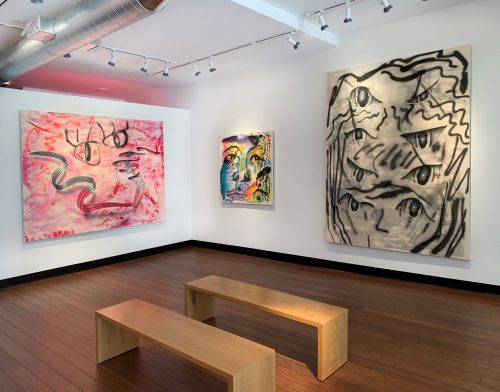
Natalie Westbrook’s exhibition at ZYNKA Gallery in Pittsburgh features new paintings on canvas and drawings on paper. Westbrook depicts faces as thick lines immersed in saturated hot pinks, greens or monochrome gradations—altogether fluctuating between the monstrous and the angelic, the scary and the pathetic. Sometimes they are solitary and sometimes they indicate twins or perhaps a fragmented self. In her catalogue essay on Natalie Westbrook’s work, Larissa Pham observes that Faces “come for you, leering, grinning, mouths a garish lipsticked rictus of joy, embedded flat against the canvas, their features seeming to emerge from the psychological fabric of the painting itself.”

Art on a wall Description automatically generated with medium confidence

Susan Rostow: Biomorphic Figurations

Susan Rostow’s sculptures resemble archeological artifacts with biomorphic characteristics, inviting us to probe into their origin, meaning and what they are made of. Textures of abrasive material such as clay and moss-like surface, along with graphic symbols such as linear markings of shore tides and other signifiers from old maps, fuse into hybrid forms where the lines between past and future, what is natural and what is fabricated, are seamlessly blurred.

https://images.squarespace-cdn.com/content/v1/56e4a5e1b09f956469fc080e/1650138651847-9U8SOF3SVVFR0HR2C2XP/Phase1_15_2000px.jpg?format=1500w

In Case of Sam Spillman at Ulterior Gallery

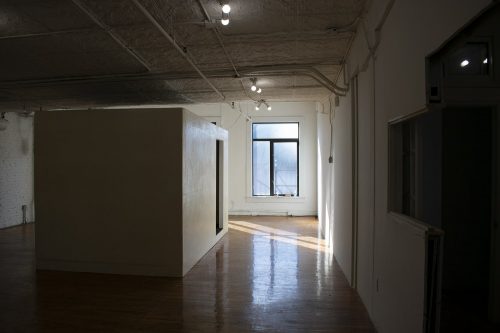
Far from the palatial white cubes of Chelsea or the intimate townhouse spaces of the Upper East Side is a different type of gallery space – one that serves as a reminder of an earlier moment in the art world, and yet persists into the present – the SoHo loft. In his debut solo exhibition, Sam Spillman has created work that probes at this history in In Case Of Sam Spillman at Ulterior Gallery. 

A picture containing fabric Description automatically generated

Waters of the Future

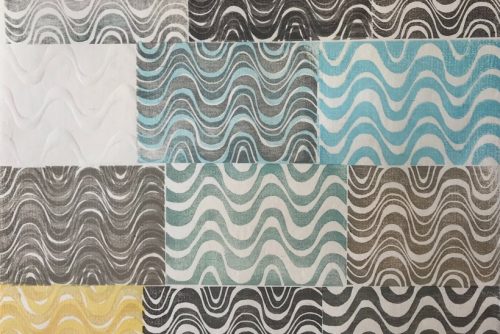
For Brooklyn-based printmaker Florence Neal, water has always been a dominant presence in her life. She grew up in Columbus, Georgia, near the Chattahoochee River, which straddles the southern half of the Alabama and Georgia borders. There she developed an appreciation for the Native American stories about the river as well as first-hand knowledge of the negative impact that the cotton and iron mills of the past and the pervasive industrial pollution had had on its health.   

A picture containing wall, indoor, floor, standing Description automatically generated

Anonda Bell – Incidental Encounters with Nature

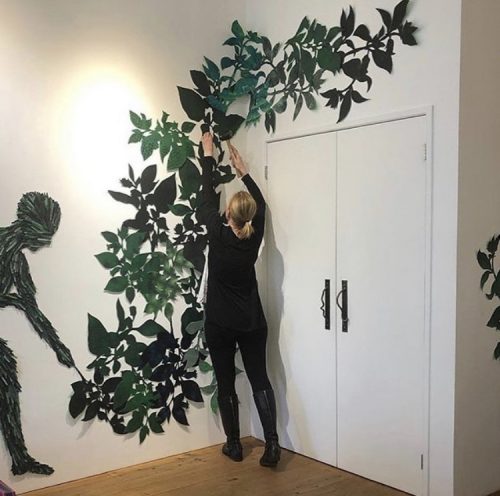
Artist Anonda Bell reflects in her mixed media installations on a range of complex notions—from exploring different ways women have been perceived throughout history to environmental concerns. The entry point to her projects include homages to historical figures like the American feminist Charlotte Perkins Gilman who protested in her book Yellow Wallpaper the oppression of women at the end of the 19th century, and the Australian Lindy Chamberlain who was falsely charged with murdering her baby; references to cultural trends in psychology related to women’s anxiety and Hysteria; or environmental concerns referencing Biophobia and extinction.

A picture containing dark Description automatically generated

An Interview with Artists Amanda Maciuba, Jen Morris & Jessica Tam

This month, I have a wonderful interview with three artists for you. Amanda Maciuba, Jen Morris, and Jessica Tam are all visual artists working in different mediums. However, they share a fascination with how ecological language (surge, spike, wave, etc.) has worked its way into news reports’ descriptions of large phenomena such as crowds, pandemics, and political movements. They recently closed a show at the A.P.E., Ltd. Gallery in Northampton, Massachusetts titled WAVE/SURGE/SPIKE.

Macintosh HD:Users:alexandraisrael88:Downloads:ChellisBaird_instudio.jpg

Chellis Baird – Redefining Sculpture

Featured Artist

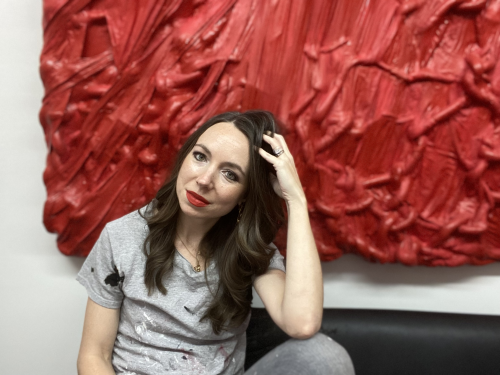
Chellis Baird’s work bridges the fine line between painting, sculpture and textile work, which is no easy feat. Baird’s sculptures require that extra layer of attention in order to really take in all the details: bright colors interwoven with gold accents, as well as the hint of foreign materials bulging from underneath. Her current exhibition, The Touch of Red, explores the significance of the color red in Baird’s practice. The color red is Baird’s favorite color, and holds much significance to her. The color conjures a wide range of symbols, feelings and history, including the contrasting emotions of love and pain, as well as symbols such as good luck, war and seduction. For this exhibition, Baird developed a shade of red with local suppliers in New York and Georgia and also developed her first metal and rosin works titled Serpentine and Flirt with the assistance of a foundry in Long Island City. The exhibition is up through April 8th at the National Arts Club.