Jorge K. Cruz & Elizabeth Insogna, Divine Myth– Faith and Flesh, installation view, photo courtesy of the gallery
In the quiet hum of Freight + Volume, myth breathes anew — through clay, through oil, through the occulted pulse of memory and transformation. Elizabeth Insogna’s luminous ceramics rise from ionic pedestals like ancient offerings, while Jorge K. Cruz’s visceral canvases create a kaleidoscopic backsplash, drawing viewers into a dialogue between the sacred and the subversive.
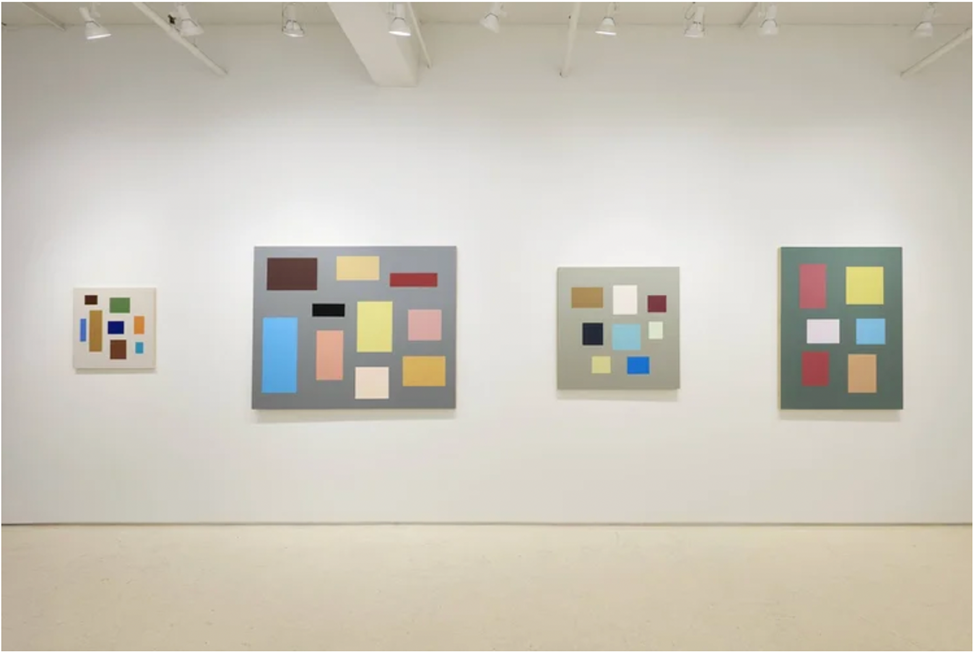
Installation photograph of 11:11, at Tappeto Volante
A few weeks ago, Marta Lee visited my studio. A few days after that visit, she texted me:
“Hey, what is the deal with that long wood piece of molding that was kind of to the left of where u were sitting? It’s gorgeous”
Marta was referring to an 8-foot-long piece of molding I’ve used as a mahlstick (also spelled ‘maulstick’) since 2018. I probably found it in the trash in my first studio building on Grand Street in Bushwick, and I’ve never thought of it beyond its use as an object to balance my arm on while painting. But Marta was right – it is sort of gorgeous. It’s got a spiraling geometric pattern carved into it, and paint streaks where I swipe it while lifting brushes. This realization led to another – just how unique Marta’s way of seeing the world really is.
Installation view of Flora Yukhnovich’s Four Seasons in The Frick Collection’s Cabinet Gallery, showing Autumn and Winter. Photo: Joseph Coscia Jr.
What draws artists and audiences back to the Baroque now, in a century shaped by speed and fracture? Perhaps it is the recognition of kinship. The seventeenth century was also an age of cataclysm and wonder — continents mapped, the cosmos recalculated, science expanding perception. The Baroque arose amid fracture: religious schisms, shifting empires, faith and politics entangled. Art became theatrical, constructed to move the spirit through light, motion, and sensation.
Installation View, (photo courtesy of Yanmei Jiang)
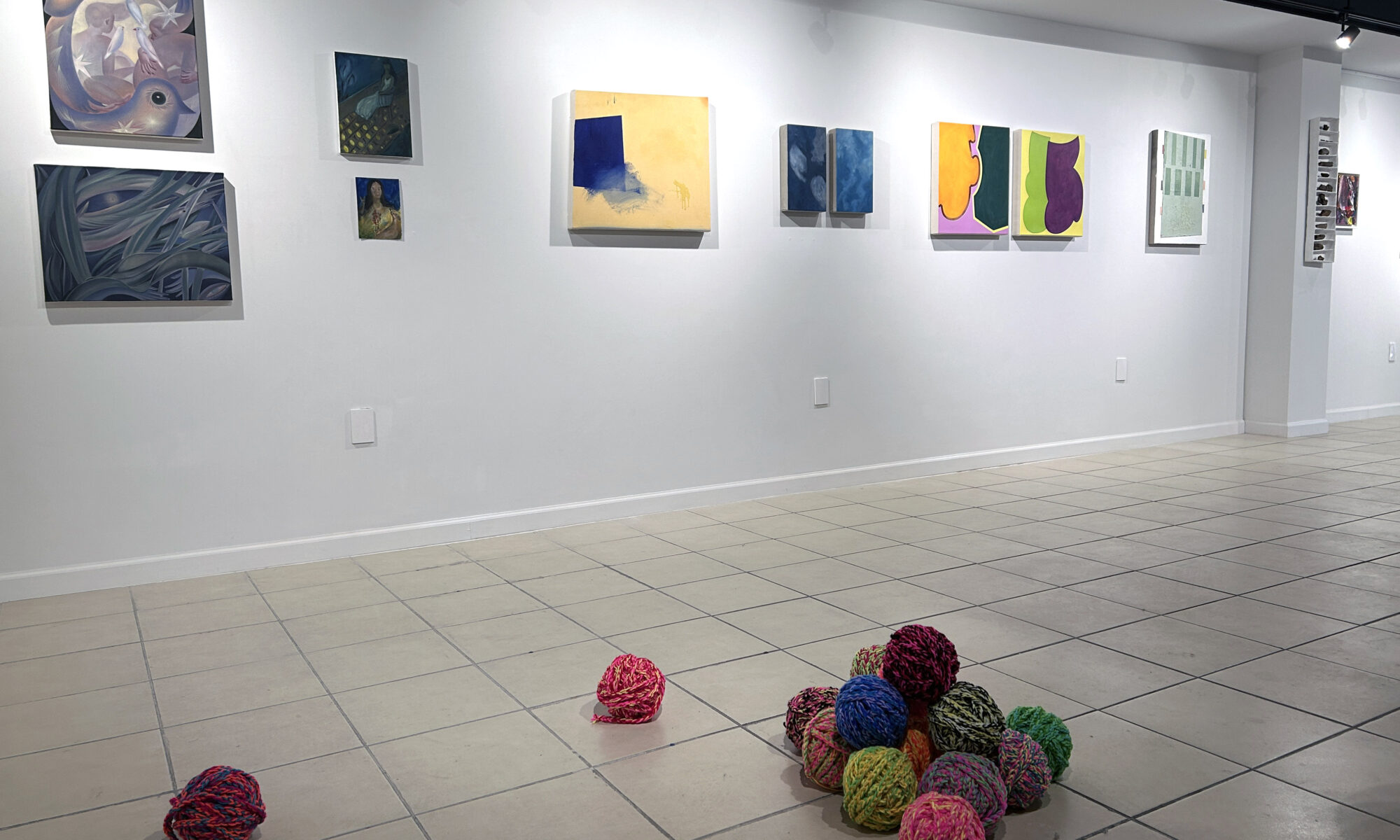
Walking into Peninsula gallery, an intimate space in the Two Bridges neighborhood, viewers are greeted with the energetic and punchy paintings in Johnny Mullen’s solo show- rehearsals in movement. Mullen has pinpointed his focus on layering paint, motion, and plays with both transparency and opacity in this new series. With the gallery itself being so intimate, you get a close and personal view of the works, a deeper look that proves very rewarding. Meandering from one painting to the next, each of a consistent size, you get to join mullen on his explorations within each piece. Expanding from his interest in color theory, Mullen has added an expanded investigation of layering and gesture within the pieces.
Totally Unique Thing. AI generated image, glazed ceramic. Installed on bespoke wallpaper, designed by Perry and produced by Liberty of London
The Wallace Collection, a storied historic mansion in London that houses an extraordinary, far-ranging collection of art and objects, invited the artist Grayson Perry to embed and create an exhibition that responds to their collections. Collected during the18th and 19th Centuries, the museum is dripping in Rococo, houses breathtaking Old Master paintings, amour, ceramics, medieval relics and sculpture. It would be, for a lesser artist, a daunting assignment.
Psyche, Ashley Garrett’s exhibition of paintings at September Gallery in Kinderhook, has a mix of large and small oil paintings, and pastels. The small works have a restless energy emphasized by Garrett’s staccato mark-making. The large canvases give Garrett’s brush plenty of room to deliver longer, more fluid gestures. This freedom allows her paint strokes to slide over and under each other in a flow that can give her compositions a quiet intensity, like tall grass seething in a high wind. Garrett has lightened up her palette to include more pinks and a range of whites and pale grays.
Portrait of the artist, photo courtesy of Elizabeth Haynes
In early September, painter Deborah Zlotsky pulled off what few artists even attempt: two solo shows opening at once, on opposite sides of Manhattan. The Light Gets In filled McKenzie Fine Art on the Lower East Side, while Genealogies took over Kathryn Markel Fine Arts in Chelsea. A double dip in one city, on one calendar page. It might sound like a scheduling accident, yet standing in front of her candy-striped canvases, the simultaneity feels deliberate. Zlotsky thrives on overlap: order brushing against disorder, geometry trembling at its edges, patterns that carry memory while stumbling into the present.
Installation View. Phong H. Bui and Sol LeWitt. Craig Starr Gallery (1)
For both Phong Bui and Sol LeWitt, the line is a democratizing gesture. The line as a line: a mark; steering focus towards the method of an image’s creation rather than convincing the viewer of the realism of its ultimate subject. And, at least for both of these artists, this means we begin to deal with units. With LeWitt, the unit is the geometric shape — a square, cube, or even a diagram-a nugget of information, often placed within another diagram, offering multiple levels in the narrative of the work’s process and arrangement.
Maya Perry, The moon takes shape of an outsiders light, 2025, Water-Soluble Graphite and Watercolor on canvas, 58 x 62 in., photo courtesy of Taylor Bielecki
Maya Perry’s solo exhibition at RAINRAIN gallery is both tender and powerful, full of tranquility and wonder. It is a conversation on humanness and existence. With the drawings, we see snapshots of thoughts, memories, feelings, and with the paintings we see narratives and longer moments of growing, returning, and becoming. This exhibition navigates the spaces where memory fractures and re-forms, dealing with the complications of the past.
Installation View, Doron Lanberg at Victoria Miro, courtesy of the writer
With the excitement of the art fairs behind us it’s time to take one look back at The Armory Show and note a couple artists to watch this year who clearly stood out in the whirlwind of that weekend.