Artworks

Articles & Reviews

Noa Charuvi: Gal’Ed at York College Arts Gallery

Photo Story

45 Jacob took a stone and erected it as a pillar. 46 He instructed his kin, “Collect some stones.” They gathered stones, formed a heap, and shared a meal beside it. 47 Laban named it Jegar Sahadutha, while Jacob named it Galeed. 48 Laban declared, “This heap stands as a witness between us today.” Hence, it became known as Galeed.

Genesis, Chapter 31, Verse 45

A Gal’Ed symbolizes a location marked by significant events—deathly moments or sacrifices. As it appears in the Old Testament, it signifies a covenant. In Hebrew, ‘Gal’ is a heap of stones, and it is the same word for ‘wave.’ ‘Ed’ means a witness. This heap of stones becomes an emblem of the pact between Jacob and his father-in-law: their agreement not to harm each other’s possessions or families. Serving as a symbol of shared promises, Jacob sanctifies it, offering to God on this stone.

Ararat: Artists Coming Together in a Time of Crisis

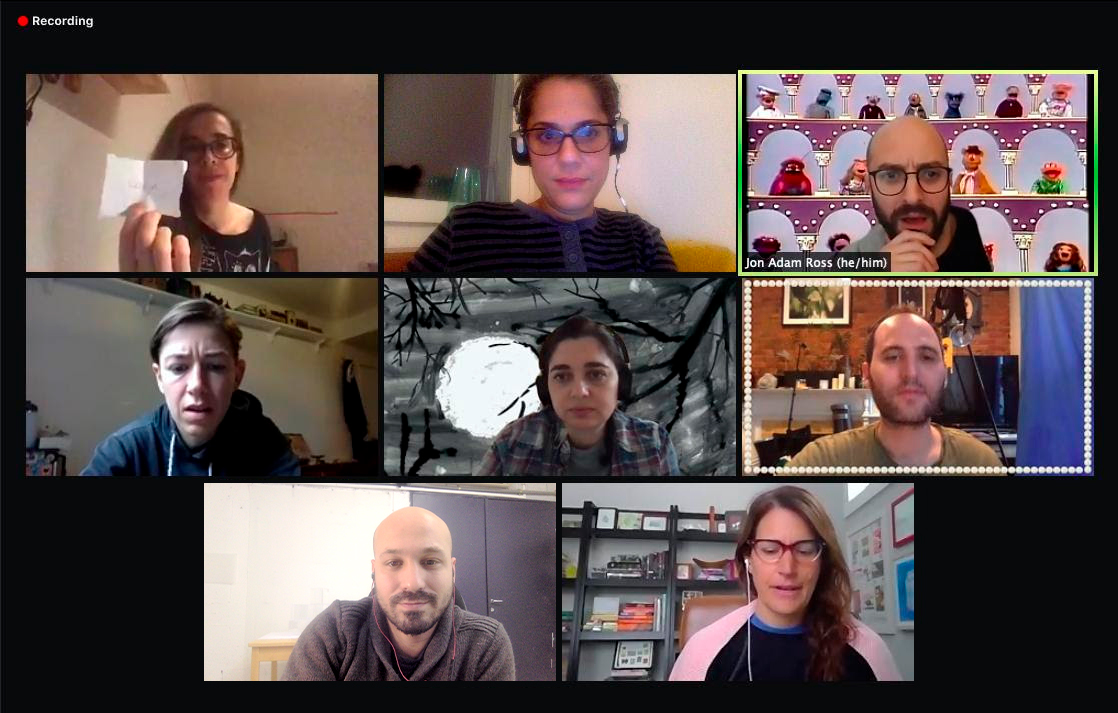
A new art collective was born out of the need to find purpose and connection during the shut down period caused by the Covid 19 pandemic. Now the collective members launch a webzine that invites everyone to peer into their minds, get inspired and think of the various ways creativity has a potential to help cope with a global disaster.

Private View from Home to Home

In Dialogue with Naomi Lev, Rebecca Pristoop, and Sarah Crown

The Exhibition Private View is a bit like an artist’s game of telephone. Three curators: Sarah Crown, Naomi Lev, Rebecca Pristoop, coordinated the movement of works by seven artists (Aimée Burg, Noa Charuvi, Tamar Ettun, Julia Goldman, KB Jones, Dana Levy, Gabriela Salazar) from home to home of each of the artists. In each new space the works were rehung, re-organized, and displayed in a new environment, often with the addition of the host’s collection of art. I interviewed the curators to find out how they planned and executed this show and how it was recorded and disseminated. In a way this exhibition reversed the traditional structure of personal and private: instead of the public being able to see artworks in a whitebox gallery or museum, which has been made impossible because of the pandemic, we became spectators on an artists private space—we couldn’t be there in person, but via Instagram we were shown more than we usually get to see. These notions of intimacy, personal expression, and a safe space in times of turmoil were central to the exhibition Private View.

Noa Charuvi - Suspended on Site

Noa Charuvi’s paintings convey a distinct sense of place where narratives of the present interrupt those of the past with urgency, sometimes even violence . Yet, her places encapsulate past and present not only as a rupture but also as an ongoing flow of coinciding contradictory forces – ruin and construction, anarchy and order. No matter if the painting depicts an interior of a room or an exterior of a construction site, it frequently portrays a place that is devoid of human figures but charged with the aftermath of human actions. Even if human figures are present, they are typically placed in context of their larger environment, players in a powerful and mysterious systemic forces of history, city, society. Noa Charuvi shares with Art Spiel some insights on her ideas, work, and process.