Artworks

Articles & Reviews


Notice: Function WP_Object_Cache::add was called incorrectly. Cache key must not be an empty string. Please see Debugging in WordPress for more information. (This message was added in version 6.1.0.) in /www/artspiel_344/public/wp-includes/functions.php on line 6131

Women Heavy at Gardenship Gallery

In Dialogue

Throughout the group exhibition Women Heavy at the Gardens Gallery in Kearny, NJ, curator Donna Kessinger references contemporary and second-wave feminist ideas. The curator aims to create a clinical and visceral experience by investigating broad concepts and featuring among many notable others work by Charlie Spademan, Gwen CharlesJeanne Brasile, Josh Knoblick, Judi Tavill, Kasia Skorynkiewicz, Charlee Swanson, Lauren VroegindeweyKristin J. DeAngelis, Michael Angelo, Richard GainesSuzan GlobusVikki MichaliosA.V. RyanDonna Conklin King, Anna Ehrsam, and Doris Cacoilo. In our interview curator D. Kessinger sheds some light on her curatorial vision.

Making Sense Without Consensus at Equity

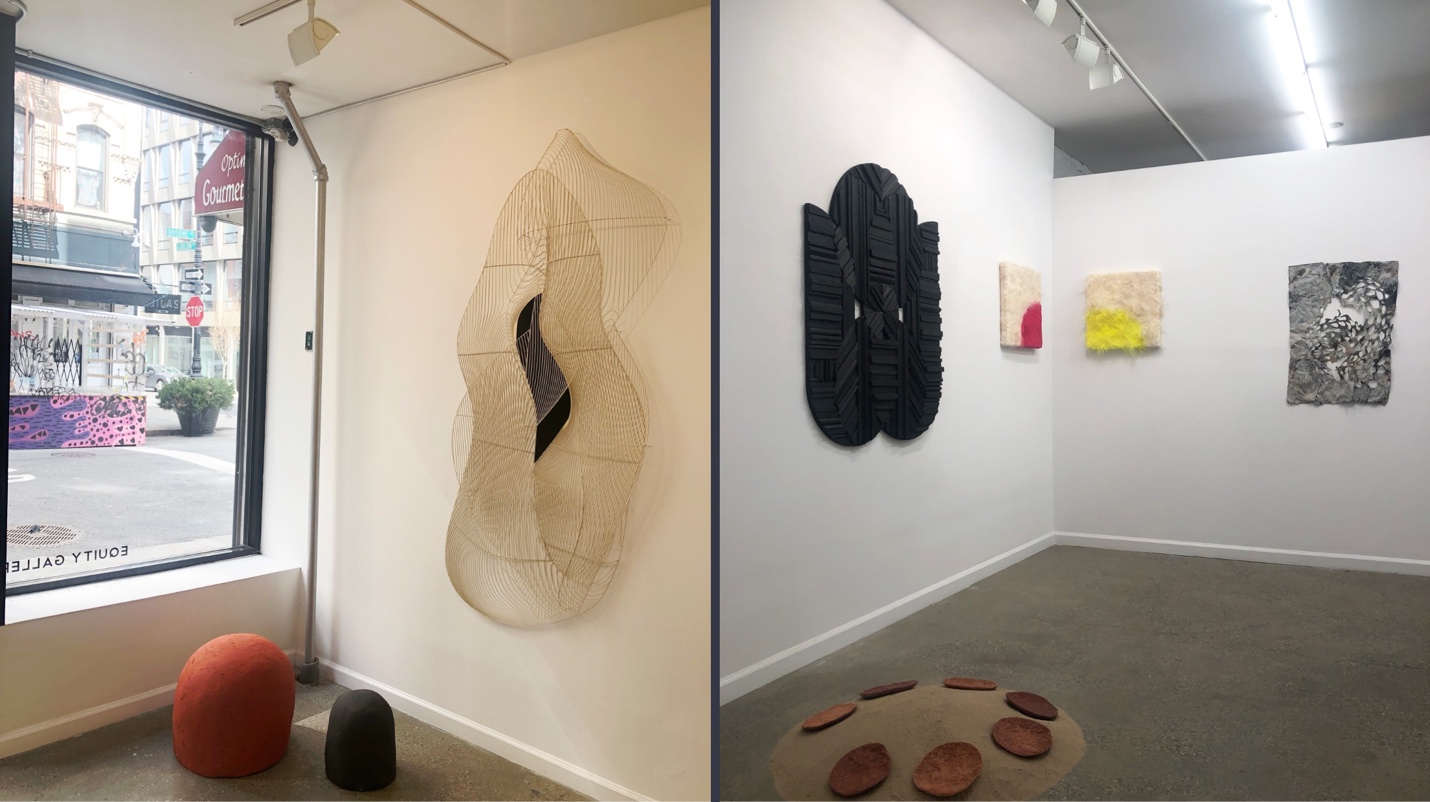
Now on view at Equity Gallery in the Lower East Side is a notable group exhibition, cogently titled Making Sense Without Consensus, with works by 14 remarkable artists and 3 astute curators at the helm. The exhibition statement says that these artists explore reality through fragmented connections and geometric materiality, “investigating whether the linearity of time is real or if past and future overlap.” 
In further absorbing what this exhibition might represent, I also want to offer an illuminating quote from The Radicant (2009), an essay by celebrated curator and critic Nicolas Bourriaud. This thought piece provides context for the development of Making Sense Without Consensus:

“In ordinary language, ‘modernizing’ has come to mean reducing cultural and social reality to Western formats. And today, modernism amounts to a form of complicity with colonialism and Eurocentrism. Let us bet on a modernity which, far from absurdly duplicating that of the last century, would be specific to our epoch and would echo its own problematics: an alter modernity …”