I think it’s safe to say that everyone dreads turning on the news nowadays, with the turmoil of politics and world events. If it’s not on the TV, stressful headlines take over email news updates or flood social media platforms. However, for an artist, it can either bring one’s mood down or inspire one to take action by creating one’s own interpretation of a solution. Blair Saxon-Hill is the latter. With Saxon-Hill’s newest solo show at SHRINE, Saxon-Hill’s oil paintings, which portray mostly flowers, provide serenity to this chaotic state of American politics.
Continue reading “Saxon-Hill’s Flower Escapism at SHRINE”How Unexpected: Encounters With the Divine, Emelie Stenhammar
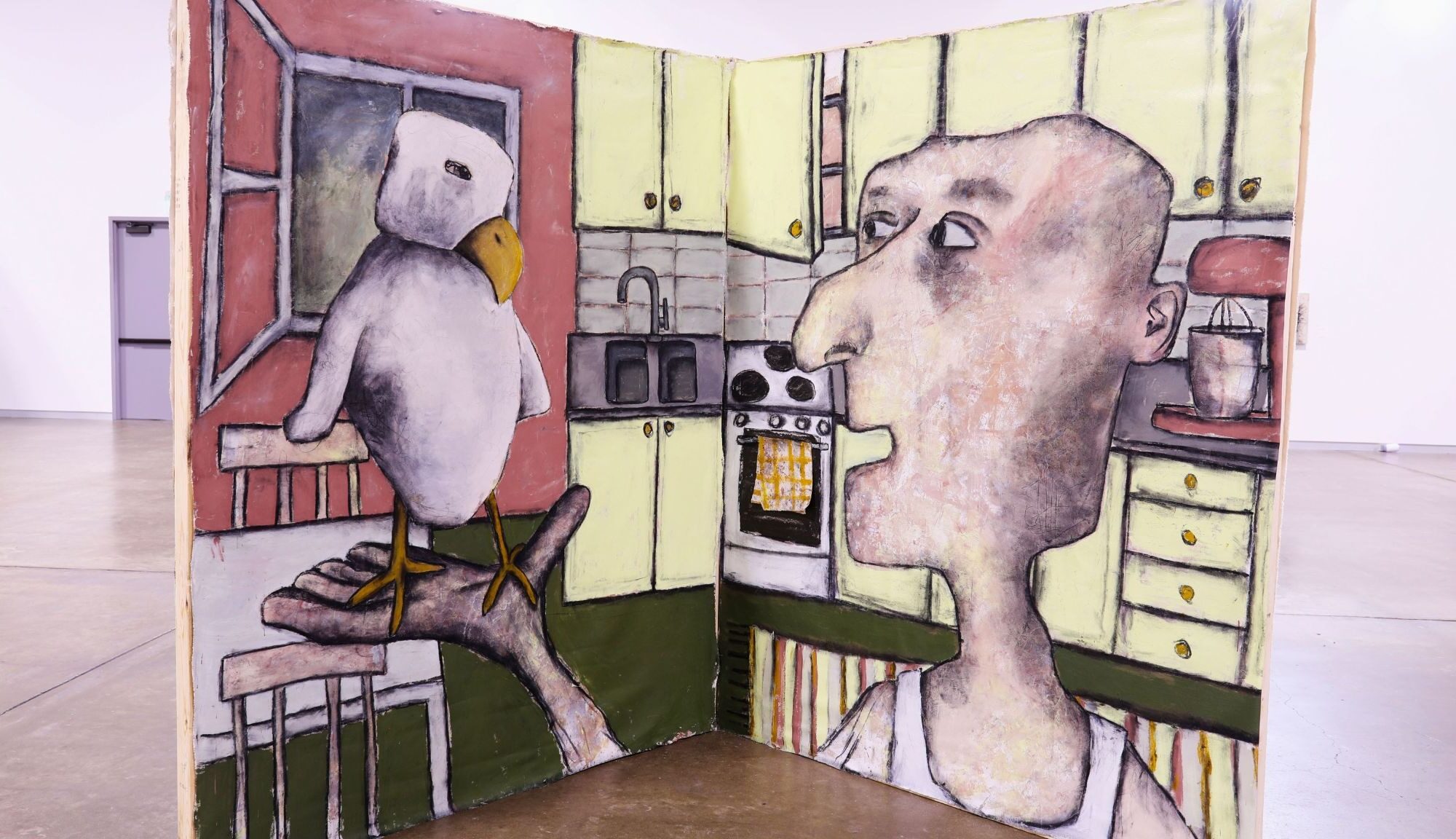
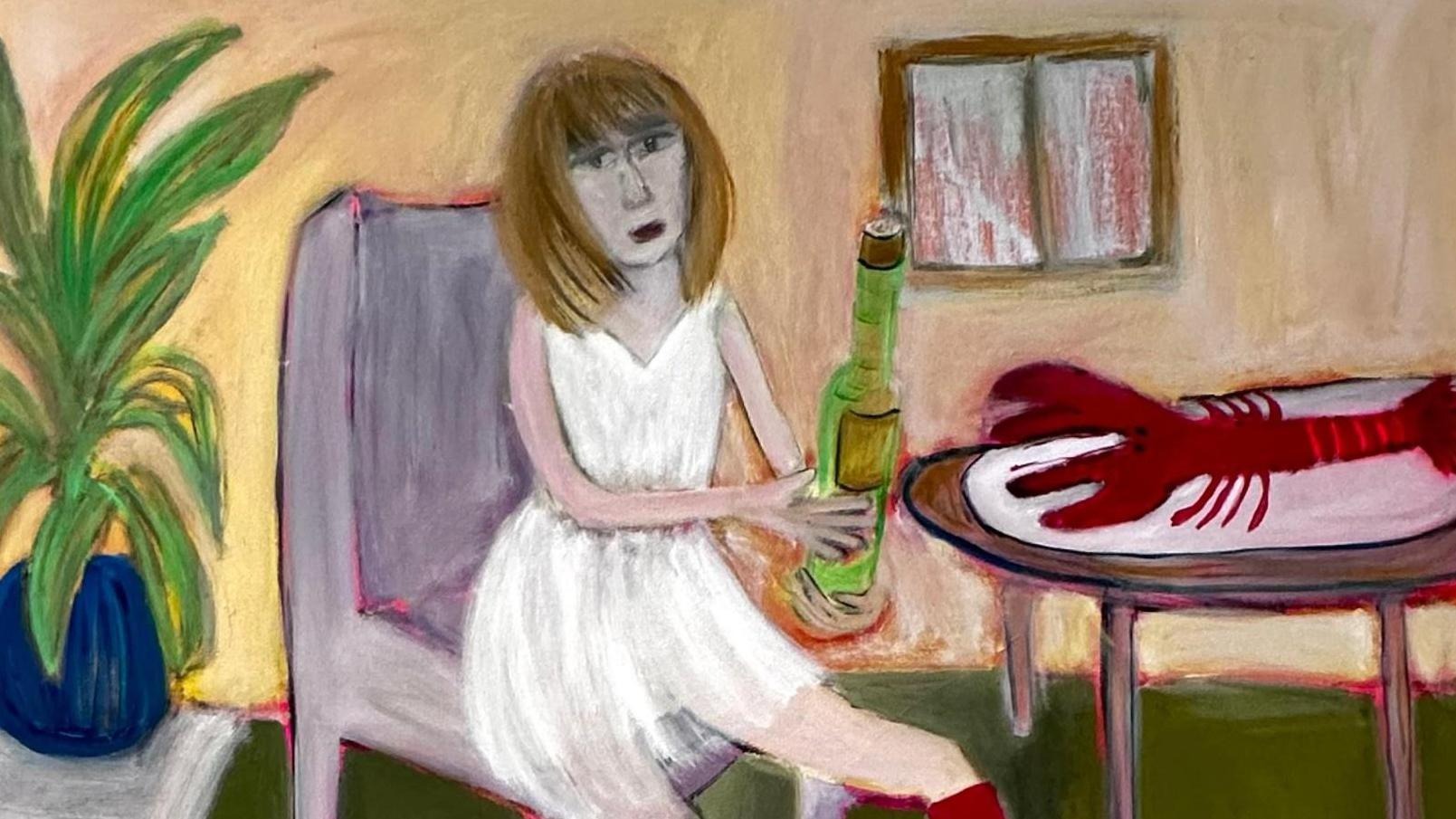
Emelie Stenhammar’s works echo the aims of Elizabeth Murray to reshape our relationship with painting. Cozy rectangular formats are denied. Twisted Perspective prevails. Both artists’ depictions of domestic spaces reflect a mutual fondness for cartoons and whimsy. Stenhammar paints compelling allegory about the human condition, with a compassionate gaze akin to that of Kathe Kollwitz.
Continue reading “How Unexpected: Encounters With the Divine, Emelie Stenhammar”Cecily Brown at the Serpentine: Everything Everywhere All at Once
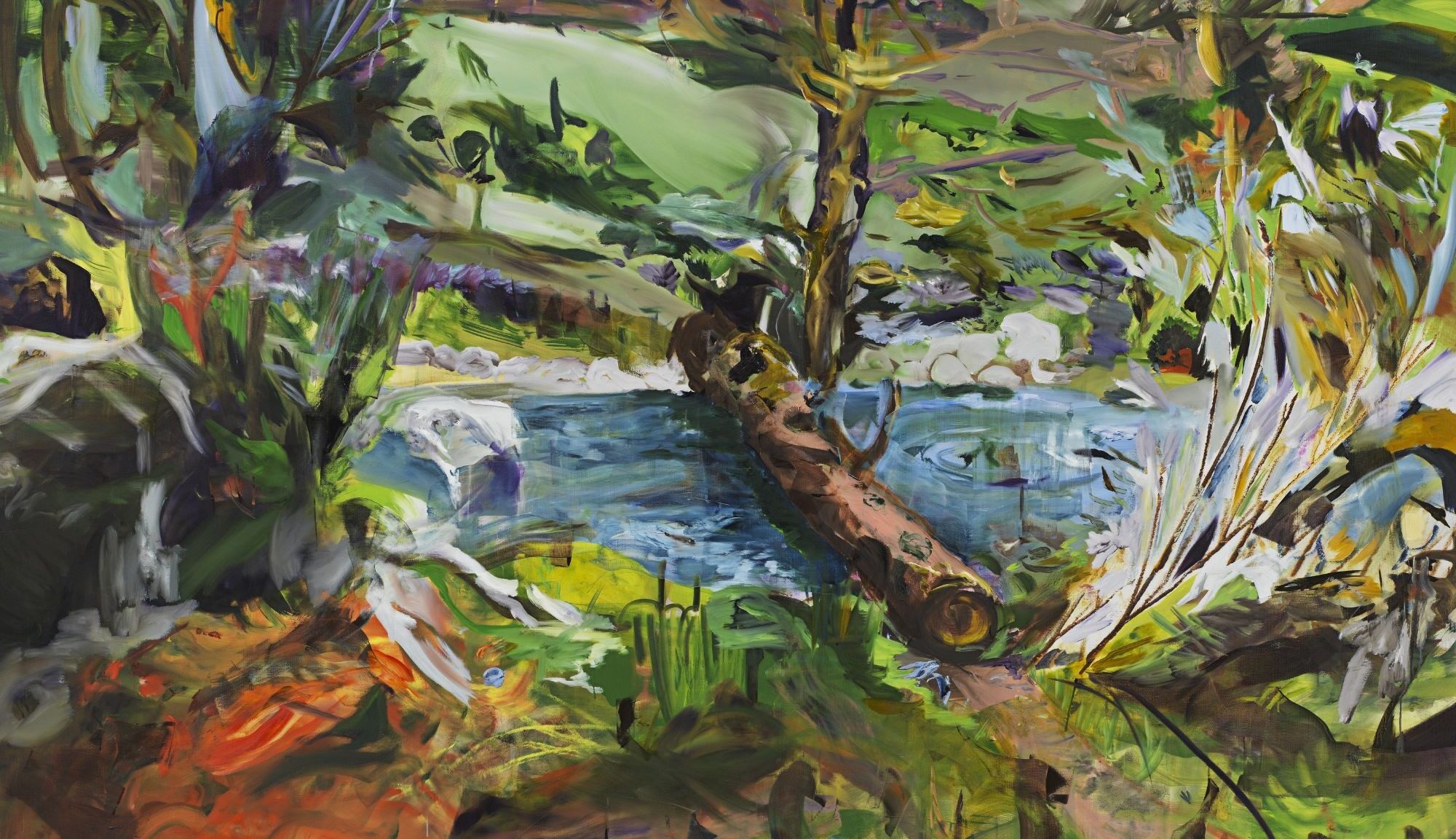
Entering the first room of the gallery, one is instantly struck by the richness of movement in Cecily Brown’s paintings. Several recent works, drawn from nature walks, centre on the motif of a log laid across a blue stream. This fairy-tale imagery, bordering on kitsch, was borrowed from a jigsaw puzzle Brown was completing at the time. Yet the jagged shrubbery and turbulence surrounding these scenes point towards something darker.
Continue reading “Cecily Brown at the Serpentine: Everything Everywhere All at Once”Growing After the Embers: A Review of Bùi Thanh Tâm’s Solo Exhibition Here on and after
For a long time, when I was young, I felt distant from the idea of “history.” In textbooks, history always appeared through years, wars, reforms, and changes of political power, as if it were made of events already organized and settled. Yet the history that truly remains in the body often appears in more hidden forms. It may be a silence within family narratives, a memory that one generation chooses to avoid, a recurring pattern in festive images, or a color that seems joyful while quietly carrying a wound. Very often, history continues to exist in another form, lingering in images, bodies, and everyday experience.
Continue reading “Growing After the Embers: A Review of Bùi Thanh Tâm’s Solo Exhibition Here on and after”The Luckiest Show You Will See This Summer
What would you do if you wanted to bring more luck into your life? Drawing from her observations of how people across cultures use rituals and superstitions to summon luck, Gail M Boykewich’s show Into the Wolf’s Mouth feels almost like a field guide to how we pray, wish for good fortune, and stay hopeful enough to keep moving forward. Rather than treating luck as simple optimism, Gail presents it as a language of survival — a way people negotiate uncertainty, longing, heartbreak, and the desire for a better future. The title is inspired by the Italian idiom “in bocca al lupo”, a phrase used to wish someone luck as they enter danger. It beautifully implies a universal experience: the desire for more, for solutions, for security, or simply for a way to feel better, especially within our current turbulent and unstable political status quo.
Continue reading “The Luckiest Show You Will See This Summer”What Remains: in dialogue with Arghavan Khosravi
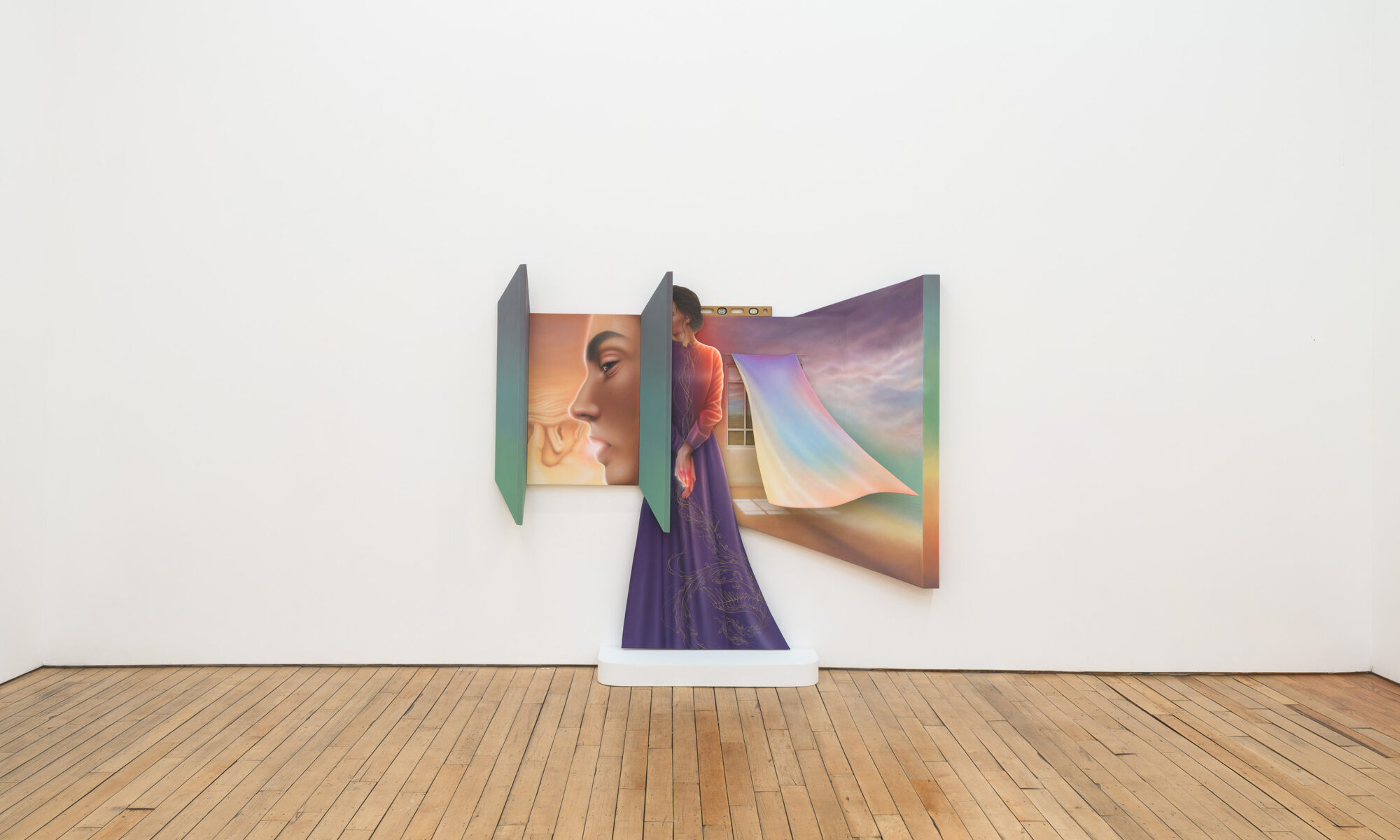
Altarpieces—historically sites of devotion, revelation, and spiritual certainty—become something altogether different in Arghavan Khosravi’s What Remains, currently on view at Uffner & Liu through July 2. The exhibition brings together large-scale wall works, a freestanding sculpture, and an intimate suite of new altar-inspired paintings that continue Khosravi’s ongoing exploration of the forces that shape women’s lives under political, cultural, and religious systems of control. Drawing equally from Persian miniature painting and medieval European iconography, the artist constructs layered worlds where architectural structures become psychological spaces, symbols migrate across histories, and moments of resistance emerge within conditions of constraint. Rather than offering resolution, the works linger in states of suspension—between freedom and captivity, memory and displacement, devotion and doubt.
Continue reading “What Remains: in dialogue with Arghavan Khosravi”Pouch Power Women: with Brenda Zlamany
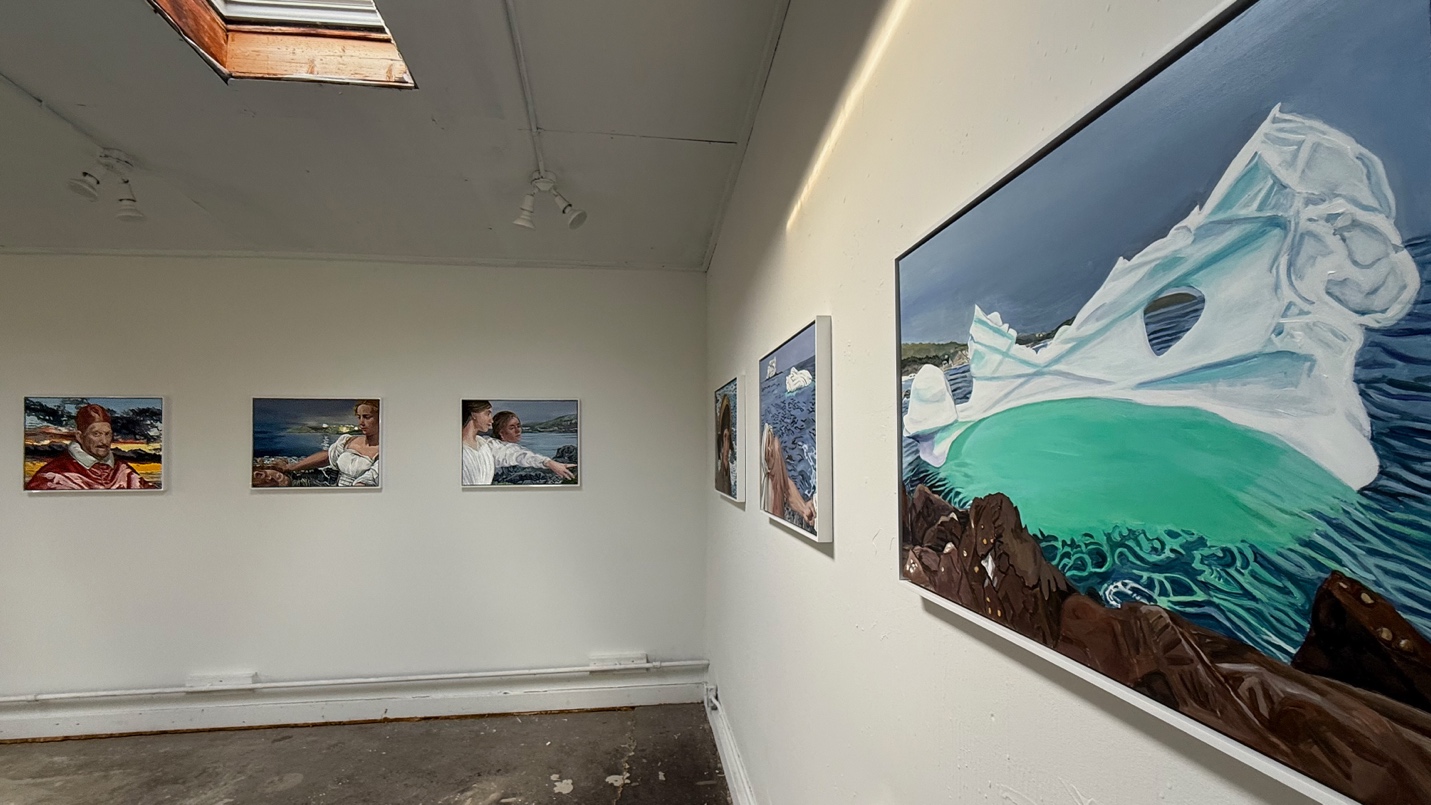
What starts as an open call and a group text to trusted friends becomes, two years later, an exhibition that feels inevitable. Seven Women Chase Icebergs, on view at The Re Institute in Millerton, NY, brings together seven painters whose friendships span decades and continents: Rome, Skowhegan, Triangle, Braziers. Organized by Brooklyn-based artist Brenda Zlamany — creator of The Itinerant Portraitist and a painter whose practice has long centered on community as both subject and method — the show grew from a month-long residency at Pouch Cove, Newfoundland, where the group painted, hiked, shared meals, and chased icebergs along the edge of the Atlantic. We spoke with Zlamany about friendship as curatorial logic, landscape as psychological mirror, and what it means to build something together at the edge of the world.
Continue reading “Pouch Power Women: with Brenda Zlamany”Seeing and Recognition: The Paintings of Lee Sherry
Lee Sherry (1947–2012) showed paintings in New York and Boston through the 1970s and 1980s, moved in the circles of the Language poets, and left behind a body of work that almost no one knew existed. Seeing and Recognition, on view at Field of Play Gallery in Brooklyn through June 28th, is the first survey of her paintings — assembled by curator and artist David McDonough, artist Susan Bee, who was a close friend of Sherry’s in the 1970s, and artist and archivist Zak Vreeland, who acquired works directly from her studio after her death. The show brings together paintings that span decades, from early experiments made in dialogue with minimalism to luminous, layered late work that unfolds the longer you look. We spoke with David McDonough, Susan Bee, and Zak Vreeland about how the show came together, what the paintings do, and why Sherry’s work went unseen for so long.
Continue reading “Seeing and Recognition: The Paintings of Lee Sherry”It Takes a Village at Freight and Volume
The most subtle acts are often the most cathartic. In times of relentless upheaval and injustice, simple moments can feel Herculean by measure. The current exhibition at Freight and Volume, It Takes A Village, focuses on daily ritual as a gate of entry. Artists Andrea Castillo, Nancy Elsamanoudi, and Baran Shafiey blend nuanced elements with doses of surreality, resulting in invitations into spaces that delightfully offer more questions than answers. Each work is a reckoning with the quietude of in-betweenness. Each artist is a painter working in figuration; yet the similarities end there, and the departures are as varied as one can imagine.
Continue reading “It Takes a Village at Freight and Volume”Gabriele Münter – Contouring a World
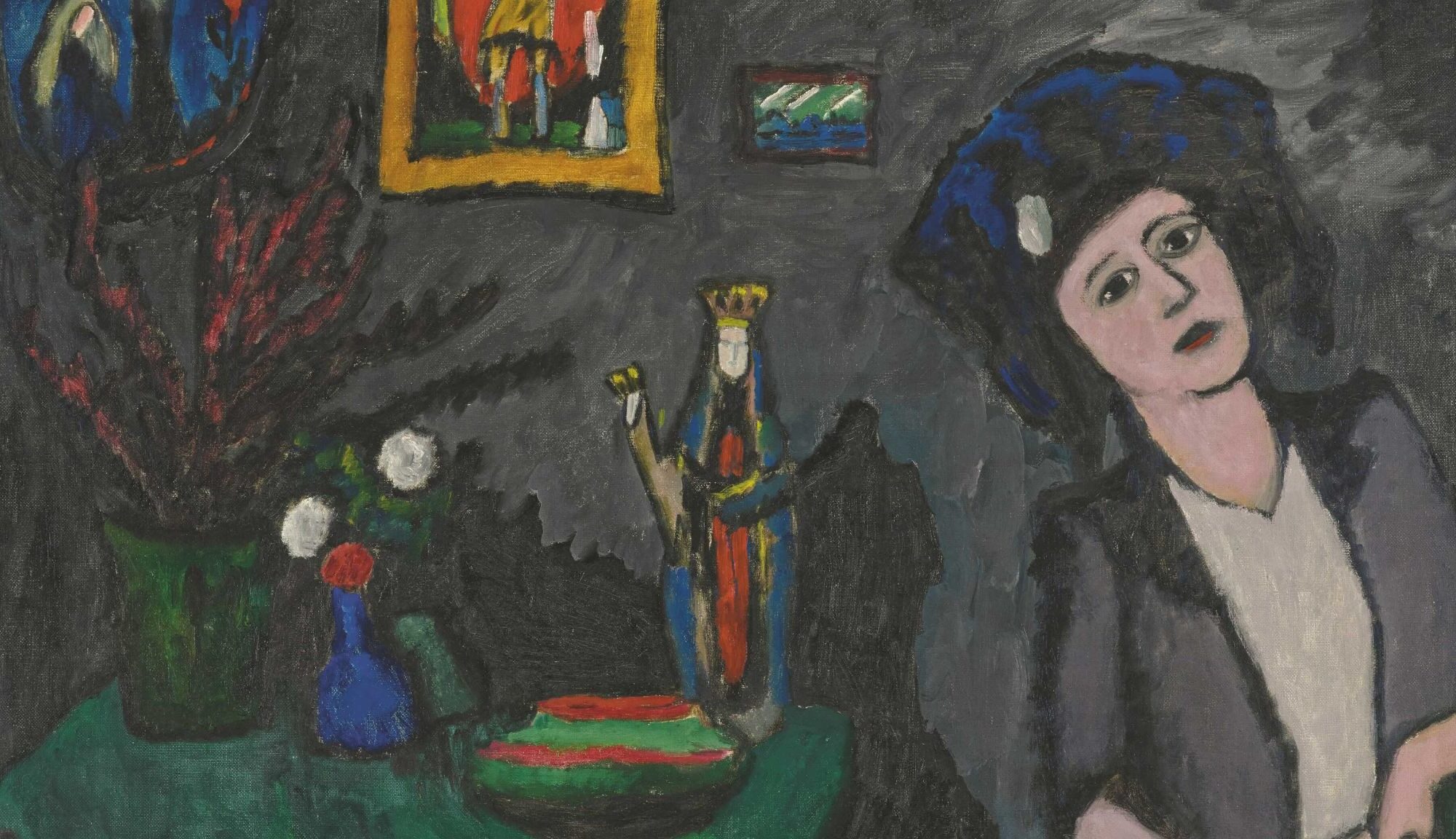
Entering the fourth floor of the Guggenheim, you are met with fields, mountains, lakes of the Bavarian Alps, daily objects, and people—bright, saturated colors held together by dark edges. The exhibition brings together landscapes, portraits, and still lifes, with a focus on Münter’s early Expressionist years alongside later paintings.
Continue reading “Gabriele Münter – Contouring a World”