Image vs Object – Isabel Riley, John Guthrie, and Judy Riola 

Isabel Riley, Cardinal Directions of the Heart

Michelle Mercaldo, an artist and master craftsperson in her own right, is hosting a strong group show in her jewelry showroom, featuring the work of Isabel Riley, John Guthrie, and Judy Riola. Michelle’s own practice is in fine metalwork, and that sensibility, precision, and materiality, with a feel for surface, inform whose work she chooses to put on her walls. 

Continue reading “Image vs Object – Isabel Riley, John Guthrie, and Judy Riola “

How Unexpected: Encounters With the Divine, Emelie Stenhammar

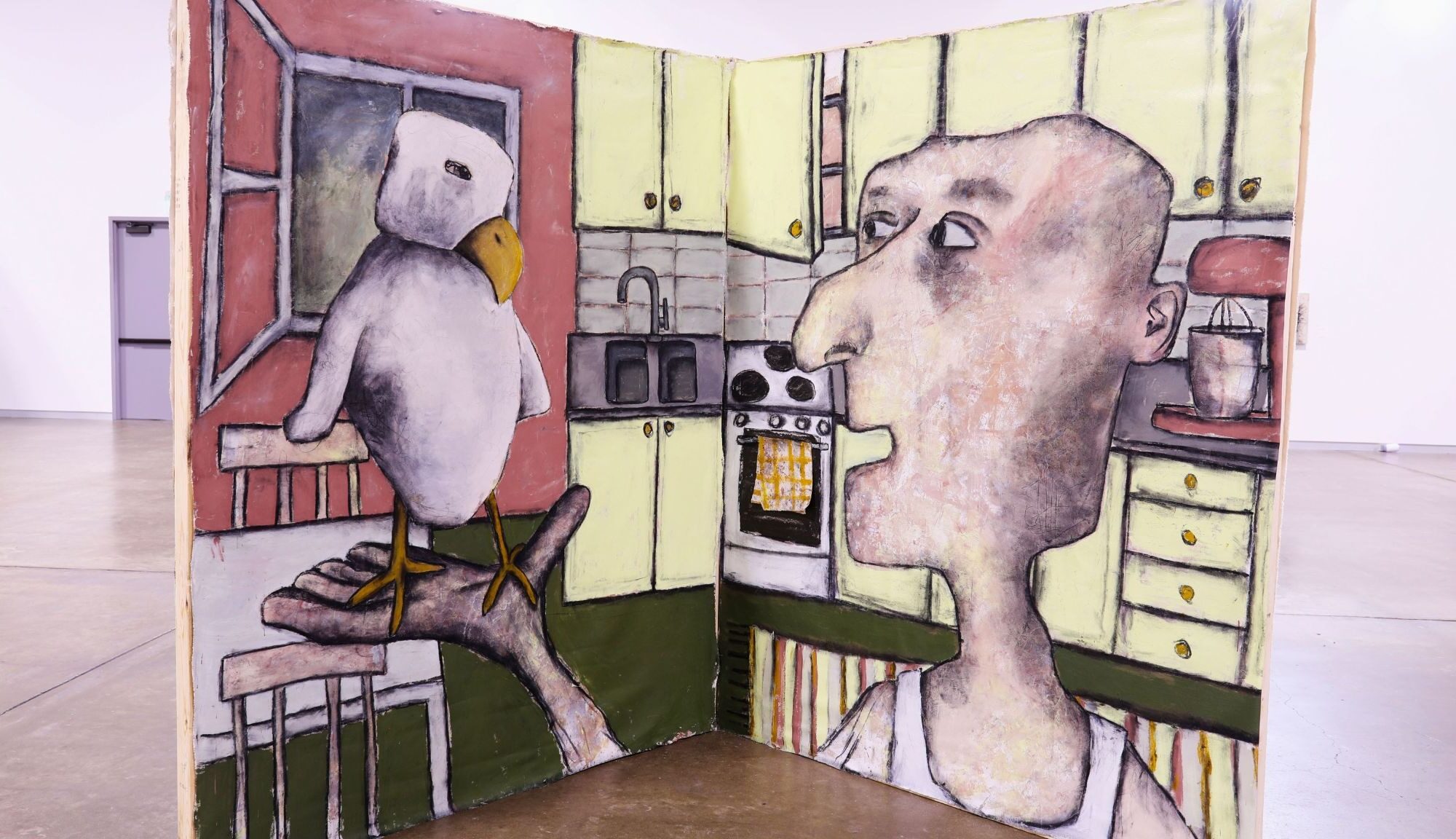
Emelie Stenhammar, How Unexpected

Emelie Stenhammar’s works echo the aims of Elizabeth Murray to reshape our relationship with painting. Cozy rectangular formats are denied. Twisted Perspective prevails. Both artists’ depictions of domestic spaces reflect a mutual fondness for cartoons and whimsy. Stenhammar paints compelling allegory about the human condition, with a compassionate gaze akin to that of Kathe Kollwitz. 

Continue reading “How Unexpected: Encounters With the Divine, Emelie Stenhammar”

Cecily Brown at the Serpentine: Everything Everywhere All at Once

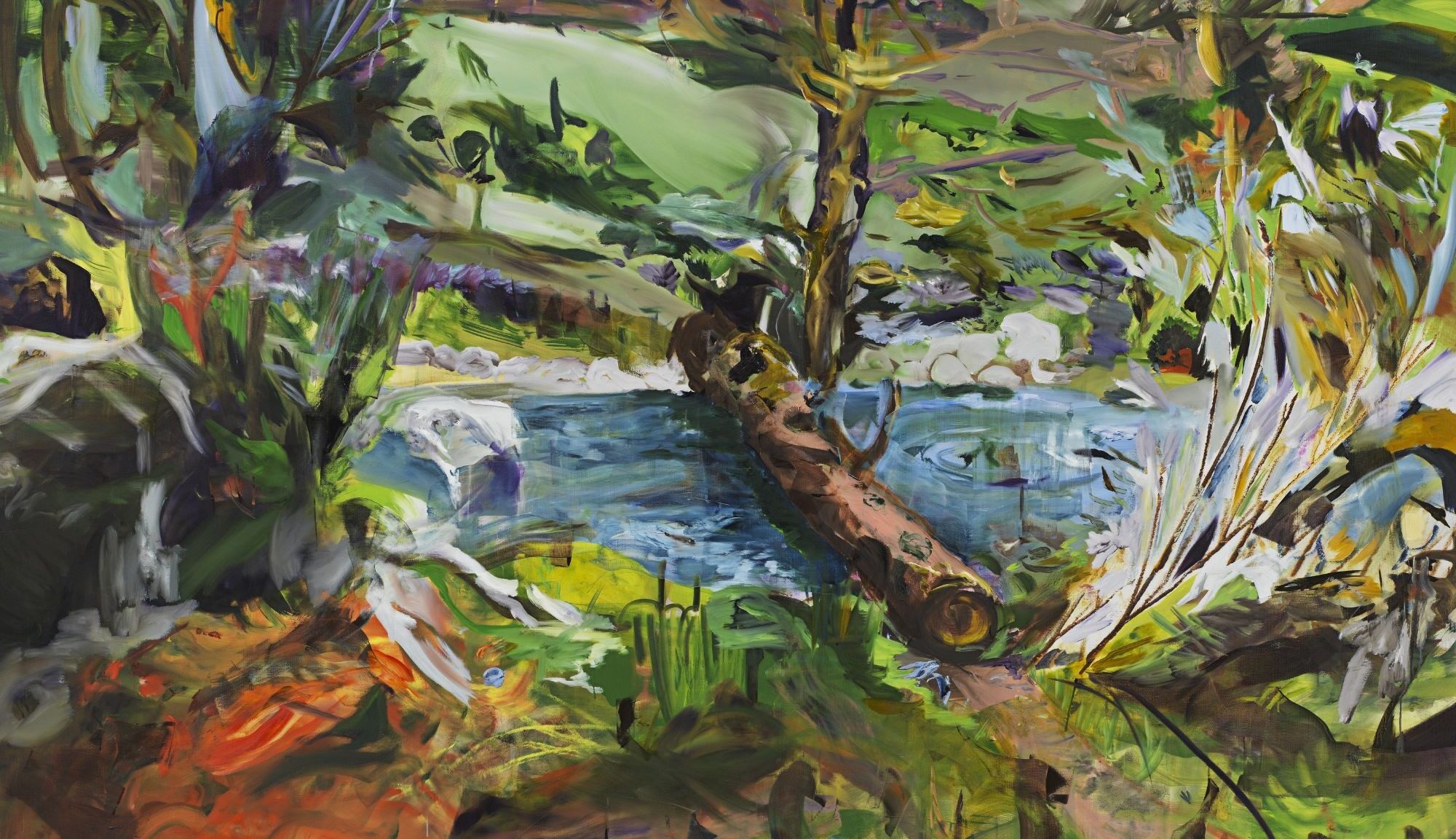
Cecily Brown, Nature Walk with Paranoia

Entering the first room of the gallery, one is instantly struck by the richness of movement in Cecily Brown’s paintings. Several recent works, drawn from nature walks, centre on the motif of a log laid across a blue stream. This fairy-tale imagery, bordering on kitsch, was borrowed from a jigsaw puzzle Brown was completing at the time. Yet the jagged shrubbery and turbulence surrounding these scenes point towards something darker.

Continue reading “Cecily Brown at the Serpentine: Everything Everywhere All at Once”

The Luckiest Show You Will See This Summer

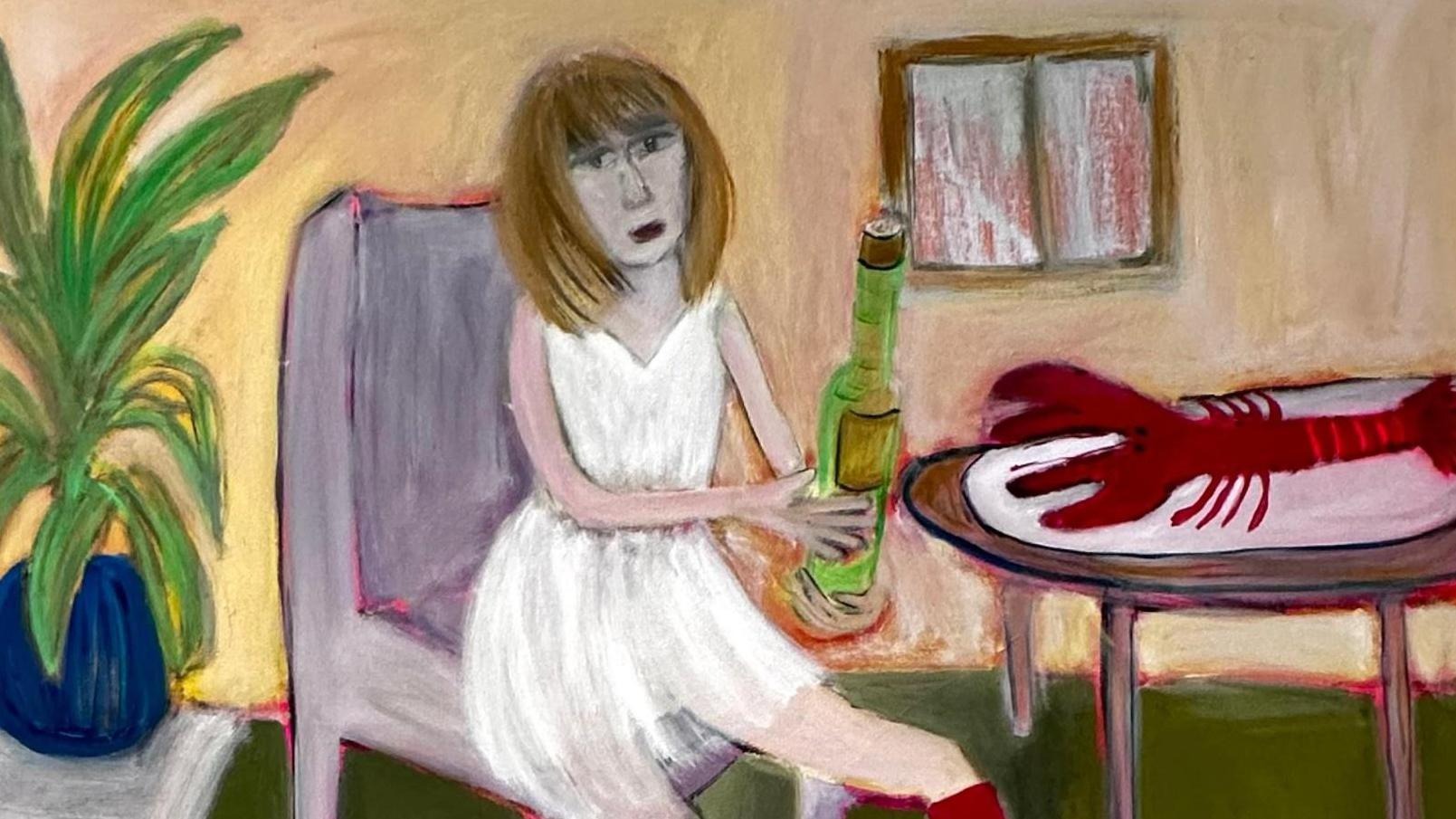
Gail M Boykewich, Lover’s Eye

What would you do if you wanted to bring more luck into your life? Drawing from her observations of how people across cultures use rituals and superstitions to summon luck, Gail M Boykewich’s show Into the Wolf’s Mouth feels almost like a field guide to how we pray, wish for good fortune, and stay hopeful enough to keep moving forward. Rather than treating luck as simple optimism, Gail presents it as a language of survival — a way people negotiate uncertainty, longing, heartbreak, and the desire for a better future. The title is inspired by the Italian idiom “in bocca al lupo”, a phrase used to wish someone luck as they enter danger. It beautifully implies a universal experience: the desire for more, for solutions, for security, or simply for a way to feel better, especially within our current turbulent and unstable political status quo.

Continue reading “The Luckiest Show You Will See This Summer”

It Takes a Village at Freight and Volume

The most subtle acts are often the most cathartic. In times of relentless upheaval and injustice, simple moments can feel Herculean by measure. The current exhibition at Freight and Volume, It Takes A Village, focuses on daily ritual as a gate of entry. Artists Andrea Castillo, Nancy Elsamanoudi, and Baran Shafiey blend nuanced elements with doses of surreality, resulting in invitations into spaces that delightfully offer more questions than answers. Each work is a reckoning with the quietude of in-betweenness. Each artist is a painter working in figuration; yet the similarities end there, and the departures are as varied as one can imagine. 

Continue reading “It Takes a Village at Freight and Volume”

Xinyu Liu’s Fool’s Hour at Art Cake: Finding a home to Carry Onward

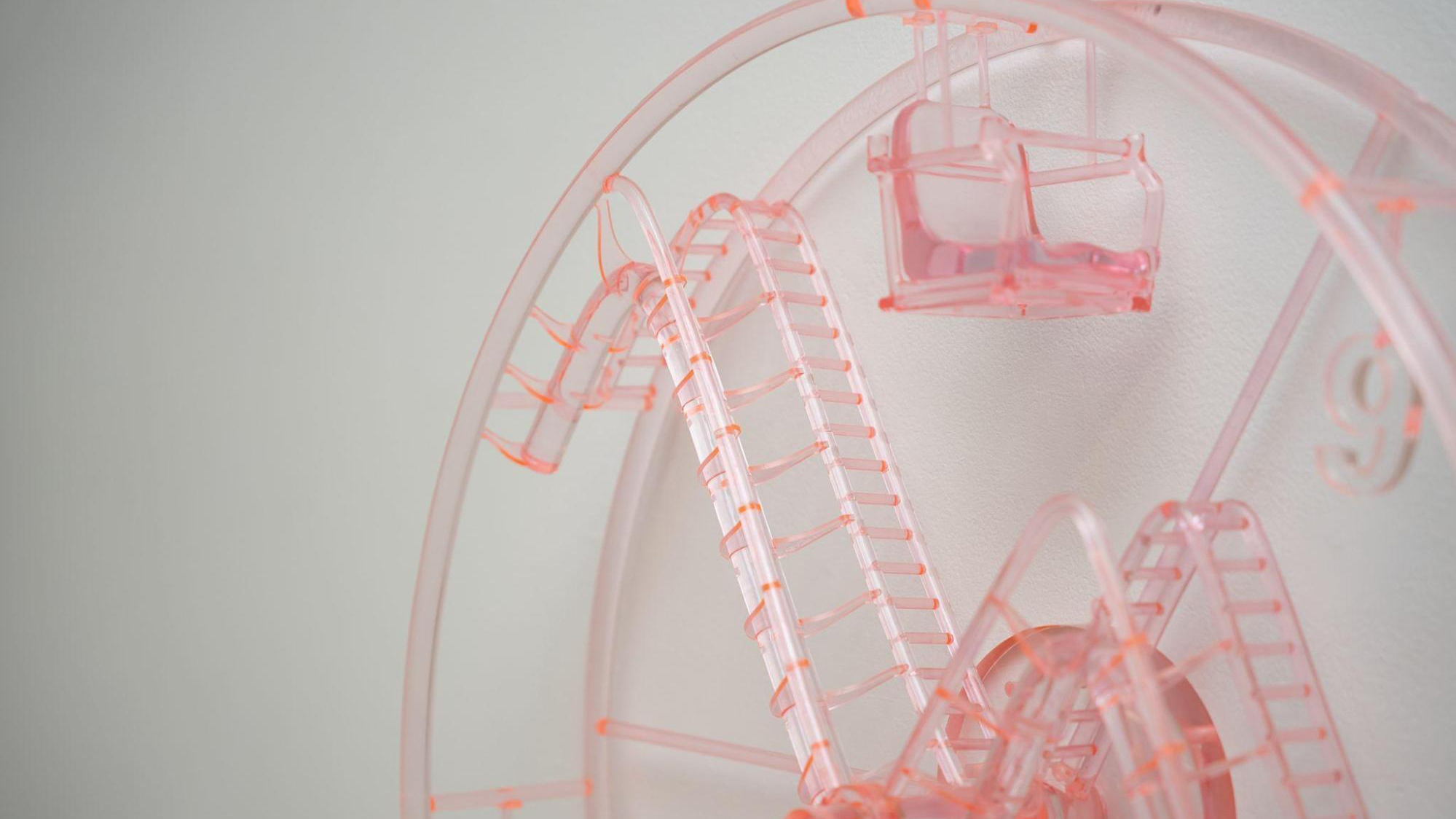
Upon entering the exhibition, you are greeted by pieces of various sizes and mediums, full of intricacies and exploration. With the pieces being smaller in size, besides the Ferris wheel, you have to get close to see the small details or the depth of space that opens into a world of its own within each piece. Within the works, Liu offers locations such as cities, darkened spaces, carnivals, and other places of transition. Places that one may find themselves when they are beginning to traverse or transition into someplace new. I appreciated that each work was either on the wall or a shelf, giving each a sense of its own place. The space around the pieces gives them an opportunity to breathe and allows viewers to look closely at one and flow seamlessly into the next. 

Continue reading “Xinyu Liu’s Fool’s Hour at Art Cake: Finding a home to Carry Onward”

Memories, Recollections and Everyday Life, Xiangjie Rebecca Wu at Latitude Gallery 

Installation Shot, A Room Rehearses its Own

Upon entering the exhibition at Latitude Gallery, you are greeted with a poem as a silent welcome, the cadence of the poem setting both the scene and the pace of the exhibition, titled A Room Rehearses its Own. In this exhibition, the paintings of Xiangjie Rebecca Wu piece together place, memory, and silence, with an impactful portrayal through both presence and absence.

Continue reading “Memories, Recollections and Everyday Life, Xiangjie Rebecca Wu at Latitude Gallery “

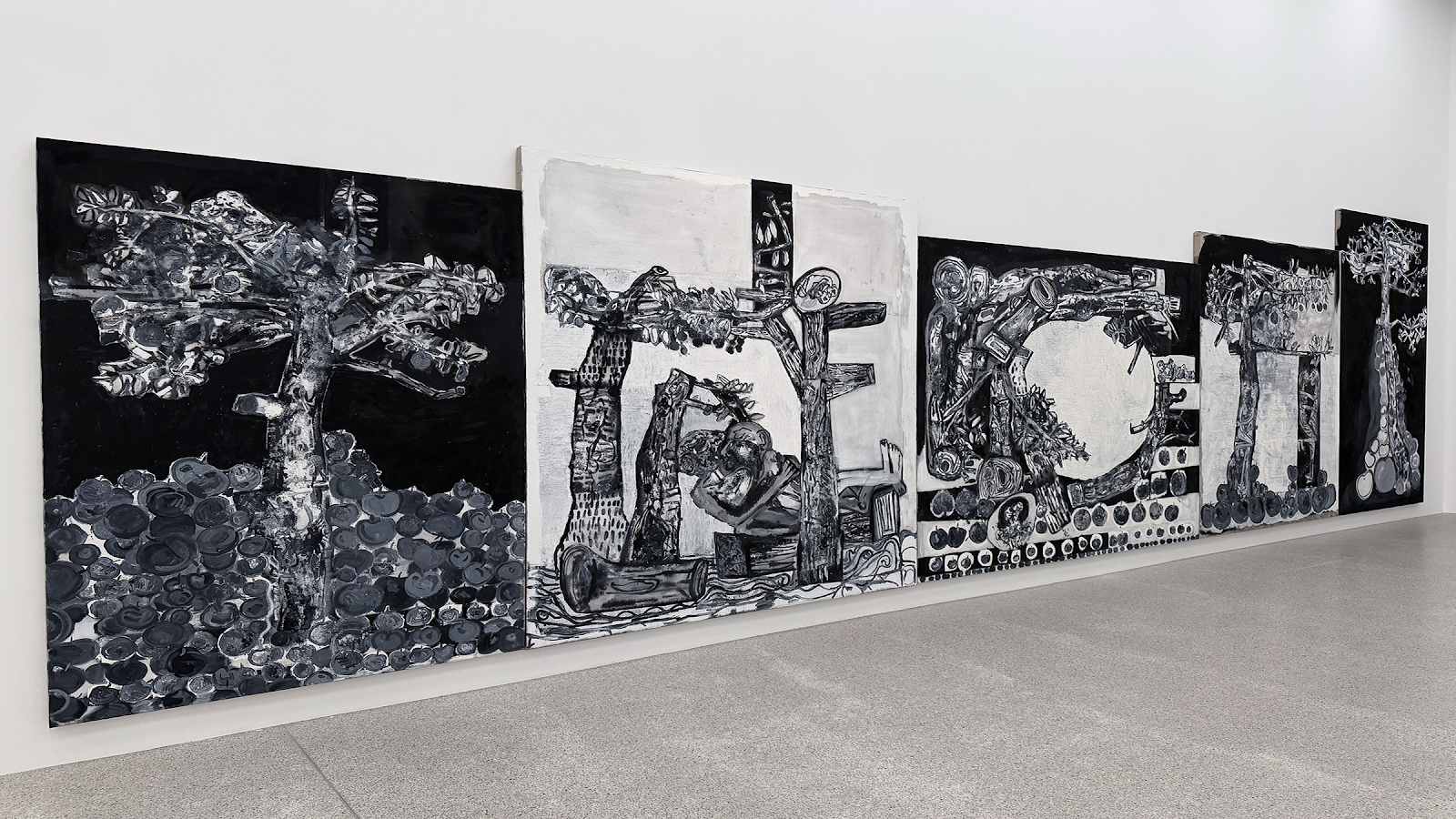
Tobias Pils: Shh at Mumok Vienna

Tobias Pils’s paintings do not give themselves up quickly. It took me two long visits to begin to grasp his extensive solo exhibition at Mumok, curated by Manuela Ammer across two floors and ten years of work. The show traces a practice rooted in personal experience and daily life, charting a shift from floor to easel painting and revealing how drawing and painting remain in constant dialogue throughout. The layout rewards sustained attention and makes the changes over time visible. I viewed the exhibition in reverse, starting with the floor of Pils’s most recent works.

Continue reading “Tobias Pils: Shh at Mumok Vienna”

Getting to the End of the Line: Sol LeWitt and Phong Bui at Craig Starr

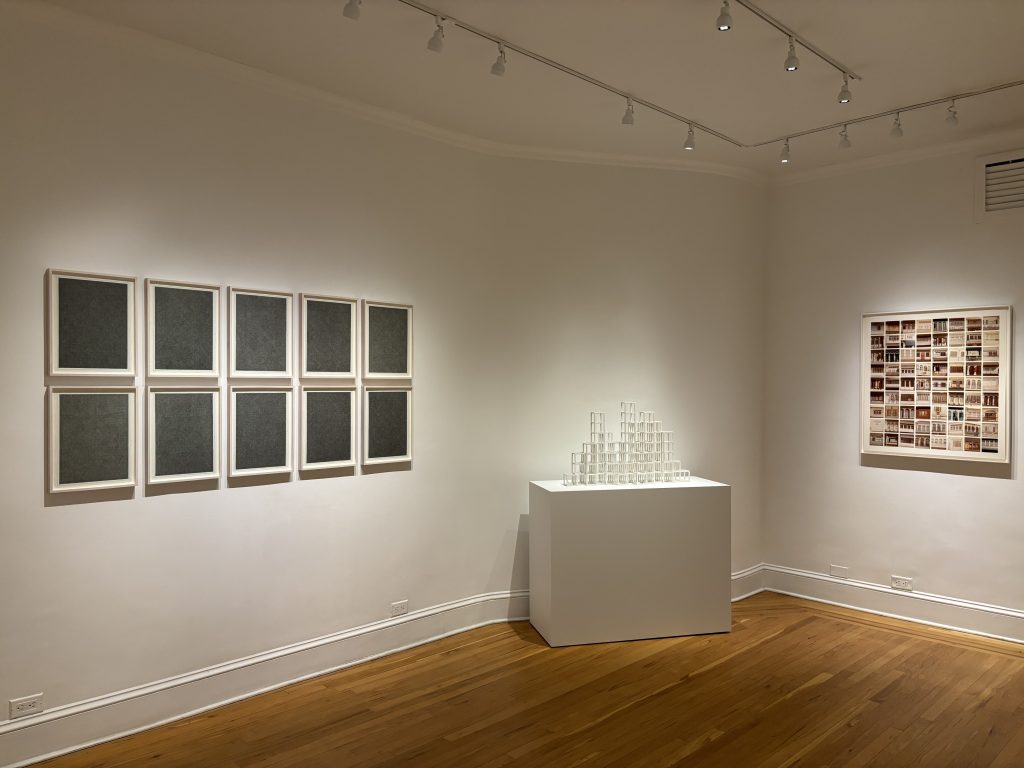
Installation View. Phong H. Bui and Sol LeWitt. Craig Starr Gallery (1)

For both Phong Bui and Sol LeWitt, the line is a democratizing gesture. The line as a line:  a mark; steering focus towards the method of an image’s creation rather than convincing the viewer of the realism of its ultimate subject.  And, at least for both of these artists, this means we begin to deal with units. With LeWitt, the unit is the geometric shape — a square, cube, or even a diagram-a nugget of information, often placed within another diagram, offering multiple levels in the narrative of the work’s process and arrangement.

Continue reading “Getting to the End of the Line: Sol LeWitt and Phong Bui at Craig Starr”