Knockdown Center, Orgy Park, CLEARING
Knockdown Center
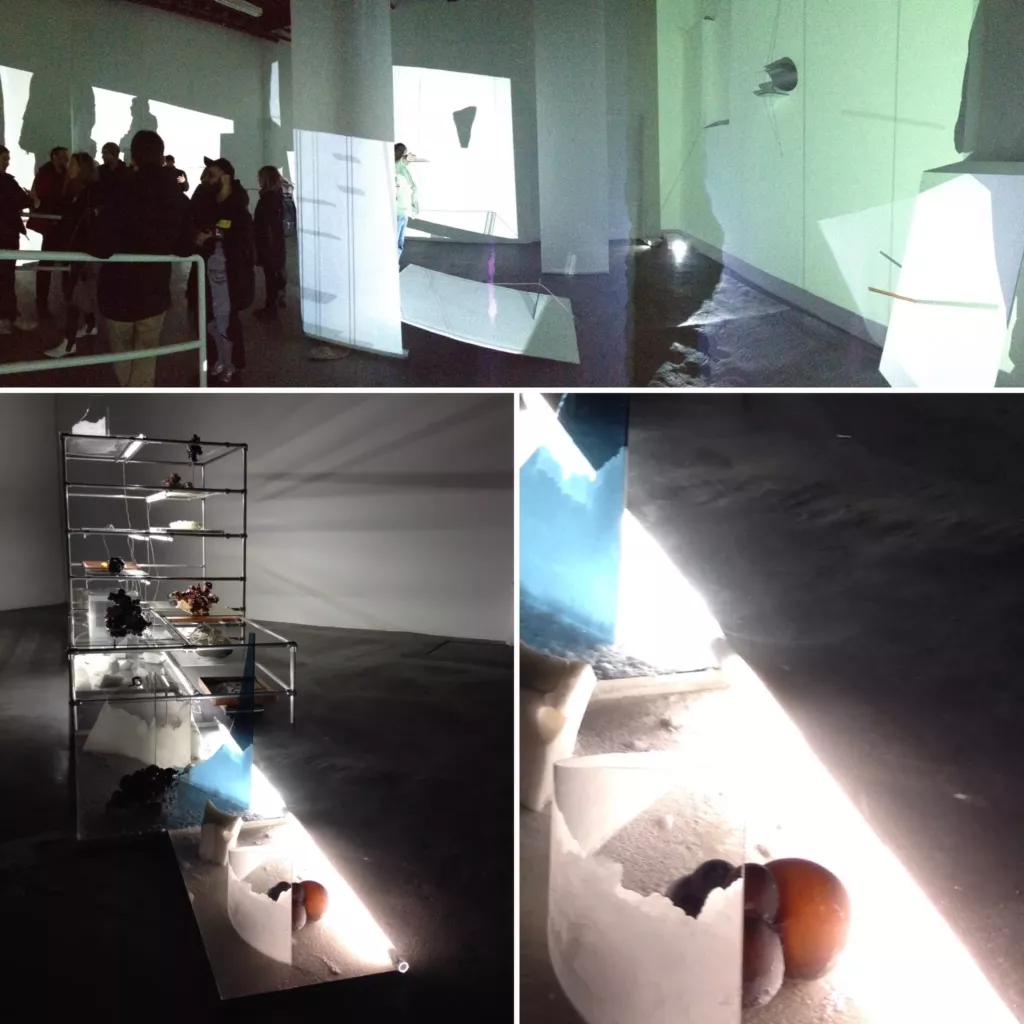
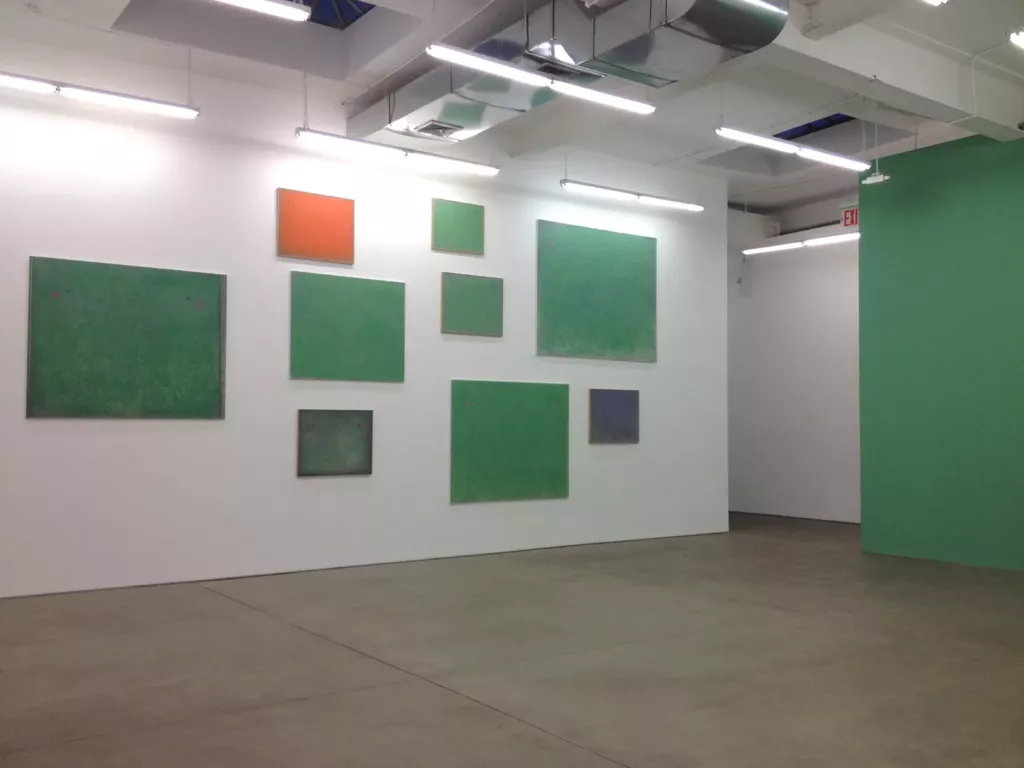
Wonderfully striking in bright luminosities, diagonal analogousness, situational room-to-room parallels, transporting suggestiveness and subtly warmed circumstantial frigidities are the two installations ‘contained,’ in a way, by “A Continuous Stream of Occurrence,” an exhibition that opened a few weeks ago at Maspeth gem The Knockdown Center .
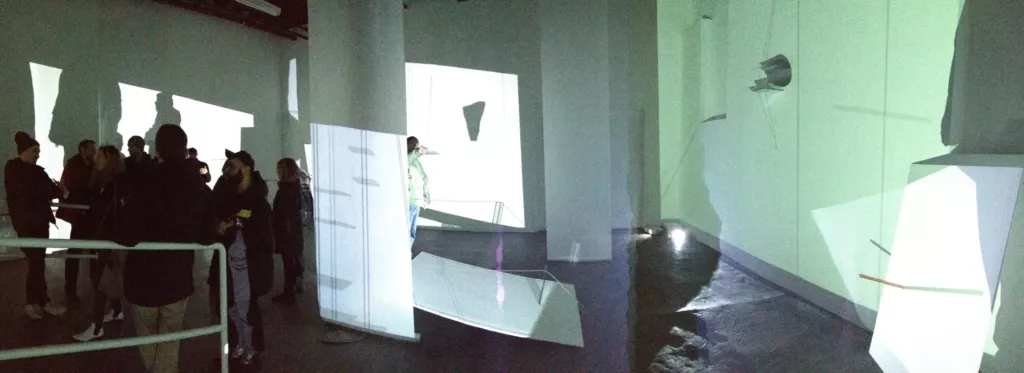
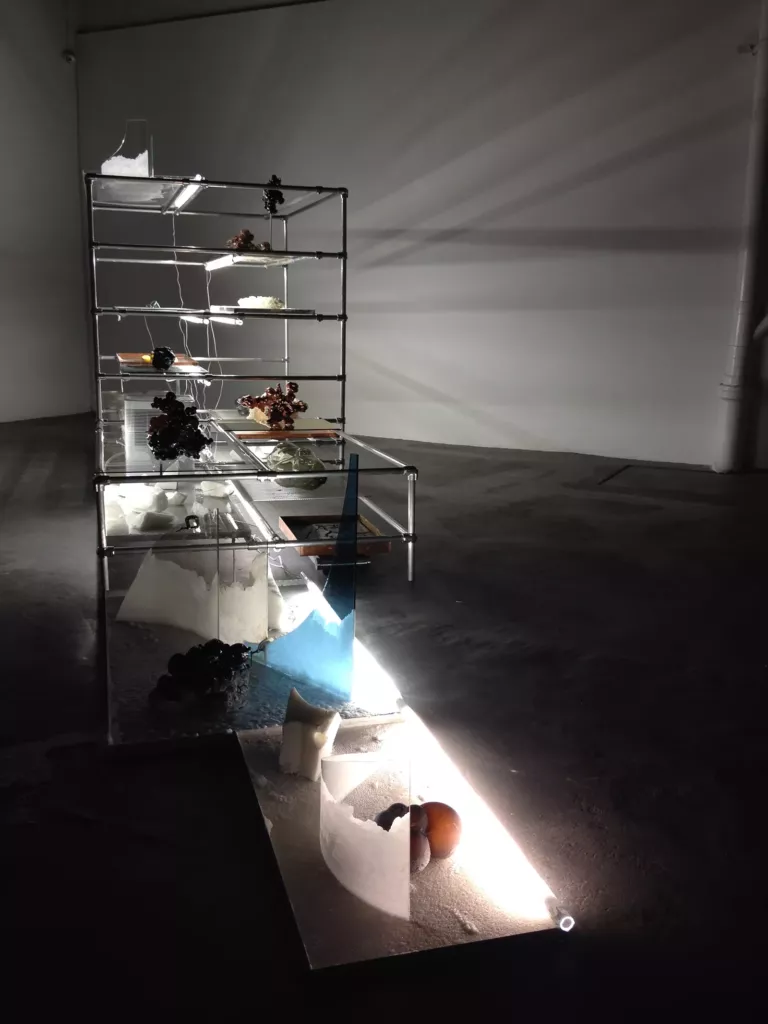
At top is Luba Drozd‘s room. It both looks and sounds like a veritable spatial knot of brilliantly site-specific polyphonia involving significant degrees of multidisciplinarity, multimateriality and strata within circumstantial strata of shadow-play. It’s a tough but fun knot to look at and into, and listen closely to, to begin to untie just how it works with totality and relative simplicity, though not in ways simplistic in the least.
Rather than necessarily site-specific or sonic, the active state of William Lamsom‘s installation in the adjacent gallery is like that of a shimmering, gradually phase-changing antechamber to Drozd’s comparative cavern; they scan instantly as visually coherent in many satisfying and still individualizable ways. Entering Lamsom’s room alone is like stumbling into an abandoned research lab in a yearless future. Seeing the rooms in tandem is like being dropped in some nicely mysterious nook on Krypton and having no idea why.
Great installations, great show. Curated by a duo going by the ‘name’ XP (@xaviacarin & @parkcmyers).
Orgy Park
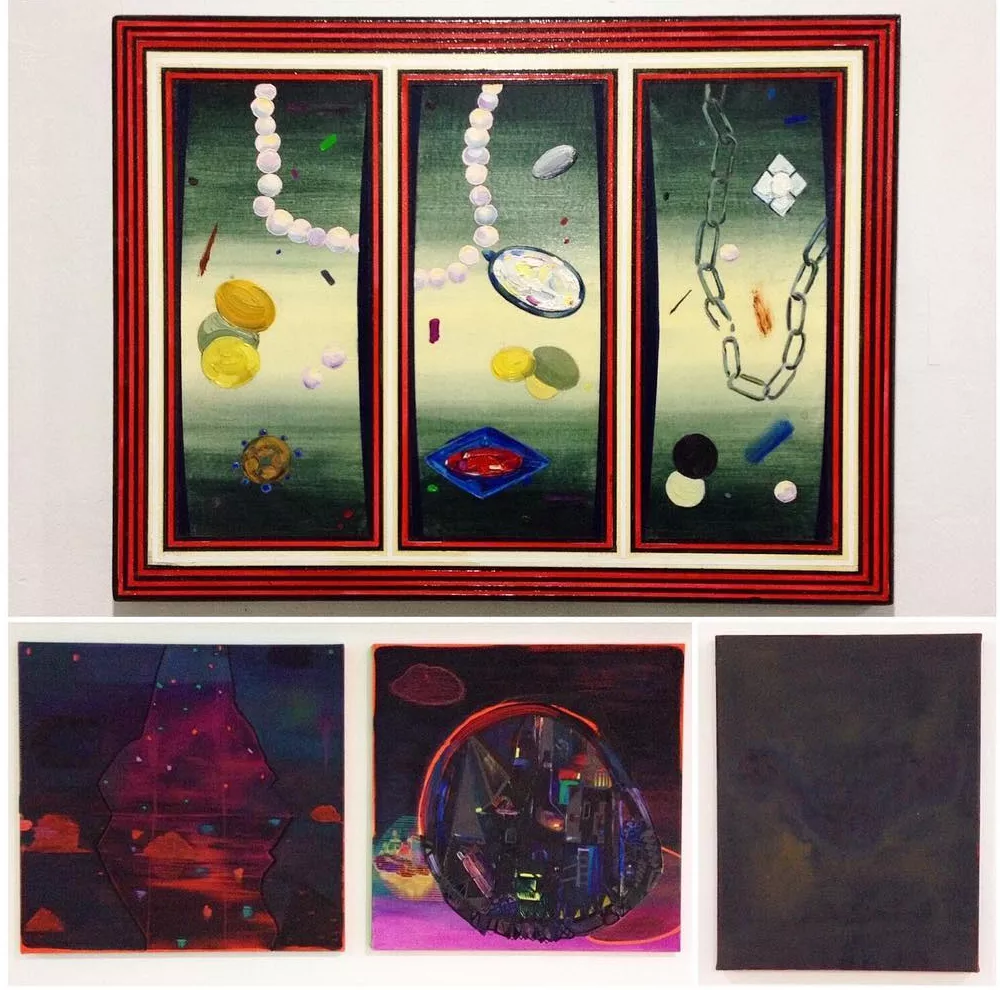
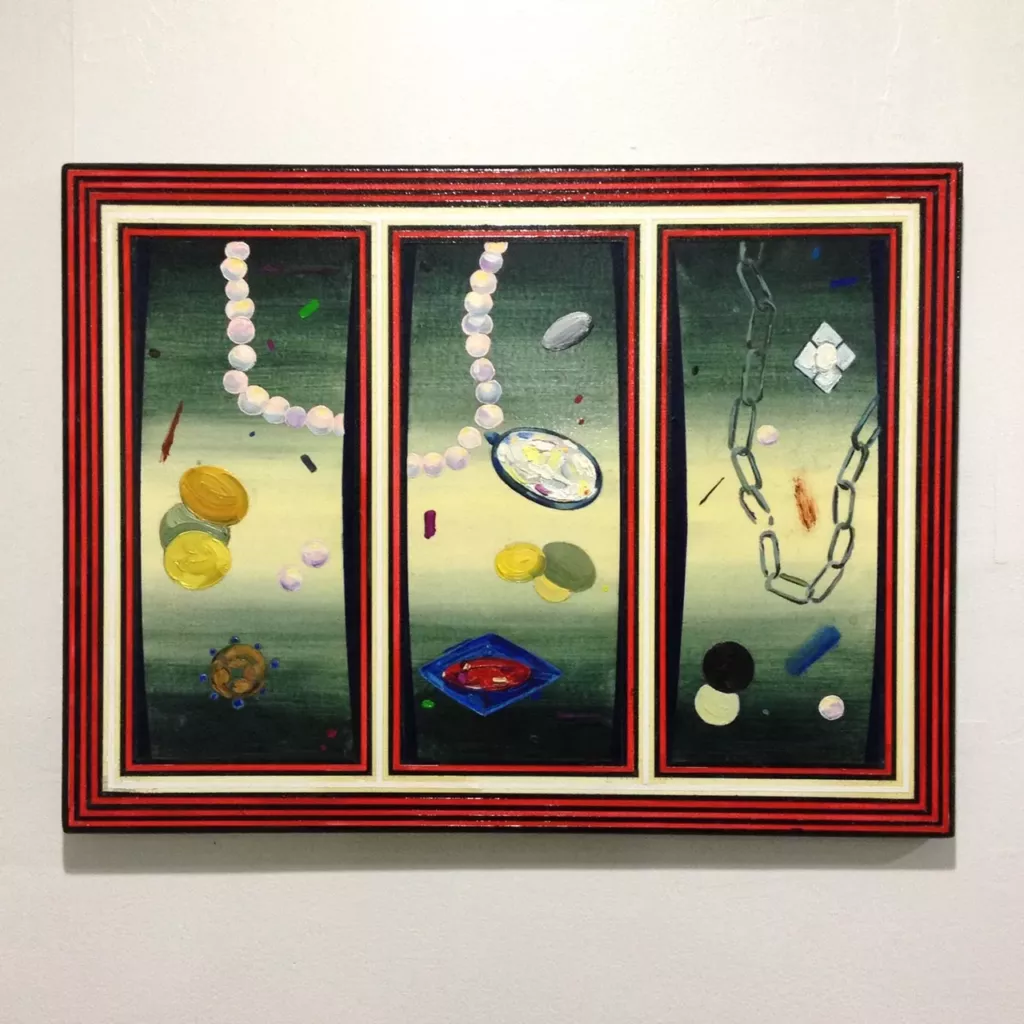
Surreal, painstakingly painted, carefully internally contained, the three vertical registers in Luke O’Halloran‘s appear unified by unchained melodies of time, money and atmospherics.
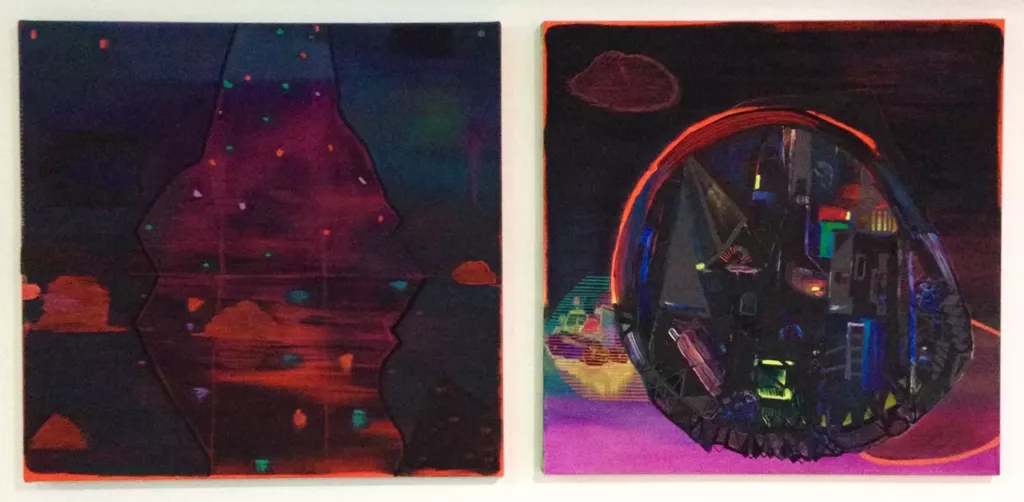
In Annie Ewaskio‘s two paintings featured here, meanwhile, we find interruptions in ruptured darknesses — dispersed among many another mysterious presence.
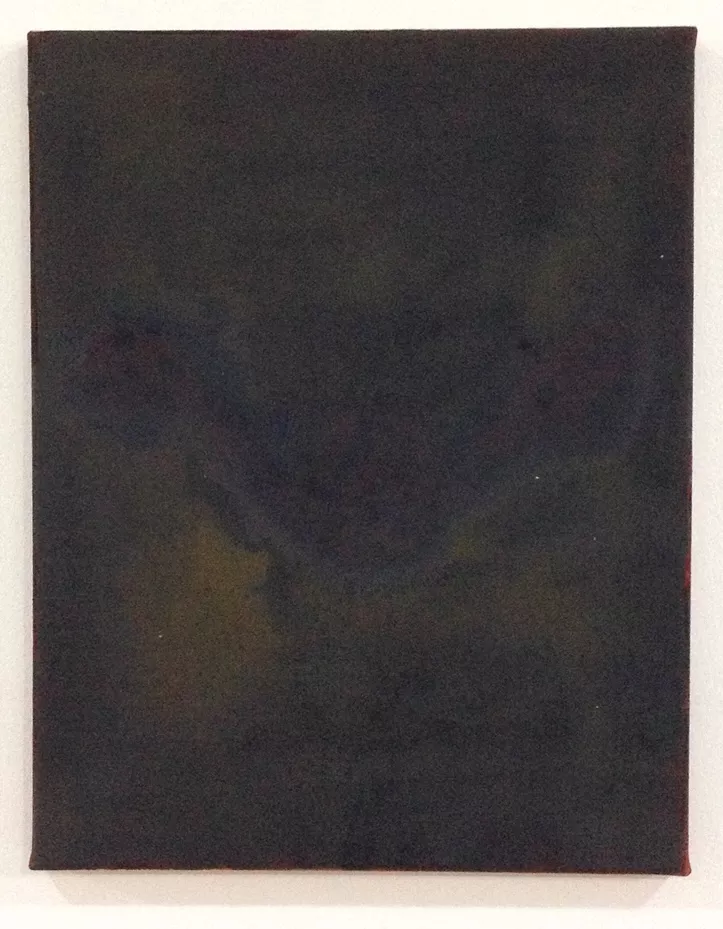
A 180-degree turn in the space would have one peering into some yet deeper, yet darker, ostensibly more fathomless, more ethereal mysteries in the works by Vlad Smolkin . One in particular almost certainly features, in my eyes, a looming demon — or looming demons — on a moonless night.
This is just a sampling of the many curiosity-stoking works in “Late Winter,” a big group show at Orgy Park . It closed a week or so ago, but ’twas quite a good one. Curated by Zuriel Waters and Steve Mykietyn .
CLEARING
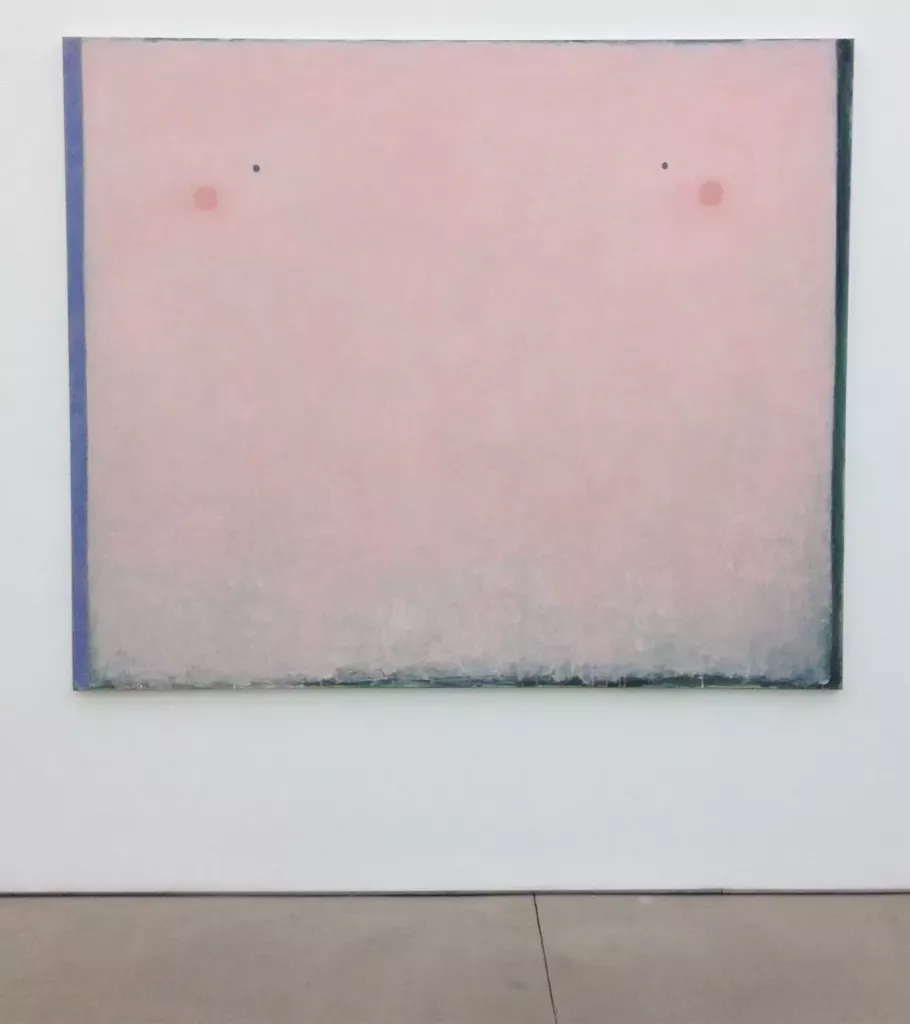
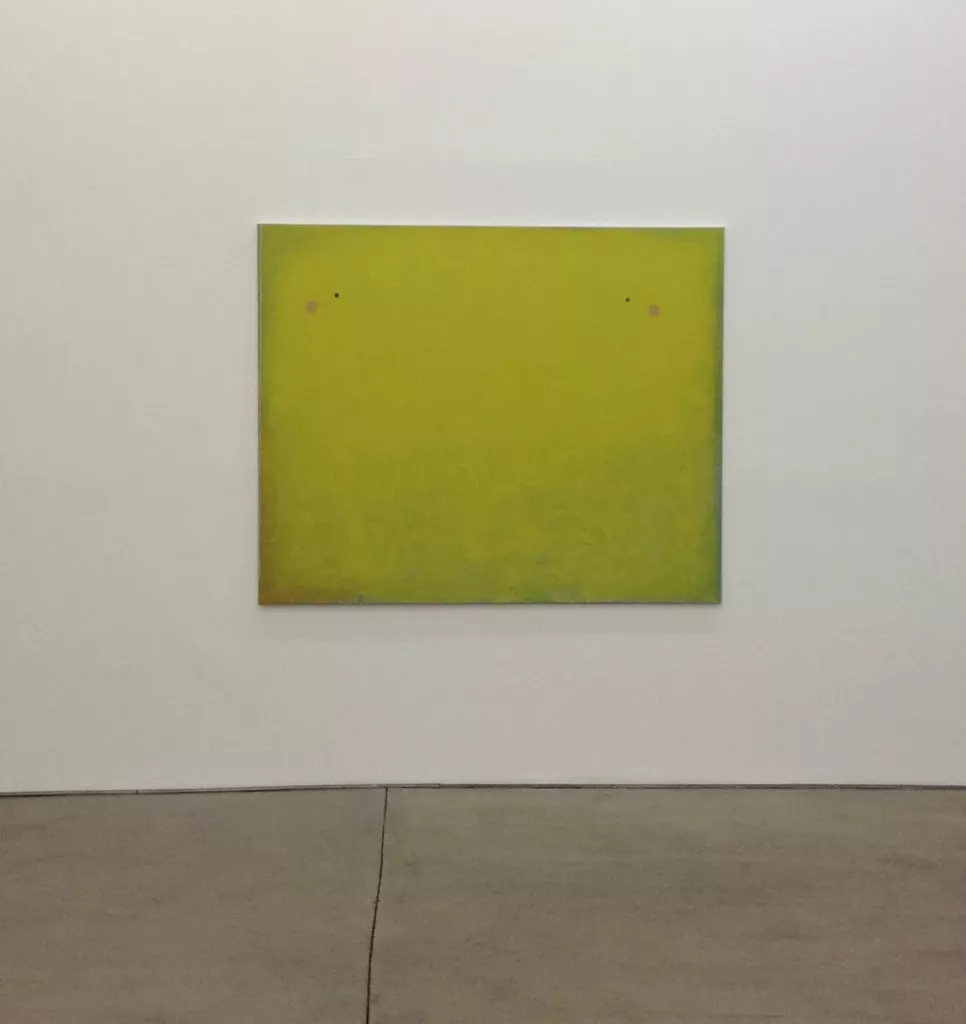
Another show that closed a week or so ago, and which also operated in splendidly curiosity-stoking ways, was “Time’s Wan Wave,” a winning two-room spread of new, substantially whispery but also rather visually deep paintings by Loïc Raguénès.
Very subtle, very discreet are the charms in Raguénès’s very subtly, very discreetly colorful, vibrant works. His paintings are almost coy. Indeed, it might well be their very coyness that makes it so difficult to look away from them.
Alas, all such traits also make the works awfully difficult to photograph in any way that renders much of how surprisingly they become arresting. So you’re forgiven if you can’t quite discern from images just how cagily captivating they are when viewed in the real. In the one above, it’s all about the abundantly pink-muffled murmur of the buttergrass upgrowth that peeks out at the bottom of the bottom-most register. The visual hold of its faint ‘hhmuuhrrmuuhrr’-like sound-look is a treat from close up and less-so, an additionally interesting note to consider given the relative ‘distancing’ implied by its title, “Loin du château bleu.”
This very fine show at CLEARING proved to be one of my favorite of the many shows I’ve seen there to date. Its gradual allure was gradually breathtaking.
It was a joy to spend some quiet moments with “Time’s Wan Wave” just before its pale curtains fell a few weeks ago.
The occasional “Nota Bene with @postuccio” pieces by Paul D’Agostino are modified versions of selected capsule reviews and other art notes he posts on Instagram. Follow him there for other posts as well: @postuccio.
Paul D’Agostino, Ph.D. is an artist, writer, translator and curator based in Brooklyn, New York. More information about him is available here, and you can find him as @postuccio on Instagram and Twitter.