In Dialogue
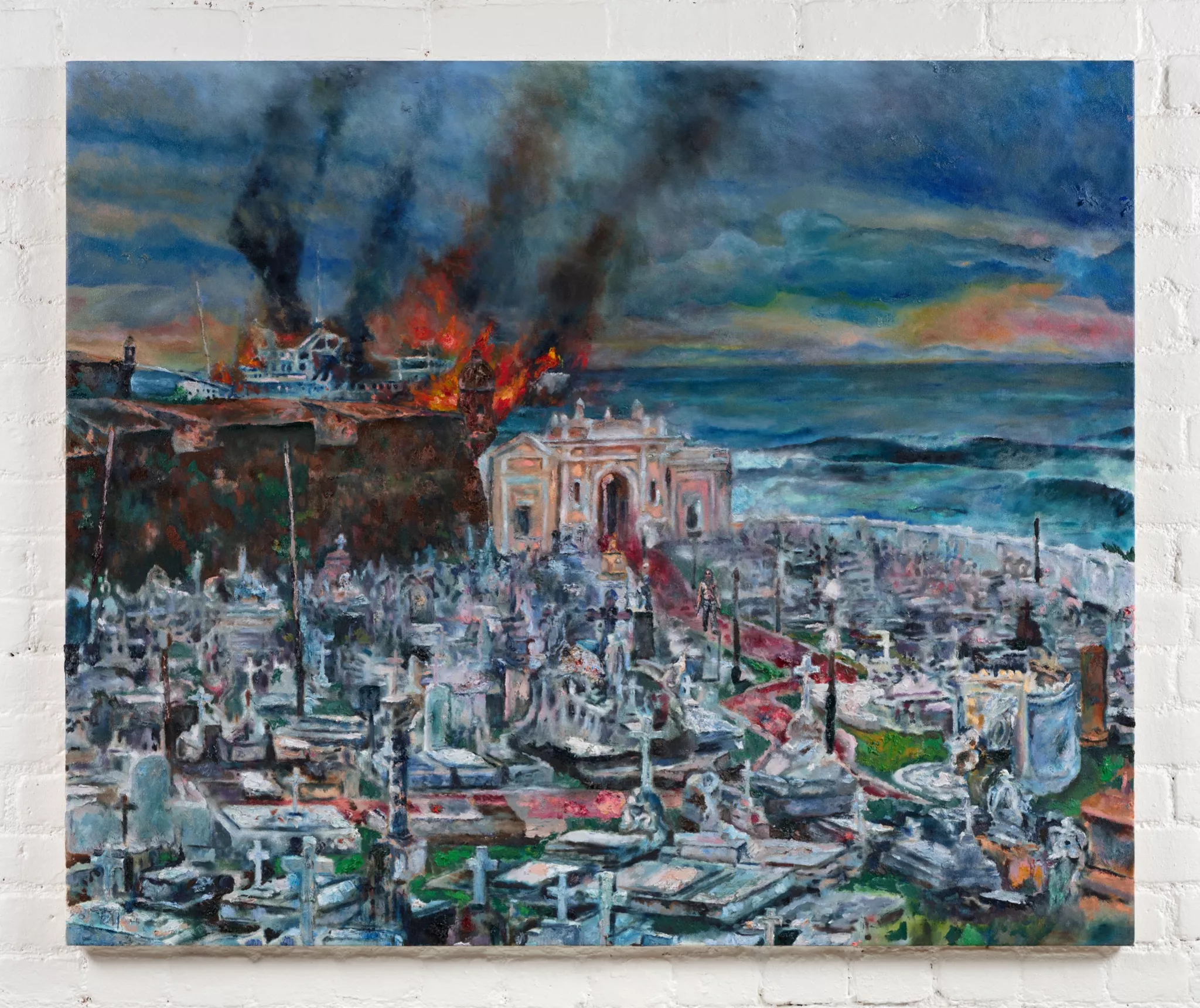
Jonathan Torres is a Puerto Rican artist born and raised in San Juan, Puerto Rico. He is based in Brooklyn, NY since 2010 and was recently a resident at the Sharpe Walentas Studio Program in DUMBO. In his paintings and sculptures a sense of otherworldliness and living in the diaspora recur. For over 15 years, Torres’ practice has grown from exploring different emotional and mental stages that have affected the way people interact with each other throughout various stages of life—crisis and anxiety with a bent of dark humor that have been crucial to the development of Torres’ imagery.
What is the genesis of La Batea (2022), and what can you tell us about the process of making it?
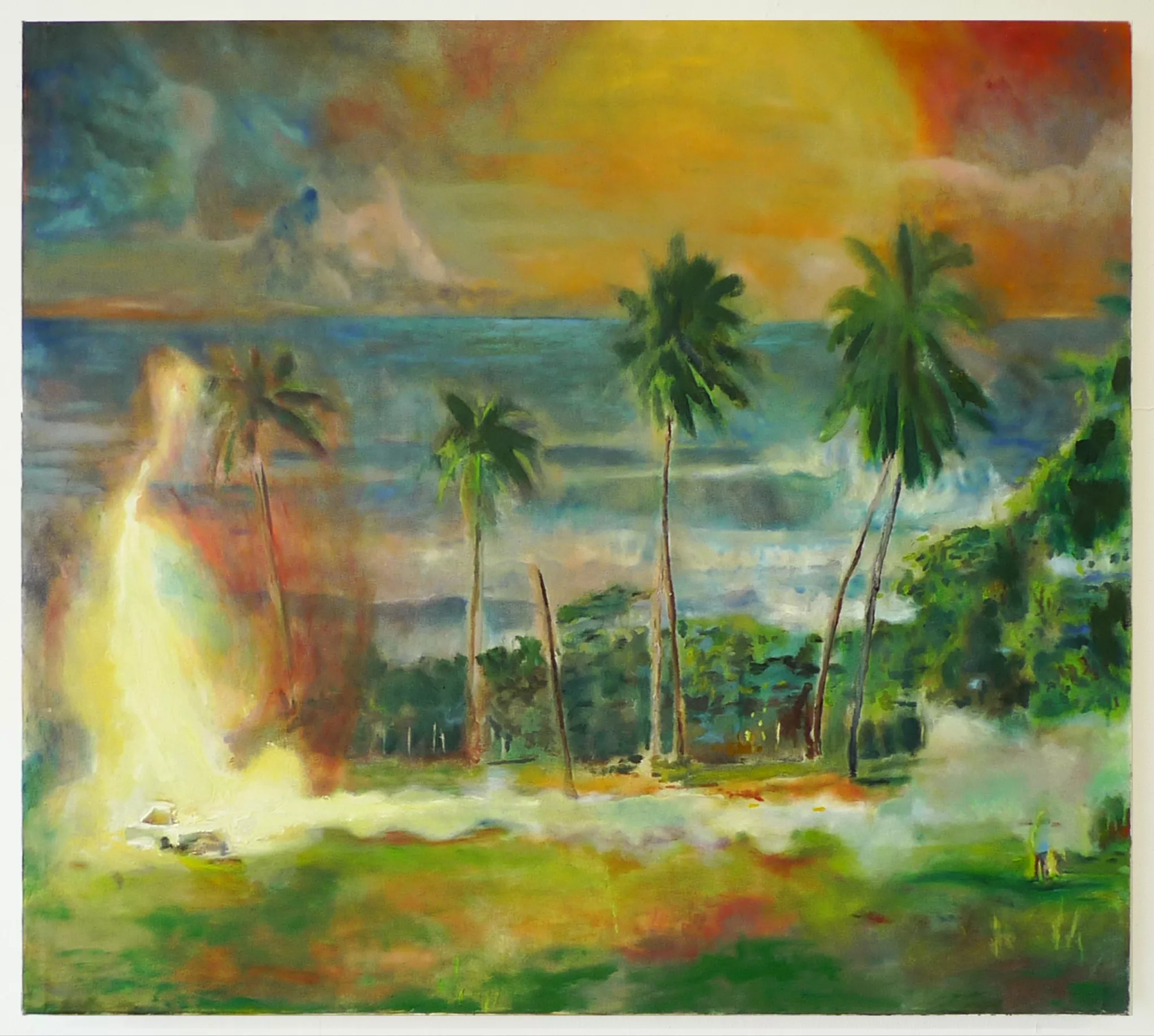
Many of the landscapes I paint are significant places. The painting of La Batea and its prequel, El Sube y Baja, are great examples. Both depict the same place from different angles.
The cemetery is on the coastal tip of Old San Juan, a small colonial city walled by the Castillo del Morro. Nestled between the wall and the sea are the cemetery and La Barriada La Perla. La Perla was built at the end of the 19th century to house formerly enslaved people, and over time, it has become a lower-class community.
I studied in Old San Juan at the Universidad de Artes Plásticas (which used to be an old asylum).The school is on a hill that overlooks the cemetery. I used to go to the graveyard to draw the funeral sculptures that were my first observation exercise drawings. I also frequently surfed el Sube y Baja, the beach adjacent to the cemetery and named by the locals.
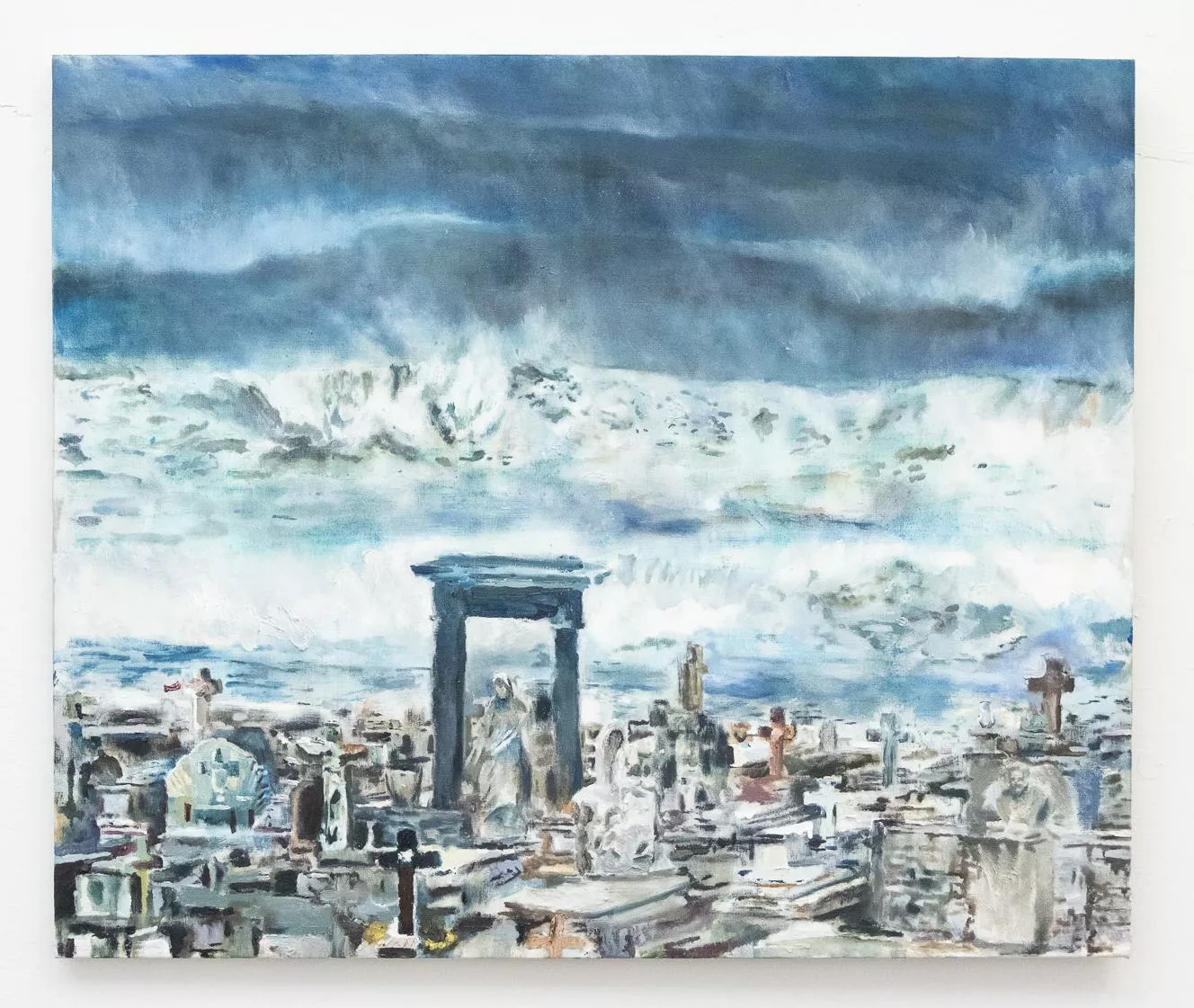
The interesting thing about this series is the stimulus that it has created for viewers, especially in Puerto Rico. This image echoes the anger and animosity towards an all-too-familiar contemporary state of sociopolitical nightmares created by a rotten government, capitalist appetite, and the unrestrained egos and agendas of the modern world. The burning ship alludes to the constant tension between the locals and foreign interests. It makes a commentary on access as well as class and gentrification.
Personally, this series served as a way for me to process anger and death. The image of the Sube y Baja refers to a photo taken by one of my best friends who passed away several years ago, the same year my grandmother died. The narrative progress of the painting was like a conversation with my deceased friend. That’s where the idea of the burning cruise ship came from as an inside joke. We used to surf that beach frequently, and when the waves got big offshore, we would ride the peak of the left wave that came from in front of La Batea.
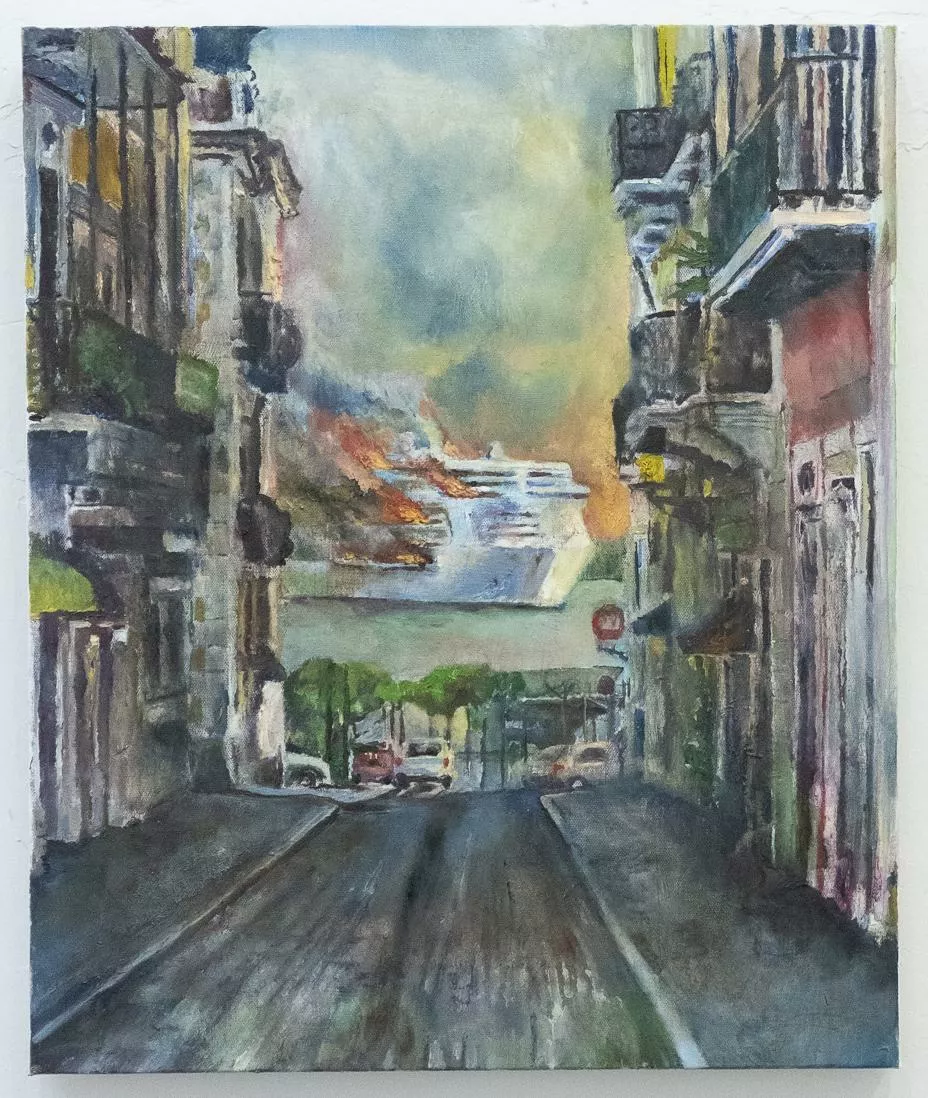
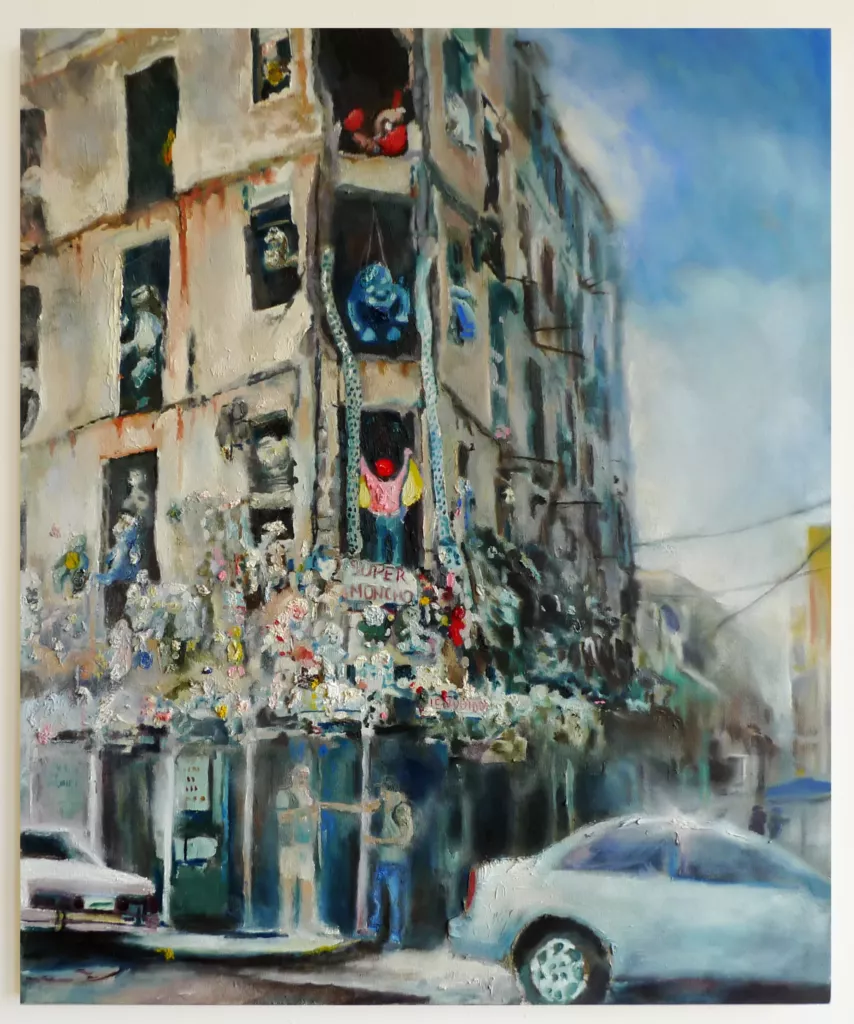
I use my own memories and traumas, while also inherently commenting on the collective and the sociopolitical climate. I want the viewer to be absorbed in this world that intertwines anxiety and beauty. In this way, the painting opens different timeless conversations and ends up having a life of its own, independent of the artist. Being honest is essential for connecting with the viewer because, in the end, we are woven from the same cloth.
In both your painting and sculpture, I see cues from Baroque, along with monsters and disasters, including climate-related –Can you elaborate on your approach to the different forms and what is the relationship between them in expressing your visual world?
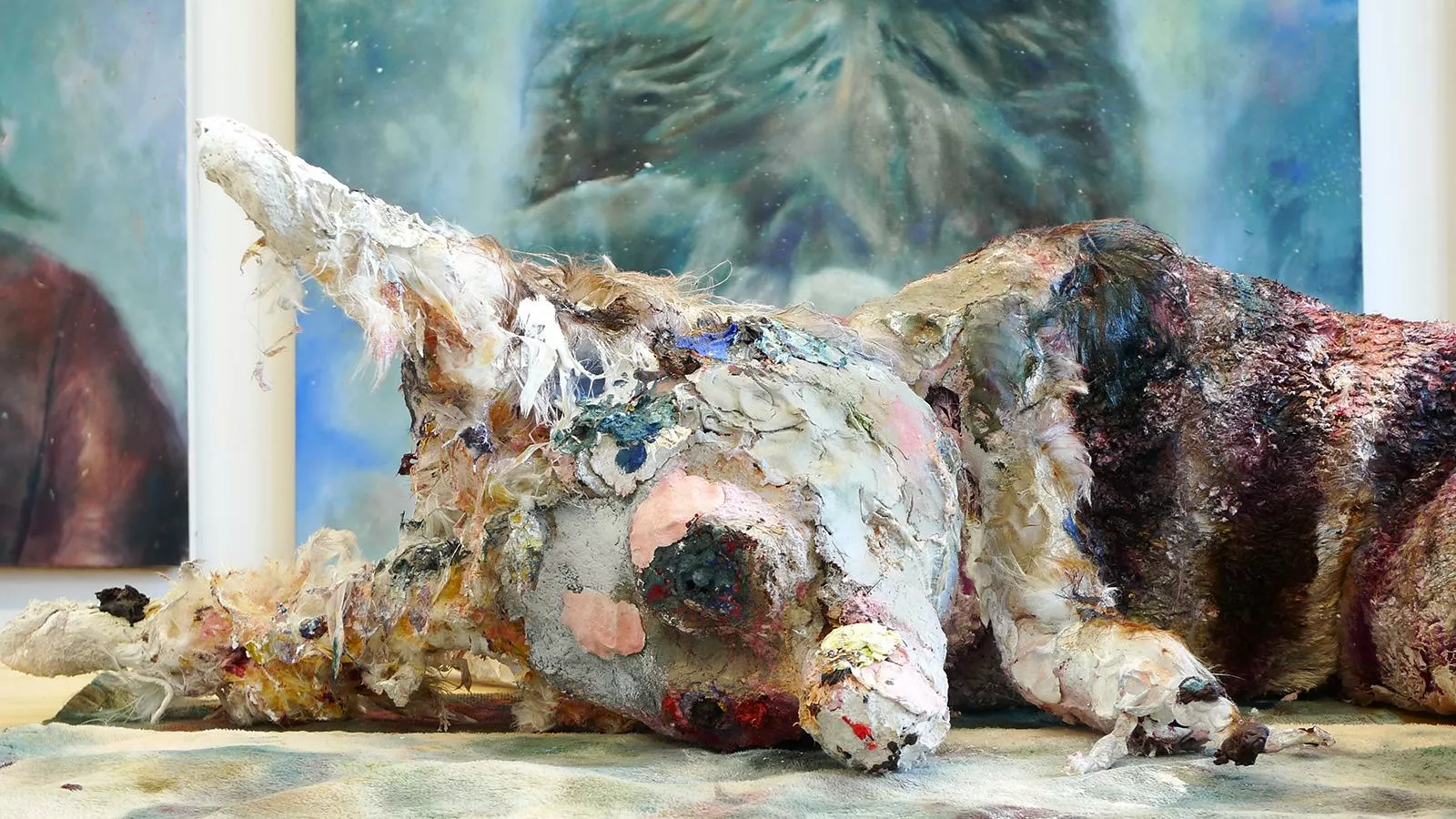
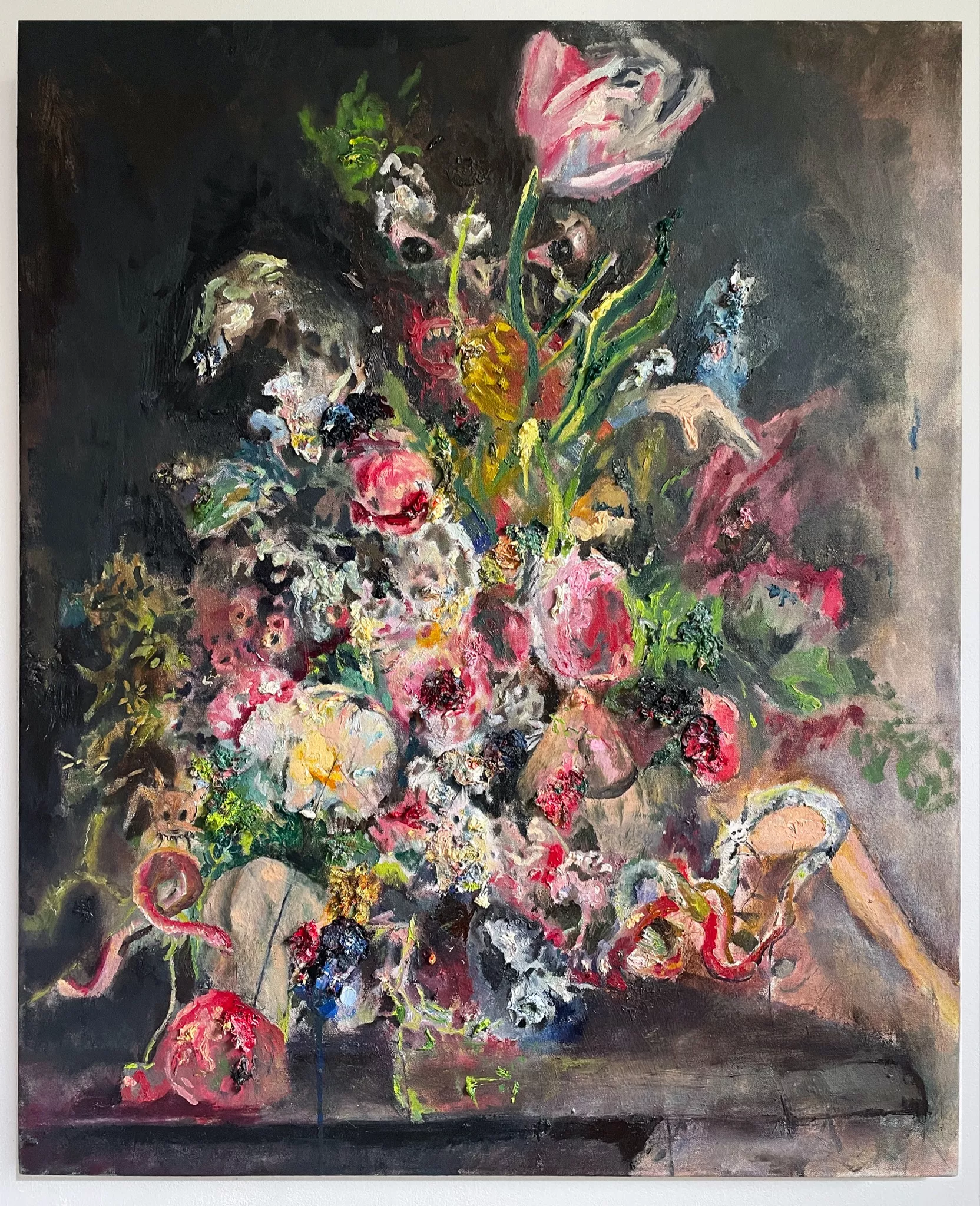
I grew up in a conservative Catholic culture, surrounded by baroque-looking kitsch decor. As a child seeing the three-dimensional representation of a naked crucified rotten body bleeding to death on the cross made me feel like I was in a horror movie environment, Exorcist type. I used that aesthetic as a support to create a visual narrative. I have always tried to build a language informed by experience and memory in baroque tales. I consider that my art has an autobiographical reference but with a portal that is parallel to our reality; from there characters with supernatural characteristics appear, and they are difficult to identify. These characters are vulnerable, ugly figures that resemble both monsters and humans, and they are sculpted as much as they are painted. My intention is to extract these characters three-dimensionally into our real space so that the painting becomes their environment.
What are you working on these days?
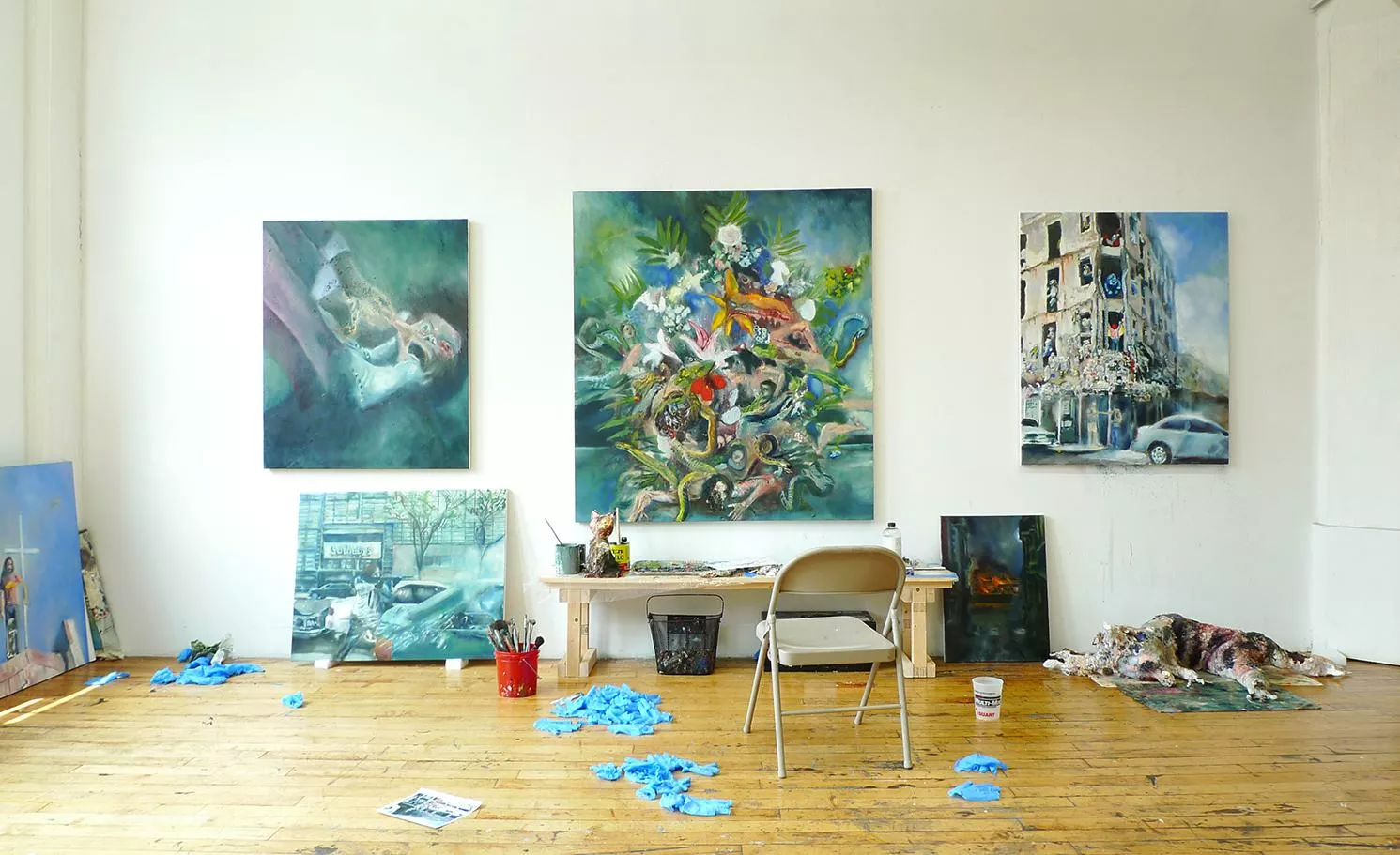
I am working on a series of landscape paintings, portraits, still lifes, and mixed media sculptures. This body of work depicts fictional, mythological, and real events in recognizable spaces between Puerto Rico and New York.
The landscape series is called Action Painting. It is a documentation of a literal action, not the physical act of painting. It is a humorous representational reaction taking the terminology of the abstract expressionism technique out of context. The series presents real places which I invade with fictional scenes that are not far from our reality. An altered reality that reflects repressed fantasies with a veil of premonition.
The still lifes offer an apparent respite in the midst of the chaos, but it is only a mirage since they hide the chaos within themselves. They are deceptive, just like the perfect tourist images. In the portraits, I am deeply into depicting distorted faces and am interested in human behavior, specifically states of mind like surviving, cowering, and shrinking.
About the artist: Jonathan Torres was born in San Juan, Puerto Rico in 1983, received his BFA in 2009 from the Escuela de Artes Plásticas, San Juan, and his MFA from Brooklyn College in 2012 Currently Torres is a resident at Sharpe-Walentas Studio Program (NY, 2022 -23). Nominee of the Joan Mitchell Foundation grant, Torres was selected for the Biennale Mercosul (Brazil 2016), won the Charles G. Shaw Award (NY, 2012) and the Arcos Dorados Award (Argentina, 2011). Torres has been exhibiting in solo and group shows between New York and Puerto Rico for over ten years. His work has been featured in Flash Art, Beautiful/Decay, and Art Observed, among other publications. Torres lives and works in Brooklyn, NY and his work belongs to important collections such as the Museum of Fine Art, Boston and Museo Contemporáneo de Puerto Rico.