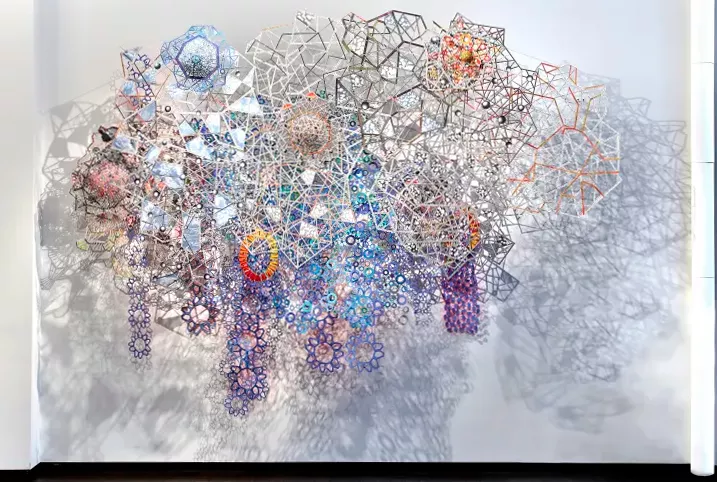
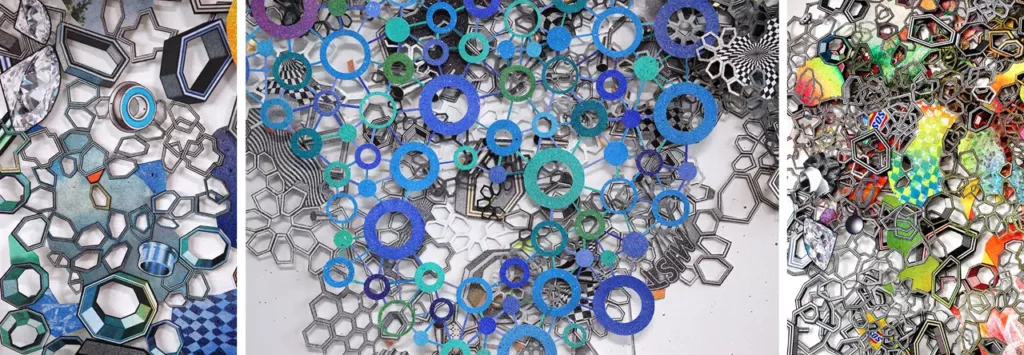
Nancy Baker’s art is colorful and bright, with filigree shapes that fuse, multiply and pulse outward in vibrant, sweeping waves. Individually the panels seem molecular and scientific; layered together they suggest vast networks and digital flow, yet clearly are the work of an artist’s hand. The eye zooms in and picks out familiar details–a candy wrapper, a takeout tray–then moves out again to appreciate the larger whole.
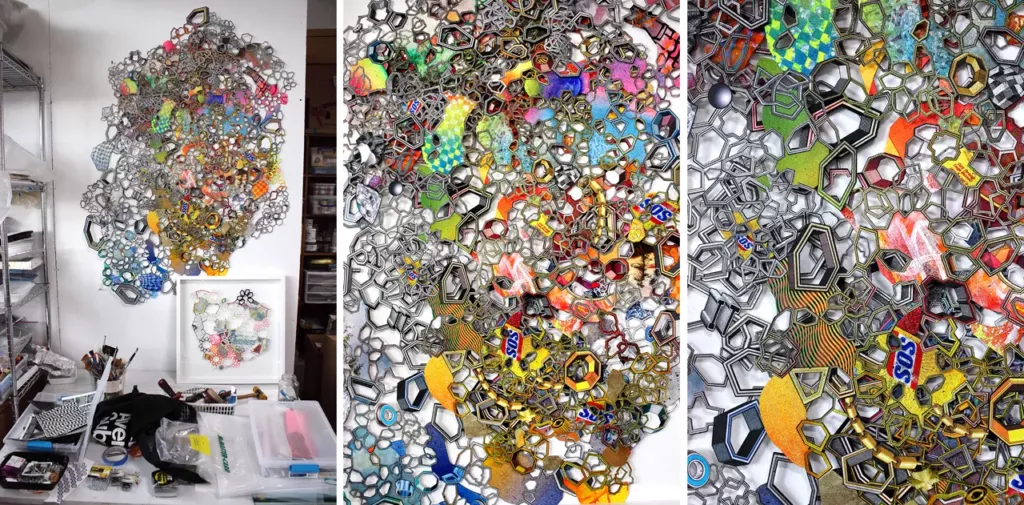
“They have to work on a macro and micro level,” Baker said, and whether in her Brooklyn studio or gallery space, they do.
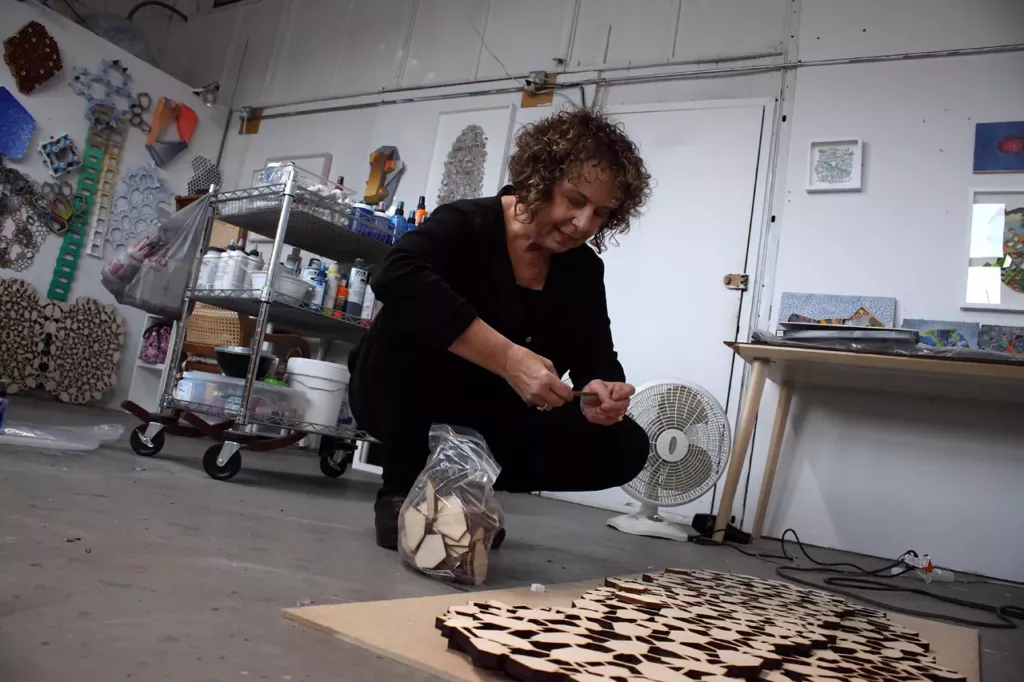
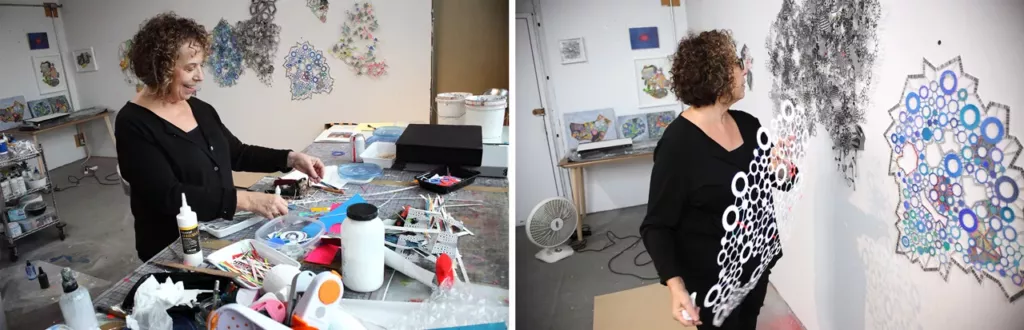
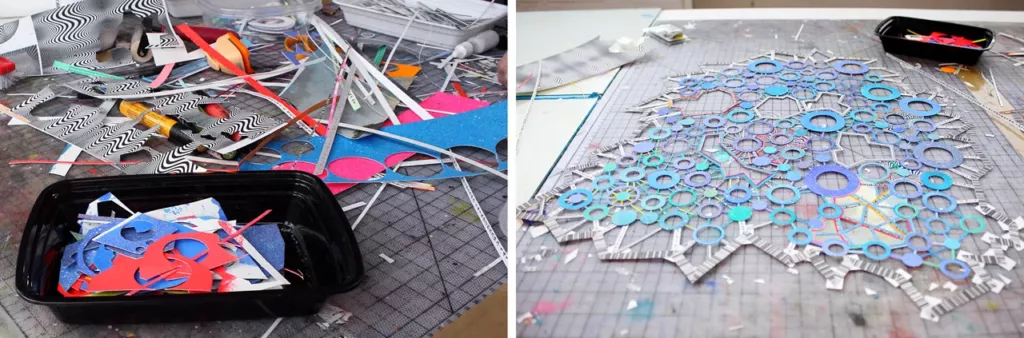
Nancy Baker is an installation artist whose unique and varied work has been exhibited widely. In 2018, there were solo shows at the Odetta Gallery and The Hunterdon Museums in NJ. A large-scale installation was recently on view at the Pen + Brush, and she is currently part of “Particulate Matter” at Project: ARTspace in Manhattan. A self-professed “nut about detail,” Baker assembles panels from a wide variety of materials that include, but are not limited to, digital printout, laser cut wood, consumer packaging, paper, Mylar, glitter, and paint. Preparation in the studio is often joined with a sense of performance when individual panels are layered into larger pieces on the spot for gallery shows. It is one of many dichotomies embraced by her work.
Creativity runs in Baker’s family. Her mother was an Abstract Expressionist painter, connected with the 10th Street gallery scene, and her father was an avid photographer who explored the many neighborhoods of New York City and Long Island with his camera.
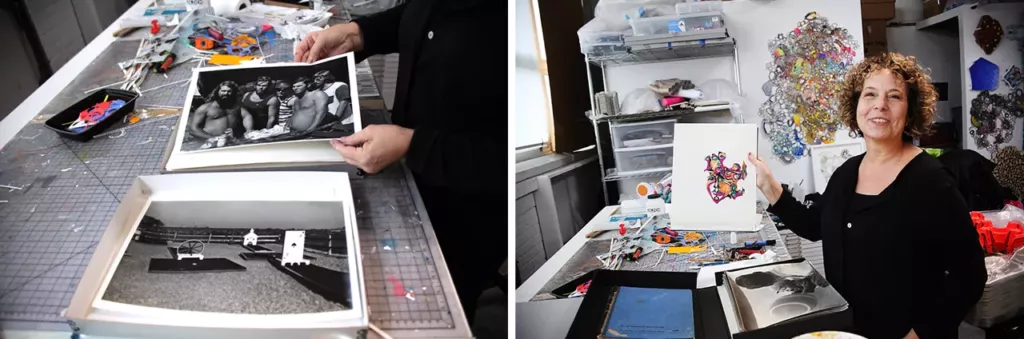
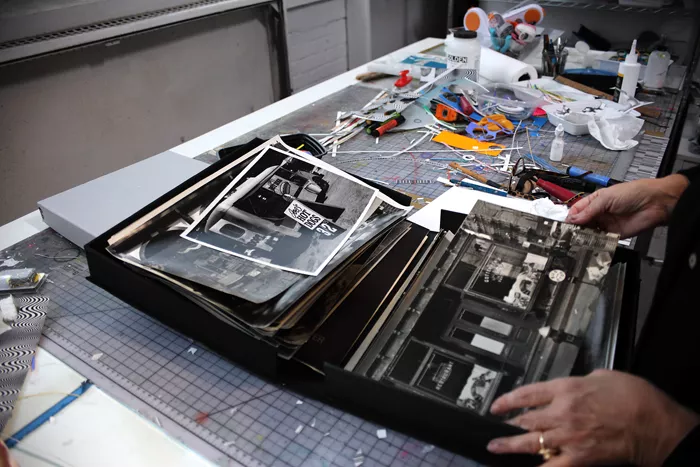
Baker believes that artists are “sieves,” taking in and expressing the fears and issues of their time, and with pieces titled “Orange 1st Amendment” and “19th Amendment,” it’s clear that she is politically attuned. She is also aware of science, the digital space, and the growing complexity and connectivity of the world in general.
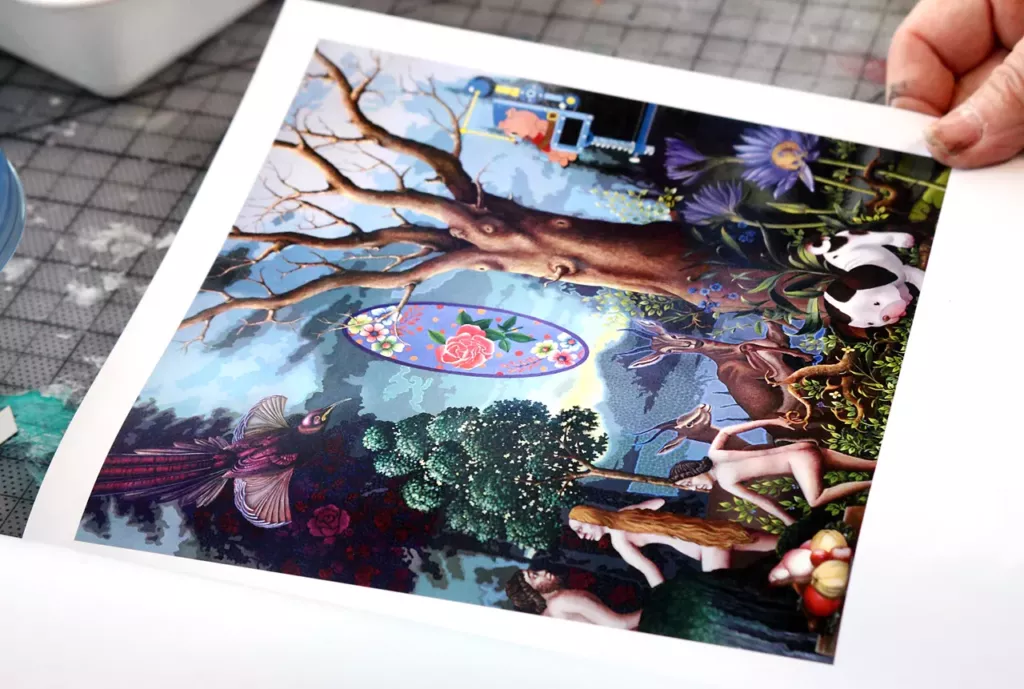
Baker has a BFA from the School of Visual Arts and started out as a painter. There were shows and success, but at a certain point, painting didn’t seem to fit with what she was trying to say. Her work began to move beyond the flat picture plane, acquired sculptural qualities, and started to incorporate a variety of components, often borrowed from consumer culture.
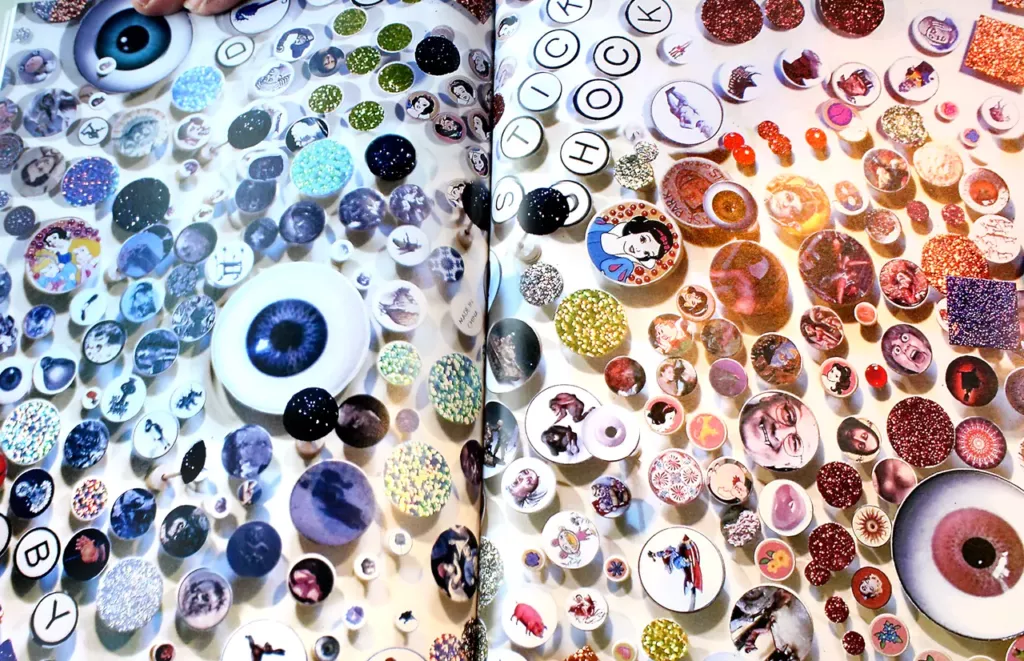
“There’s something about these things that are mass-produced and cheap,” she said. Items that are overrunning and degrading our world, but when repurposed, can comment on it.
It is fitting that her Brooklyn studio has a wide bank of windows that look out over the city, a city that grows taller every day, dividing like our country, into starkly etched halves of rich and poor. Baker worries about the future of culture in a place where artists struggle just to hold on. And about a country that she, like so many others, feel is heading the wrong way, with freedoms and fundamental rights under attack.
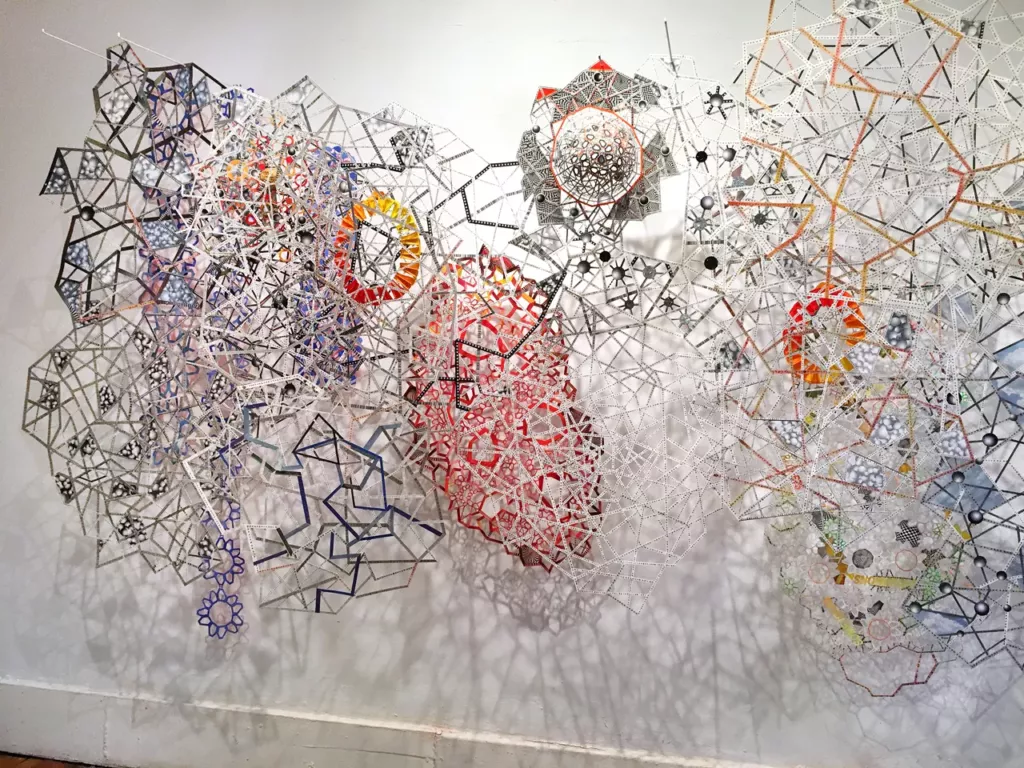
In “Shredded Cold Victory,” assembled for the Trill Matrix exhibit at The Clemente, Baker minced bits of the Constitution and sent them out over a tracery that felt like a real-time map of election night returns. In it the medium was the message, America’s lofty ideals reduced to sound bites for short attention spans and quick send, threading over networks that have become more important than the ideas they carry.
Baker’s pieces seem powered by a personal geometry, yet are not inhibited by it. Hexagons, pentagons, circles and squares join and multiply exuberantly and asymmetrically into open space. Neat, confining borders do not exist. Some sections are monochromatic, others burst into vibrant color. There is a hint of Pop Art, but they are clearly of the digital age and comment on it. Provoking thought, they also elicit a sense of wonder and fun.
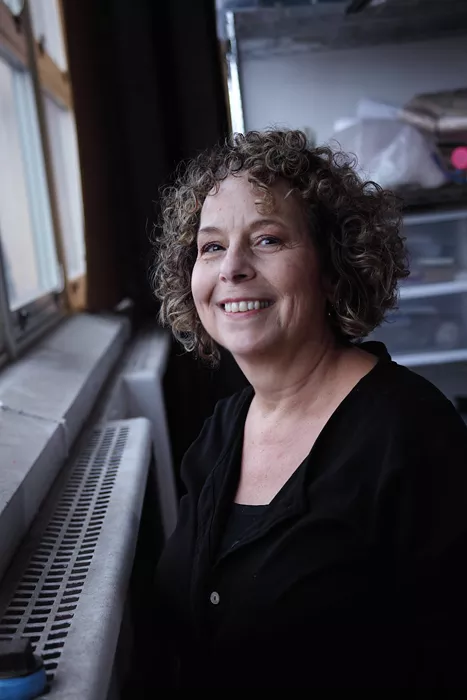
Whatever happens outside, the studio remains a sacred space for Nancy Baker. It is her sanctuary, a peaceful arena where she can push back against the madness of the world and work out ideas in her own eclectic way. Rumor has it that an easel has even reappeared. Not surprising for an artist who values different roads and ways, and always brings to her work a free and open mind.
All photos by Catherine Kirkpatrick
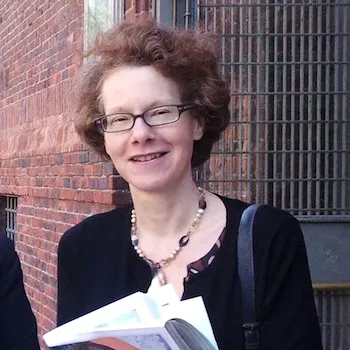
Catherine Kirkpatrick is a writer and photographer based in New York. She wrote the introductions to Meryl Meisler’s two books, and is currently working on an oral history about recent changes in photography.