Photo Story
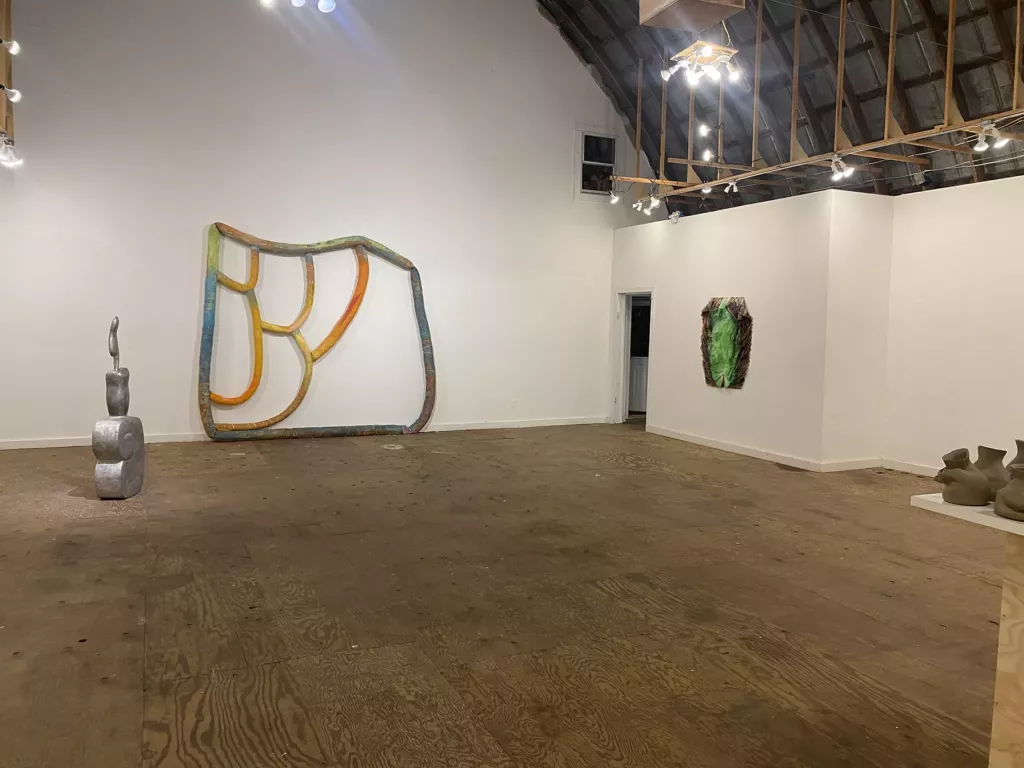
Through their group show at Re Institute, Julia Kunin, Barbara Zucker, Meg Lipke, Catherine Hall, and Joanne Howard reflect on how a supportive community and friendship nourish the often solitary act of creating art. Their lives have intersected over many years, and their approach to art cross-pollinates on multiple levels.
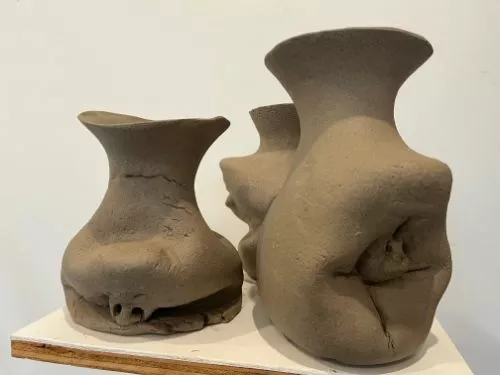
In 1984, Julia Kunin, Joanne Howard, and Barbara Zucker first crossed paths—Julia and Joanne were students at the Skowhegan School of Painting and Sculpture, and Barbara Zucker was an artist in residence at this hub for artistic exchange. Zucker, who now resides in Burlington, Vermont, maintains a close friendship with Catherine Hall.
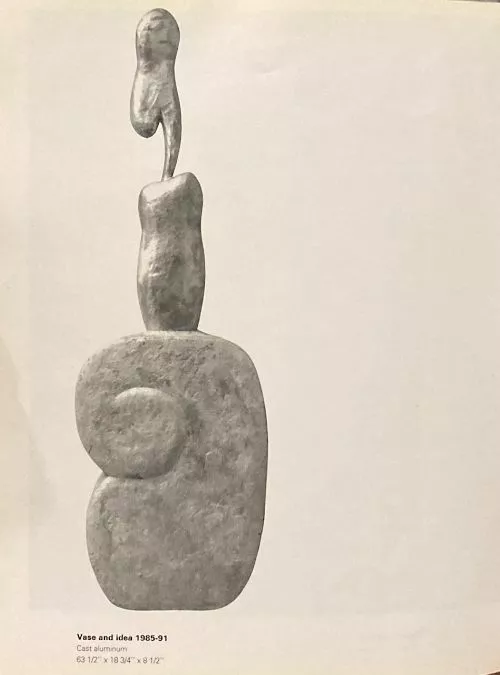
Barbara Zucker’s passion for creating art began in childhood. “I’ve been making whatever ‘art’ is since I was about five or six,” she recalls. Despite her mother’s dismissal of her artwork, Barbara remained steadfast in her artistic pursuit. “It has been a privilege to watch fledglings develop into fully formed, gifted artists, each with their unique voice that captivates me. The unexpected bonus has been their friendship,” says Zucker. Hall echoes her friend’s sentiment, adding, “When Barbara Zucker came to teach at the University of Vermont, Vermont artists such as myself benefited almost as much as her students. Her support has been invaluable to me in hard times and good times, and I am forever grateful for her friendship.”
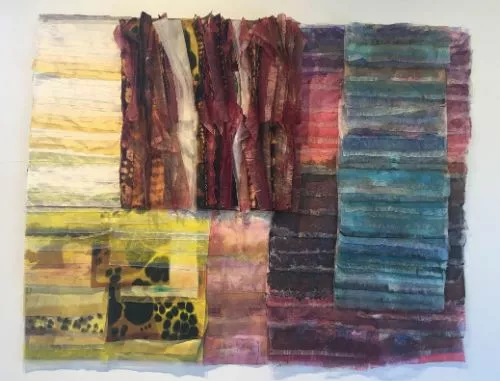
Catherine’s journey started in England, where she worked as a teenager in a textile mill and later pursued art history. “I was accepted into art school at age 16 and later pursued art history at the University of Manchester,” she recounts. She transitioned to making art with unconventional materials like gauze, fabric, and paper, drawing inspiration from her textile background.
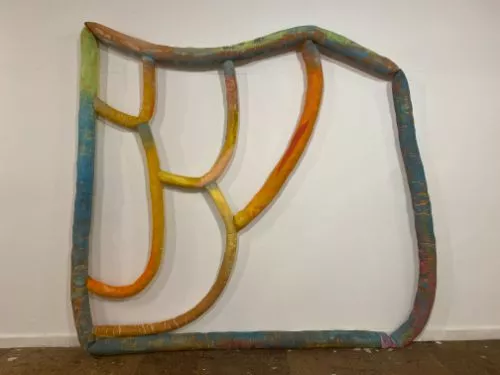
Meg Lipke, who shifts traditional mediums into new spatial contexts in her soft sculptures, acknowledges the profound impact of the artists in this exhibit on her practice. “In different ways, I have ‘grown up’ inside the art practices of three of the artists in this show,” she states. Influenced by her mother’s unconventional art and the works of Barbara Zucker and Julia Kunin, Meg’s piece for this exhibition, Chamber, employs acrylic and fabric dye on muslin to explore themes of kinship. Lipke reminisces, “Barbara Zucker moved into our hometown with her daughter when I was ten and was soon ‘my best friend’s mom’ and later a revered teaching artist who I wanted to impress.” Julia Kunin is the older sister of a high school classmate and the first artist of Lipke’s generation from their town to have a career as an artist.
Joanne Howard, whose work investigates the human attraction to order and perfection, exploring beauty, decoration, and the absurd, recalls her time at Skowhegan and her friendships with Julia Kunin and Barbara Zucker. “Barbara’s support has been invaluable to me in hard times and good times, and I am forever grateful for her friendship,” Joanne says. Her admiration for Zucker’s artistry and mentorship during the residency underscores the depth of their connection.
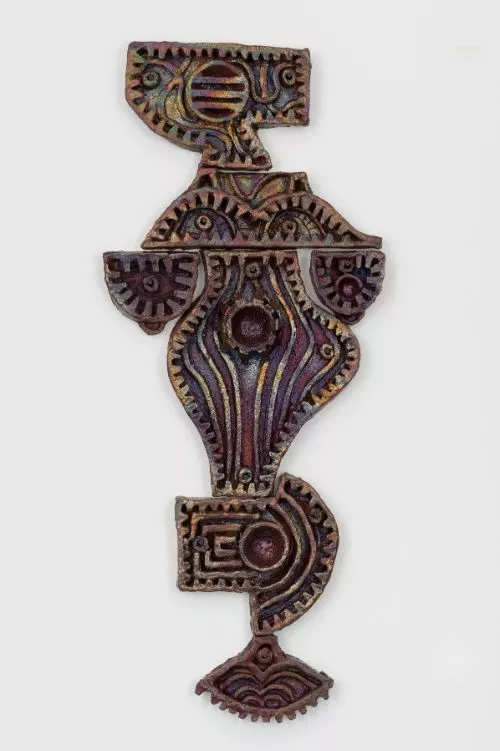
Julia Kunin’s sculptures explore themes of sexuality, beauty, growth, and decay, drawing influence from Art Nouveau ceramics and referencing the interplay of body, machine, and architecture through a queer lens. Her iridescent, surreal work has been shaped by her experiences in Hungary and her enduring connections with the artists in this exhibition. Summers in Pecs, Hungary, where she works with expert craftspeople, inform her intricate practice. “Learning from expert plaster carvers, mold-makers, china painters, architectural ceramic experts, and enamel workers is critical to my work,” she explains. She sums up, “I am deeply connected to the artists and Henry Klimowicz, the curator of our show, through my hometown of Burlington, Vermont, and Skowhegan. I couldn’t ask for a better aligning of the stars.”
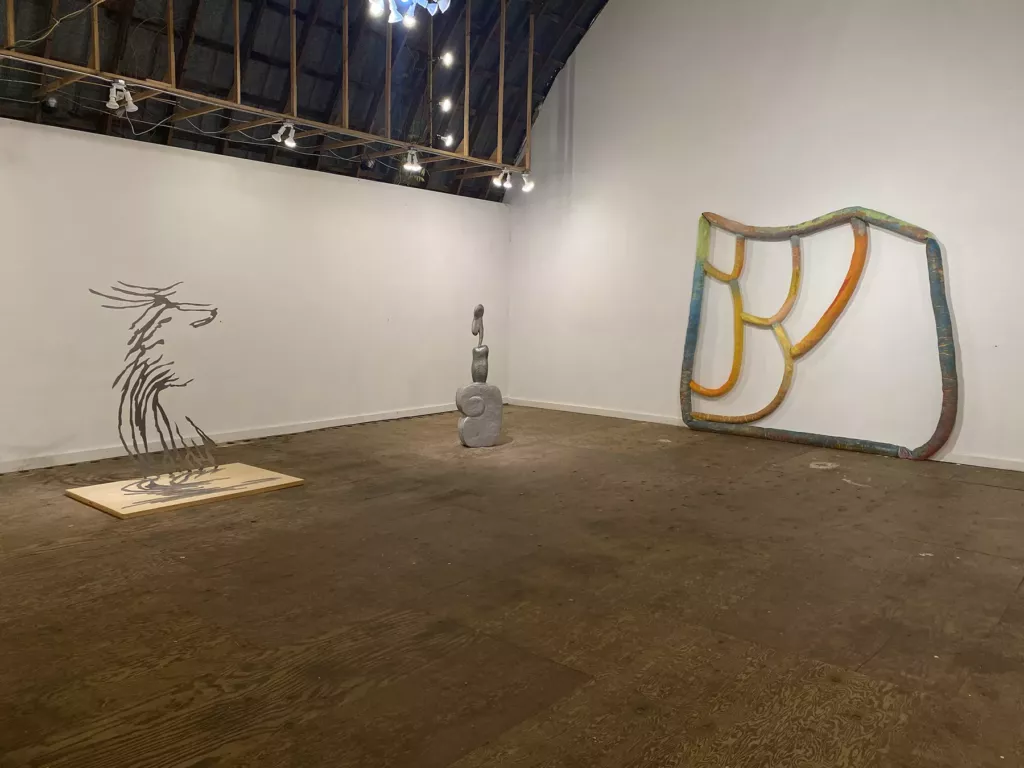
All photo courtesy of the artists and The Re Institute
Julia Kunin, Barbara Zucker, Meg Lipke, Catherine Hall, Joanne Howard, May 4th to June 15th The Re Institute 1395 Boston Corners Road, Millerton, NY 12546